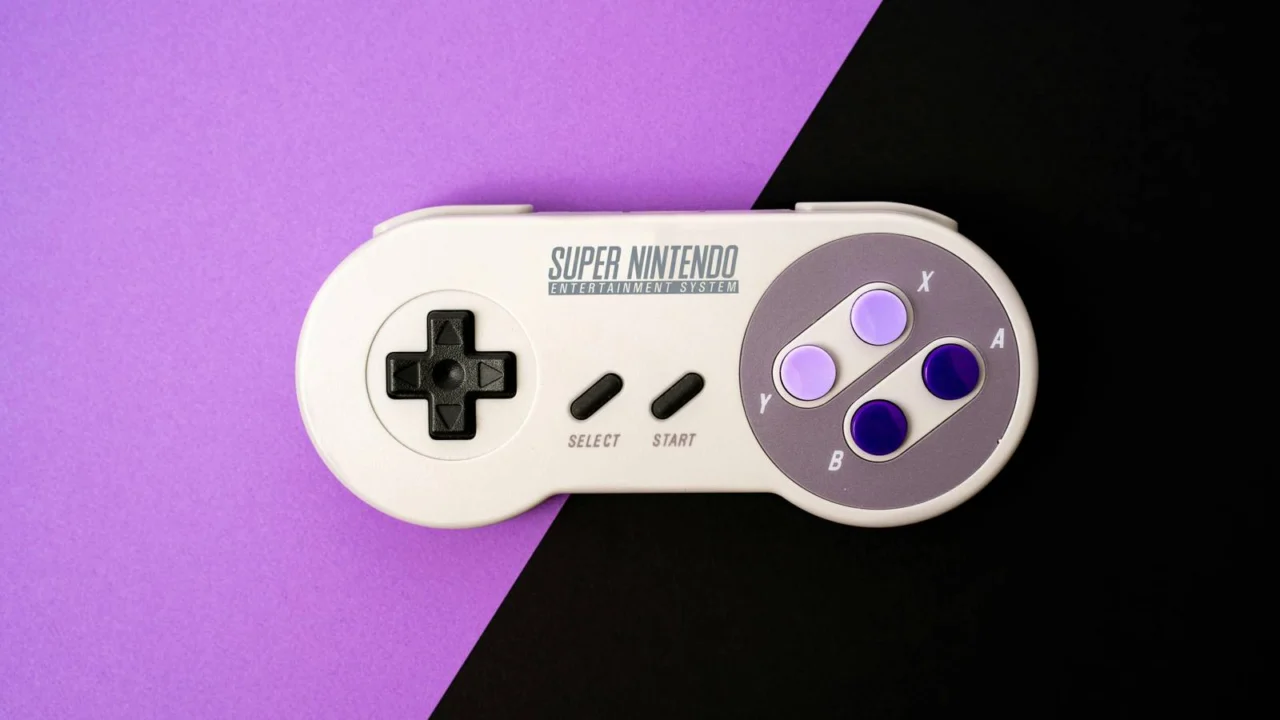
10 Essential SNES Games Still Missing From Switch Online
The Super Nintendo Entertainment System succeeded the NES with an extraordinary catalog of 16-bit software spanning simulations, sprawling role-playing games, athletic competitions, adventures, and definitive platformers. While third-party licensing hurdles mean certain monumental crossovers will likely never return to modern platforms, Nintendo Switch Online has successfully revived countless crown jewels from the SNES library, making them readily accessible to current subscribers. Even with this expanding digital archive, however, 10 indispensable SNES titles remain conspicuously absent from the Switch Online ecosystem. Here they are, ranked in descending order from 10 to 1.
10
Axelay
Released: September 1992
Axelay stood as a premier, hardware-exclusive shooter during the height of the 16-bit generation. While enthusiasts of the genre often favored the Sega Genesis for their fix, Konami’s masterpiece distinguished itself by seamlessly alternating between traditional sidescrolling levels and breathtaking vertical perspectives, much like their earlier arcade classic Life Force. Gamers could strategize loadouts by equipping specialized armaments between stages based on impending threats, preparing them for relentless enemy squadrons and monumental boss encounters. Its graphical presentation was nothing short of revolutionary, producing pseudo-3D visual effects that pushed the 2D hardware to its absolute limits. Kazuhiko Ishida, a key developer on the project, later co-founded Treasure and went on to program the legendary Genesis tour-de-force Gunstar Heroes.
9
Final Fantasy: Mystic Quest
Released: October 1992
By the time Final Fantasy: Mystic Quest debuted in 1992, Japanese role-playing games were steadily gaining traction in Western markets. Eager to cultivate a broader audience for its flagship genre, Squaresoft engineered Mystic Quest as an accessible, streamlined entry point. The protagonist acquired specialized tools to interact directly with dungeon environments—such as wielding an axe to fell obstructive trees. Combat parties were capped at two members, and if a skirmish went awry, players could instantly restart from the very beginning. While properly leveled characters could easily breeze through most adversaries—which visibly fractured upon taking heavy damage—the dungeons were mercifully straightforward, featuring clear save points and visible enemies instead of punishing random encounters. Bolstered by an unexpectedly brilliant, high-energy soundtrack, the adventure offered a delightful journey. Granted, some fans were initially miffed at receiving this simplified spin-off instead of Final Fantasy V, but those who looked past the branding discovered a genuinely charming experience.
8
Super Off Road
Released: December 1991
Adapted from Leland Corporation’s coin-op arcade smash, Super Off Road may look deceptively simple at a glance. It drops four competing trucks into a single-screen, mud-caked arena where racers tear across diverse dirt tracks, snatching cash bonuses and nitro boosts while earning prize money to upgrade their vehicles between events. Although the track selection isn’t massive, the circuit loops continuously, sustaining momentum as long as players manage to podium. While the game was ported to several systems—including the NES—the SNES iteration felt like the definitive home version, delivering hours of endlessly replayable, competitive multiplayer chaos. It remains an absolute blast for a nostalgic game night with friends.
7
The Legend of the Mystical Ninja
Released: July 1991
Japan recently received Ganbare Goemon Daishuugo on Nintendo Switch, PlayStation 5, and PC, a comprehensive anthology celebrating the beloved Goemon franchise. Unfortunately, a Western localization has not been announced, leaving retro enthusiasts who fondly remember The Legend of the Mystical Ninja feeling a bit slighted. Back in the early days of the SNES, this whimsical masterpiece offered a robust co-op adventure brimming with imaginative stages and quirky minigames—even featuring a playable mini-version of Gradius tucked inside an in-game arcade. Levels alternated between top-down exploration reminiscent of The Legend of Zelda and demanding sidescrolling action sequences. It remains a shining example of classic game design that holds up wonderfully more than thirty years later. Barring any unexpected announcements, modern players’ best alternative is the spiritual successor Bakeru.
6
SimCity
Released: April 1991
SimCity is a timeless management sim on virtually any platform, but the SNES iteration holds a special historical significance because Nintendo handled the porting duties in-house. Running exceptionally well on the hardware, the game offered staggering depth and an addictive gameplay loop that effortlessly swallowed hours as players transformed barren wilderness into sprawling urban centers. It offered a surprisingly practical education in urban planning, and while subsequent entries joined the console’s library down the road, none managed to capture the distinct charm of the original. Licensing complexities might complicate a Switch Online release, but given that Nintendo previously featured it on the Wii Virtual Console, hope for a revival remains alive.
5
Robotrek
Released: July 1994
Crafted by Quintet—a studio renowned for its fruitful partnership with Enix throughout the 16-bit era—Robotrek is a delightful role-playing game aimed at a younger demographic. The narrative follows the son of a brilliant inventor who spends his days constructing custom mechanical companions to fight battles across a sci-fi landscape. Mechanically, it bears structural similarities to Pokémon, as the protagonist delegates combat to his creations rather than fighting directly. Instead of managing a massive roster, players fine-tune and upgrade a select few robots to overcome escalating challenges. Visually modest yet vibrant and clean, the game benefits greatly from a phenomenal musical score composed by Yuzo Koshiro. Overshadowed by heavier hitters upon its initial release, it serves as a wonderful hidden gem for modern retro enthusiasts.
4
Ogre Battle: The March of the Black Queen
Released: March 1993
Back in the cartridge era, when gaming budgets were tight, players sought out titles offering immense longevity and replay value. Ogre Battle: The March of the Black Queen delivered this in spades. Its colossal campaign featured multiple branching endings, expansive stages, intricate unit customization, and hidden events dictated by the moral alignment of your army. While some of its deeper mechanics can feel opaque and its deliberate pacing requires immense patience, it remains an absolute strategy classic. Though a modern quality-of-life remaster is likely a pipe dream, bringing it to Switch Online would give tactical masterminds dozens—if not hundreds—of hours of engrossing gameplay.
3
Uniracers
Released: December 1994
Before DMA Design became a household name for gritty urban crime epics like Grand Theft Auto, the studio experimented with wonderfully eccentric concepts like high-speed unicycle racing. Uniracers thrilled players with lightning-fast trick-based racing across stylized ribbon tracks, possessing all the right ingredients to launch a lasting franchise. Unfortunately, legal disputes involving trademark issues—rumored to involve Pixar—led to Nintendo pulling physical copies from shelves entirely. This murky legal history makes a Switch Online appearance a long shot, but if the right corporate parties ever hash out an agreement, modern gamers deserve a chance to experience this forgotten cult classic.
Get Polygon’s Wishlister newsletter
A weekly cheat sheet to what you’ll eventually love to play. No buying, no
commitment — just saving for later.
Free. Unsubscribe anytime.
2
Illusion of Gaia
Released: November 1993
Published by Nintendo in North America, Illusion of Gaia was treated as a major marquee release, arriving bundled with a collectible T-shirt and an exhaustive strategy guide. Developed by Quintet, the game shares strong thematic ties with studio stablemates Soul Blazer and Terranigma. It delivers a deeply memorable and sweeping narrative quest, guiding a tight-knit circle of companions across spectacular locales set within a mythic, alternate-history Earth. The result is a polished, action-heavy, Zelda-styled adventure driven by narrative ambition, even if navigating certain labyrinthine dungeons occasionally proved frustrating without a walkthrough. With an updated Terranigma horizon-bound, now is the absolute ideal moment for Illusion of Gaia to finally find a home on Switch Online.
1
Chrono Trigger
Released: March 1995
Chrono Trigger represents the ultimate realization of an all-star dream team uniting to build something truly transcendent. At the time, the mere concept of elite talent from fierce industry rivals Squaresoft and Enix collaborating on a single project generated unprecedented excitement. Despite the immense expectations riding on such a powerhouse roster, the final product shattered every benchmark of quality. Effortlessly weaving a complex time-travel narrative to thwart the apocalyptic threat of Lavos, the game paired gorgeous pixel art and a first-rate soundtrack with unforgettable characters and a vibrant world across multiple eras. While Chrono Trigger subsequently received a brilliant Nintendo DS port and spent a stint on the Wii Virtual Console, it has been far too long since one of the greatest games ever made was officially accessible on Nintendo hardware. It is high time for its triumphant return.
Source: Polygon
Related articles
 Troy Baker Reflects on His Role in Mass Effect 3
 Insider Details Major Microsoft Changes Following Player Requests
 Hideo Kojima Criticizes DLSS, Says AI Does Not Understand Author’s Intent
 GTA VI Rival Paradise MIA for 18 Months Following Controversy
 PS5 Pro Operated for a Year Inside a Cardboard Box in User Experiment
 Star Citizen Sees Drop in Revenue and New Player Inflow, Analyst Reports
 2K Warns Players As One of the Best Basketball Simulators Is Removed From Steam and Other Stores
 Fans Release Remaster of Canceled Borderlands Online After 11 Years