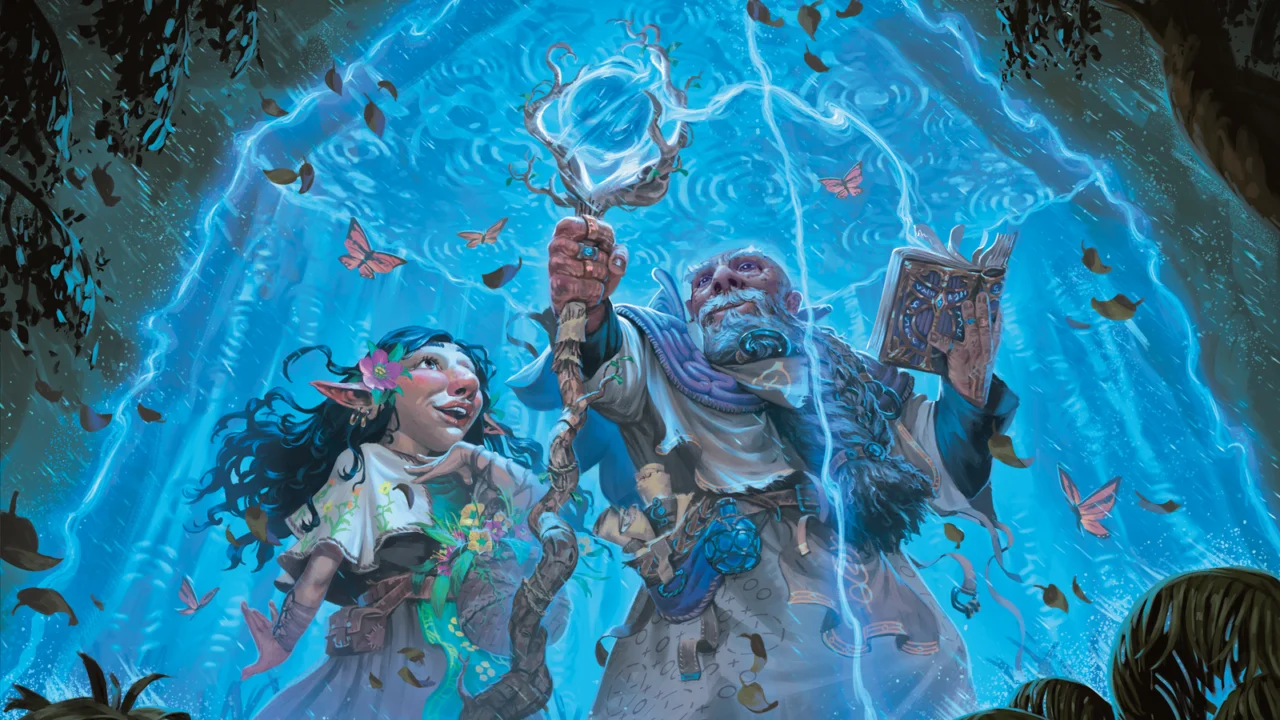
Why D&D’s New Arcana Unleashed Feats Are Overpowered, and How to Fix Them Easily
The newest Dungeons & Dragons release, Arcana Unleashed, delivers a wealth of options for players who would rather manage spell slots than swing a sword. With fresh subclasses, spells, magic items, and factions, even the most devoted spellcaster will find plenty to explore.
One part of the book, however, has stirred up heated discussion within the community, and not in a flattering way: the new Adept feats. There are eight of them, one for every school of magic, and each hands any spellcaster a set of potent spells once reserved for Wizards and Sorcerers. Some players and Dungeon Masters argue this could be a campaign-breaking development, yet the remedy is refreshingly simple.
The new Adept feats put Fireball in everyone’s hands

Evocation Adept is frequently singled out whenever the conversation turns to these new feats. Evocation is the school devoted to shaping raw elemental energy, most often for destructive ends, and it houses some of the most formidable damage dealers in the game, including the legendary Fireball and the dependable Magic Missile.
This feat belongs to the “half-feat” family, meaning it raises one ability score by 1 (Intelligence, Wisdom, or Charisma here) and adds further perks on top. Like every Adept feat, Evocation Adept offers two such perks: an expanded spell list and a special trait called Fueled Evocation. Each has drawn criticism for its own reasons.
The Additional Spell feature lets a character add one spell per level, from first through fifth, to their list. For Evocation Adept, the options are Chromatic Orb, Shatter, Fireball, Vitriolic Sphere, and Wall of Force. That is a formidable collection of offensive magic, and with the exception of Shatter, none of it was available outside the Wizard and Sorcerer lists before.
So a Druid who feels like it can take this feat at fourth level (the prerequisite is simply having the Spellcasting or Pact Magic feature) and begin hurling Fireballs at enemies. Fueled Evocation sweetens the deal further: once per turn, a character dealing damage with an evocation spell may add up to two of their unspent Hit Dice to the damage roll. That Druid could cast Fireball using a third-level slot and deal 8d6+2d8. A Paladin or Ranger could tack on 2d10, pushing the average damage of a third-level Fireball above that of a sixth-level one cast by a Wizard. And they would do it while wearing armor, retaining their class features, and boasting more hit points (HP) than any Wizard.

Now picture every member of the party taking this feat. That is a lot of Fireballs. Countless combinations and min-maxed builds exploit this feat and its siblings, and you can find plenty of them online. Still, I don’t think that is the heart of the matter. These feats reflect a design philosophy that has been gradually spreading through 5th edition and is especially pronounced in the 2024 rules revision (often called 5.5e): the homogenization of D&D.
Should Druids really be casting Fireball?

In the game as it stands today, the lines between character classes keep fading, and everyone can do a bit of everything. On the very page of Arcana Unleashed that introduces the Adept feats, an illustration shows a brawny warrior gripping an enormous hammer in one hand while aiming a spell with the other, in the unmistakable Spirit Gun pose from Yu Yu Hakusho. The caption declares that any hero can use magic to sharpen their abilities. But should that really be the case?
Broader character options are not inherently bad. Earlier editions were fairly rigid: conventional wisdom held that a party needed a Cleric to heal, a full arcane caster (Wizard or Sorcerer), and a couple of frontliners to function at its best. Those roles still matter in 5.5e, but nearly every class can now fill several of them thanks to the flexibility of feats and subclasses. On the whole, that gives players greater freedom when building a character.
Even so, is there any reason left to play a Wizard when their exclusive spells are available without the old trade-offs? Wizards were once the most fragile members of the party, but they made up for it with unmatched magical power. Setting the Druid aside, you can now build a Paladin with high Armor Class (AC), plentiful HP, Extra Attack, and Aura of Protection who also starts lobbing Fireballs by level nine. Clerics can keep their usual healing toolkit and add the firepower of an evocation Wizard. Admittedly, the Adept feats stop short of spells above fifth level, but most campaigns never get that far anyway.
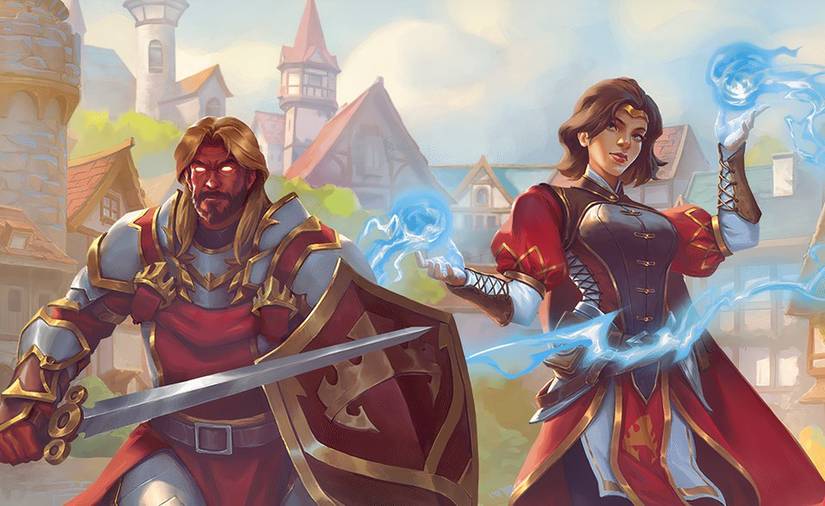
One reason to pick a Wizard or Sorcerer remains, beyond the joy of casting Time Stop at least once: you simply love the class. D&D is not a competitive game. Optimizing a character is perfectly natural, but players should be encouraged to begin with a concept rooted in flavor and roleplay rather than numbers. It is also the simplest way for DMs to keep the Arcana Unleashed feats from being abused.
Make it make sense

Suppose a player at your table wants to run a Fireball Druid. You could reasonably point out that unleashing enormous spheres of fiery destruction hardly suits a Druid’s calling (plants burn easily, in case you hadn’t noticed). As the DM, you can use session zero to ask everyone where they intend to take their builds. If somebody brings up the Adept feats, don’t panic. Just ask that player to “make it make sense.” How and why did this Druid become an adept of evocation? What happened in their past to draw them toward such destructive magic? What do they hope to accomplish now that they can command the deadliest side of the elements? You might even require Druid players to choose the Circle of Wildfire subclass so the concept feels more cohesive.
Answering these questions together should, at minimum, yield an intriguing backstory, which you can then weave into your campaign. For instance, you could borrow the well-known “knife theory” to create tension and stakes: perhaps the Fireball Druid once lost control of their power and razed a village, and now a bounty hangs over their head.
To be clear, this is not a “hard fix” for any imbalance the new Adept feats may create. It is more of a “meta fix,” one that converts a potential problem into something valuable: a great story. Stricter DMs may prefer to ban the feats entirely, and that is a legitimate choice too, provided it doesn’t leave the players resentful.
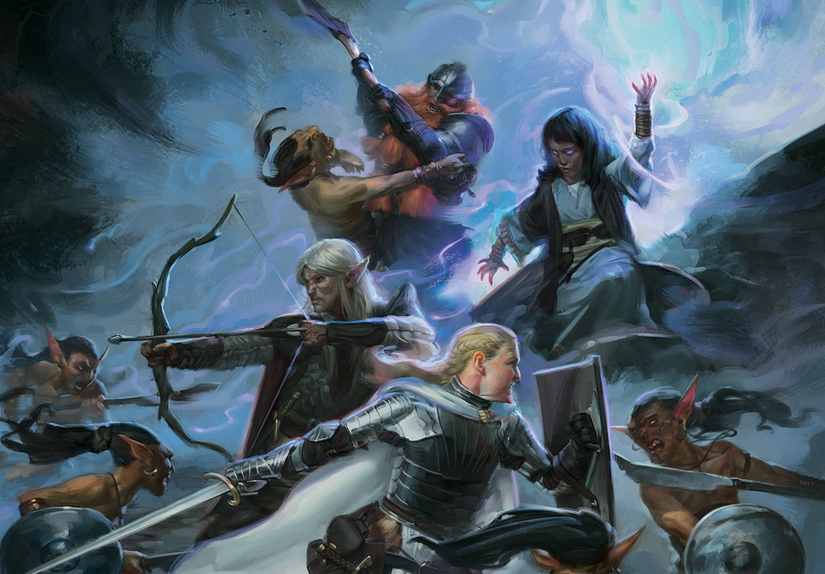
The direction of D&D’s design is plain, and it is unlikely to reverse soon. The designers want players to have more choices, which means class boundaries will keep growing thinner. It is understandable to miss the older, more distinct feel of the game, when a Fighter was a Fighter and a single arrow could fell a Wizard, but a DM should remember that not everyone at the table shares that nostalgia. Instead of taking options away from your players, it is often enough to simply ask them to make it make sense.
Source: Polygon
Related articles
 Final Trailer Released for Bleach: Thousand-Year Blood War – The Calamity Anime
 C.S. Lewis’ Heirs Comment on Greta Gerwig’s Narnia Film for First Time, Already Planning for Sequels
 Antonio Banderas Joins Nicolas Cage in 'True Detective' Season 5
 Fans Flood Cyberpunk: Edgerunners Showrunner With Requests to Bring Back David
 Scrapped Ben Affleck Batman Film Would Have Featured Batgirl and a Major Character’s Death, Deathstroke Actor Says
 A Remaster of the Best Shrek Game Ever Has Just Leaked
 Mike Flanagan Explains How New Dark Tower Adaptation Will Avoid Mistakes of Idris Elba Film
 Dragon Ball Super Finally Delivers Beerus as Akira Toriyama Originally Envisioned 11 Years Later