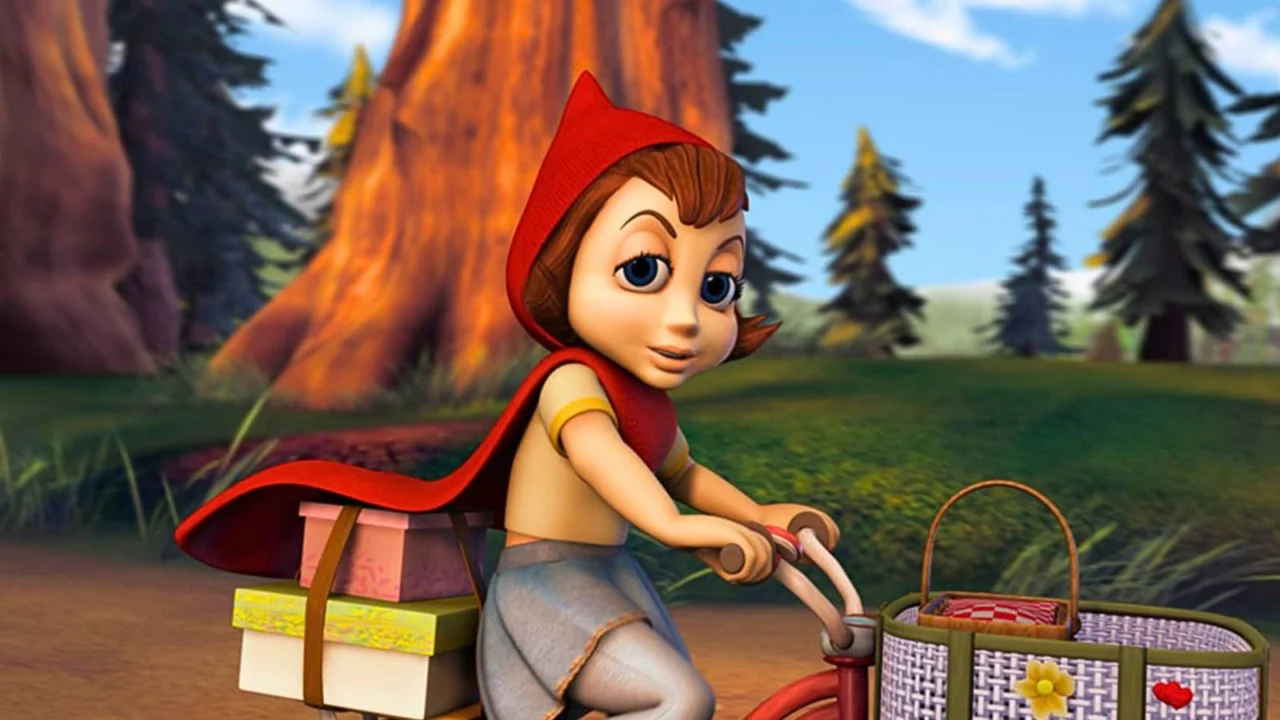
Twenty years on, the century’s most unsightly fantasy film warrants a second look

Traditional folklore, from the cautionary tales of Charles Perrault to the darker iterations by the Brothers Grimm, carries a singular, blunt message for children: stay away from strangers, lest a wolf devour your family. It was a simple moral for a simple time. However, Cory Edwards’ 2006 cult classic Hoodwinked—frequently cited for its visually unpolished aesthetic—arrived two decades ago to dismantle those expectations entirely.
This animated musical comedy doesn’t just tweak the legend of Little Red Riding Hood; it essentially deconstructs it. In this version, Red (voiced by Anne Hathaway) isn’t a helpless victim but a 12-year-old martial arts expert ready to defend herself. The surrounding cast received similar “glow-ups.” Granny (Glenn Close) isn’t bedridden; she’s an adrenaline junkie with skills that would rival a character in SSX. Meanwhile, the Big Bad Wolf (Patrick Warburton) is reimagined as a cynical investigative journalist—a man who might bend the rules, but only to land a front-page scoop.

The film opens with the familiar tableau—a girl, a wolf in a nightgown, and a missing grandmother—but it quickly shifts into a detective story centered on the “Goody Bandit,” a criminal mastermind draining the forest of its treats. Hoodwinked utilizes a non-linear, Rashomon-style structure to explain how everyone ended up in that cottage. We learn the Wolf was working an undercover lead, and Red was desperately trying to protect her family’s secret recipes. By the time the credits roll, the original fairytale has been turned inside out.
What truly sets Edwards’ film apart is its unexpected sincerity. While it followed in the wake of Shrek and leaned into parody, it never sacrificed its heart for cheap cynicism. Despite Red’s combat skills, she remains a young girl searching for her identity. Even the bumbling Woodsman (Jim Belushi), who is often a one-dimensional hero, is given a layered, albeit hilarious, motivation. The film mocks the tropes, but it clearly loves the world it’s playing in.

The visual “ugliness” of the film was born of necessity. Produced by Blue Yonder Films with a meager budget of $8 million, the animation was largely outsourced to the Philippines. Knowing they couldn’t compete with Pixar’s technical prowess, Edwards leaned into a lo-fi aesthetic. As he explained in an interview with Animation World Network, he aimed for the charm of stop-motion miniatures rather than failing at photorealism. By avoiding the pursuit of every individual hair or skin pore, the team focused on style over technical perfection.
This independent spirit allowed the writing team, including Cory’s brother Todd Edwards, to experiment. They framed the story as a police procedural, citing Quentin Tarantino’s Pulp Fiction as a narrative touchstone. Though the Weinstein Company eventually handled distribution and insisted on high-profile voice talent, the core creative vision remained untouched by studio meddling.

The result is a movie that may be visually jarring but is narratively brilliant. While the lackluster sequel, Hoodwinked Too! Hood vs. Evil, was a financial and critical dud due to its hollow self-awareness, the original remains a testament to great storytelling. Hoodwinked proves that even if a film looks a bit rough around the edges, a smart script and sincere heart can make it absolutely flawless.
Source: Polygon
Related articles
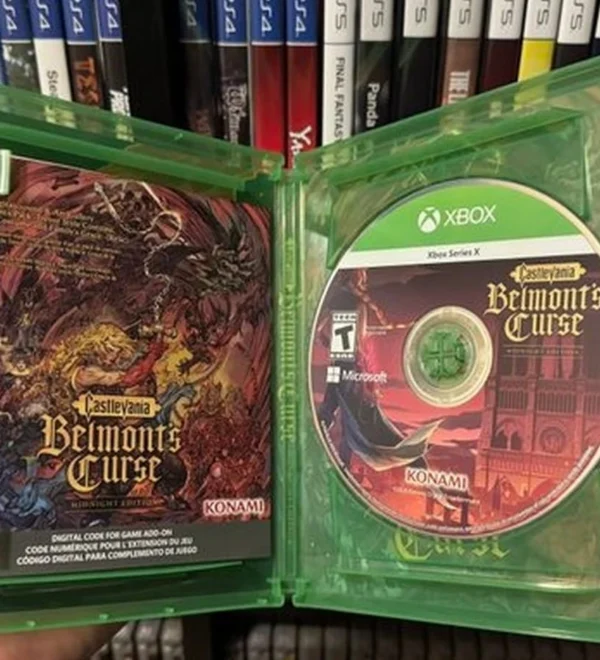 Boxed Games Become a Problem for Collectors as Issues Reach PS5
 Gears of War: E-Day Reportedly Planned as Start of a New Trilogy, Rumors Say
 Shenmue III Enhanced Edition Delayed to Improve Graphics and Add New Features
 Ridley Scott Finds Screenwriter for New Film That May Continue the Prometheus and Alien: Covenant Story
 Zendaya to Be Promoted for Best Lead Actress Oscar for Third Dune Film
 Crimson Desert Charting the Unknown Expansion Will Add Sea Monsters and Ship Boarding, Details Revealed
 Ticket Presales Suggest Dune: Part Three Will Lose Heavily to Avengers: Doomsday at the Box Office
 DC Horror Film Clayface Earns Unusually High CinemaScore