Thunder at the Gates: Army Headquarters and Special Forces
Greetings, fellow gamers. Welcome to this developer diary, where I will walk you through the most significant feature arriving in our upcoming expansion, Thunder at our Gates. This is an extensive look at our design philosophy, so grab a seat and let’s dive into the evolution of Army HQs.
The concept for Army HQs began as a simple prototype: placing generals directly on the map. Initially, we tested attaching a general’s portrait to a division, creating an aura of influence that granted localized buffs. My colleague, Zwirbaum, famously labeled it “dangerously shippable”—an enticing idea that pushed us to iterate further.
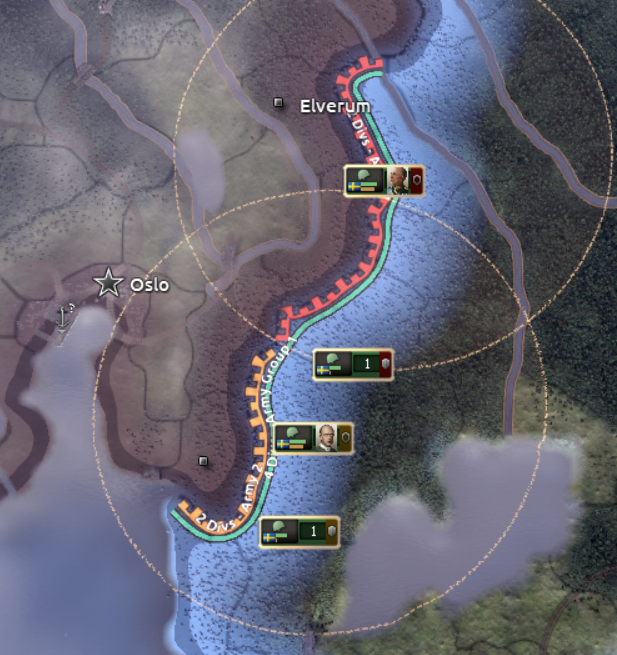
Our initial design aimed to consolidate general skills and bonuses, making their impact visually prominent on the map. We even considered mechanics like capturing generals if their assigned unit was overrun. However, proximity-based systems often led to messy gameplay, encouraging players to “micro” units just to keep them within the command radius—a design trap we wanted to avoid. Furthermore, a circular aura didn’t reflect the reality of how military command actually functions: top-down, through a clear chain of command, rather than a simplistic bubble of influence.
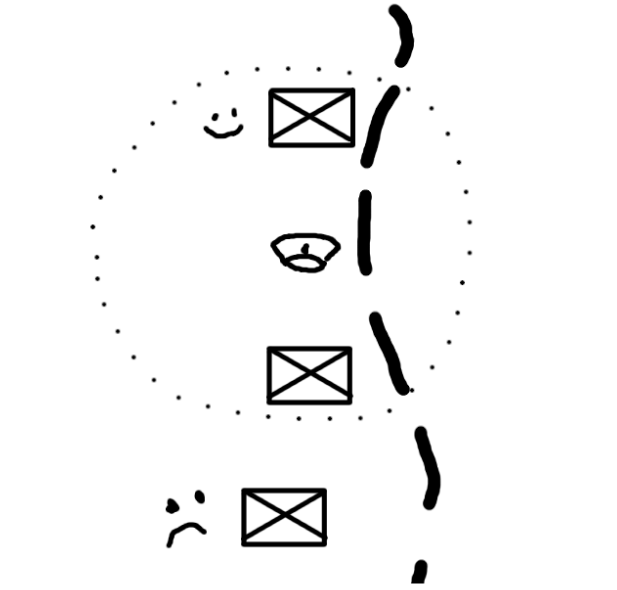
We revisited the legacy feel of Hearts of Iron III’s order of battle, which offered deep, granular control. While complex, the visual clarity of lines and arrows effectively communicated the command structure. We wanted to recapture that sense of cohesion, applying bonuses to units tied to specific orders rather than just proximity.
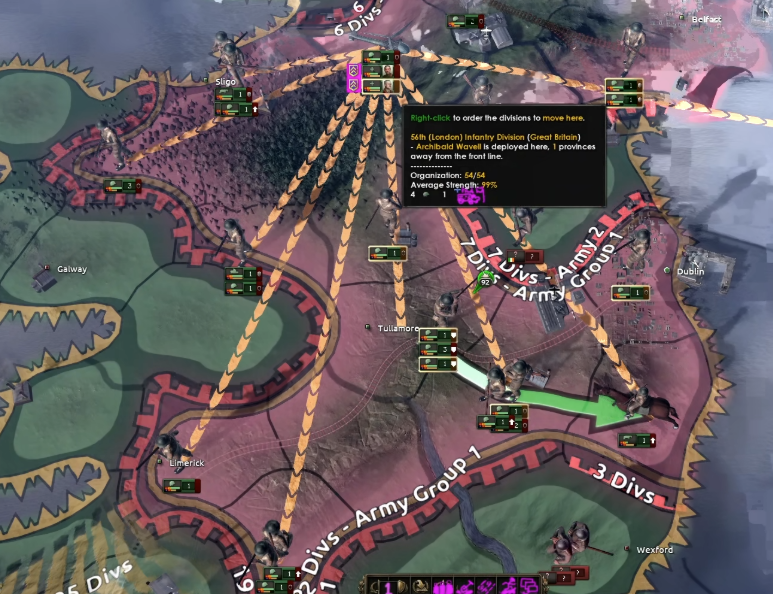
A feature must offer meaningful choices. By attaching generals to orders, we force players to prioritize: which frontlines receive your best commanders? While previous iterations simply attached generals to existing divisions, we realized this lacked the satisfying customization of a dedicated HQ template. Our final implementation empowers players to treat HQs as a strategic resource rather than a static attachment.
Our goals for Army HQs were clear: enhance strategic decision-making, allow for deeper customization, and provide better control over unit planning. The final feature allows players to:
- Construct custom HQ division/company templates.
- Deploy generals to the map via these HQ units, consuming Command Power.
- Set automatic proximity parameters for the HQ unit relative to the front line.
- Grant powerful bonuses that propagate down through the chain of command when assigned to specific orders.
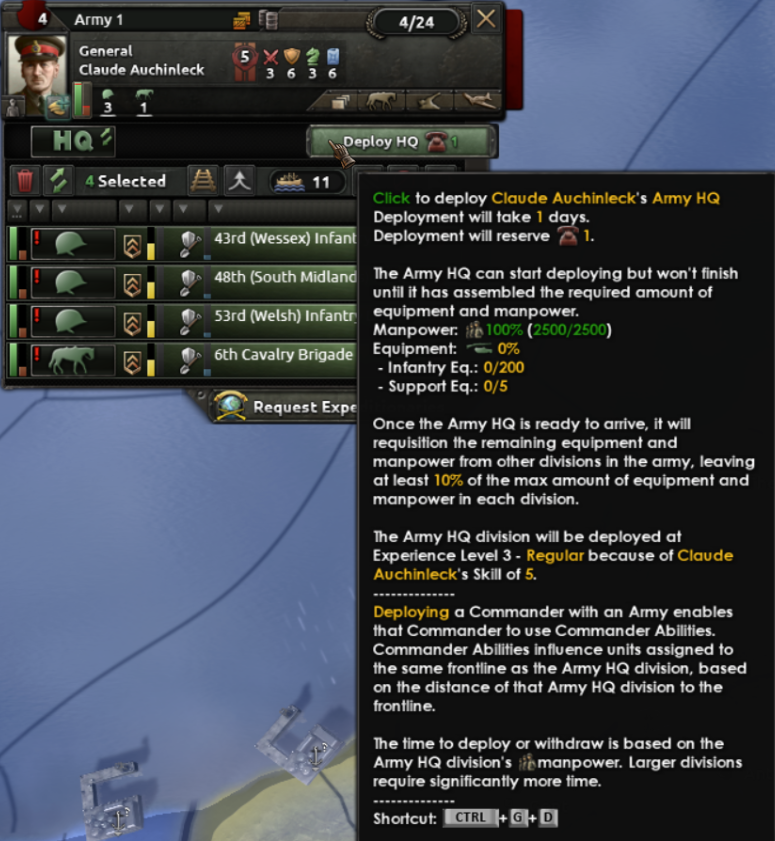
General capture remains a mechanic but is less punishing than before. Captured commanders can be recovered through land raids or intelligence operations near supply hubs, adding a layer of risk-reward to aggressive positioning.
Unlocking with Thunder at our Gates, the “Dispersed Operations” doctrine addresses the late-war reality of operating without air superiority. Focused on resilience, this doctrine provides bonuses to reinforce rates and reduces the impact of enemy close air support, rewarding players who integrate logistics and anti-air support into their army composition.
Zwirbaum here—taking the baton to discuss the Special Forces (SF) overhaul. We are transitioning the SF system from the old XP-buy model to the new Mastery-based system found in No Compromise, No Surrender. This ensures a consistent experience across all expansion content, allowing for deeper specialization and better integration with existing faction and intelligence mechanics.
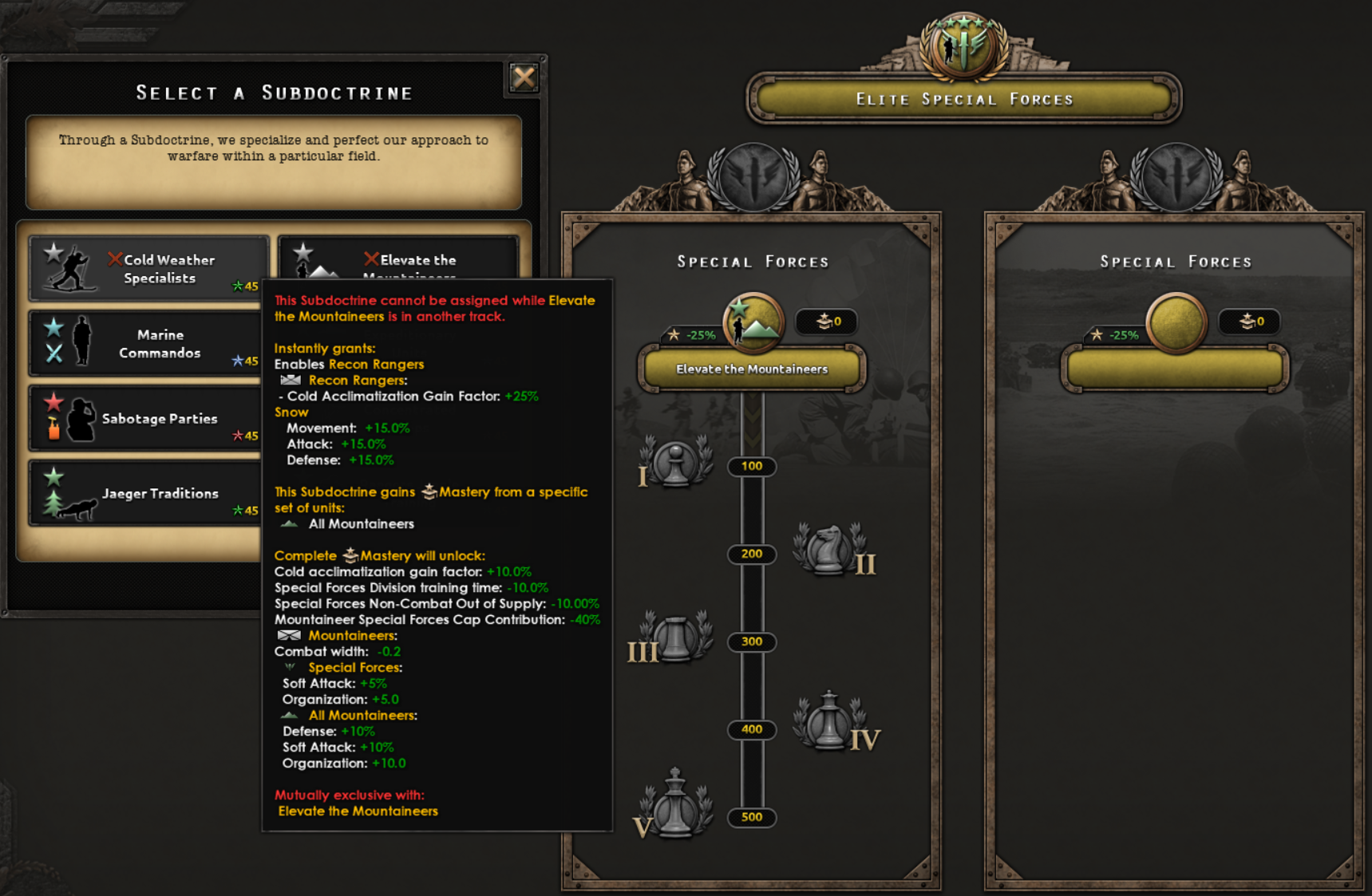
Whether you are maximizing your Special Forces capacity or focusing on elite unit quality, these new, mutually exclusive sub-doctrines offer significant strategic depth. We look forward to seeing how these systems integrate into your future campaigns.
Related articles
 HOI IV Developer Diary | Romania: A Flawed Democracy
 Developer Corner & Open Beta: Energy #2
 Hearts of Iron IV Dev Corner | Strikes!
 Hearts of Iron IV Dev Corner: Old Canada Questions Before New Canada
 Hearts of Iron IV Dev Corner | Energy
 Steam Autumn Sale 2026
 HOI IV Dev Corner | The Great Depression
 Hearts of Iron IV | Patch 1.19.3