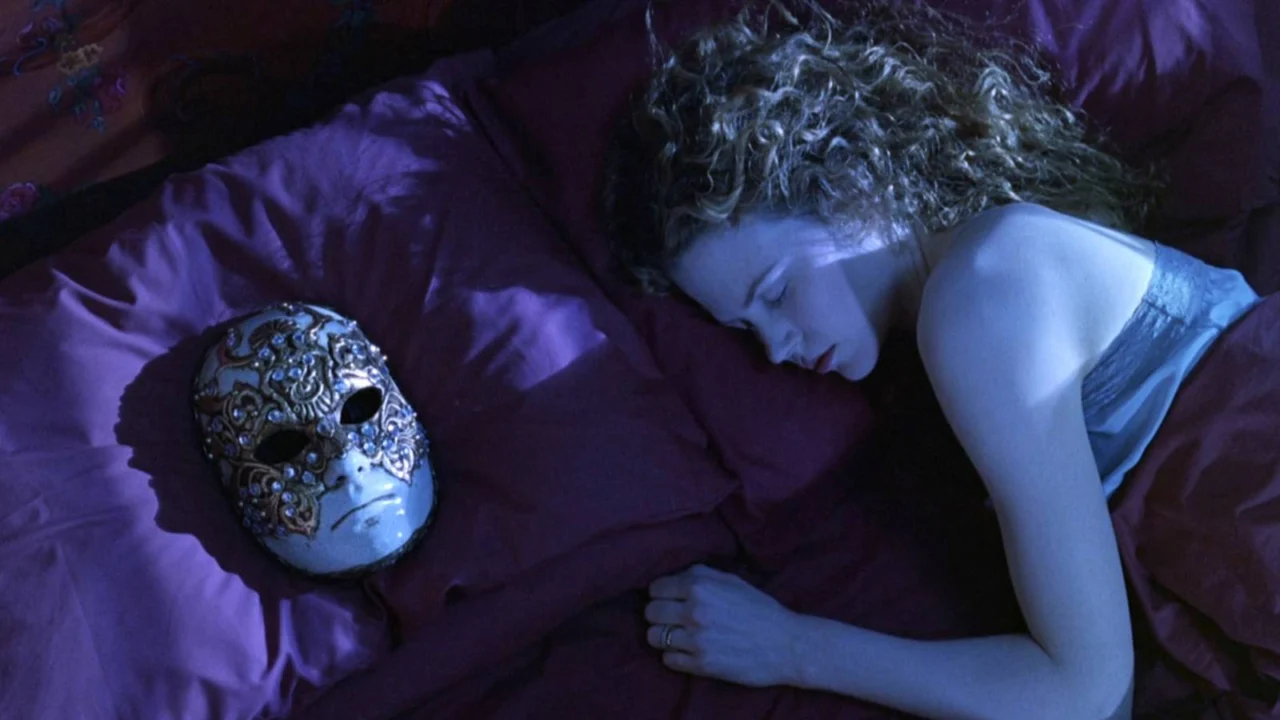
The One Key Way Stanley Kubrick’s Eyes Wide Shut Outshines Its Source Material

Image: Warner Bros.
Although Stanley Kubrick’s cinematic swan song, Eyes Wide Shut, reached theaters in 1999, the legendary filmmaker had been eyeing the rights to the source material since the mid-1960s. Inspired by Arthur Schnitzler’s 1926 novella Dream Story, the film dissects the psychological unraveling of a long-married couple (portrayed by Tom Cruise and Nicole Kidman) after a candid confession of their illicit fantasies. Schnitzler’s original work was a product of the Decadent movement in early 20th-century Europe, an era fascinated by artistic hedonism and the inner workings of human desire. By transplanting the narrative from Vienna to 1990s New York City, Kubrick didn’t just modernize the setting; he fundamentally transformed the central conflict, creating a version of *Eyes Wide Shut*—currently available on Tubi—that elevates Schnitzler’s themes into a hauntingly unique exploration of the psyche.
Even though *Eyes Wide Shut* was Kubrick’s most commercially successful release, it initially alienated mainstream audiences, earning a dismal D- CinemaScore. This disconnect was likely fueled by several factors: Kubrick’s sudden passing just six days after screening a final cut sparked endless rumors about the film’s completeness, while the unprecedented 400-day shoot became the stuff of industry legend. Furthermore, Warner Bros. chose to market the film as a standard erotic thriller, capitalizing on the real-life marriage of Cruise and Kidman. In reality, the film is far more subversive; it operates as a paranoid, dreamlike descent, following Dr. Bill Harford (Cruise) through a grueling, overnight ritual of social and sexual humiliation.
In the original Dream Story, Fridolin and Albertina share their sexual secrets, acknowledging the temptations that have simmered beneath the surface of their marriage. Fridolin finds these revelations unbearable; his ego is bruised by his wife’s sexual agency, even as he struggles with his own fidelity. Viewing her inner life as a betrayal, he wanders the streets of Vienna seeking a hollow revenge through his own conquests, though every attempt is thwarted by fate or circumstance. His odyssey eventually leads him to a mysterious masked ball, an event that ultimately forces him back to the reality of his fragile domestic life.

Image: Warner Bros.
On the surface, Kubrick’s film mirrors these plot points with precision. However, he infuses the relationship between Bill and Alice (Kidman) with a visceral claustrophobia that permeates every frame. What begins as a glimpse into marital strife quickly evolves into a study of Bill’s deep-seated psychosexual insecurity. He perceives the women he encounters as transactional objects or damsels in need of his protection, unable to view them as autonomous beings. This critique of dysfunctional masculinity recalls Kubrick’s work on A-Clockwork-Orange, where he deviated from the novel’s conclusion to present a more cynical worldview. Bill’s journey is hindered by a misplaced savior complex, which only deepens the disorientation of his nocturnal travels.
The function of the masked gathering also differs significantly between the two works. In the novella, Fridolin is repulsed by the vulgarity of the ball, yet he continues to search for women who remind him of his wife. “In every woman… it was always you that I was searching for,” he later confesses, highlighting his constant, desperate attachment to Albertina even amidst his attempts at betrayal.
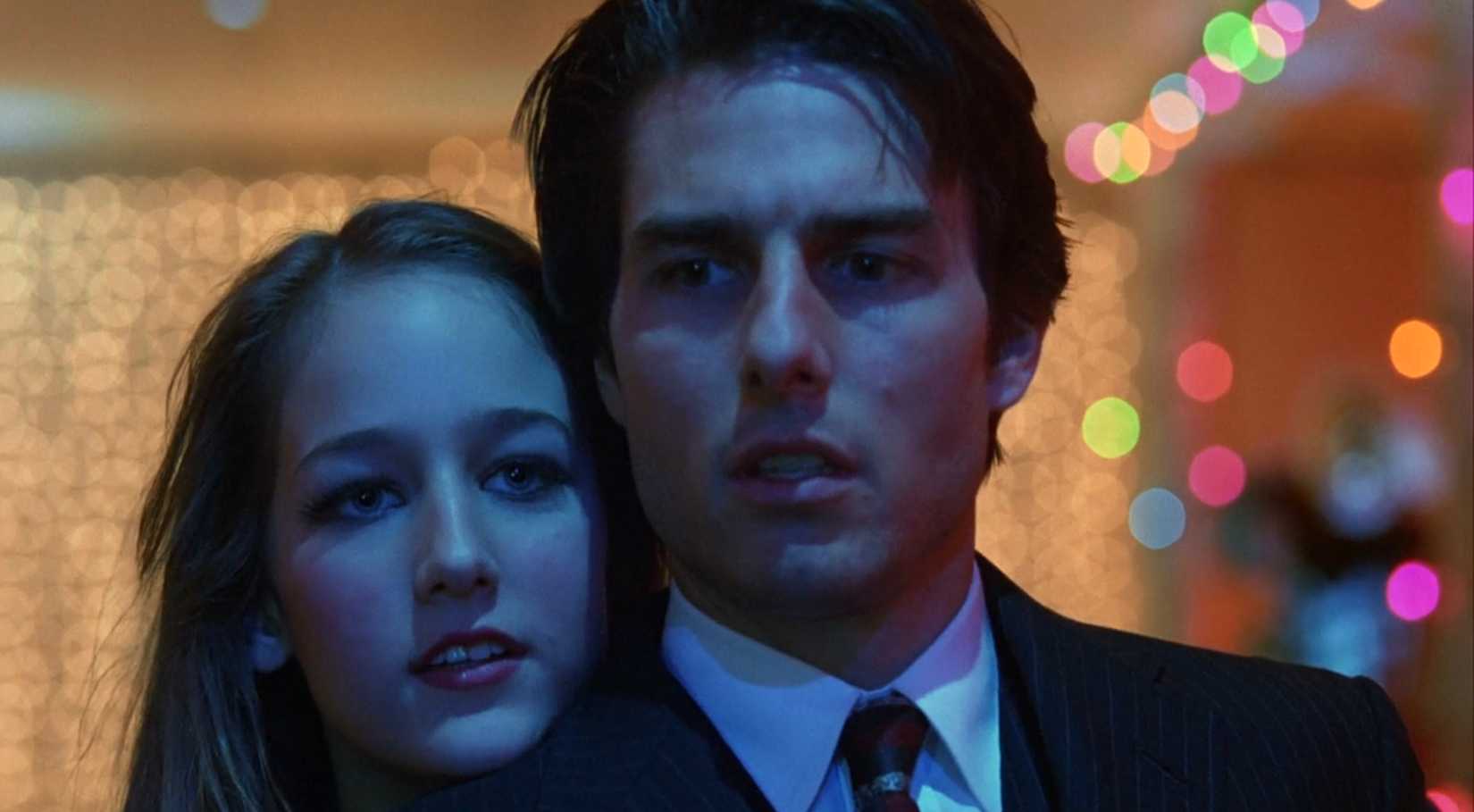
Image: Warner Bros.
Conversely, Bill’s presence at the mansion in the film is driven entirely by petty jealousy. He seeks to “repay” Alice’s honesty by crashing an elite, perverse social ritual. His arrogance is short-lived; he is quickly exposed and warned of the dire consequences of his intrusion. In a chilling turn, a masked stranger intervenes, sacrificing herself to atone for Bill’s transgression against this shadowy high-society cult.
Schnitzler explicitly frames Fridolin’s experience as a psychological dreamscape. The turmoil sparked by Albertina’s confession manifests as a high-stakes fantasy world, allowing him to process his hubris and insecurity. This internal voyage eventually leads to their reconciliation. Kubrick, however, opts for a more unsettling ambiguity. The dangers Bill encounters are disturbingly tangible and tethered to the real world.
The mansion remains a physical location the following day, and Bill receives an explicit warning to cease his investigation. His wealthy patient, Victor Ziegler (Sydney Pollack), eventually confirms the existence of the secret society, even while dismissing Bill’s fears as paranoia. This reframes the entire narrative: it is less of an erotic escapade and more of a cautionary tale about a man of privilege stumbling into a hellish underworld he was never meant to see.
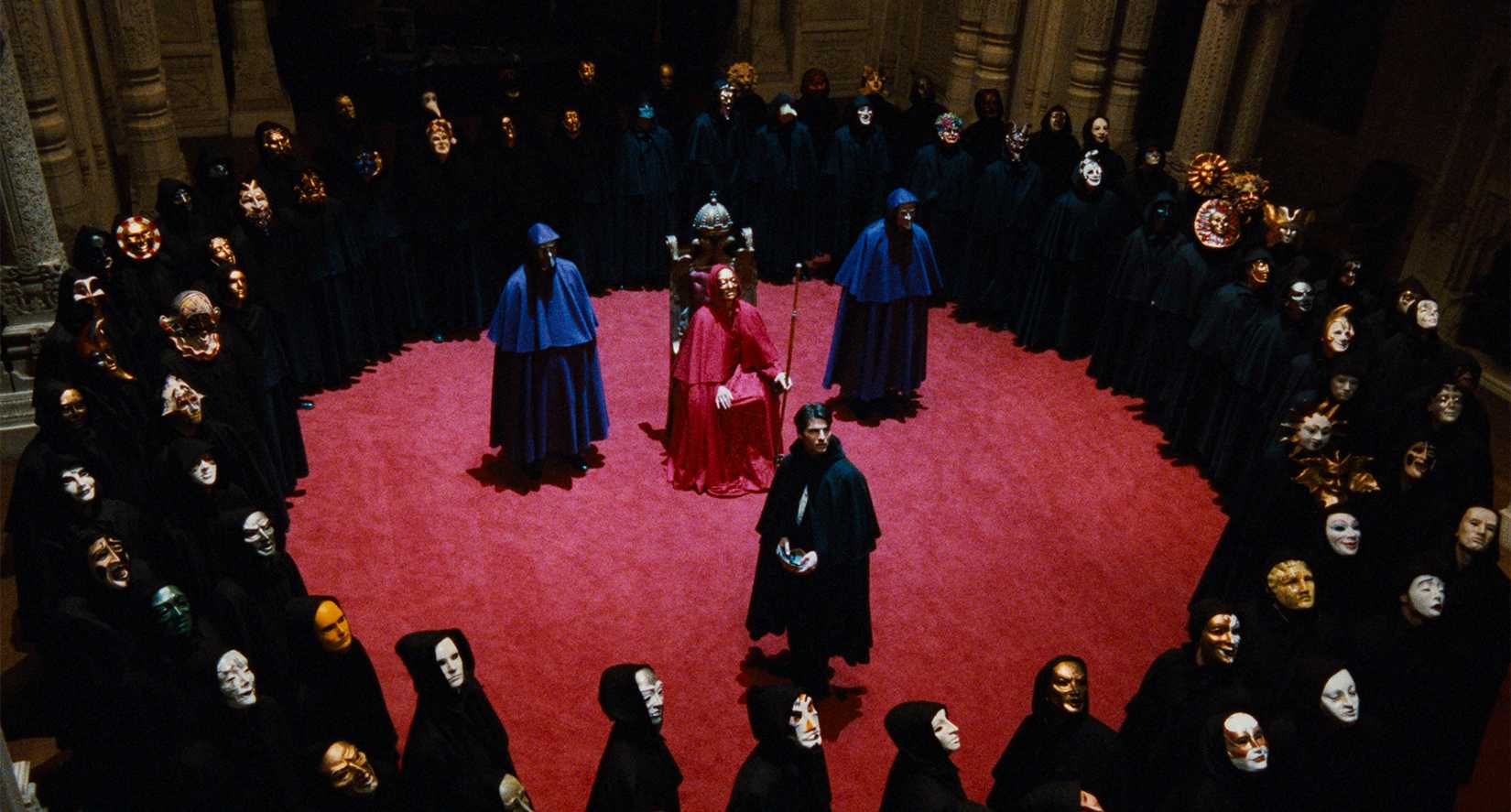
Image: Warner Bros.
Perhaps the most vital deviation from the source is Kubrick’s development of Alice. In Dream Story, Albertina is viewed almost exclusively through her husband’s perspective. In contrast, Alice is a powerhouse of honesty who refuses to be diminished by Bill’s vanity. Her autonomy is a source of constant agitation for him, leading him to seek validation elsewhere, though he is inevitably drawn back to her strength.
Upon his return, Alice is no longer the woman he left; she appears transformed, as if she has lived through her own parallel nightmare. Kubrick frames their final confrontation in a cold, ethereal blue light, blurring the boundaries between consciousness and the unconscious. While Dream Story functions as a complex parable, Eyes Wide Shut evolves into a sharp social commentary disguised as a fever dream. In Kubrick’s meticulously ordered world, no dream is ever truly innocent.
Eyes Wide Shut is available for free streaming with ads on Tubi, and can be rented or purchased via Amazon, YouTube, and other digital storefronts.
Source: Polygon
 Xbox COO Helen Chiang leaves Microsoft after 21 years
 Pixel Body Horror Game Look Outside Is Coming to Consoles
 New Details Emerge About Marvel’s Zodiac Series, Featuring Spies Against People With Superpowers
 Fallout Day 2026: All the Major Announcements from Bethesda’s Fan Event
 Need for Speed: Underground 2 Ported to Android
 Necromunda Tabletop Team Shares Plans for 2027
 Director Peter Berg Says Call of Duty Movie Won’t Be a Mindless Action Film
 Takopi’s Original Sin Compilation Film Gets New Trailer Ahead of November 27 Japan Release