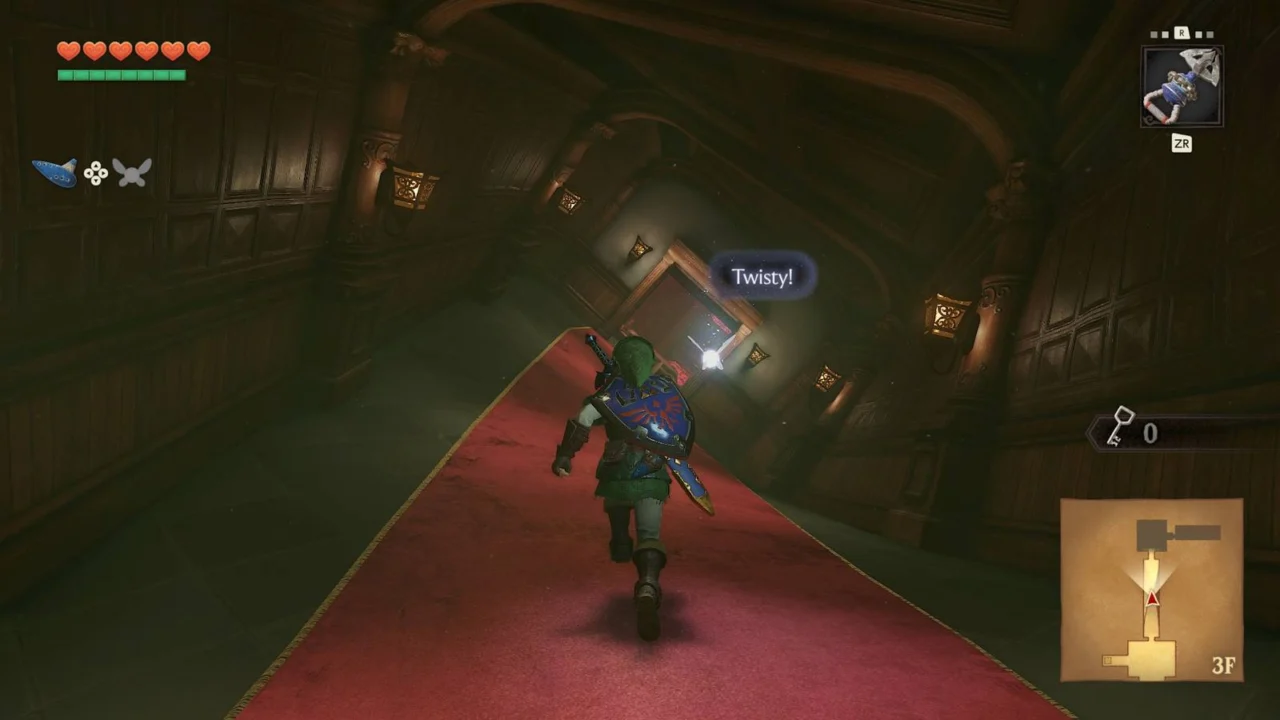
The Legend of Zelda: Ocarina of Time Remake – Hands-On With a New Nintendo Classic
Reimagining The Legend of Zelda: Ocarina of Time presents a formidable design challenge for Nintendo. The upcoming Nintendo Switch 2 iteration of this legendary Nintendo 64 masterpiece must preserve the soulful authenticity of the genre-defining original while seamlessly aligning with the design philosophies of contemporary franchise milestones like Breath of the Wild.
Following roughly half an hour of hands-on exploration with the November release of The Legend of Zelda: Ocarina of Time, it is evident that Nintendo has accomplished this delicate balance. The updated title boasts breathtaking graphical fidelity and dramatically refined mechanics. This revitalized edition successfully conjures profound nostalgia for Link’s inaugural three-dimensional journey while delivering an experience that feels thoroughly contemporary.
My preview sessions closely mirrored the sequence showcased by series producer Eiji Aonuma during the September Nintendo Direct presentation. I commenced the journey at the very beginning, watching Link meet Navi before venturing into the Great Deku Tree to tackle his inaugural labyrinth. From there, I crossed the sweeping expanses of Hyrule Field and entered the vibrant energy of Castle Town.
Later in the session, I had the privilege of investigating a previously unrevealed segment of the Ocarina of Time overhaul: the labyrinthine corridors of the Forest Temple. Throughout my entire playthrough, one overarching impression remained constant: Nintendo’s latest iteration of this classic adventure is remarkably snappy, elegantly streamlined, and polished to a brilliant sheen.
Kokiri Forest and Inside the Great Deku Tree
The Nintendo Switch 2 edition of The Legend of Zelda: Ocarina of Time commences with comforting familiarity, featuring Navi waking up the lonely hero at the behest of the venerable Deku Tree. This opening act allowed me to reacquaint myself with foundational movement and combat mechanics. I conversed with my Kokiri peers and gathered the prerequisites for advancement—securing a Kokiri sword hidden within a secluded forest nook and amassing enough rupees to acquire a sturdy Deku shield.
Executing these introductory tasks highlighted the enhanced fluidity of the mechanics. Notably, Link can now perform manual jumps utilizing either the X or B button on the Joy-Con 2 controller, and interacting with environmental objects feels exceptionally precise. I breezed through the initial tutorials, dealing with the arrogant Mido with such swift efficiency that he could hardly register the slight.
Upon speaking with the stunningly detailed Great Deku Tree, I accompanied Link inside to investigate the subterranean cavern. Skirmishes against adversaries like Skulltulas and Deku Babas proved thoroughly satisfying due to the exceptional responsiveness of the combat system. Ocarina of Time handles magnificently on the Switch 2 hardware; acquiring gear such as the Fairy Slingshot and classic bow and arrow is complemented by an intuitive inventory management system that lets you cycle through secondary armaments instantly via the R bumper.
One particular visual detail left a lasting impression during my brief subterranean excursion: the gleaming Gold Skulltula Tokens look utterly magnificent. Nintendo’s handling of lighting and surface textures throughout this reimagined adventure stands as a true visual benchmark for the Switch 2 platform.
A stroll through Hyrule Field and Castle Town
Following my departure from the Deku Tree, I was intercepted by the wise owl Kaepora Gaebora, who guided my steps toward Hyrule Castle. This segment offered a glimpse into the brand-new “Threads of Time” mechanic introduced in this remake. Accessible directly from the pause menu, this feature provides an ongoing chronicle of Link’s exploits, highlighting pivotal plot developments and clarifying your current objective. While it introduces a touch of hand-holding, it serves as an exceptionally practical tool for keeping track of a sprawling narrative.
Hyrule Field remains vast in scale. Iconic points of interest like Death Mountain and the castle loom in the distant horizon, making the initial trek toward Castle Town feel slightly daunting. Fortunately, Link is now equipped with a sprinting capability, drastically reducing transit time across open territory.
I briefly deviated from the main path to test my combat mettle against a towering Peahat hovering near the drawbridge, eager to experience heightened skirmishes against formidable threats. Stepping into Hyrule Castle Town revealed a settlement bursting with vitality; local residents mill about, engaged in lively conversations and spontaneous dances. Chatting with townsfolk and uncovering early side-quest opportunities proved immediately captivating. I am eagerly anticipating the chance to immerse myself fully in these bustling urban districts once more.
Exploring the Forest Temple
After spending considerable time experiencing the early chapters as Young Link, I transitioned to a save file featuring the adult incarnation of the protagonist. At this stage, Link possesses the Hookshot—an indispensable tool for navigating the Forest Temple, widely remembered as one of the definitive architectural achievements of the original adventure.
It was inside this haunted sanctuary that I truly began to appreciate the refined agility of the reworked controls and the meticulous artistry poured into modernizing these classic environments. The Forest Temple is breathtaking. It feels tactile, weathered, and deeply ancient, with thick moss and creeping vines clinging tightly to timeworn stone masonry. Subtly adjusted architectural geometry gives the space a realistic sense of scale while remaining entirely faithful to the source material. Atmospheric flourishes, such as a low-lying mist drifting across the courtyard floors, establish an enchanting, ethereal mood. It is a stunning setting to inhabit.
Despite the improved pacing and responsive controls, my allocated time ran out before I could reach the dungeon’s climatic adversary, Phantom Ganon. Even so, navigating the twisted pathways and ingenious puzzles of the Forest Temple left me completely exhilarated. I cannot wait to return and discover how the remainder of the experience unfolds when Nintendo’s upcoming version of The Legend of Zelda: Ocarina of Time officially launches.
The Legend of Zelda: Ocarina of Time arrives on November 5, available exclusively for the Nintendo Switch 2.
Owls, fairies, and more blink-and-you’ll-miss-it teases
Source: Polygon
Related articles
 Boxed Games Become a Problem for Collectors as Issues Reach PS5
 Gears of War: E-Day Reportedly Planned as Start of a New Trilogy, Rumors Say
 Shenmue III Enhanced Edition Delayed to Improve Graphics and Add New Features
 Ridley Scott Finds Screenwriter for New Film That May Continue the Prometheus and Alien: Covenant Story
 Zendaya to Be Promoted for Best Lead Actress Oscar for Third Dune Film
 Crimson Desert Charting the Unknown Expansion Will Add Sea Monsters and Ship Boarding, Details Revealed
 Ticket Presales Suggest Dune: Part Three Will Lose Heavily to Avengers: Doomsday at the Box Office
 DC Horror Film Clayface Earns Unusually High CinemaScore