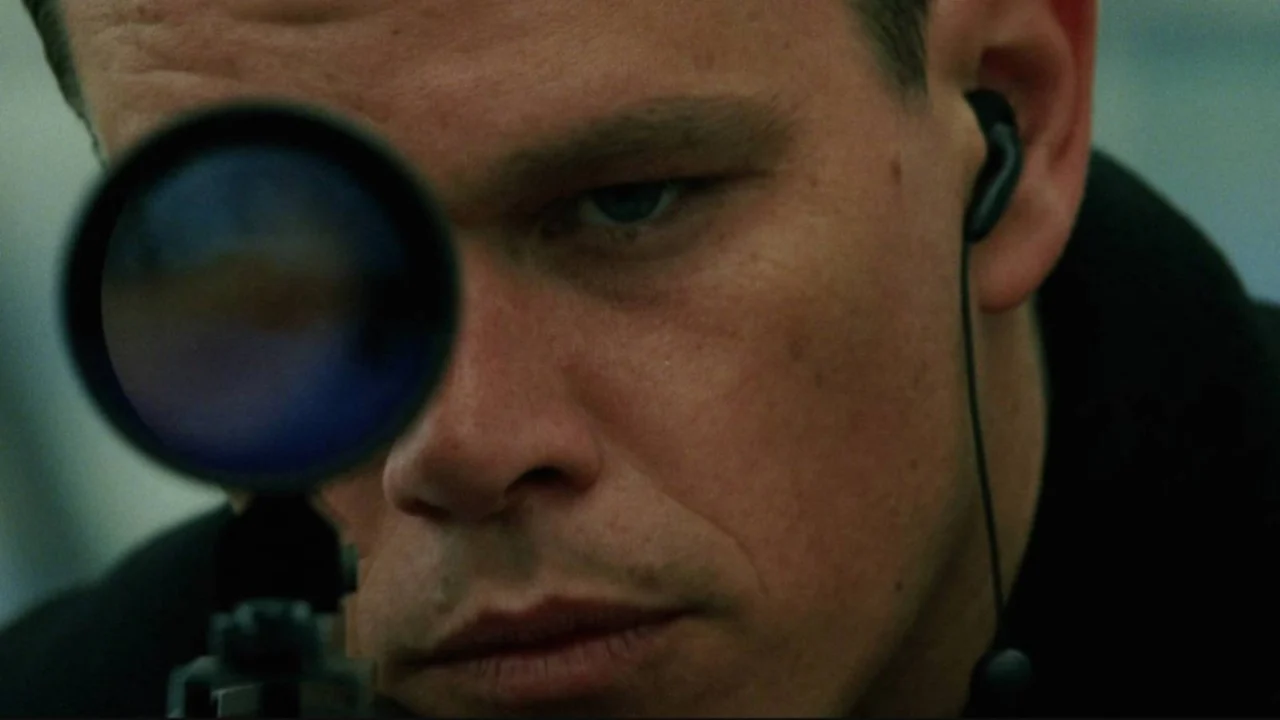
The Bourne Trilogy Added to Netflix
There is no shortage of great spy thrillers and action movies, ranging from the larger-than-life spectacle of James Bond to the death-defying set pieces of Mission: Impossible. Both franchises have spent decades perfecting their own flavors of espionage. They feature cool gadgets, exotic locations, elaborate schemes, and action sequences that grow more ridiculous with every new installment. Yet while this theatricality is central to their charm, such extravagant excess and predictable storytelling can eventually breed fatigue, leaving even the most explosive set pieces feeling well-worn.
That is where the Bourne trilogy veered dramatically from its spy thriller predecessors. The first movie, adapted from Robert Ludlum’s novel The Bourne Identity and directed by Doug Liman, set in motion a series of spy thrillers that completely changed the way big-screen action could feel. It combined conventional espionage with brutally grounded action that gave the series an identity wholly its own. More than 20 years after the release of The Bourne Identity, there is nothing quite like it, and there is no better time to revisit the entire series as it just landed on Netflix.
Before every action hero became an unstoppable killing machine, there was Jason Bourne played by Matt Damon. Pulled from the Mediterranean Sea with no memory, Bourne quickly becomes the Central Intelligence Agency’s most dangerous rogue agent. All he has is a handful of clues, including a Swiss bank account and a stack of fake passports. It does not take long to realize he is unnervingly good at things no ordinary person should know how to do. Matt Damon explains it best:
“I can tell you the license plate numbers of all six cars outside. I can tell you that our waitress is left-handed and the guy sitting up at the counter weighs two hundred fifteen pounds and knows how to handle himself. I know the best place to look for a gun is the cab or the gray truck outside, and at this altitude, I can run flat out for a half mile before my hands start shaking. Now why would I know that? How can I know that and not know who I am?”

Not only can he speak multiple languages, read a room instantly, and disappear into a crowd at will, but most importantly, he fights like someone trained to kill. Despite that, his world is defined by bruised knuckles and desperate escapes. Bourne spends his days sprinting through crowded European streets, hot-wiring cars seconds before capture, and surviving unglamorous brawls that often end tragically. Unlike the suave polish of James Bond or the high-tech theatrics of Ethan Hunt, Bourne is a blunt instrument operating in the dark. Even in the face of elite Central Intelligence Agency conditioning, he spends his journey wrestling with fractured memories, barely scraping by as he tries to uncover why a global network of assassins wants him dead.
Set across three primary films, with the addition of two later movies, the Bourne series mostly tracks the rogue agent on his quest to unlock the secrets of his past. The Bourne Identity follows his attempt to uncover the truth while a Central Intelligence Agency black ops program tries to eliminate him. The Bourne Supremacy drags him back into the fold after a botched assassination attempt leaves his love interest dead in India. The last film in the main trilogy, The Bourne Ultimatum, pushes the conspiracy further, hitting Bourne closer to home than he could ever have imagined. Although Doug Liman directed the first movie, Paul Greengrass took over for the second and third films, turning the trilogy into one of the defining action franchises of the 2000s.
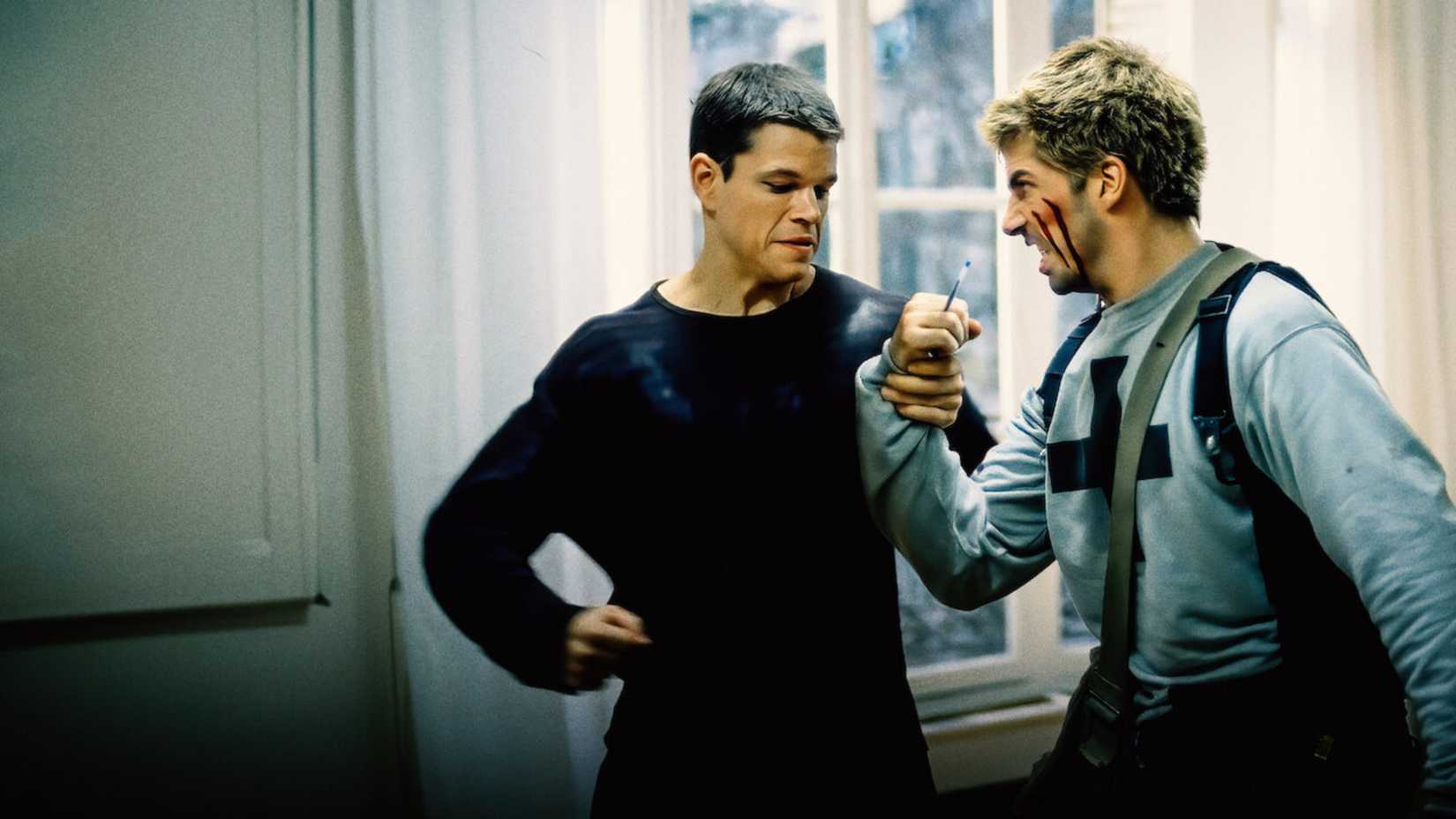
Paul Greengrass is a huge part of why these movies still hit as hard as they do. The shaky camera, rapid cuts, and deliberately messy framing have been copied so many times that it is easy to forget how startling The Bourne Supremacy felt when it first came out. Action here is stripped of all elegance. Rather than dancing through clean choreography, Bourne weaponizes his surroundings, transforming everyday clutter into brutal finishes. Even the lens feels breathless, hyperventilating as it struggles to anchor itself in the fray. Paul Greengrass injected a terrifying realism into Hollywood that filmmakers have spent two decades trying to clone, rewriting the DNA of the genre and directly paving the way for James Bond’s blood-and-bruises pivot in Casino Royale.
The best thing about Bourne has always been Matt Damon. He plays the character with an almost fascinating lack of swagger. Bourne is not James Bond, and he does not seem particularly interested in being cool. He is tired, confused, and more often than not horrified by his own lethal capabilities. Unlike his spy film counterparts, Bourne is wrapped in a pervasive tragedy. The more he learns about himself, the less he wants to be that person. This push and pull between the Central Intelligence Agency-shaped assassin and the ordinary life he craves becomes the emotional core of a character facing down a curse. Bourne is frightening because of his immense lethality, but the movies are ultimately about a man trying to become something more than the person he was trained to be.

The series did try to keep that machine running following The Bourne Ultimatum, but the sequels never quite matched the bravado of the original three films. The Bourne Legacy pulled in Aaron Cross played by Jeremy Renner in an attempt to expand the universe beyond Bourne himself, and Matt Damon eventually returned for the 2016 film Jason Bourne. While The Bourne Legacy is a competent action vehicle and Jason Bourne looks the part, both hollow out the franchise’s emotional core. The original trilogy’s magic was not just breathless pacing and paranoia. It was driven by the narrative necessity of a definitive finish line. The Bourne Legacy abandoned that psychological weight entirely, reducing its stakes to Aaron Cross chasing genetic enhancement pills. Meanwhile, Jason Bourne felt like a cover band playing the hits, dragging Matt Damon through a contrived revenge subplot long after the central mystery of his identity was solved. The sequels proved that while you can easily clone the shaky-cam and grounded action, you cannot resurrect the haunted spirit of an assassin who just wants to stop killing.
No other spy franchise has reached those heights since. Other movies have borrowed the shaky-cam, the brutal close-quarters combat, and the amnesiac super-assassin, but Bourne still feels like the best iteration of a brooding espionage thriller that strips away almost everything glamorous about spycraft. All these years later, Jason Bourne stands alone as the cinematic gold standard for the anti-fantasy spy story.
The Bourne movies are streaming on Netflix.
Source: Polygon
Related articles
 Xbox Console Sales Revenue Drops 14 Percent Amid Declines for Game Pass and Third-Party Games
 Modern Warfare 4 Season 1 to Introduce Secret X01 Weapon Complex to DMZ
 Phantom Blade Zero: The Best Graphics and Performance Settings on PlayStation 5
 BioWare Co-Founder Calls EA Acquisition Studio’s Final Nail in the Coffin
 Scarlett Johansson Sci-Fi Movie Under the Skin Leaving Netflix
 Super Battle Golf sets March 25, 2027 console launch with cross-play
 The Must-Play Board Games from 2026’s Biggest Board Game Fair
 HYPERyuki: Snowboard Syndicate confirms Switch 2 release for early 2027