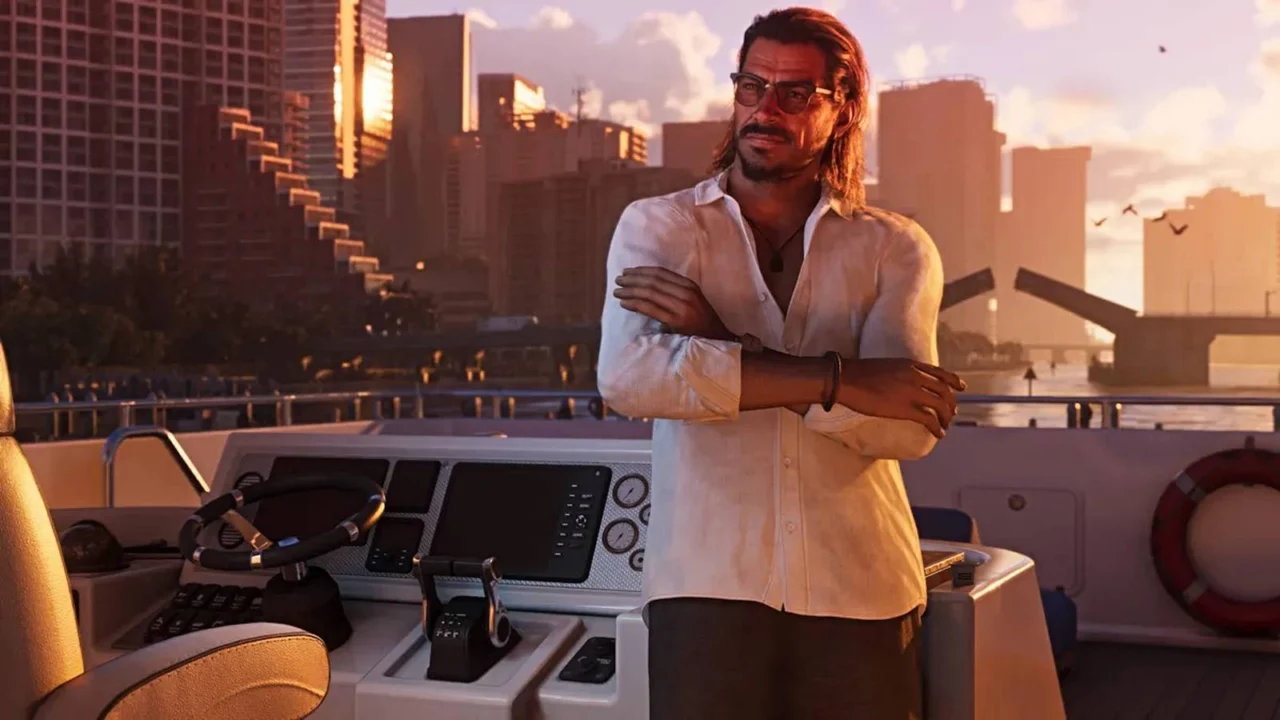
Take-Two CEO calls the idea of making GTA 6 with AI “laughable”
When Google debuted its experimental Project Genie earlier this year, the ripples were felt immediately across the stock market. AAA industry titans, including Grand Theft Auto parent company Take-Two Interactive, saw their share prices stumble. The investor anxiety was fueled by a singular question: why employ thousands of developers to build sprawling digital universes if Google’s AI could generate interactive worlds from simple text prompts?
Despite the market’s jitters, Take-Two CEO Strauss Zelnick remains remarkably unfazed by the rise of generative AI. In a candid conversation with The Game Business, Zelnick offered a grounded perspective on why technology alone cannot manufacture success.
“I was somewhat perplexed by the market’s reaction,” Zelnick remarked during his appearance on The Game Business Show. “It seemed as though investors viewed these tools as a threat, when in reality, enhanced creation tools have always been a catalyst for progress in our industry. The cynical view—that AI will suddenly empower everyone to churn out massive hits—simply doesn’t hold up under scrutiny.”
Zelnick emphasized a crucial distinction between production and resonance. “Having the tools to generate assets is one thing; crafting a hit is quite another. We already live in a world saturated with digital assets. Whether it takes six weeks to model a character or six seconds with a button press, the result is still just an asset. Thousands of games flood the mobile market annually, yet only a minuscule fraction ever capture the public’s imagination.”
According to Zelnick, while AI might eventually produce visuals that rival the fidelity of NBA 2K or Red Dead Redemption, the soul of those franchises is “a completely different animal.” He argues that achieving that level of cultural impact requires an intricate blend of human creativity and genuine emotional engagement.
Essentially, Zelnick contends that generative AI fails to bridge the gap between amateur prompt-engineers and veteran developers. The barrier to entry for making games has already been lowered by existing technology, as evidenced by the sheer volume of annual releases. However, the true blockbusters continue to emerge from established entertainment powerhouses and the occasional visionary indie creator.
“The idea that a person can simply push a button to generate, market, and distribute a global phenomenon to millions of players is an absurd proposition,” Zelnick stated. “History shows that entertainment doesn’t work that way.”
To illustrate his skepticism, Zelnick—who maintains he is pro-tech and values AI for automating “mundane office tasks”—pointed to the current state of AI-generated music. “There are programs right now that can spit out a professionally recorded song based on a prompt. It sounds like a song, certainly, but I challenge you to find one you’d actually want to listen to more than once.”
As Take-Two prepares for the monumental release of Rockstar Games’ Grand Theft Auto 6 this November, the industry will be watching closely to see how the world’s most anticipated game navigates this evolving technological landscape.

How Will GTA 6 Impact the 2026 Release Calendar?
Competitors are bracing for impact as the Rockstar juggernaut approaches.
3
Source: Polygon
Related articles
 Remedy Reveals Control Resonant Sales Figures for First Three Weeks
 Stranger Than Heaven: Snoop Dogg Shows Protagonist Makoto How to Rap in New Story Trailer
 GTA VI Artist Describes Aftermath of 2022 Leak: It Felt Like Someone Got Inside Your Head
 AISLPC Opens Preorders for Pocket AIS Retro Gaming Handheld
 The Witcher 4 Will Release in a Physical Edition, but with a Catch
 Survival Game Enshrouded Exits Early Access With Version 1.0 Release
 Steam to Add New Trophy System to Address Old Achievement Issue
 Steven Spielberg and Stanley Kubrick Sci-Fi Film A.I. Coming to Peacock