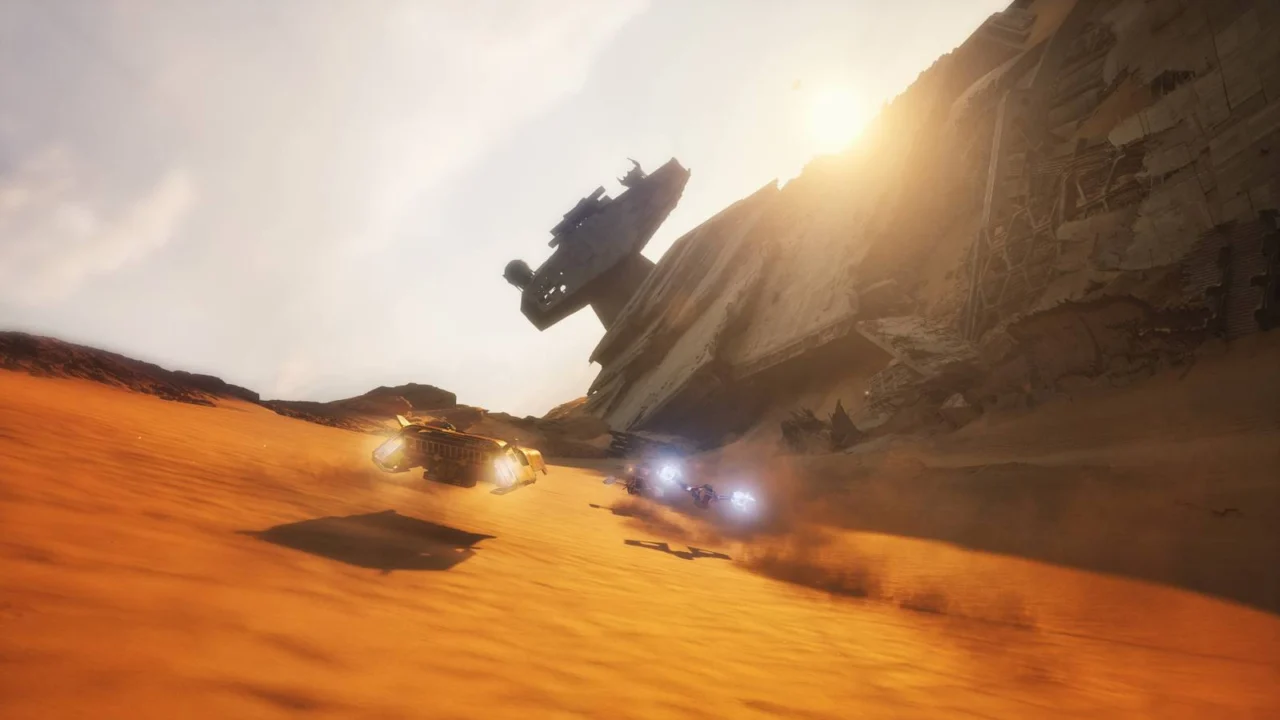
Star Wars: Galactic Racer Is the Hades of Racing Games for One Ultimate Reason
For any up-and-coming studio, landing a Star Wars property as a debut project is an absolute dream scenario. For Fuse Games—a Guildford-based developer founded by industry veterans from Electronic Arts and Criterion Games—it offered a chance to tackle a genre that Lucasfilm Games has largely kept on the shelf since 1999’s Star Wars Episode I: Racer.
Earlier this week, we sat down with Craig Derrick, executive producer at Lucasfilm Games, and Matt Webster, founder of Fuse Games. Our discussion centered on their maiden voyage into a galaxy far, far away and the lasting impression they hope to leave on arcade racing fans. Rather than coasting on pure nostalgia, the team set out to reshape the genre from the ground up.
Fuse Games and the Birth of Galactic Racer
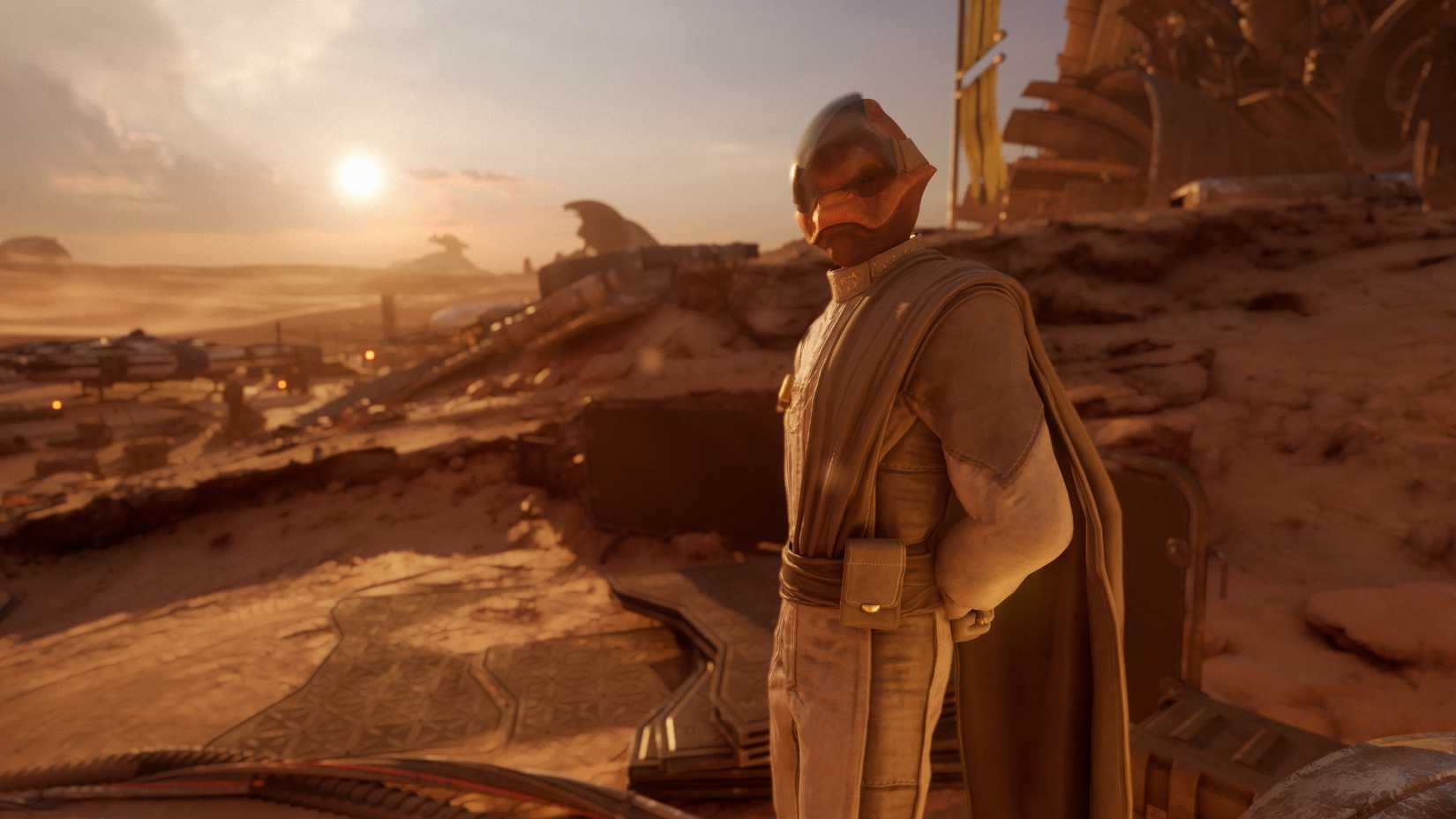 Image: Fuse Games/Secret Mode
While Galactic Racer holds plenty of surprises, handing the steering wheel of the first Star Wars racer in 24 years to Fuse Games feels entirely appropriate. Given the studio’s pedigree with Criterion’s acclaimed Burnout series—known for blistering speeds and combative driving mechanics—they possess the ideal background for a universe where speeder and podracing are a matter of survival.
Even so, both Webster and Derrick emphasized that while Episode I served as a foundational touchstone, it was meant to act as a departure point rather than a blueprint.
“Our goal wasn’t just to make players remember something that they played a long time ago,” Derrick noted. “It was, ‘How do we lean into the authenticity of Star Wars and nostalgia, yet forge something entirely fresh that you’ve never experienced before, while still honoring those cherished memories?'”
To prepare for my hands-on time, I recently revisited Episode I. The immediate takeaway? I am remarkably terrible at Galactic Racer. I bounced off walls, plunged into acid pools, and drifted corners so disastrously that I was genuinely shocked Darius Pax saw my Shade’s dismal performance and still offered me a spot in the Galactic League.
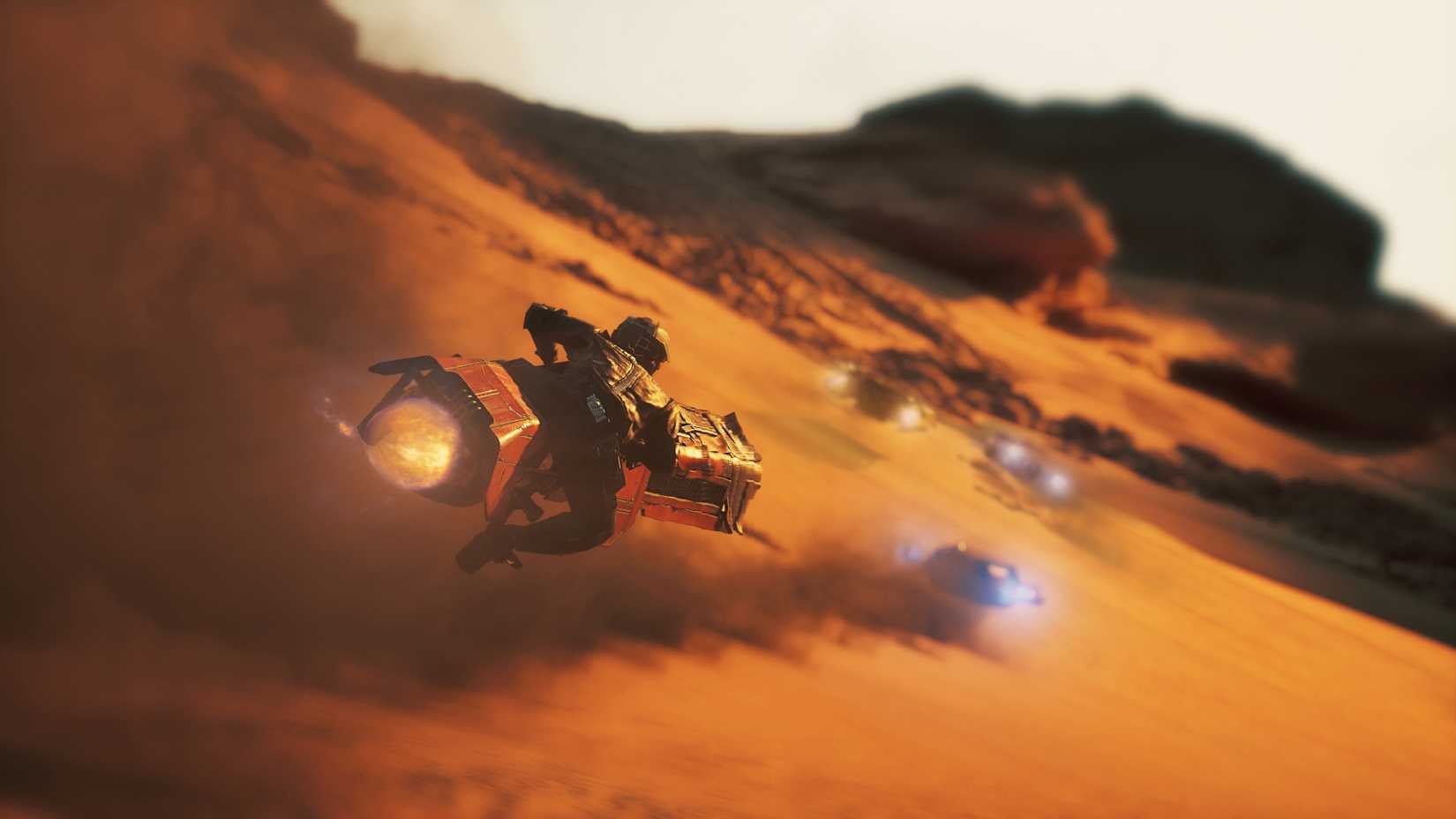 Image: Fuse Games/Secret Mode
Admittedly, part of the steep difficulty curve stems from my rustiness, though having played the classic title countless times, I expected to transition more smoothly. The real shocker, however, is how uncompromising Galactic Racer is from the outset. The campaign opens with a brief vehicle showcase introducing landspeeders, speeder bikes, and skim speeders—vehicles that are easy enough to grasp, even if mastery eludes you.
By the second or third race, however, the training wheels come off entirely. The UI might warn you about hazardous planetary conditions (such as Sentinel I’s toxic atmosphere or Jakku’s scorching heat), but it leaves you entirely on your own to figure out how those elements actually impact your craft.
Galactic Racer Won’t Hold Your Hand
When pressed about the absence of a comprehensive tutorial, Webster attributed it to a deliberate design philosophy.
“The joy of discovery is tremendously powerful, and I think game design is finally emerging from an era of over-tutorialized experiences,” Webster explained. “When players are given space to experiment—to ask ‘what does this do?’ and tinker—it fosters curiosity. Having questions is completely fine because finding the answers yourself makes the payoff so much more rewarding.”
Webster’s critique of over-handholding is timely. Recent scrutiny surrounding Insomniac Games’ Wolverine—which faced heavy backlash for treating players with kid gloves—has reignited industry-wide debates about player trust. Even so, Webster acknowledged that striking the right balance between accessibility and depth remains a delicate tightrope walk.
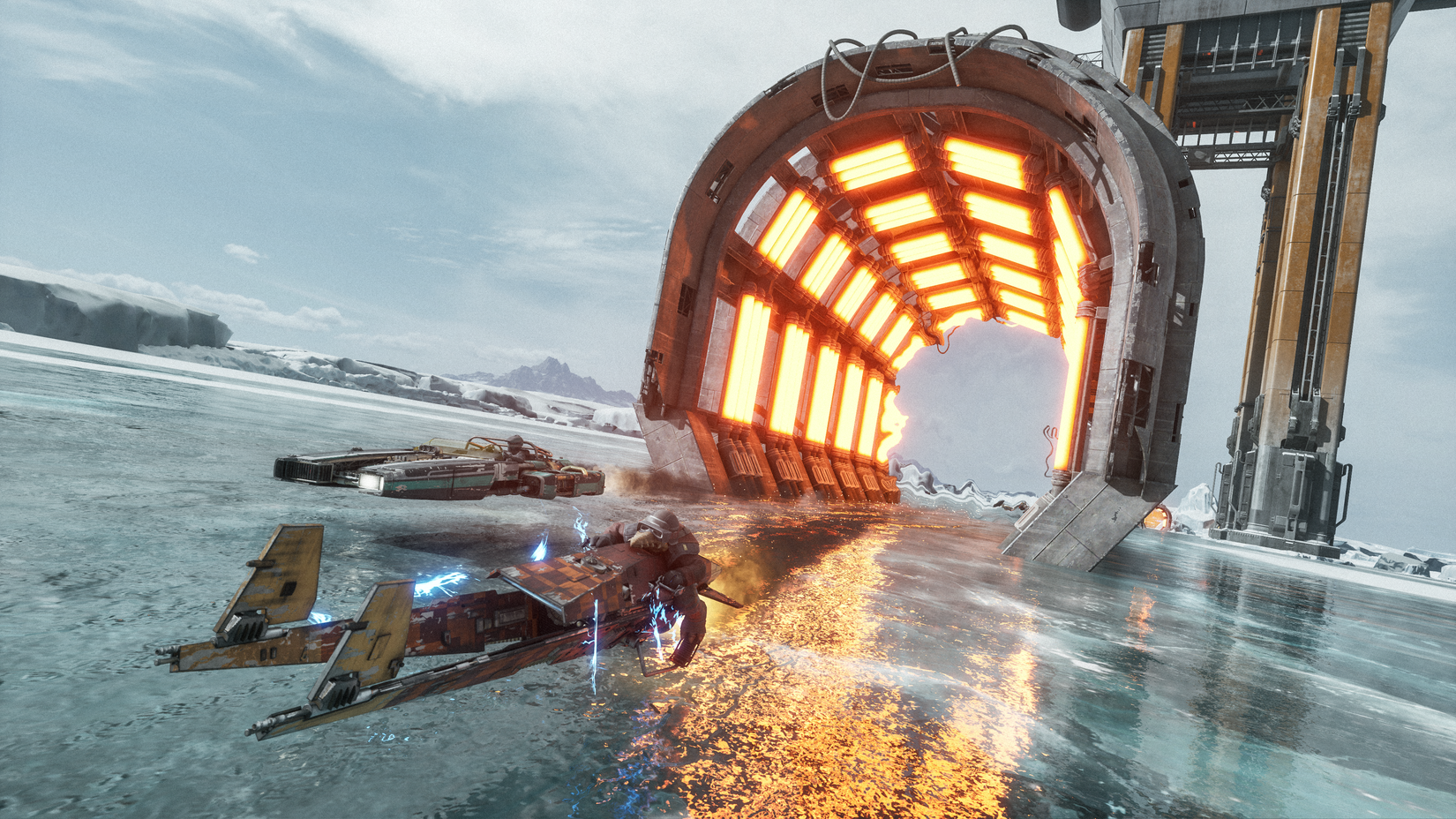 Image: Fuse Games/Secret Mode
Regardless, Fuse Games has certainly not shied away from punishing mechanics. Galactic Racer embraces a run-based, roguelite progression structure where players must survive a gauntlet of events just to reach the qualifying race needed to advance in the Galactic League. Reaching those milestones demands genuine effort, and failure routinely forces you to repeat previous runs. The structure immediately brought to mind Supergiant Games’ Hades, where initial escapes from the Underworld as Zagreus ended in repeated, humbling defeats. Much like that masterpiece, progress here is earned inch by inch through perseverance.
I asked Webster and Derrick whether Galactic Racer could fairly be categorized as a racing roguelike, and whether that design was baked in from day one.
“You’re entirely right; by definition, this is a roguelike,” Webster confirmed. “It relies on consequences, reinforcing the core gameplay loop, and ensuring that victory is hard-earned. You’ll encounter obstacles you cannot immediately overcome, requiring you to return, hone your skills, and upgrade your machine to break through.”

Free sign-up
Get Polygon’s Wishlister newsletter
A weekly cheat sheet to what you’ll eventually love to play. No buying, no commitment — just saving for later.
Free. Unsubscribe anytime.
Replayability sits at the core of the racing genre, Webster added. The deeper players invest in a vehicle and its environment, the better they grasp its distinct nuances, allowing them to adapt, improve, and conquer previously insurmountable tracks.
Galactic Racer Wants to Revolutionize the Racing Genre — and Star Wars
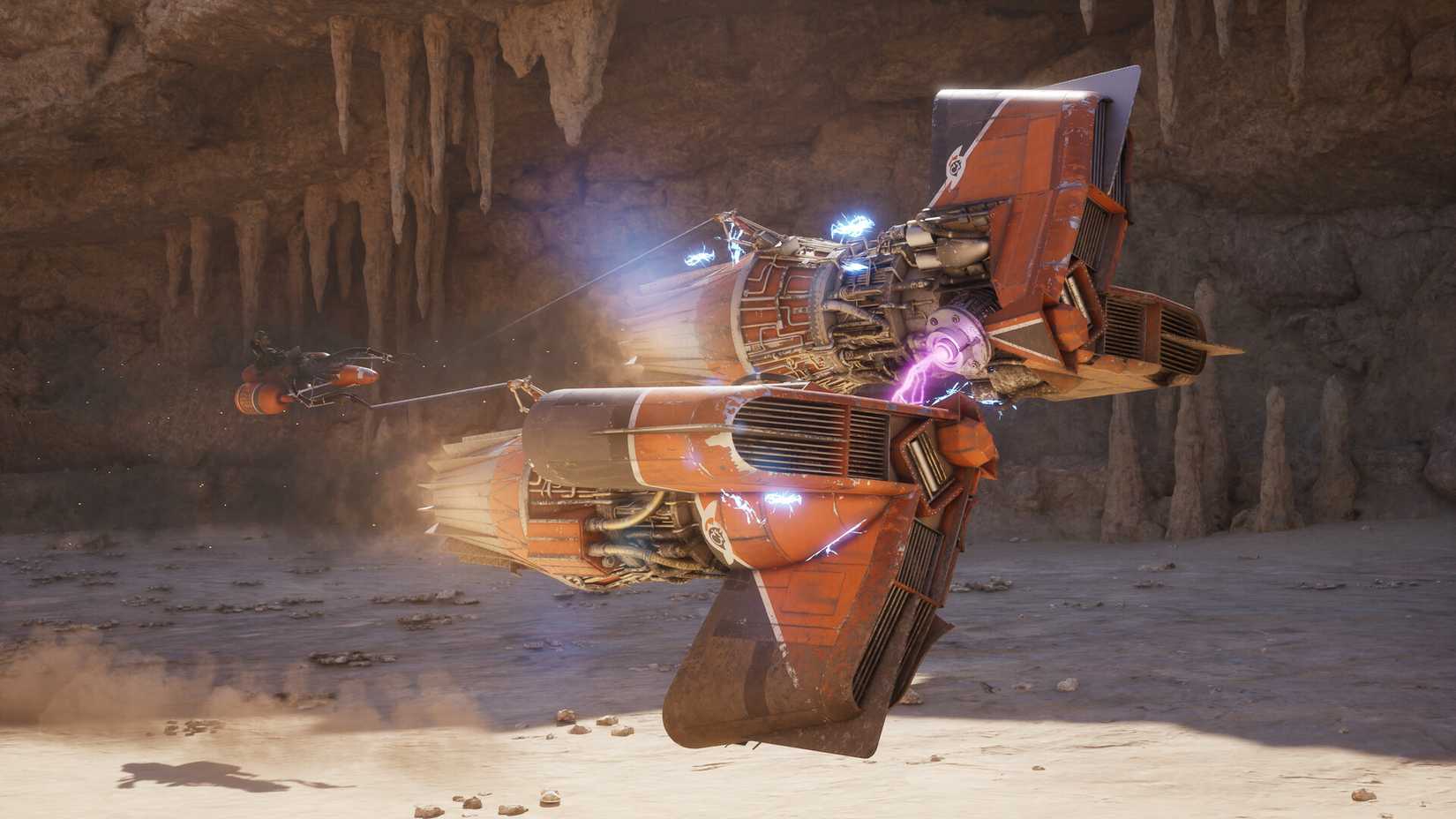 Image: Fuse Games/Secret Mode
“Fuse Games came in wanting to properly evolve the genre, centering primarily on this roguelike, run-based progression,” Derrick shares. “To pull that off, we had to nail the fundamentals on day one—the handling, the visual fidelity, the audio design, and the narrative driving the experience. Once we solidified the story around the Galactic League, everything clicked to support that run-based structure.”
It’s worth noting that overcoming failure is a thematic cornerstone of the Star Wars mythos itself. When Luke struggles to lift his X-Wing on Dagobah, it takes Yoda’s guidance to unlock the resolve he needs to try again. Even a young Anakin Skywalker faced impossible odds before triumphing in the Boonta Eve Classic. Ultimately, Webster and Derrick want players to experience setbacks, reframing defeat not as a dead end, but as a stepping stone.
That encouragement to push past failure is what they hope will draw players—whether die-hard Star Wars enthusiasts or casual racing fans—into the fold.
“The objective from the absolute beginning wasn’t just to cobble together a decent racing game and slap a Star Wars coat of paint on it,” Derrick emphasized. “It was to build a game that could only exist as a Star Wars racing title.”
Star Wars: Galactic Racer will launch on Oct. 6 for PlayStation 5, Windows PC, and Xbox Series X.
Related articles
 Engineer builds oversized Game Boy Color Special Edition with giant Pokémon Yellow cartridge
 Control Resonant and Silent Hill Townfall Reviews Are the Week’s Top Stories
 PS5 Players Report Losing Accounts to Scammers Bypassing PlayStation Security
 Analysts Estimate Wardogs Has Earned $100 Million on Steam
 Stephen Colbert Lord of the Rings Movie Still in Development
 Runtime for all eight episodes of Vision Quest finale revealed to exceed one hour
 How Lost Changed Television With a Last-Minute Pilot Change
 Legend of Vox Machina Season 4 Changes From Critical Role Campaign 1