
Star Trek: Strange New Worlds Has Lost Sight of Its Greatest Strength
Star Trek: Strange New Worlds was conceived—according to co-showrunner Akiva Goldsman—as a character-driven series, with serialized emotional arcs anchoring episodes that shift in tone and genre. Season 3 opened with strongSetup that explored themes like PTSD, bodily autonomy, and mentorship. Unfortunately, many of those promises falter as the season increasingly leans on homages to classic Trek beats instead of fully developing its own ideas.
Pike isn’t the only character facing a tragic fate

Photo: Marni Grossman/Paramount Plus
Prequels face the unique challenge of preserving dramatic suspense when viewers already know certain endpoints. Strange New Worlds attempts to navigate that by having Captain Christopher Pike (Anson Mount) carry the weight of foreknowledge about his grim destiny while maintaining a resilient optimism. Season 3 heightens that tension by placing his partner, Captain Marie Batel (Melanie Scrofano), in mortal jeopardy.
Batel’s ordeal begins with the Gorn-egg infection left unresolved from season 2’s cliffhanger. The season’s opening episodes deliver gruesome imagery as the parasitic threat grows, and an early cure—an infusion of augmented Illyrian blood from Una Chin-Riley (Rebecca Romijn)—appears to work. But when the infection reemerges in episode 3, “Shuttle to Kenfori,” the writers opt for an extreme medical intervention that effectively transforms Batel into a human–Gorn hybrid.
That premise offered fertile dramatic possibilities: Batel could have hidden details of her treatment from Pike to protect him, forcing both characters to confront how much a partner should know and control in a life-or-death situation. Instead, aside from one standout scene, the series largely minimizes her psychological and bodily changes until the finale, undercutting what could have been a sustained, painful exploration of identity and consent.
Batel eclipses M’Benga’s defining turn
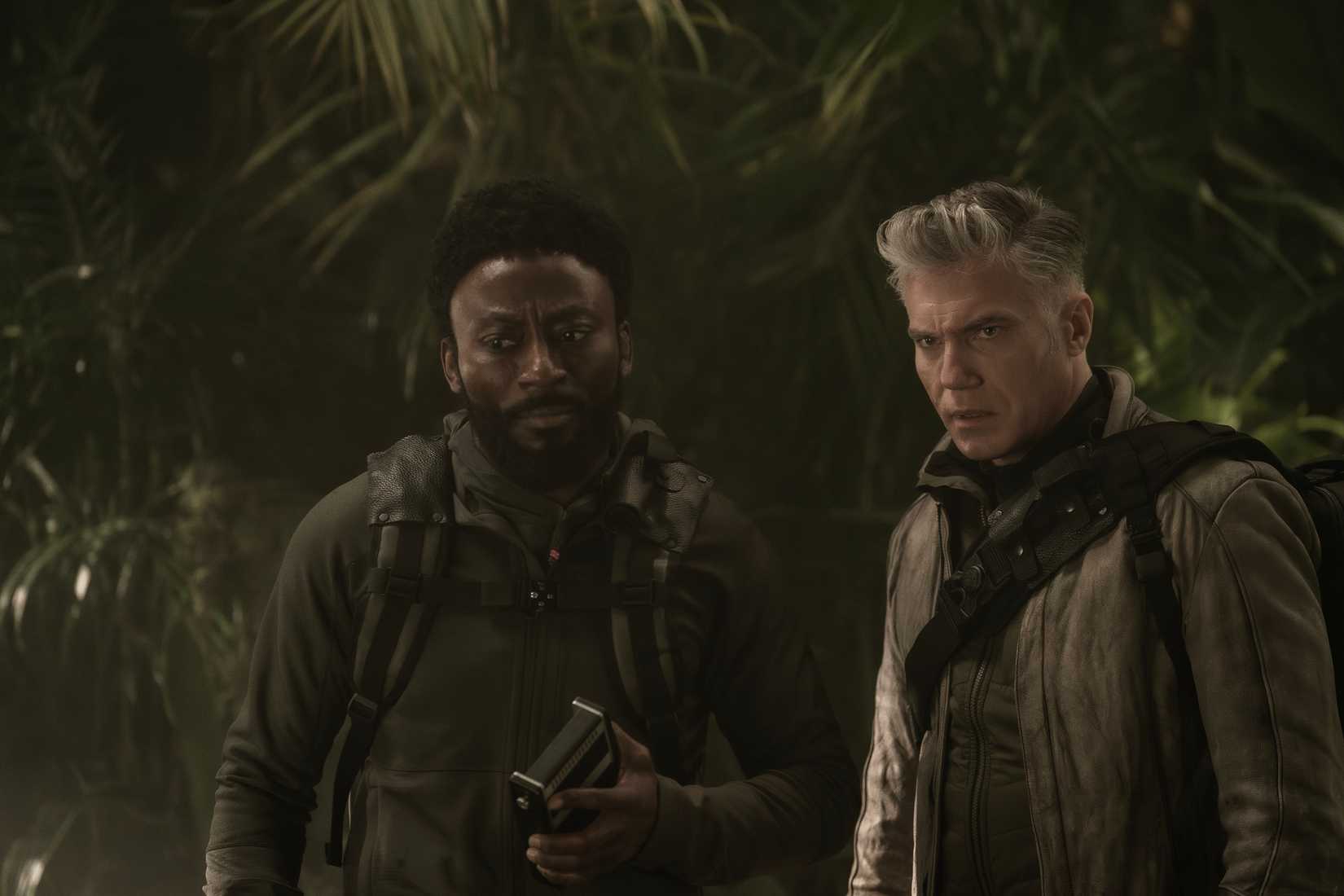
Photo: Marni Grossman/Paramount Plus
When the extradimensional Vezda are unleashed in episode 5, the possession of ensign Dana Gamble (Chris Myers) should have catalyzed a powerful reckoning for Dr. Joseph M’Benga (Babs Olusanmokun), who mentored Gamble and carries a fraught past. Instead, Batel—empowered by her hybridization—emerges as the one who delivers the season’s most dramatic, movie-like confrontation, speaking in Gamble’s voice, exhibiting superhuman strength, and ultimately confronting the Vezda in a way that bends the show’s established tone.
The reveal that Batel is somehow connected to the Beholder statue—effectively making her an eternal guardian sealing the Vezda—feels more like a mythic twist than the organic resolution M’Benga’s arc deserved. The season repeatedly teases M’Benga’s potential for sacrifice and redemption, particularly when causality anomalies force him to consider re-opening the Vezda prison. A genuine, self-forgiving choice from him would have provided poetic closure; instead, the narrative turns that moment over to Batel, reducing M’Benga’s journey to a setup for someone else’s fate.
The Gorn deserved a richer treatment
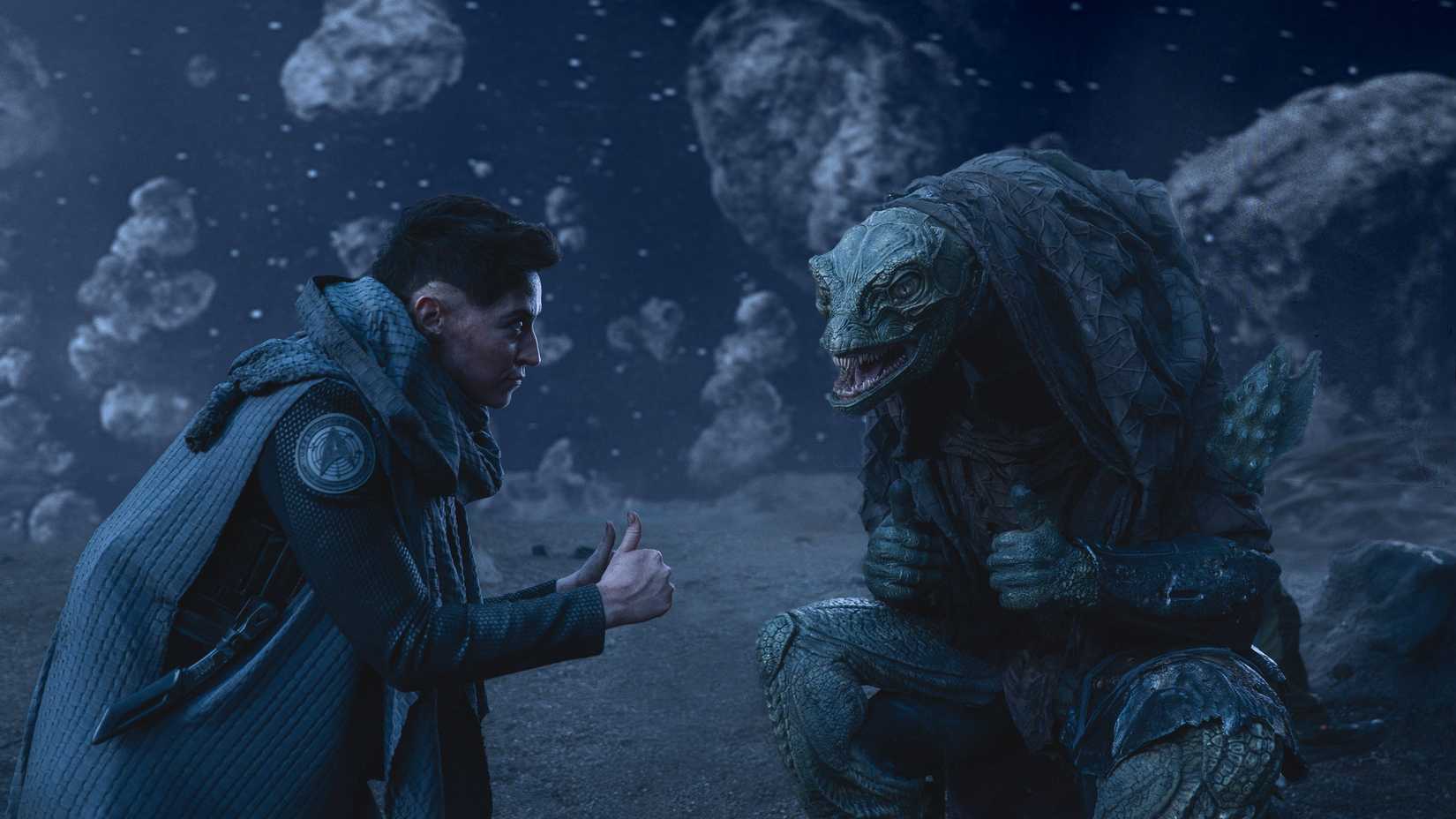
Photo: Marni Grossman/Paramount Plus
Erica Ortegas (Melissa Navia) enters season 3 already haunted by her experiences in the Klingon Wars, and an early Gorn attack amplifies that trauma. The show signals an opportunity to complicate the Gorn beyond the one-note “monster” portrayal—perhaps by exploring cultural nuance or unexpected empathy. Unfortunately, the season resolves Ortegas’ arc too quickly, treating her PTSD largely as a plot device rather than an ongoing psychological struggle.
The episode “Terrarium” nods to the original series’ “Arena,” placing Ortegas in a survival scenario where she bonds with a Gorn. Yet that connection is cut short when a rescue team kills the alien, an act the series treats as stirring but not lasting. If the Gorn had survived and integrated into the crew—think of a role similar in narrative function to Voyager’s Seven of Nine—the show could have posed meaningful questions about reconciliation and what it means to humanize an erstwhile foe. Instead, the arc resolves as a brief, feel-good encounter that slips past the season’s deeper emotional responsibilities.
Rushing important relationships
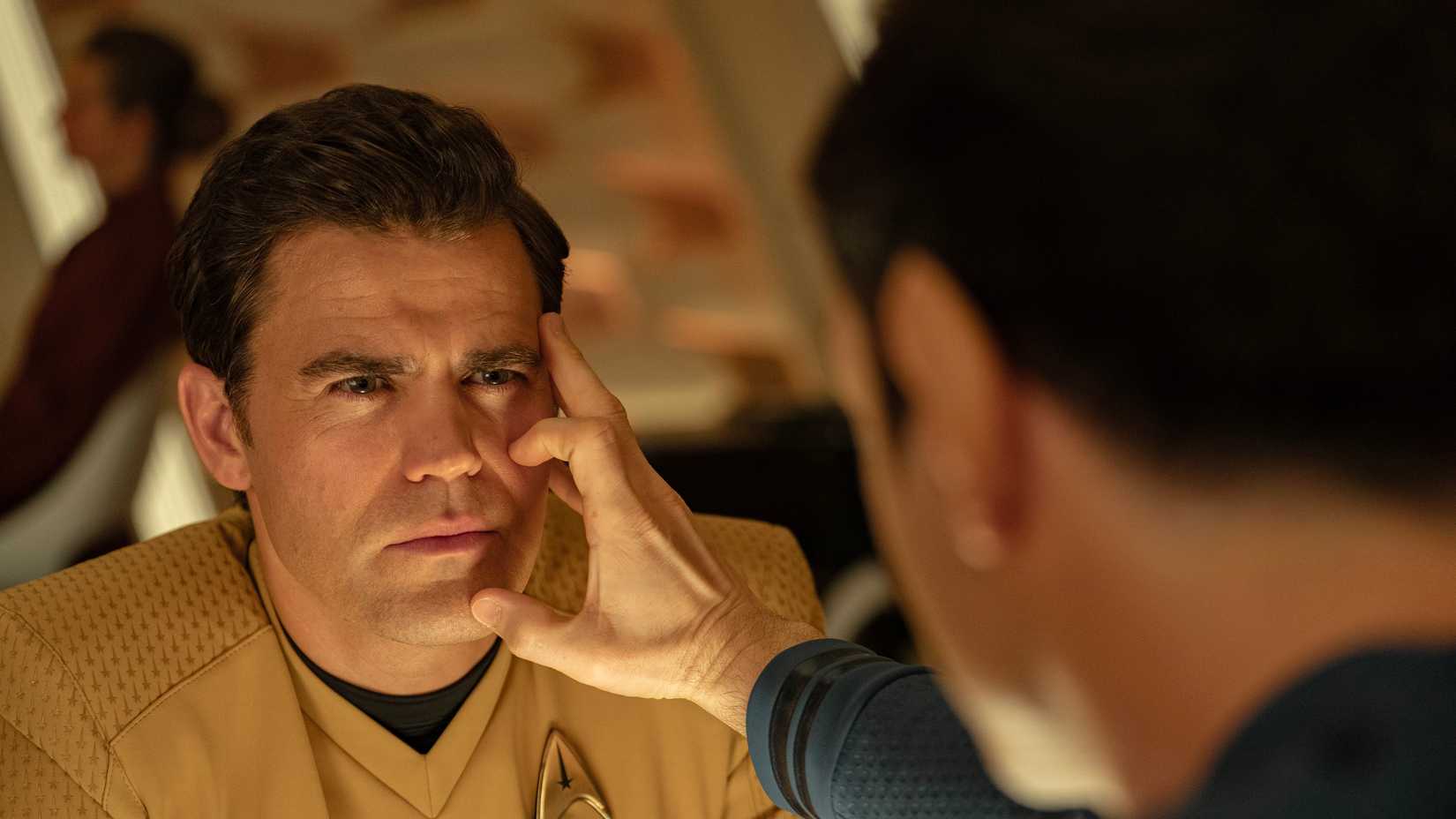
Photo: Marni Grossman/Paramount Plus
Across the season, several character beats are compressed or short-circuited. The careful rapport developing between Kirk and Spock in episodes like “The Sehlat Who Ate Its Tail” is undercut when the finale shortcuts their emotional arc via a mind meld, rather than letting their bond evolve more gradually. Una’s chemistry with her friend-lawyer from the earlier courtroom episode “Ad Astra per Aspera” is reduced to a comedic detour (and stunt casting), while Nyota Uhura (Celia Rose Gooding) is given little beyond a slight romantic subplot.
Goldsman has acknowledged the production challenges that complicated season 3—citing the 2023 Writers Guild of America and SAG-AFTRA strikes—and has expressed confidence about the show’s future. With that in mind, here’s hoping season 4 refocuses on the series’ strongest asset: sustained, character-first storytelling that trusts the cast and lets emotional stakes breathe.
Source: Polygon
Related articles
 “The Bunker” starring Bardem and Cruz screened at Venice
 The Librarians: The Next Chapter Season 2 Has Concluded
 “The Mummy 4” filming has begun
 Urfin Jus Movie Announced
 Ellen Burstyn Receives Honorary Golden Lion
 Danny Boyle used artificial intelligence in his new film “Inks”
 Gary Oldman Reveals the Name of the New Bond
 Summer 2026 Becomes the Highest-Grossing Season in U.S. Box Office History