
Star Trek Is Squandering Its Sharpest Political Commentary in Years

In the third episode of Star Trek: Starfleet Academy, titled “Vitus Reflux,” the narrative leans into the burgeoning friction between the Academy’s hopeful cadets and the more militant students of the War College, who share the historic San Francisco campus. While the episode adopts a lighthearted tone—relying on a series of elaborate pranks and a combat simulation akin to futuristic laser tag—there is a sense that showrunners Alex Kurtzman and Noga Landau are missing a vital opportunity. By reducing the War College to a comedic foil rather than a formidable ideological rival, the series falters in its promise to serve as a compelling reflection of our modern world.
[Note: The following contains plot details and minor spoilers for Starfleet Academy episode 3.]The War College is a direct consequence of the Burn, the catastrophic event that fractured the galaxy. While the Academy looks toward a future of discovery, the War College was established to forge officers dedicated exclusively to the defense of a decimated United Federation of Planets. Such a divergent mission should naturally attract students with complex, survivalist motivations, yet the show offers little insight into their inner lives.
We see flashes of potential in Tarima Sadal (Zoë Steiner), a Betazoid who chooses the War College’s rigid structure as a means to harness her telepathic abilities. Beyond her, however, the opposition is largely composed of stereotypical antagonists. The only exception is a dryly humorous Vulcan who admits to engaging in the rivalry simply because he finds it “fun,” providing a rare moment of personality in an otherwise shallow group.
 Photo: John Medland/Paramount Plus
Commander Kelrec (Raoul Bhaneja) and his War College students ultimately serve as narrative strawmen for Chancellor Nahla Ake (Holly Hunter) and her Academy recruits. The conflict settles into a familiar “jocks versus nerds” trope; the War College possesses superior tactical coordination and physical dominance, but the Starfleet cadets—who are equally athletic—ultimately prevail through lateral thinking and unconventional ingenuity.
The issue with Kelrec’s characterization began in the previous episode during the diplomatic summit with Betazed. He could have been a powerful voice for realism, questioning the Federation’s ability to defend its allies or debating the move of the capital away from Earth. He might have challenged the very core of Starfleet’s philosophy, asking if philanthropy is a luxury the Federation can no longer afford. Instead, the show paints him as a one-dimensional, tea-sipping caricature with little narrative weight.
 Photo: John Medland/Paramount Plus
This oversight is particularly glaring given the Federation’s extreme vulnerability. Following the ambush of the U.S.S. Athena—triggered by a security lapse involving one of Ake’s own recruits—the War College had every reason to criticize Starfleet’s focus on ethical dilemmas over tactical readiness. A sharper script would have allowed the War College to highlight these very real security concerns, making their perspective difficult to dismiss.
Kelrec and his students shouldn’t necessarily be villains, but they should represent the fundamental tension between liberty and safety that defines societies in crisis. The revival of Starfleet Academy is a beacon of hope and idealism in a post-Burn world, but it should be challenged by a faction shaped by decades of fear and loss. While the schoolyard rivalry offers light entertainment, Starfleet Academy would be a far stronger show if it treated the philosophical divide between these two institutions with the gravity it deserves.
The initial three episodes of Star Trek: Starfleet Academy are currently available on Paramount Plus, with new installments arriving every Thursday through March 12.
Source: Polygon
Related articles
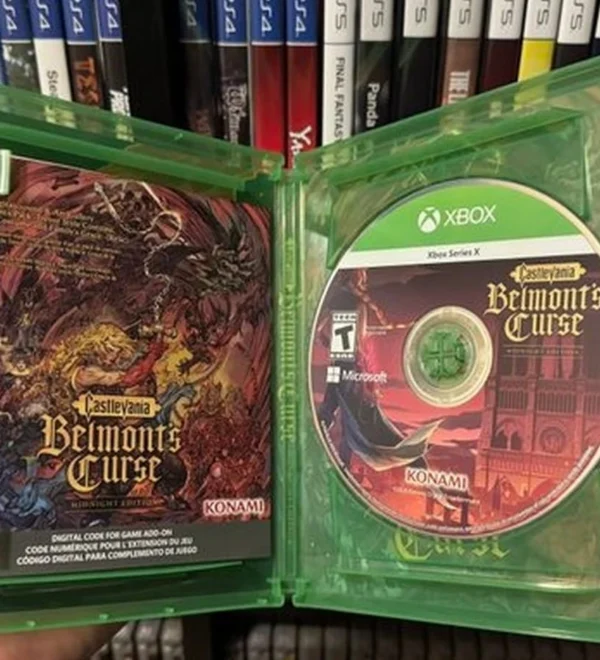 Boxed Games Become a Problem for Collectors as Issues Reach PS5
 Gears of War: E-Day Reportedly Planned as Start of a New Trilogy, Rumors Say
 Shenmue III Enhanced Edition Delayed to Improve Graphics and Add New Features
 Ridley Scott Finds Screenwriter for New Film That May Continue the Prometheus and Alien: Covenant Story
 Zendaya to Be Promoted for Best Lead Actress Oscar for Third Dune Film
 Crimson Desert Charting the Unknown Expansion Will Add Sea Monsters and Ship Boarding, Details Revealed
 Ticket Presales Suggest Dune: Part Three Will Lose Heavily to Avengers: Doomsday at the Box Office
 DC Horror Film Clayface Earns Unusually High CinemaScore