Seven Writer’s New Horror Movie Fails Both Serial Killers and Slashers Simultaneously

Audiences diving into the trainwreck that is Psycho Killer on streaming might be forgiven for thinking they’ve unearthed a forgotten relic from the late ’90s. The premise—a state trooper abandoning jurisdictional boundaries to hunt the homicidal maniac who murdered her husband—feels like a throwback to an era when such gritty, mid-budget thrillers were staples of the local multiplex.
The film’s pedigree further reinforces this Y2K aesthetic. Screenwriter Andrew Kevin Walker is the mind behind David Fincher’s Se7en and Sleepy Hollow, while first-time director Gavin Polone spent that era producing high-tension projects like Fincher’s Panic Room. Despite the occasional modern gadget, Psycho Killer leans heavily on retro tropes like physical motel registries and classified ads. A casual reference to a news anniversary suggests the story is anchored somewhere around 2007, a time when the analog world hadn’t yet fully surrendered to the digital age.
It is tempting to try and place Psycho Killer within a specific timeline because it acts as a clumsy crossroads for various horror subgenres. Early “proto-slashers” like Psycho and The Texas Chain Saw Massacre were famously rooted in the exploits of real-world killers like Ed Gein. This eventually gave way to the supernatural slashers of the 1980s before the 1990s pivoted back to the clinical, investigative serial killer thriller. The transition was remarkably efficient: as A Nightmare on Elm Street faded, The Silence of the Lambs became a cultural phenomenon and a Best Picture winner. By the time Scream arrived in 1996 to resurrect the slasher, it did so by adopting the grounded, procedural framework popularized by its ’90s predecessors.
The primary distinction between these subgenres lies in the presence of the outside world. Serial killer movies are populated by forensic teams and media circuses. Conversely, classic slashers like Friday the 13th rarely concern themselves with FBI profiles or evening news updates. In those films, the adolescent protagonists are terrifyingly isolated against an inexplicable force. Part of what makes a killer like Michael Myers so daunting is the feeling that no amount of police intervention can truly stop a supernatural shadow.

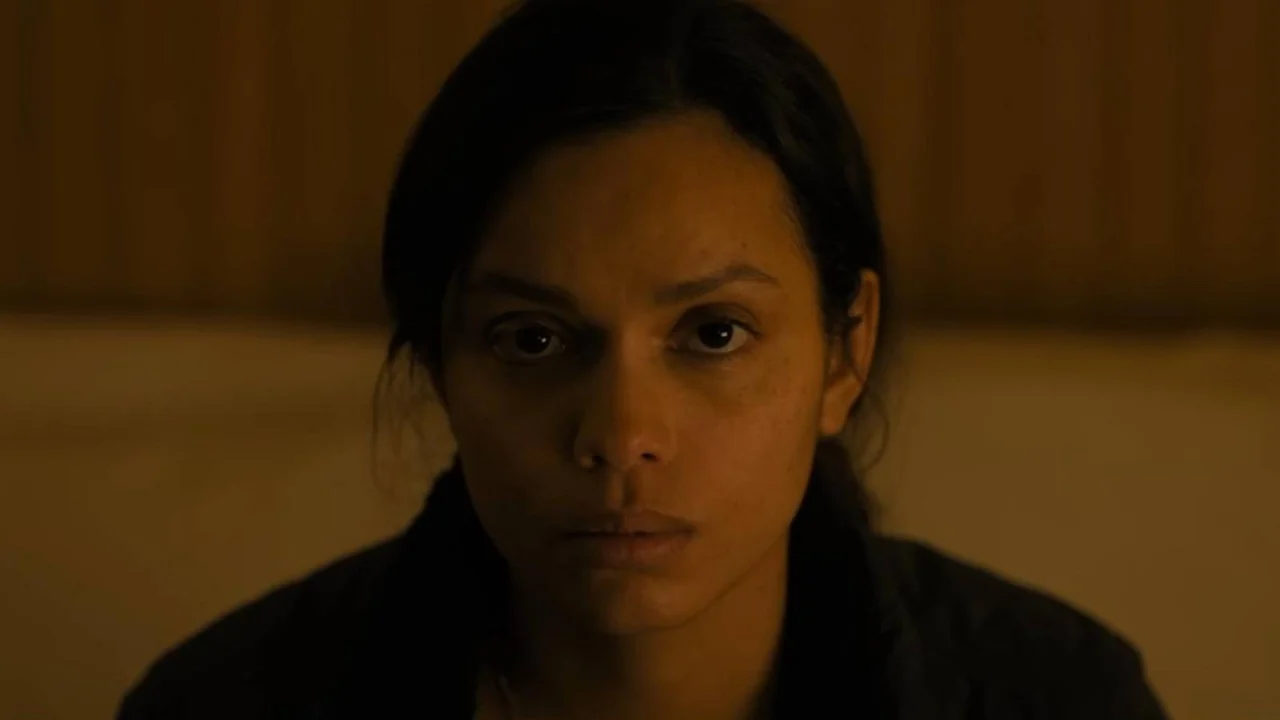
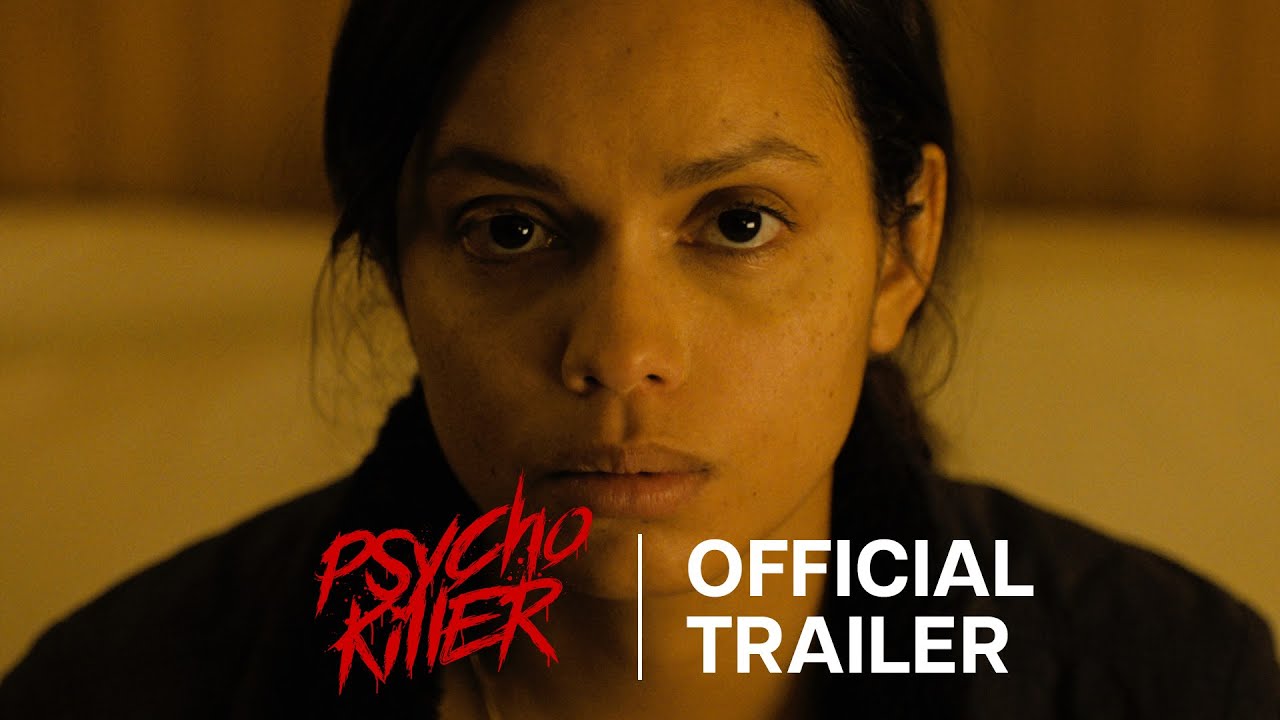
This friction between investigative procedurals and primal slashers should, in theory, make Psycho Killer a compelling hybrid. Jane Archer (portrayed by Barbarian star Georgina Campbell) is a professional adult—a “serial killer movie” protagonist. Yet, she is hunting a “Satanic Slasher” (James Preston Rogers) whose theatrical, blood-soaked kills feel ripped from an ’80s grindhouse flick. With a gas mask reminiscent of My Bloody Valentine and a penchant for drinking blood through crude metal straws, the villain is far more Jason Voorhees than Hannibal Lecter. It’s a level of campy absurdity that Walker and Fincher intentionally avoided in Se7en by keeping the most grotesque details in the shadows.
Strangely, these moments of slaughter seem to be the only parts of the film that interest Polone. While the violence is captured with stylistic flair, the human drama is a mess. An early, pivotal conversation between Jane and her father is ruined by frantic editing and awkward blocking, leaving the audience confused about where to even look. Polone fails to capture any nuance in Campbell’s performance, only finding his footing when focusing on the killer’s sunglasses glinting in the dark.

Psycho Killer essentially pits a detective from a police procedural against a monster from a slasher film. While a similar genre-blend worked for Oz Perkins’ Longlegs, the elements here eventually curdle. The narrative takes a bizarre detour into “Satanic Panic” tropes, including a sequence where Jane blames a rock band for the killer’s motivations. It all culminates in an ending so nonsensical and abrupt that it leaves more questions than it answers, seemingly twisting the killer’s identity without any narrative justification.
Ultimately, Psycho Killer collapses under the weight of its own misguided ideas. While it features a few effective suspense sequences, it serves mostly as a reminder of how distinct these horror subgenres actually are. A killer who behaves like a theatrical slasher doesn’t automatically become a terrifying real-world threat just by expanding his body count across state lines. Despite their shared history, Psycho Killer proves that both subgenres can be equally, and frustratingly, vapid.
Psycho Killer is currently playing in theaters.
Source: Polygon
Related articles
 RTX 4070 Runs Bloodborne in PS4 Emulator, and Fans Show Sony What Players Want
 Enthusiast Ports GTA IV to PS5, With Part of the Work Done by AI
 The Video Games and More You Should Play This Weekend – October 23, 2026
 Resonance: A Plague Tale Legacy Fell Short of Publisher’s Expectations
 Sony Pulls Its Last UHD Blu-ray Player From Sale in Japan
 Players Launch Petition Hoping to Save Mass Effect 5
 Assassin’s Creed Black Flag Resynced Developers Confirm New Mode
 Best Visions to Use in Final Fantasy Resonance