Reflecting on the Enduring Legacy of Calvin and Hobbes Dad Quotes After 37 Years
According to his essays in the 10th anniversary collection of Calvin and Hobbes, Bill Watterson deliberately chose to not give Calvin’s parents actual names. Readers occasionally glimpse their inner lives through Dad’s cycling habit or Mom’s love of reading, but both characters primarily relate to Calvin. Calvin is still at an age where he might not realize his parents have real names. More importantly, giving them names adds nothing to the strip.
Watterson kept Calvin’s parents from acting as prosaic dispensers of time-honored wisdom. Whenever Calvin’s dad tells him an entertaining lie about the world rather than the actual truth, readers gain a keener insight into how these two people produced a child like Calvin. Some parents get the child they deserve.
That does not mean Calvin’s parents are consistently wrong. They possess their own irrationalities and pet peeves, but they usually have a point, especially when facing Calvin’s angry inability to comprehend the world’s absurdities.
Two specific strips stand out as the best moments of Calvin’s dad. One feels apt in 2026, while the other remains sad and true.
Dec. 7, 1993: Rage against the machine
During the run of Calvin and Hobbes, Calvin’s dad occasionally voiced Watterson’s complaints about modern living. Some complaints focused on minor consumer annoyances, such as the numerous brands of peanut butter on store shelves, but they carried underlying truths.
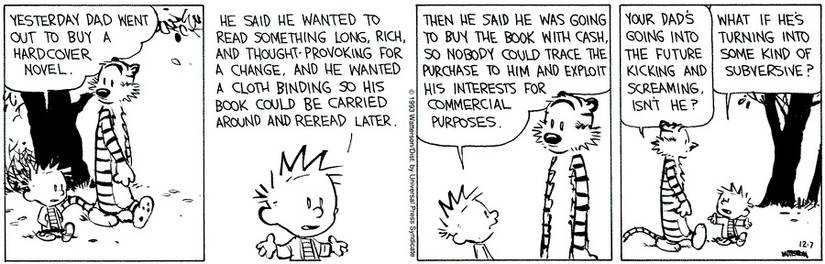
The strip from Dec. 7, 1993 feels relevant to the 21st century. When online activity feeds data-gathering systems, unplugging feels like a renegade act. Leaving a phone at home, reading physical books, and listening to old records helps avoid leaving a data shadow. Bill Watterson anticipated this shift.
May 10, 1989: Adulthood is an ad-lib
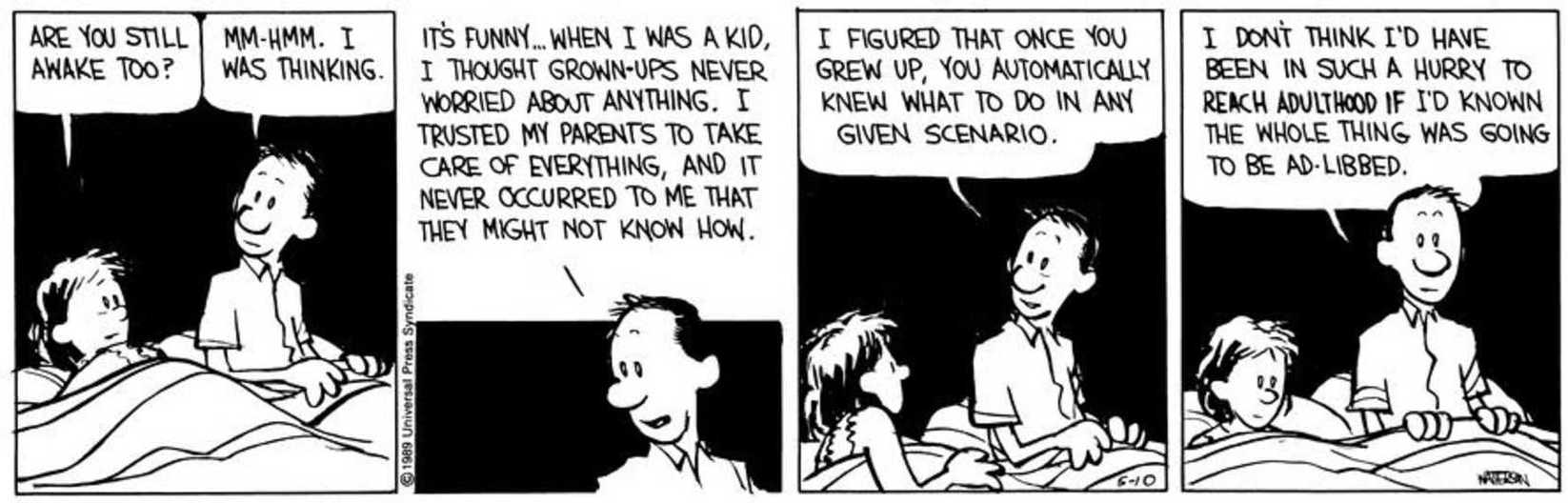
This early strip concludes a short story arc in which Calvin’s family discovers their house has been burglarized. Their television and jewelry are missing, but Hobbes is still present. According to differing accounts, the burglars either left him behind or Hobbes scared them off.
Calvin remains unbothered by the event, but his parents take center stage to discuss the aftermath. The conversation addresses a difficult truth of adulthood: some people have a plan, but everyone ultimately improvises.
Calvin and Hobbes primarily focuses on Calvin and his frustration with the world. The strip occasionally explores territory outside Calvin’s perspective, capturing genuine truths about vulnerability and adulthood during the burglary arc.
Source: Polygon
Related articles
 Twitch Shares Streamer Data With Amazon to Train AI
 Reports Indicate GameStop Has Canceled Its Planned Acquisition of eBay
 Orc Incremental launches on Steam September 8
 Low-Budget Repairs launches on PC
 Duskfade launches on PC and consoles
 Pixel Washer shows new gameplay trailer and targets autumn release
 Infinity: HexaDome Tactics launches September 10, final playtest open
 No More Room in Hell 2 leaves Early Access with 1.0 launch