
Peace for Our Time: An Alternative History of Czechoslovakia and the Divided Nations Rework
The Monarcho-Fascist Path
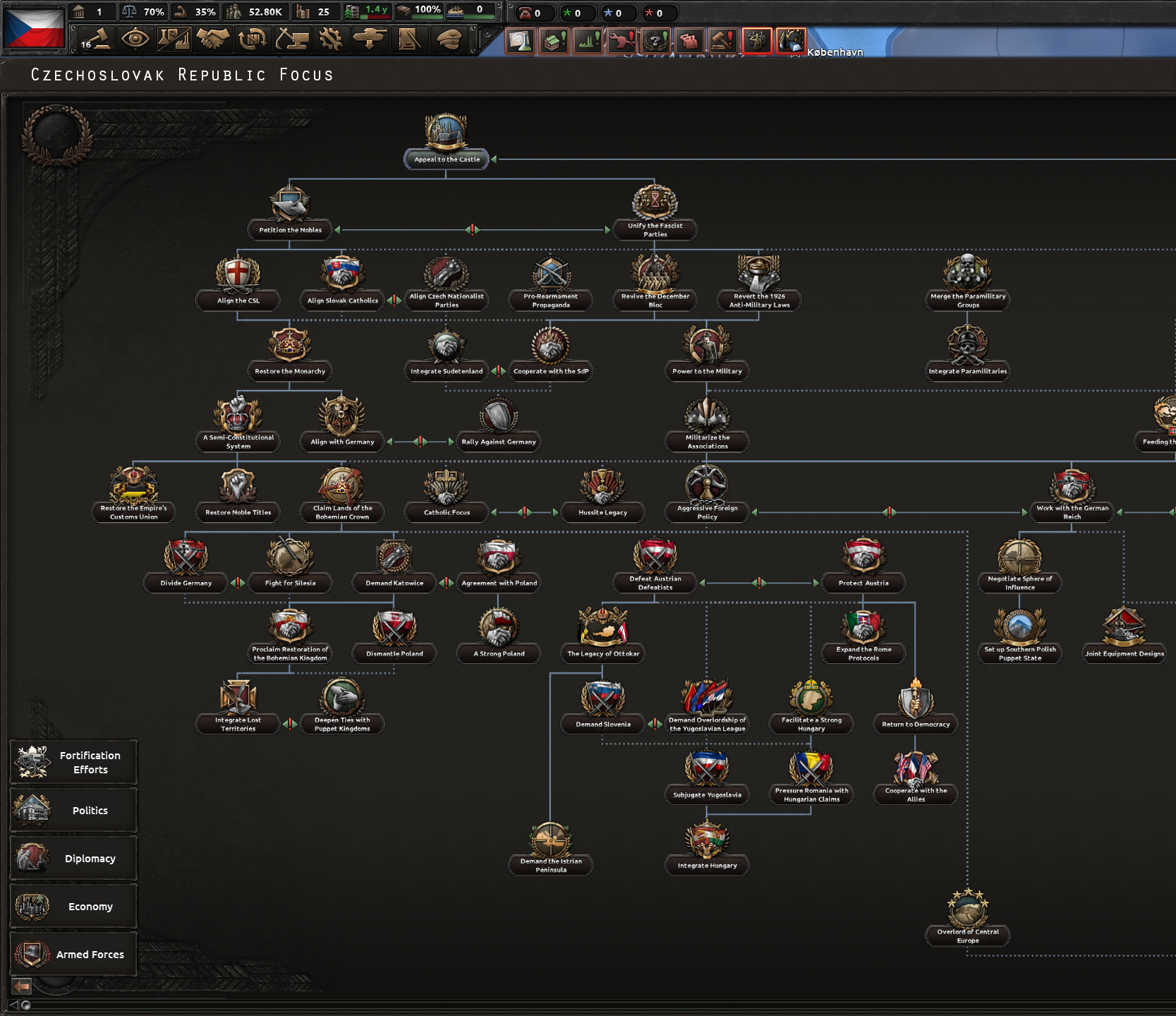
While the authoritarian branches share certain tenets of foreign policy with their democratic and communist counterparts, they carve out their own distinct identities. The Monarchist route leans heavily into territorial expansion, whereas the Fascist path provides a broader array of alliance possibilities.
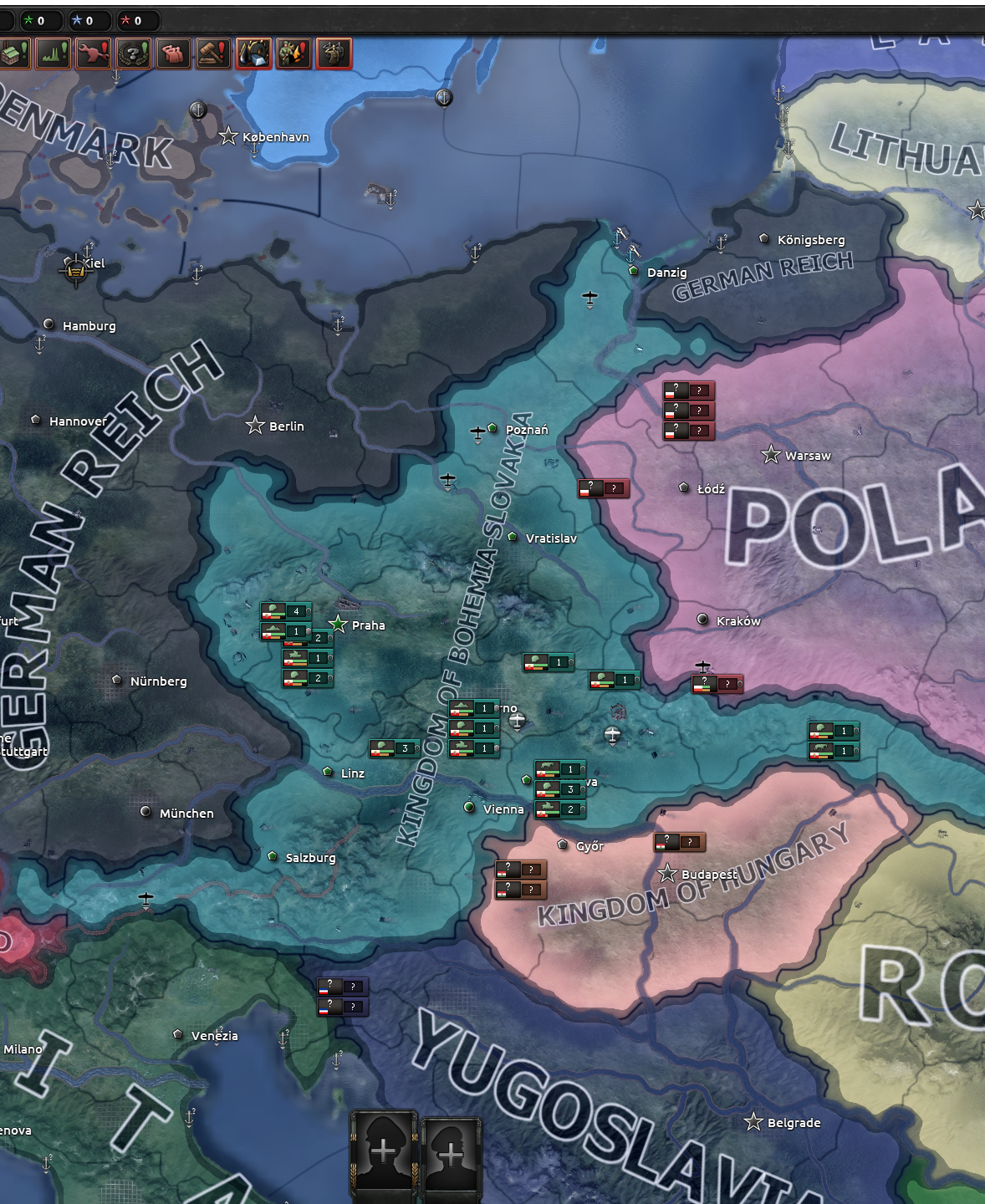
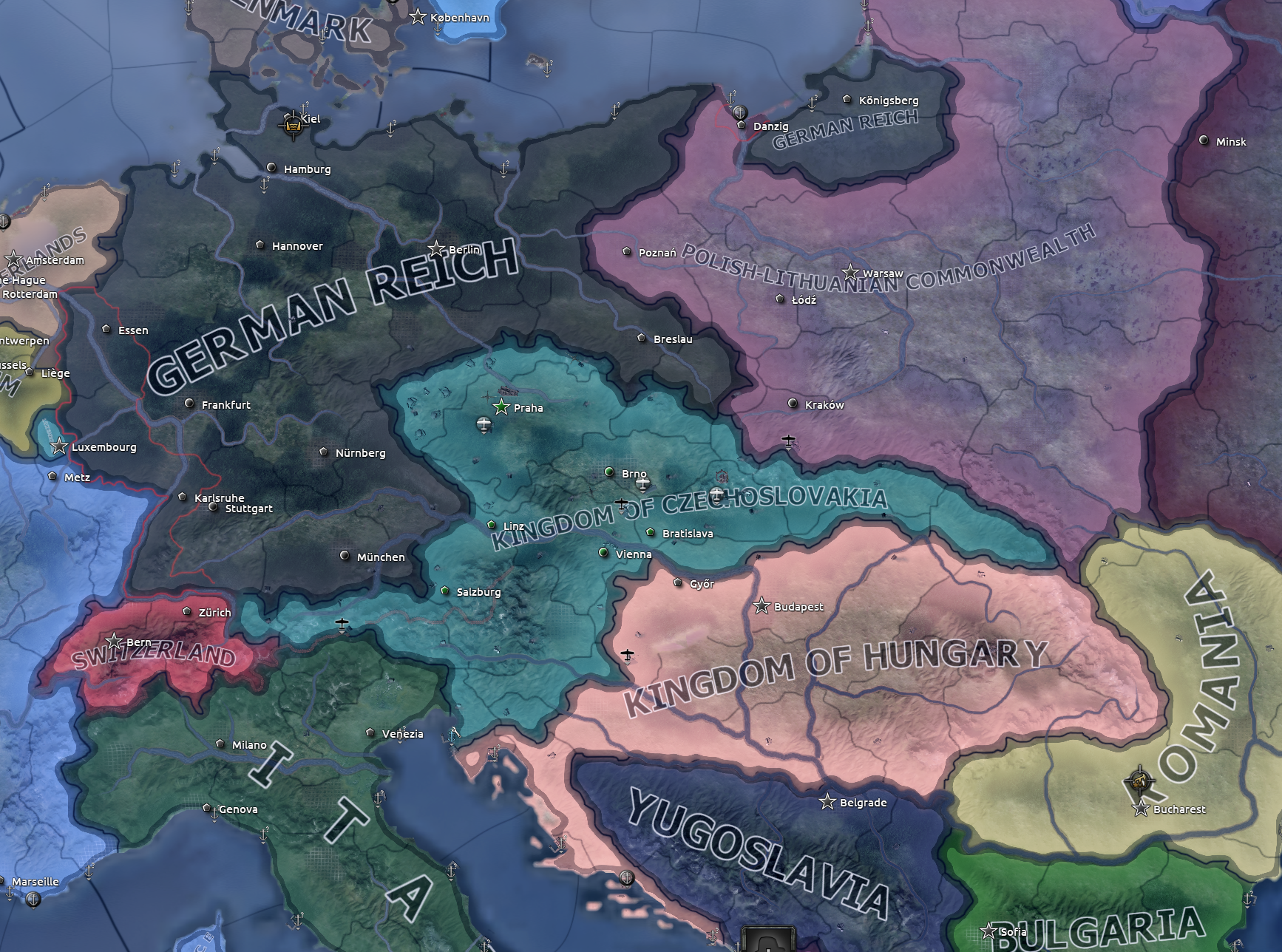
Focused on territorial cores, the Bohemian-Slovakian Kingdom can effectively integrate lands ranging from Austria to Danzig. This expansion is inspired by the historical reaches of the Bohemian Crown, reimagined as a singular, cohesive empire. Unlike the democratic or communist paths—which often focus on integrating smaller nations—the fascist and monarchist diplomatic trees are built to bolster your existing allies. You can, for instance, facilitate the formation of the Polish-Lithuanian Commonwealth or, once you have established dominance over Hungary, assist them in reclaiming their lost territories, specifically granting them free cores on Northern Transylvania and Croatia.
The Communist Branch
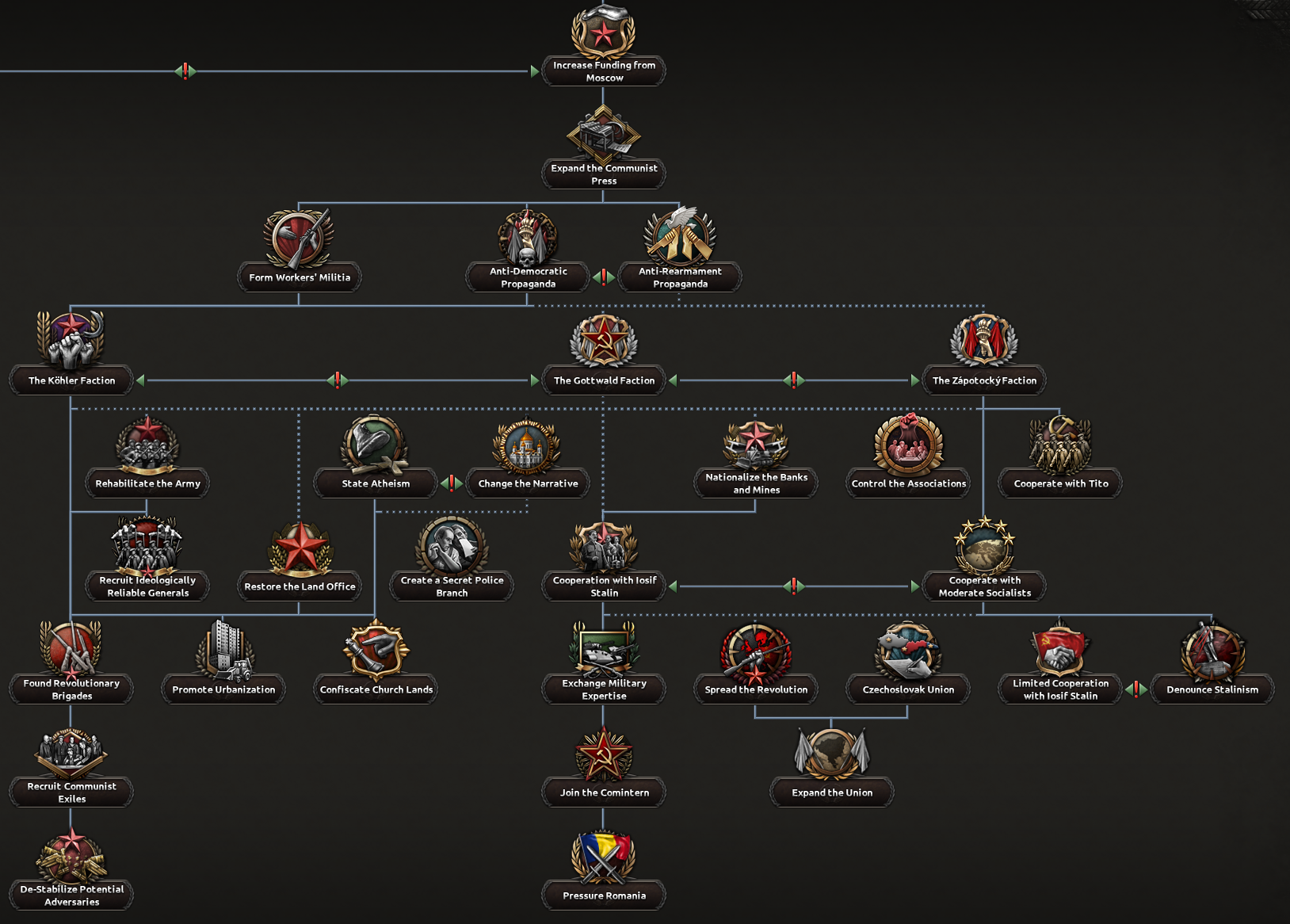
The communist trajectory is more specialized, as it incorporates several shared foreign policy elements previously introduced in our democratic overview. A primary strategic pivot here is your allegiance to a specific communist faction. While the Köhler faction necessitates a civil war, it rewards you with enhanced long-term influence over other nations. Both the Köhler and Gottwald factions offer pathways to align with the Soviet Union, whereas the Zápotocký faction provides substantial advantages for spearheading the Little Entente.
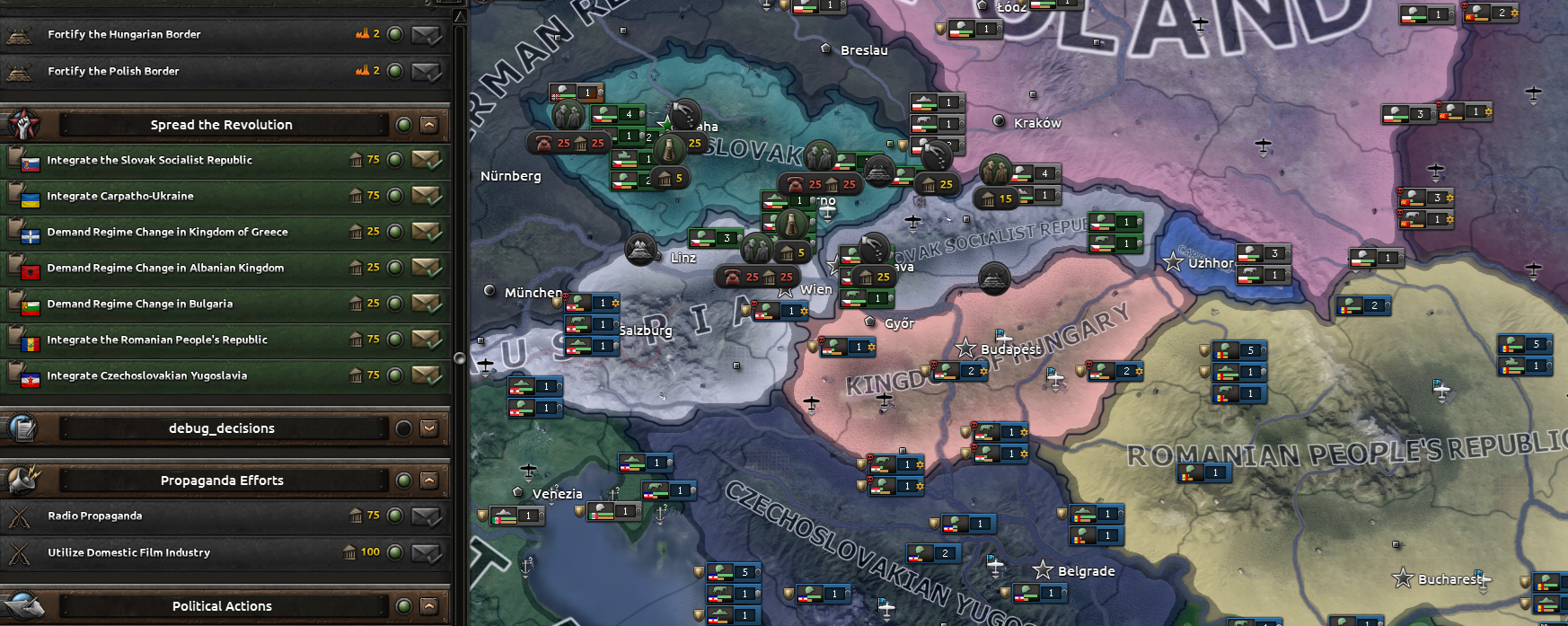
Regardless of your chosen faction, expansion is primarily driven by the “Spread the Revolution” decision tree. These initiatives allow you to exert pressure on neighboring states, encouraging them to adopt communism or join your coalition. Once they fall into your orbit, these neighbors can be absorbed into the Czechoslovak Union as puppets, where you may further integrate them to unlock significant national bonuses.
Revamping the Divided Nation
The “Divided Nation” national spirit has been overhauled to present a more formidable challenge. To fully mitigate the internal strife that plagued Czechoslovakia throughout the mid-1930s, players must successfully navigate 10 distinct decisions, bolstered by specific political focuses designed to streamline the process. These systemic issues are now reflected in localized state modifiers, underscoring the urgent need to stabilize your country before the situation deteriorates further.
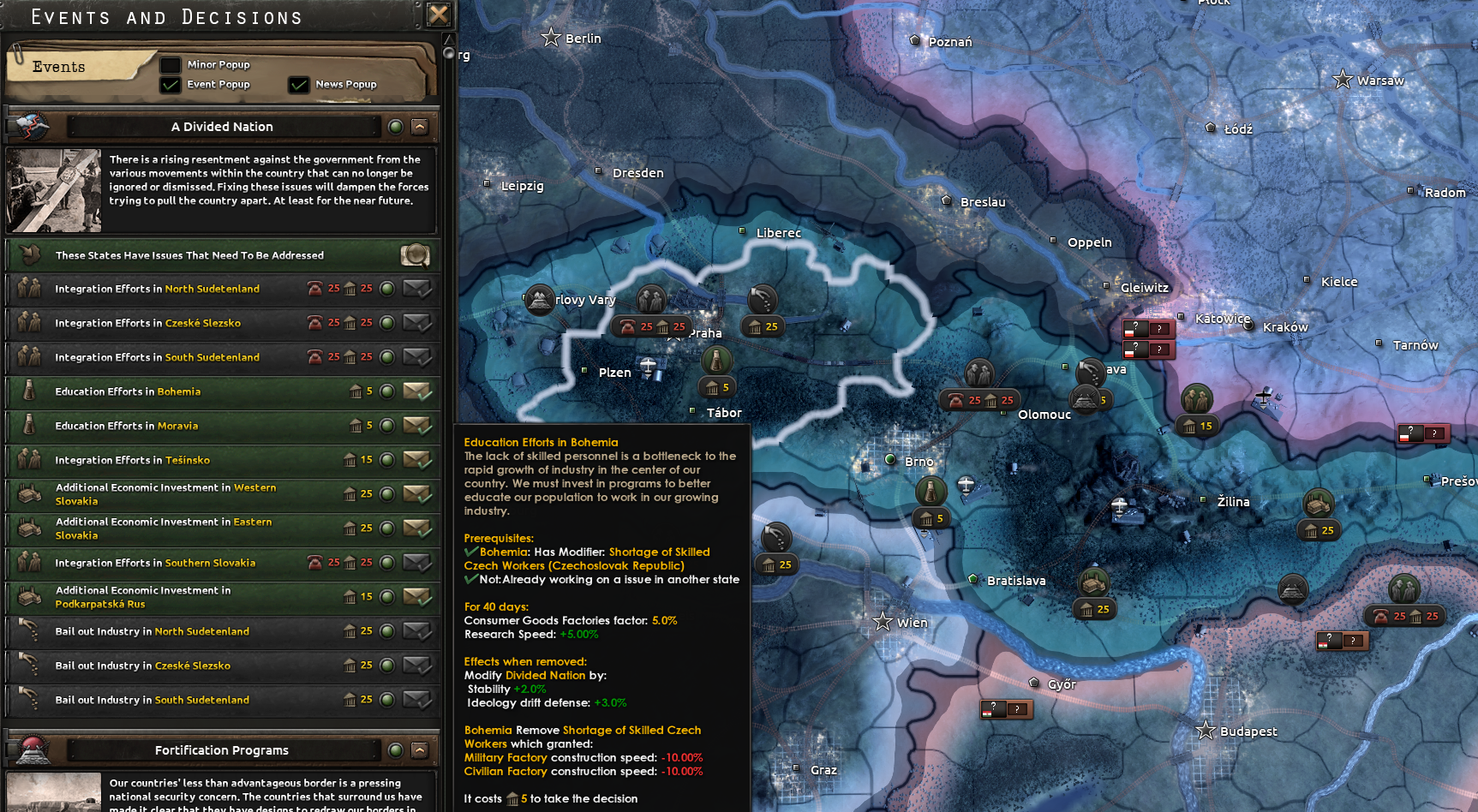
As you navigate these decisions, the severity of the national spirit modifier will gradually diminish until it is fully eradicated.
That covers our look at the Czechoslovakian rework! Join us for our final developer diary, where we will explore remaining mechanics and showcase the stunning new art assets crafted by Abbus.

Related articles
 HOI IV Developer Diary | Romania: A Flawed Democracy
 Developer Corner & Open Beta: Energy #2
 Hearts of Iron IV Dev Corner | Strikes!
 Hearts of Iron IV Dev Corner: Old Canada Questions Before New Canada
 Hearts of Iron IV Dev Corner | Energy
 Steam Autumn Sale 2026
 HOI IV Dev Corner | The Great Depression
 Hearts of Iron IV | Patch 1.19.3