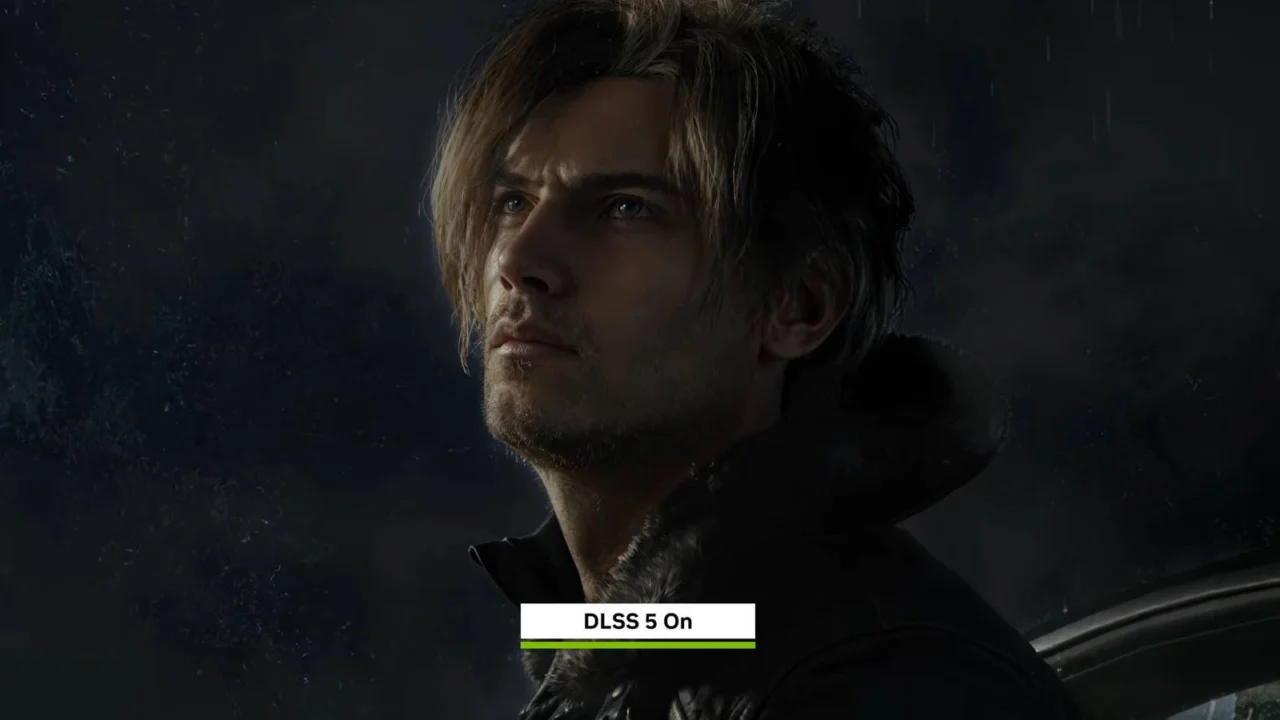
Nvidia CEO Defends Controversial AI Tech Against Gamer Ridicule
Over the past few days, the gaming community has relentlessly criticized Nvidia’s latest graphical innovation, DLSS 5. While the tech giant intended for this feature to represent the pinnacle of visual fidelity, it has instead been met with widespread mockery, with many comparing its output to “yassified” imagery and AI slop. Typically, such a polarizing reception would prompt a brand to pivot its marketing strategy, but Nvidia is choosing to double down on its current trajectory rather than acknowledging the aesthetic disconnect.
DLSS 5 is set to be a cornerstone feature of the upcoming RTX 50-series graphics cards. By leveraging machine learning and “neural rendering,” the technology aims to drastically enhance lighting and reflections within supported titles. However, early demonstrations have sparked significant backlash. While the technology excels at rendering inanimate surfaces like polished metal or flowing water, its treatment of human characters has proven deeply unsettling. The result is an “uncanny valley” effect that many players have likened to an aggressive TikTok beauty filter.
Nvidia remains steadfast, asserting that DLSS 5 does not fundamentally alter a game’s underlying assets. The company maintains that textures and models remain untouched, regardless of whether the feature is toggled on. Furthermore, Nvidia highlights that game developers are voluntarily integrating the technology, often claiming it helps them achieve their specific creative goals. From Nvidia’s perspective, the public’s dissatisfaction stems from a misunderstanding of the mechanics; the company has even taken to social media to pedantically clarify that DLSS 5 is technically not a “filter.”
Following the initial reveal, Nvidia CEO Jensen Huang addressed the brewing controversy directly. In a recent interview with Tom’s Hardware, Huang was blunt, stating, “Well, first of all, they’re completely wrong.” He proceeded to reiterate the company’s stance on creative control and the architectural nature of the software.
“It’s not post-processing… it’s generative control at the geometry level,” Huang explained. “This is very different than generative AI; it’s content-control generative AI. That’s why we call it neural rendering.”
The core issue, however, seems to be a fundamental disconnect between Nvidia’s technical definitions and the player’s visual experience. Huang’s insistence that he has “explained very carefully” suggests that the company believes the problem is one of education rather than execution. To the average gamer, the technical distinction between a filter and “geometry-level generative control” is irrelevant if the final image looks wrong. When iconic figures like Leon S. Kennedy look fundamentally different than intended, players are going to push back. You cannot use technical jargon to convince someone that what they are seeing isn’t jarring.
Ultimately, there is a growing cultural fatigue regarding the pervasive use of AI to generate “realistic” visuals. This specific brand of hyperrealism is increasingly stigmatized as soulless or unimaginative. The gaming public isn’t necessarily confused about how DLSS 5 works—they simply find the results unappealing.
Source: Polygon
Related articles
 AISLPC Opens Preorders for Pocket AIS Retro Gaming Handheld
 The Witcher 4 Will Release in a Physical Edition, but with a Catch
 Survival Game Enshrouded Exits Early Access With Version 1.0 Release
 Steam to Add New Trophy System to Address Old Achievement Issue
 Steven Spielberg and Stanley Kubrick Sci-Fi Film A.I. Coming to Peacock
 PlayStation Casts Doubt on 60 FPS Support for GTA VI
 Avatar: Seven Havens Episode 6 Ending Explained
 Call of Duty Report Points to Modern Warfare 4 as Epic Finale Amid Major Franchise Overhaul