
Nimona Creator Discusses ‘Collaborating’ with His 12‑Year‑Old Self on His Debut Novel

In 2020, ND Stevenson — the writer-artist behind the film adaptation of Nimona and the creator-showrunner of Netflix’s She-Ra and the Princesses of Power — published a comics memoir tracing a tale he first began as a teenager. That early manuscript followed two orphans, Viola and Wilmur, who are swept aboard a pirate ship and drawn into an old mystery of murder, betrayal, and misread identities. Over the years that juvenile project mutated in format — once staged as a play-thing where friends were assigned parts — and by seventeen it had become a complete 600-page story.
When Stevenson came across a digital copy of that youthful draft five years ago, he found himself reimmersed in its world and its obsessions. He mined the core of that tale to create the novel Scarlet Morning, set in a realm of uncanny magic and maritime dread. In the book, the pirate Scarlet Morning assassinates the adored Queen Hail Meridian; a strange storm soon follows, turning seas to salt and warping the natural order into grotesque manifestations. Viola and Wilmur, shipwrecked children from a gloomy, cut-off town, are taken in by the pirate Captain Cadence Chase. What begins with familiar middle-grade beats — darkly comic as if filtered through a Lemony Snicket sensibility, with ornate worldbuilding that calls to mind Garth Nix — gradually reveals its own singular voice.
 Image: ND Stevenson/HarperCollins
As the narrative deepens and Viola and Wilmur begin to untangle myth from history, Scarlet Morning asserts a distinctiveness — character moments, surprise turns, and illustrations that feel unmistakably Stevenson’s. Polygon spoke with Stevenson about how the book evolved, the possibility of adapting it for television, and the forthcoming sequel, Evening Gray.
Below the interview, you’ll find a short excerpt from one of the book’s eerier chapters.
This conversation has been condensed and refined for clarity.
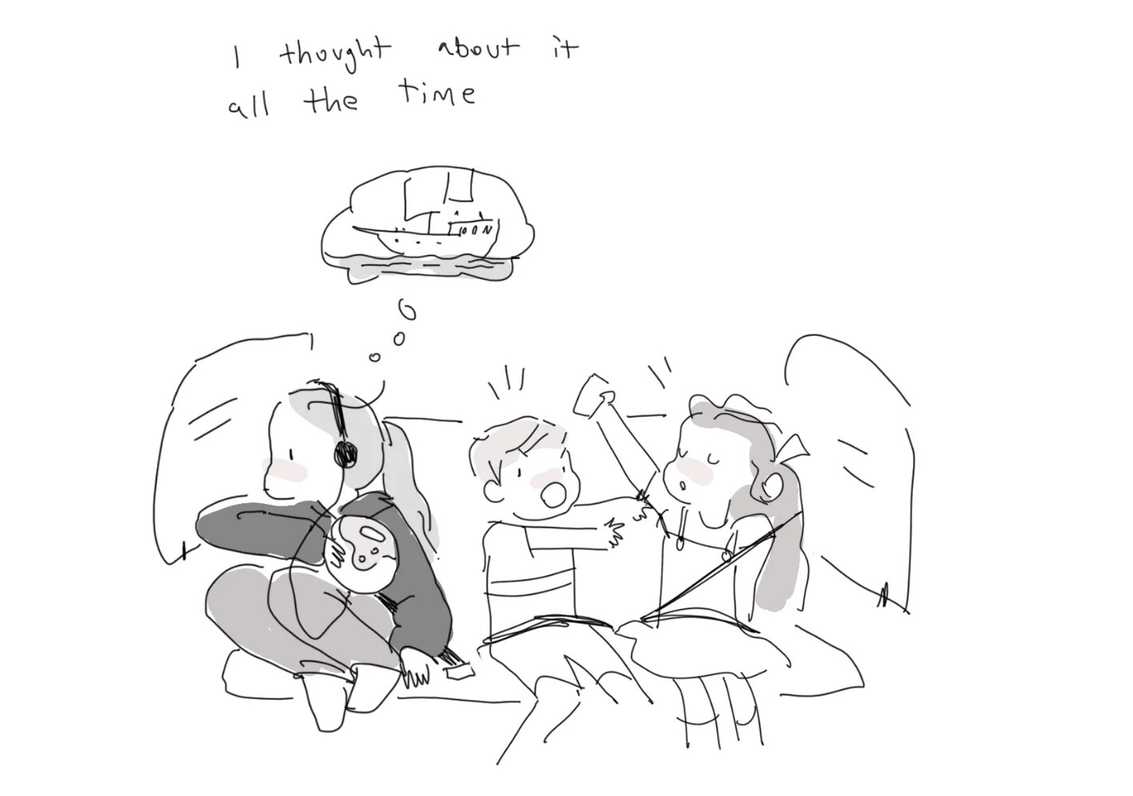
Image: ND Stevenson

Image: ND Stevenson
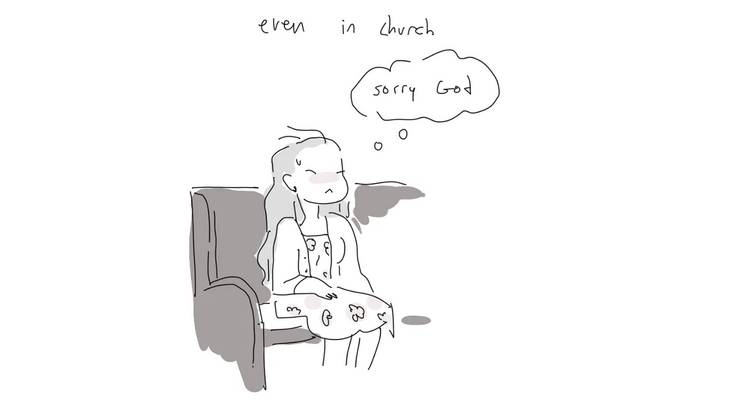
Image: ND Stevenson
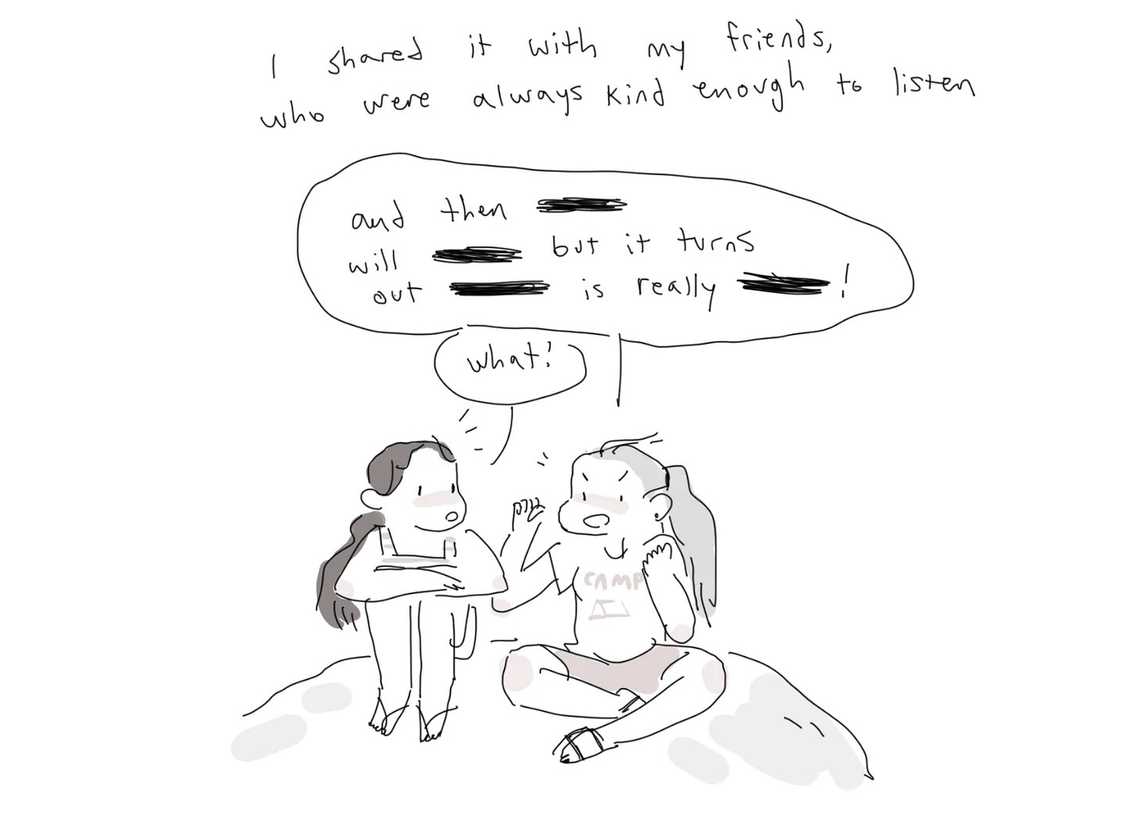
Image: ND Stevenson
How Scarlet Morning grew out of a teenage project
Polygon: How different is this book from the 17-year-old you finished it with?
ND Stevenson: The prose and most of the worldbuilding are essentially new; only a handful of original lines survived — the opener among them. Working on it felt like adapting my own past work: I tried to isolate the elements that made the story what it was and preserve those, while being ruthless about trimming parts that no longer worked. I also asked myself what the story should mean now, and what I wanted readers to take away today. In that sense it was a collaboration between who I am now and who I once was.
The first draft leaned more heavily on a conventional Age of Sail backdrop, with some magic and the same odd plot mechanics. But I expanded ideas like the sea turning to salt and the way Dickerson’s Sea is disappearing; those kernel concepts became much more developed. Many pieces from the early draft served as starting points rather than finished plans.

Polygon: Your work is known for emotionally rich relationships — from She‑Ra to Nimona. Did those dynamics exist in the early draft, or did you develop them later?
I think those connections are what pulled me back in. It would have been easy to approach the old manuscript with pure nostalgia, just admiring what my younger self made. But at the center of this one were relationships that still felt compelling. The bond between Viola and Chase was especially magnetic to me. Re-reading it as an adult made me wonder what I’d been trying to say back then and how those early impulses informed my life since.
That relationship captures a generational fascination — the way a teenager might idolize an older figure as an aspirational mirror of who they could become. I don’t see that dynamic explored as often as I’d like in other media, which made it interesting to revisit and deepen.

Polygon: A lot of stories conceived by children include a self-insert. This one has many vivid characters but none that read as obvious author stand-ins. Do you identify with anyone now or back then?
Interestingly, I didn’t place myself in Viola or Wilmur originally; those roles were written for friends to act out. Chase was always more mythic than autobiographical — an adult figure I was fascinated by. As an adult, though, I’ve found myself recognizing aspects of Chase and also reconnecting with Viola in ways I didn’t before. At twelve I believed I was already grown; now I can see the child in myself more clearly.

What’s next — a follow-up and possible TV adaptation?

Polygon: How many books will this series comprise?
Right now the plan is a two-book arc intended to cover the sweep of that original 600-page teenage draft; the sequel is titled Evening Gray. I’m focused on finishing the second volume — I don’t want to plot too far ahead — but the world definitely invites further stories if I want to explore them later. The second book will pick up threads and answer questions left by the first.
Polygon: Given your showrunning background, are you pursuing a screen adaptation?
There have been conversations. I’m open to adaptation, but I don’t want to think about that until the books are complete. If this becomes a TV project, it should be someone else’s interpretation — the shift in medium requires a different set of choices, and because the material is so personal I suspect I’d struggle to strip it down in the ways adaptation sometimes demands. I want the novels to exist fully on their own terms first.

An excerpt from Scarlet Morning
The Bleachfields were the sort of place where the unusual was ordinary: masts burning with cold blue flame on damp nights, stretches of day where dusk refused to arrive, and odd little curses like every sailor’s right boot turning into a left. Once, rising in the night to relieve herself, Viola thought she’d seen a vast white bird perched on an ice floe, a human-shaped skeleton looped around its neck — though Clem insisted she’d imagined it.
“Nay, girl,” Clem declared gravely. “If that were so, we’d all be dead already.”
Not long afterwards, something still stranger occurred.
The Calamary Rose struggled through a viscous band they called a diamond pack — more like congealed fat than sea — that clung to her hull and slowed their progress. Spirits were high because Old Bottle, the next outpost, was supposed to be their first true island in weeks.
“It’s not much to see — a little heap o’ rock,” Clem said. “But after where we’ve been it’ll feel like a garden. They cure bluebuck jerky tougher than old boots, but you’ll adore it.”
Viola and Wilmur pressed to the rail, eager for the sight of land. Instead they sailed into a cold fog stiff with saltbergs larger than their ship, a maze of treacherous ice. All hands were called; even Chase stepped from her cabin to stand with Clem at the wheel. From a distance Viola could tell the captain’s mood had soured since the last holiday.
They circled for hours trying to find Old Bottle, sniffing the mist for the promised jerky but finding only more saltbergs. As the search dragged on, unease rippled through the crew. The usual chatter dwindled to worried murmurs and the clench of hands on weapons. Wilmur’s carefree energy dissolved into restless picking at the rail, flicking splinters into the sea. “It should be here,” Jacoby muttered, rubbing the tattoo on his arm like a talisman. “We anchored here not three weeks back.”
The air had sharpened and an unnatural hush settled over the ship — not the usual island quiet but an appetite of silence that swallowed sound. Even the Calamary Rose seemed to hold her breath. Viola thought she heard a distant low droning, barely more than a memory in her skull, but it left a pressure behind her eyes.
“I see it!” Young Teazer called, his voice oddly muffled. “Old Bottle, ho!”
Relief fluttered around the deck. Viola and Wilmur peered through the fog but saw only mist.
“Lay off, Teazer,” Clem said, weary. “We’re not in the mood for your tricks.”
“It’s not a trick,” Teazer said. “Look — lanterns on the pier, masts like winter trees. Fomka! Don’t you see it? Allis, tell me you see it!” He pointed into nothing.
Silence pressed in so hard Viola felt sick.
“About ship,” Chase ordered to Clem. “Put this cursed place astern — quick.”
The crew moved to obey, except Teazer, who grew more frantic. He fell against the rail, reaching toward whatever island only he could perceive. “No, no, we can’t turn back now — it’s right there! Why can’t you see it?” he cried.
“Easy, Teazer,” Chase said, voice level, her hand resting near her knife.
Teazer’s howl tore through the quiet, and in an instant he flung himself over the bow and was gone.
They lowered boats and scoured the water, but not even his hat was found. The sea lay dead and still, the fog so dense the air felt viscous. Eventually Chase ordered the search called off.
“Enough,” she said. “He’s gone. About ship.”
Even the hardest-handed among them breathed with relief once the strange silence receded into the mist.
Later, a few gathered by the capstan, staring into mugs of hot flip Clem had set about.
“What was his name?” Fives asked quietly. “Does anyone remember?”
“What are you on about?” Jacoby snapped. “Course I remember.” He hesitated, then fell silent.
Viola tried to summon his name — she had stood in line with him at the mess and laughed at his jokes, she had shelled mussels beside him — but the details slipped away. The joke, the face, the name: gone as if the fog had stolen them.
Whoever the lost sailor had been, he had vanished far more completely than any ordinary disappearance.
Source: Polygon
Related articles
 Danny Boyle used artificial intelligence in his new film “Inks”
 Summer 2026 Becomes the Highest-Grossing Season in U.S. Box Office History
 Shadow Movie Screenings in Russia Face Shutdown
 Dance drama “The Art of Falling” to premiere on Okko in September
 Lilly Wachowski disavows involvement in the new “Matrix” film
 Kane Parsons to Return to The Backrooms
 First Emmy Award Winners Announced
 Robert Pattinson calls ‘The Batman’ sequel ‘radical’