
Legendary Director Reimagines a 422-Year-Old Classic in New Sci-Fi Anime
Renowned Japanese auteur Mamoru Hosoda has long been captivated by the mechanics of temporal displacement and the intersections of reality. Following the success of genre-defining works like The Girl Who Leapt Through Time, Mirai, and Belle, Hosoda returns with Scarlet, a sprawling odyssey that once again bridges the gap between disparate worlds.
Scheduled for a stateside theatrical debut early next year, this visionary reimagining of William Shakespeare’s Hamlet centers on Princess Scarlet, a dispossessed warrior exiled to a purgatorial “Otherworld” after her botched attempt to avenge her father’s regicide at the hands of her uncle, Claudius. Accompanying her is Hijiri, a modern-day Japanese paramedic whose empathy provides a stark contrast to Scarlet’s vengeful path. Together, they navigate surreal vistas, battling spectral armies and the encroaching “Void” in a quest for redemption. While Hosoda infuses the Shakespearean premise with his signature style, the film’s true distinction lies in its use of a classic revenge trope to advocate for global harmony.
Reflecting on the film’s origins, Hosoda notes that the “fragmented geopolitical landscape following the pandemic” and a growing “incapacity for forgiveness” served as primary inspirations. Scarlet personifies this refusal to let go of bitterness, even when her anger is entirely justified. As she finally faces Claudius, she is forced to decide whether to remain shackled to her hatred or discover a purpose that transcends retribution.
As society continues to grapple with the lingering trauma of the COVID-19 era, a sense of profound division has permeated the globe. It is little wonder that Gen Z, whose formative years were defined by isolation, has adopted a more cynical worldview. Hosoda intends Scarlet to serve as a hopeful message to this younger generation, suggesting that Hamlet’s exploration of the cyclical nature of violence remains as pertinent as ever.
The pivotal departure from the source material, however, lies in the final words of the fallen King. In Shakespeare’s tragedy, the ghost demands blood; in Scarlet, the father’s dying plea is for his daughter to find the strength to forgive. While the original play tracks a descent into madness and ruin, Hosoda seeks to offer a more constructive path forward.
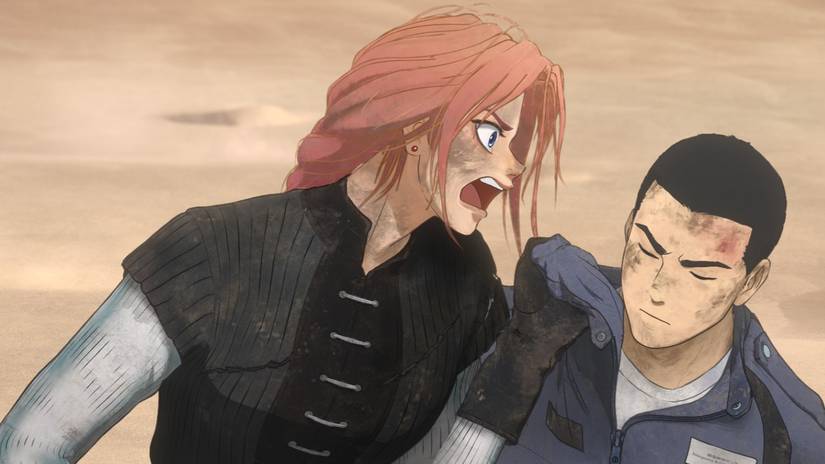
“It is a complex directive to follow after such devastation,” Hosoda explains. “Scarlet wonders how forgiveness can be achieved so simply. Her struggle reflects our contemporary world—we haven’t yet found the answer to ending conflict, but there is a profound, collective desire to resolve it because we all recognize the catastrophic price of war.”
By drawing parallels between Scarlet’s internal strife and the anxieties of today’s youth—their raw idealism and their search for empathy in a fractured society—Hosoda creates something rare. While much of modern media dwells on nihilism, Scarlet provides a glimmer of genuine hope. It is a masterfully revitalized classic that offers an honest, timely perspective on the human condition.
Source: Polygon
Related articles
 Cosplayer Shares Zelda Costume from The Legend of Zelda: Tears of the Kingdom
 Street Fighter Movie Adaptation to Feature Anime Flashbacks Inspired by Akira and Ghost in the Shell
 Resident Evil Requiem Producer Explains Inclusion of Grace Ashcroft
 Ace Combat 8 Developers Confirm Success With New Trailer Despite PC Issues
 In a Violent Nature 2 Sets 2026 Release Date
 Tekken 8 Character Reina Coming to Fatal Fury: City of the Wolves in December
 The Equalizer Begins Streaming on Netflix
 Paul Verhoeven Joins New RoboCop Series as Producer