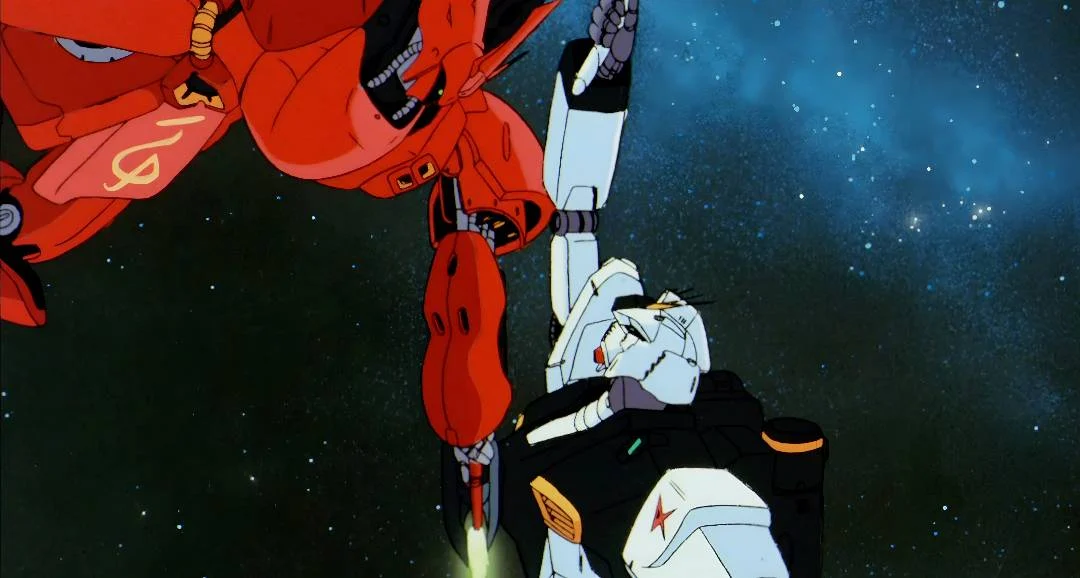
Legendary 1980s Sci-Fi Anime Returns to Theaters With a Major Catch

For those uninitiated with the sprawling Gundam universe, Yoshiyuki Tomino’s 1988 masterpiece, Mobile Suit Gundam: Char’s Counterattack, serves as a daunting gateway. As the franchise’s inaugural original theatrical production, it dives headlong into a decades-long intergalactic feud that has spiraled into total war. However, with a special double-bill featuring Char’s Counterattack and The Sorcery of Nymph Circe (the second chapter of the Hathaway trilogy) returning to Japanese cinemas this month, there is no better occasion to rediscover this foundational work of mecha cinema.
[Ed. note: This article contains plot spoilers for Mobile Suit Gundam: Char’s Counterattack]Navigating the narrative turbulence of 1988’s Char’s Counterattack without historical context is a tall order. This film acts as the grand finale to a saga that began with the original Mobile Suit Gundam and continued through Zeta and Gundam ZZ. These stories detail the “One Year War,” a harrowing struggle for sovereignty between the space-dwelling Principality of Zeon and the Earth Federation—a governing body struggling to manage the planet’s dwindling resources.
Zeon initially gained a tactical edge with their advanced mobile suit prototypes, yet the ensuing conflict was so devastating that half of the human population perished in the opening week. When a civilian teenager named Amuro Ray accidentally pilots the Federation’s secret weapon—the RX-78 Gundam—he shifts the tide of history and shatters the fragile equilibrium between Earth and its colonies.
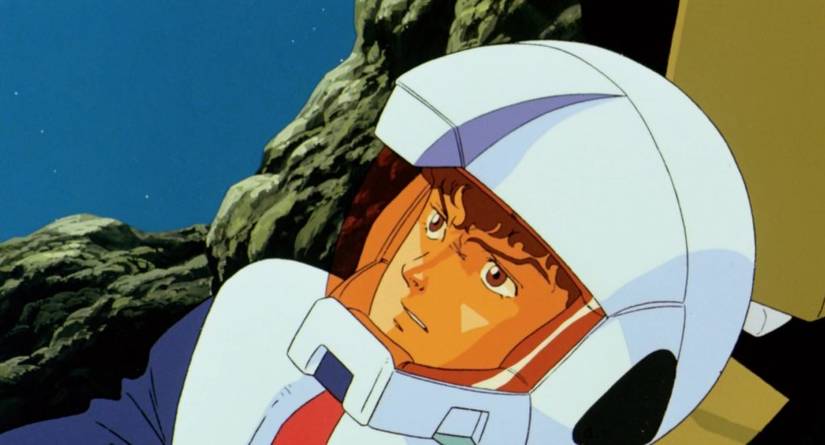 Image: Sunrise
Concurrent to this, the legendary Zeon commander Char Aznable pursues a vendetta far more personal than mere politics, a path that inevitably pits him against Amuro. As the title implies, Char’s Counterattack serves as the definitive resolution to this expansive epic. The film captures Char’s desperate attempt to cleanse the Earth of humanity, leaving Amuro as the final line of defense against a planetary apocalypse.
While the visceral thrill of giant robots remains a primary attraction, the franchise has always grounded its mechanical combat in the heavy cost of war. The arbitrary nature of casualty ensures that viewers never lose sight of the tragedy beneath the spectacle. Visually, the film remains a stunning artifact of vintage animation; it famously marked the franchise’s first foray into computer-generated imagery with a brief, groundbreaking shot of the Sweetwater colony. Yutaka Izubuchi’s iconic mech designs lend a sense of fluid weight to the action, seamlessly transitioning between quiet character drama and high-octane battles.
Char’s ultimate goal involves dropping the Neo Zeon asteroid base, Axis, onto Earth to trigger a nuclear winter. Though he ostensibly aims to force humanity’s evolution into space, his crusade is fueled by deep-seated disillusionment and personal resentment. His rivalry with Amuro acts as the catalyst for his obsession, transforming their battle into a final clash of opposing ideologies. While Amuro embodies a more traditional heroism, the film doesn’t shy away from the institutional rot and corruption within the Earth Federation.
 Image: Sunrise
Similarly, the tyrannical Zabi family, the rulers of Zeon, represent some of the most oppressive forces in the series. While the Federation often appears as the lesser of two evils, it is difficult to take sides without a heavy moral conscience. Even the “heroes” are frequently depicted treating both soldiers and civilians with a cold indifference, as lives are reduced to mere statistics in the gears of war.
It might be easy to overlook the sophisticated nuances of Char’s Counterattack, but Gundam’s critique of conflict has only deepened in the modern era. The Mobile Suit Gundam: Hathaway trilogy offers a tonal shift, presenting a geopolitical landscape tinged with post-capitalist despair. Our new lead, the enigmatic Hathaway Noa, shares Char’s disillusionment but carries it with a more profound sense of emotional exhaustion.
Char’s extremist vision was at least rooted in a calculated understanding of global politics. By contrast, Hathaway’s desperation is the scar tissue of past trauma—he is a man physically and mentally defined by the devastation of Char’s Counterattack. While the motivations of Char and Amuro feel more direct, the film raises haunting questions about binary morality and mutual destruction. As an epic conclusion to a 14-year rivalry, Char’s Counterattack remains an essential, timeless piece of science fiction.
Mobile Suit Gundam: Char’s Counterattack is currently available to stream on Crunchyroll.
Source: Polygon
Related articles
 One of the largest game decompilation sites is shutting down amid the rise of AI
 Cyberpunk: Edgerunners 2 Premiere Time Announced, All 10 Episodes Arrive on Netflix October 20
 Call of Duty: Modern Warfare 4 Dedicates Separate Screen to Memory of Vince Zampella
 Hideo Kojima Will Appear in Cyberpunk: Edgerunners 2, Cyberpunk 2077 Developers Say
 Modern Warfare 4 Is Legitimately a Top-5 Call of Duty Campaign
 Saros Zenith Update Adds Slow Game Speed, Auto-Fire and Other Options to Make Combat Easier
 Super Meat Boy 3D Adds Jack Pepper From MOUSE: P.I. for Hire
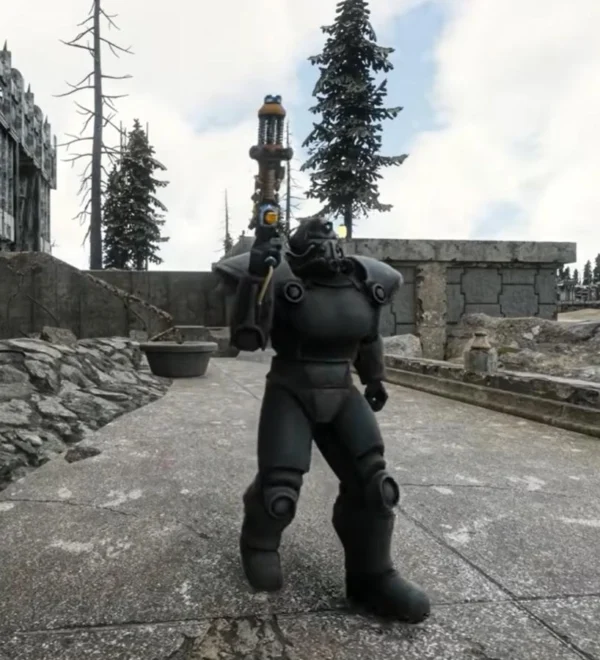 Fan Remake of Fallout 3 on Fallout: New Vegas Engine Shown With Ray Reconstruction and Neural Rendering