
Jujutsu Kaisen Ups the Ante with a Brutal Twist Inspired by Neon Genesis Evangelion

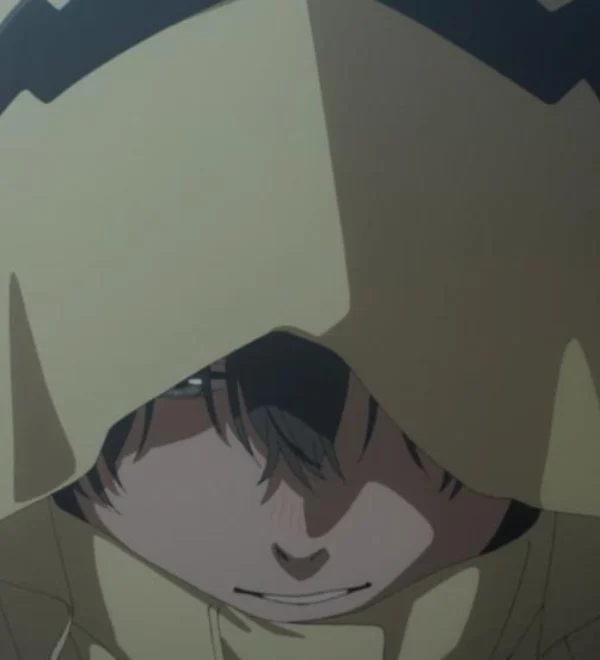
While Jujutsu Kaisen typically drip-feeds its complex lore through frantic combat and cryptic remarks, the third episode of Season 3, “About the Culling Game,” takes a sharp detour into heavy exposition. On a structural level, it is a bold departure from the series’ usual rhythm. Following the events of episode 2, Yuki, Yuji, Megumi, Maki, Yuta, and Choso finally enter the Tombs of the Star Corridor to seek counsel with Master Tengen. What follows is a comprehensive breakdown of Kenjaku’s grand design and the mechanics of the Culling Game—a narrative pivot that shares a striking thematic DNA with the existential finale of Neon Genesis Evangelion.
Kenjaku’s ambitions transcend mere political dominance or chaotic destruction. His ultimate goal is far more abstract and unsettling: he intends to trigger a forced evolution by merging the entirety of the human race with Tengen. By dissolving the boundaries of the individual self into a singular consciousness, Kenjaku aims to redefine humanity. This revelation fundamentally reinterprets the stakes of the series, shifting the conflict into the realm of metaphysical horror.

To understand how such a cataclysm is possible, one must look back to the “Hidden Inventory” arc. Master Tengen is the world’s most proficient barrier user, possessing the innate technique of immortality. While he cannot die of old age, his physical form continues to degrade, necessitating a “reset” every 500 years by merging with a Star Plasma Vessel. Over a decade ago, Satoru Gojo and Suguru Geto failed to protect the vessel, Riko Amanai, after she was assassinated by Toji Zenin. Consequently, Tengen’s evolution accelerated unchecked, causing him to lose his human identity and merge with the atmosphere itself. “I am now the world,” he explains to the group.
The entity the protagonists encounter is merely a physical avatar Tengen maintains through barriers. He clarifies that in his current evolved state, his soul is omnipresent; should any human merge with him now, they would transform into a transcendent being existing simultaneously everywhere and nowhere. This lack of individual barriers suggests that a single malevolent thought could potentially infect all of humanity instantly. While Tengen admits he cannot fathom Kenjaku’s specific motivations for such a nightmare, the ambiguity only heightens the sense of dread.
Furthermore, Tengen’s evolution has shifted his biological “frequency” closer to that of a cursed spirit, making him susceptible to the Cursed Spirit Manipulation technique currently held by Kenjaku (inside Geto’s body). He also reveals the karmic connection between the Star Plasma Vessel, the Six Eyes, and himself. Kenjaku has spent centuries trying to sever these ties, and having failed to kill previous Six Eyes users, he realized sealing Gojo was the only viable path to success.

The parallels to Neon Genesis Evangelion are impossible to ignore. In Hideaki Anno’s masterpiece, SEELE pursued the Human Instrumentality Project—a plan to initiate the Third Impact and merge all human souls into a singular, painless existence. While Evangelion framed this as a potential end to loneliness and suffering, Jujutsu Kaisen views it through a more predatory lens. Kenjaku’s plan is essentially Instrumentality stripped of its philosophical salvation, replacing it with a cold, forced “evolution” into an undifferentiated collective.
It is a testament to the series’ confidence that it pauses its high-octane action to deliver such a dense, dialogue-heavy chapter. “About the Culling Game” utilizes creative infographics and flow charts to navigate the labyrinth of rules governing the tournament—rules that effectively trap every sorcerer in a “kill or be killed” scenario. The sheer volume of information can be overwhelming, yet it serves as a crucial anchor for the narrative’s final descent into chaos.
Throughout the series, Satoru Gojo’s overwhelming power served as a narrative safety net; as long as he was around, total catastrophe seemed impossible. However, in the wake of the Shibuya Incident and with Gojo incarcerated in the Prison Realm, that protection has vanished. The apocalypse isn’t a distant threat—it is actively unfolding. Much like the inevitable tide of Instrumentality in Evangelion, the Culling Game cannot be simply stopped by killing its architect. Yuji and his allies are now forced to play a rigged game, searching for any loophole to prevent the permanent dissolution of the human race.
Source: Polygon
Related articles
 VeryCool Reveals The King of Fighters XIV Blue Mary Figure
 Rockstar Cut Planned Refrigerator Mechanic From GTA VI
 Sukuna promises something interesting on the first poster for Jujutsu Kaisen Season 4
 Xbox Reportedly Leaks October Game Pass Title From Konami
 Street Fighter Movie Director Discusses Tone of Upcoming Adaptation
 Rockstar Games Reveals When GTA VI Development Began
 Alien: Isolation 2 First Gameplay Footage Released
 Pokémon Animated Film Wild Card Announced With First Teaser Trailer