Jujutsu Kaisen Unveils the Tragic Irony of the Series’ Central Deathmatch

In the narrative of Jujutsu Kaisen, Kenjaku’s Culling Game stands as a harrowing masterclass in supernatural chaos. While the third season has gradually unraveled the grim complexities of this battle royale, the true objective remains a mystery to those trapped within its borders. Following his pivotal return, Yuta Okkotsu dived into the fray, shortly followed by Yuji Itadori and Megumi Fushiguro’s desperate mission to secure allies and navigate the carnage. The duo was split apart the moment they crossed into Tokyo Colony No. 1, setting the stage for Megumi’s high-stakes confrontation with the resurrected sorcerer Reggie Star in episode 10.
Episode 11 serves as a double-edged sword: it solidifies Megumi’s reputation as a tactical prodigy while exposing the cruel irony at the heart of the Culling Game. As elite sorcerers find themselves ensnared in a lethal architectural trap, Jujutsu Kaisen interrogates the very concept of “strength” in a society that often tramples the weak. Here, true power isn’t measured by an undefeated record, but by the realization of how futile that power becomes when the entire system is designed to fail its participants.
[Editor’s note: The following contains spoilers for Jujutsu Kaisen Season 3, Episode 11 and its manga source material.]
 Image: MAPPA
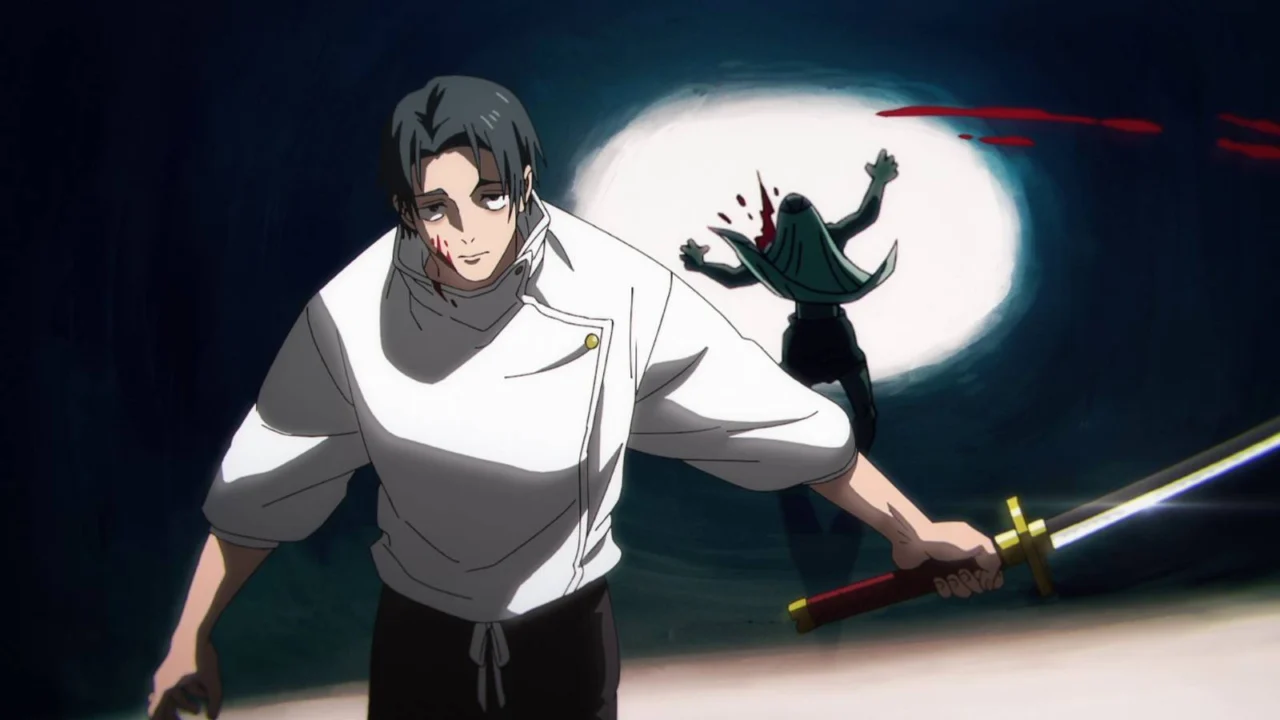
Picking up from the previous cliffhanger, Megumi unleashes his unrefined Domain Expansion, Chimera Shadow Garden, within the confines of a school gymnasium. Reggie Star, initially confident, attempts to negate the threat using the anti-domain technique “Hollow Wicker Basket.” This specialized defense typically neutralizes a domain’s “sure-hit” factor by interacting with its barrier. However, Megumi’s domain is uniquely incomplete; it lacks a traditional barrier, utilizing the gymnasium walls as a physical substitute. This clever workaround renders Reggie’s defense useless, leaving him vulnerable to a relentless assault of shadow clones. By the time Reggie realizes he’s fallen into a spatial trap, he’s already being dragged into the ink-black depths of the Ten Shadows Technique.
MAPPA continues to deliver stellar production values this season. The clash between Megumi and Reggie is rendered with visceral kinetic energy, employing shaky-cam effects and fisheye perspectives to heighten the sense of desperation. The visual contrast is striking—Megumi’s vibrant blue cursed energy illuminating the darkened gymnasium as he balances the immense weight of Reggie’s summoned vehicles. The fight reaches a crescendo when Reggie attempts to crush his opponent with a literal house, only to plummet through the floor and into the pool below. It becomes clear that Megumi wasn’t retreating out of fear; he was orchestrating a calculated ambush to soak Reggie’s cursed receipts and neutralize his arsenal.
 Image: MAPPA
Following a brutal physical exchange, Megumi utilizes “Divine Dog: Totality” to deliver a lethal blow. In his final moments, Reggie compares sorcerers to master manipulators—or “con artists”—while acknowledging Megumi’s superior guile. Crucially, Reggie reveals he was merely a participant, not a conspirator with Kenjaku. His dying warnings cast a shadow over the entire mission, suggesting that Master Tengen has been far from transparent about the game’s true nature. Though Megumi kills in self-defense to ensure his sister Tsumiki’s safety, the moral weight of these actions clearly begins to erode his resolve.
The mystery of Kenjaku’s endgame remains the series’ most compelling hook. He appears to be using this bloodbath as a literal Darwinian filter, discarding the weak to force an evolution in the strong. This “adapt or perish” cycle redefines the hierarchy of jujutsu society, where raw power is second to the ability to survive a rigged slaughter. We see a glimmer of this untapped potential in Fumihiko Takaba, whose “Comedian” technique is whispered to rival even Gojo Satoru’s Limitless, though he remains blissfully ignorant of his own god-like capability. Meanwhile, in the Sendai Colony, Yuta Okkotsu makes his presence felt by eliminating the ancient sorcerer Dhruv Lakdawalla, shattering a long-standing stalemate and signaling a violent shift in the game’s momentum.
 Image: MAPPA
The tragedy of the Culling Game lies in the false promise of agency it offers its combatants. Kenjaku intends to weaponize Sukuna as a catalyst for society’s total collapse, a move that will inevitably sacrifice the defenseless. This philosophical conflict echoes the “Hidden Inventory” arc, where a young Gojo and Geto held diametrically opposed views on their duty. Before Riko Amanai’s death, Geto believed strength existed solely to protect the weak, while Gojo viewed his status as a burden-free peak. Their roles eventually inverted—Geto descended into misanthropic madness, while Gojo realized that true strength is found in fostering an empathetic next generation to protect humanity from the rot of curses.
Season 3 of Jujutsu Kaisen threatens to dismantle that hopeful vision through Kenjaku’s plan to forcibly merge humanity with Tengen. It is a scheme that erases individuality and treats sorcerers as disposable gears in a broken machine. In this rigged arena, winning is a delusion, and surviving feels like a waking nightmare. As the first part of Season 3 approaches its finale, the mockery the Culling Game makes of its “geniuses” becomes painfully clear.
New episodes of Jujutsu Kaisen are available every Thursday on Crunchyroll.
Source: Polygon
Related articles
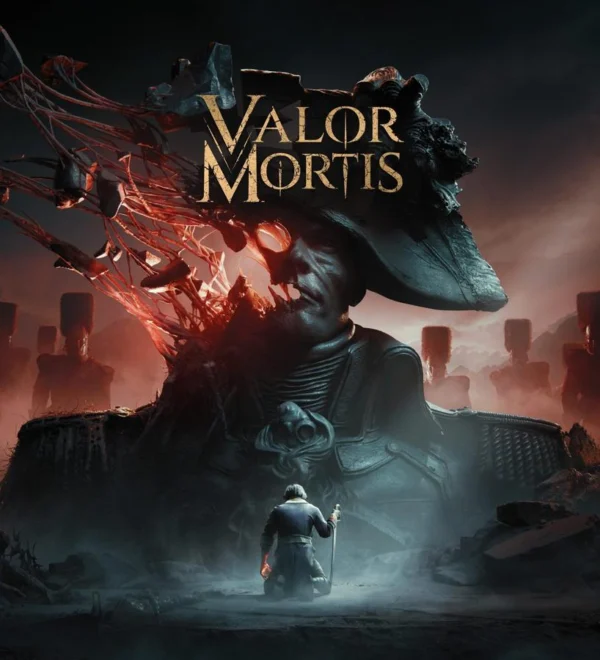 Soulslike Valor Mortis Released on PC and Consoles
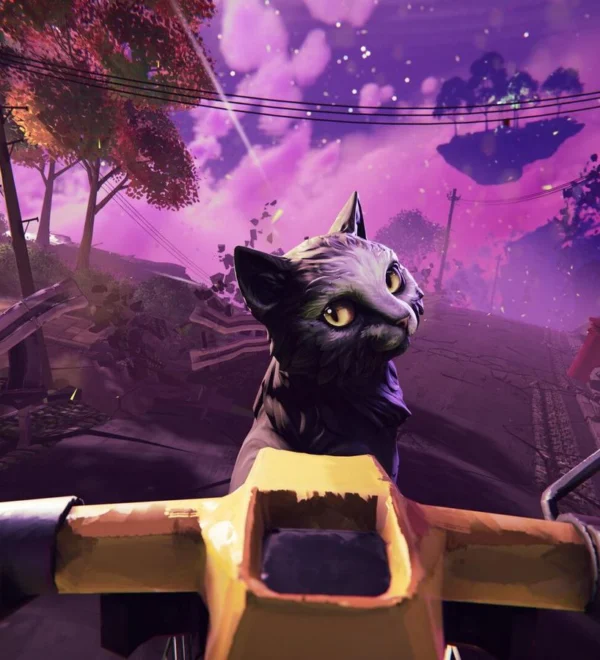 There Are No Ghosts at the Grand Combines Hotel Management with Ghost Hunting
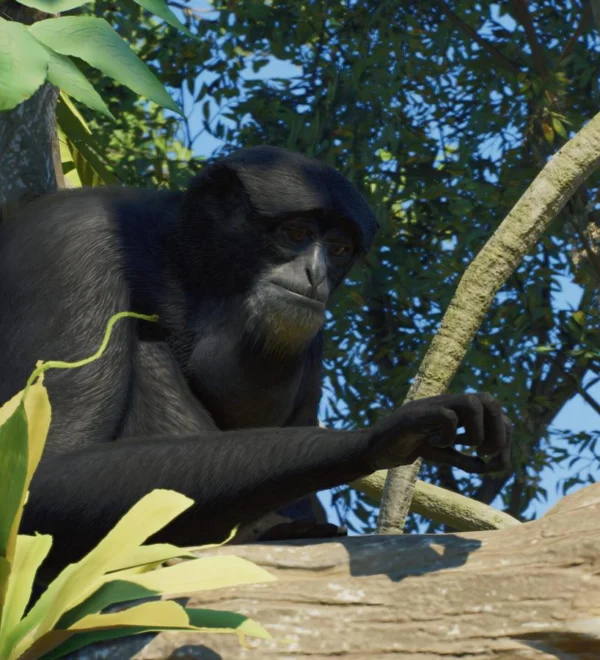 Planet Zoo 2 Released with New Trailer Showcasing Animals and Aquariums
 Classic The Far Side Comic Quote Resonates 34 Years Later
 Microsoft Announces ID@Xbox Showcase Featuring 20 Games
 Uncharted 2 Turns 17 as Players Recall Naughty Dog’s Acclaimed Sequel
 House of the Dragon Star Reveals When Final Season Filming Begins
 Vision and Ultron Return as Vision Quest Premieres on Disney+