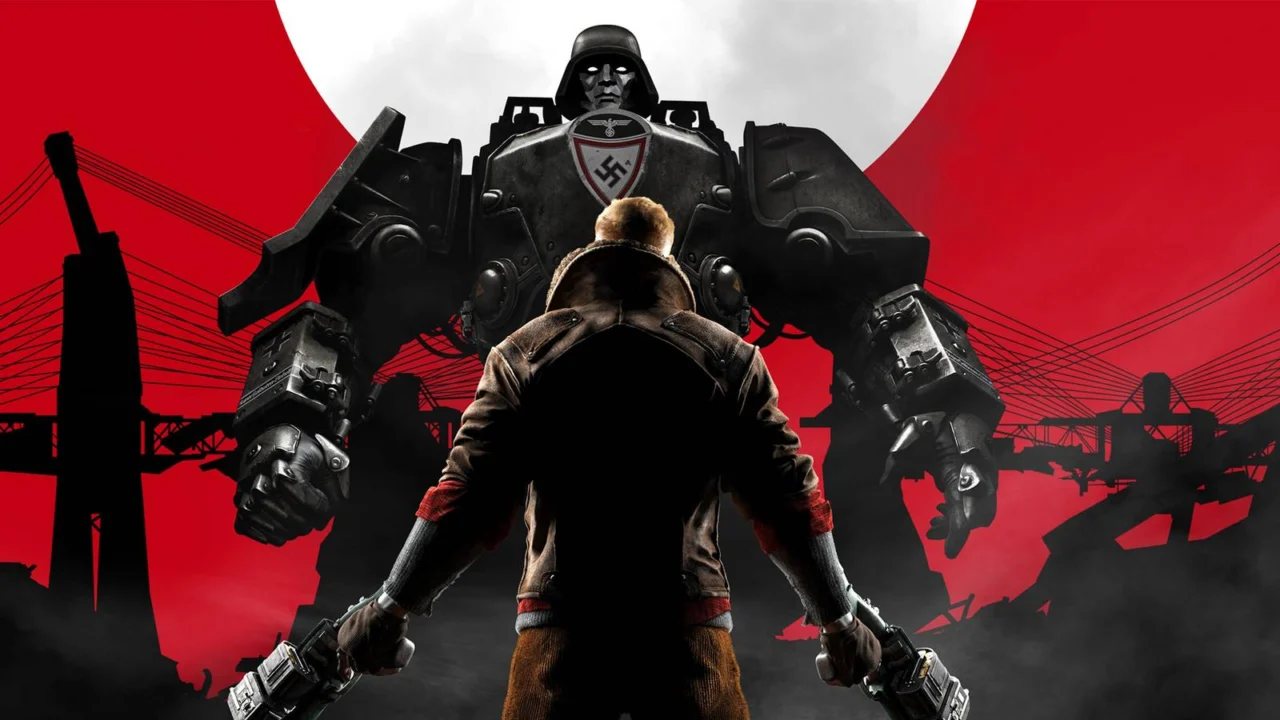
Jonathan Nolan explains the distinctions between his Fallout and Wolfenstein TV adaptations

Few creators have cracked the code of video game adaptations quite like Jonathan Nolan. As the executive producer and director behind the acclaimed Fallout series, Nolan successfully translated the quirky, macabre atmosphere of Bethesda’s wasteland to the small screen. Now, he is shifting his focus to another heavy-hitting Bethesda IP with a drastically different tone: Wolfenstein.
In discussing the upcoming project, Nolan is quick to credit his collaborators—specifically showrunner Patrick Somerville, known for his work on The Leftovers and Station Eleven.
“For Wolfenstein, we’ve teamed up with Patrick Somerville, a truly brilliant showrunner,” Nolan shared with Polygon. “We feel incredibly fortunate. Success in this industry is built on these types of creative partnerships. Patrick is currently deep in development, and I’m genuinely thrilled about the direction of the show.”

The Wolfenstein legacy began in 1981, initially defining the stealth genre with its portrayal of an American operative navigating World War II. The franchise saw a major narrative revitalization in 2014 with Wolfenstein: The New Order. Developed by MachineGames, the reboot introduced a harrowing alternate history where the Axis powers won the war, leading into the 2017 sequel, The New Colossus, which took the fight to a Nazi-occupied United States.
This transition poses a new creative challenge for Nolan. Unlike the expansive, player-driven sandbox of Fallout, Wolfenstein offers a more linear, cinematic experience.
“Every adaptation requires a unique methodology,” Nolan explained. “The games operate on different levels. Fallout provides these sprawling, open worlds, whereas the modern Wolfenstein titles are more narrative-driven and linear. I have a deep appreciation for both styles, but they each possess specific elements that are considered ‘sacred’ to the fans.”

When Nolan began his journey with Fallout, he worked closely with Bethesda’s Todd Howard to ensure the series felt like a natural extension of the game’s mythology. While Fallout allowed for an original story set within a broad universe, Wolfenstein may require a more focused interpretation of its established characters.
Nolan, who grew up in England, finds the era’s history and rapid technological evolution fascinating. “In Wolfenstein, you’re looking at a period where the world is shifting at a terrifying pace,” he noted. “The transition from the pre-war era to the post-war world involved a staggering rate of change, mirroring the technological acceleration we see today.”

The Wolfenstein games visualize this through a “dieselpunk” lens, imagining advanced, frightening machinery born from an alternate victory. It’s a thematic cousin to Fallout‘s Cold War retro-futurism; both franchises explore the fragility of the democratic order and the consequences of its collapse.
As Nolan reflects: “Regrettably, these stories feel more relevant than ever, albeit for different reasons.”
Source: Polygon
Related articles
 Crimson Desert Charting the Unknown Expansion Will Add Sea Monsters and Ship Boarding, Details Revealed
 Ticket Presales Suggest Dune: Part Three Will Lose Heavily to Avengers: Doomsday at the Box Office
 DC Horror Film Clayface Earns Unusually High CinemaScore
 Danganronpa 2×2 Visual Novel Lowers System Requirements After Criticism Over 32GB RAM Listing
 A Decade On, Nintendo’s Switch Reveal Is a Captivating Time Capsule
 Kaiju No. 8 Anime to Conclude With Feature Film, First Poster Released
 GTA VI Launch Trailer Remade in GTA IV, Including an Even Stranger Shower Scene
 Asmongold Assigns Blame for BioWare Closure, and Some Players Agree