
How Killing Floor’s coolest mechanic made it in on the final minute
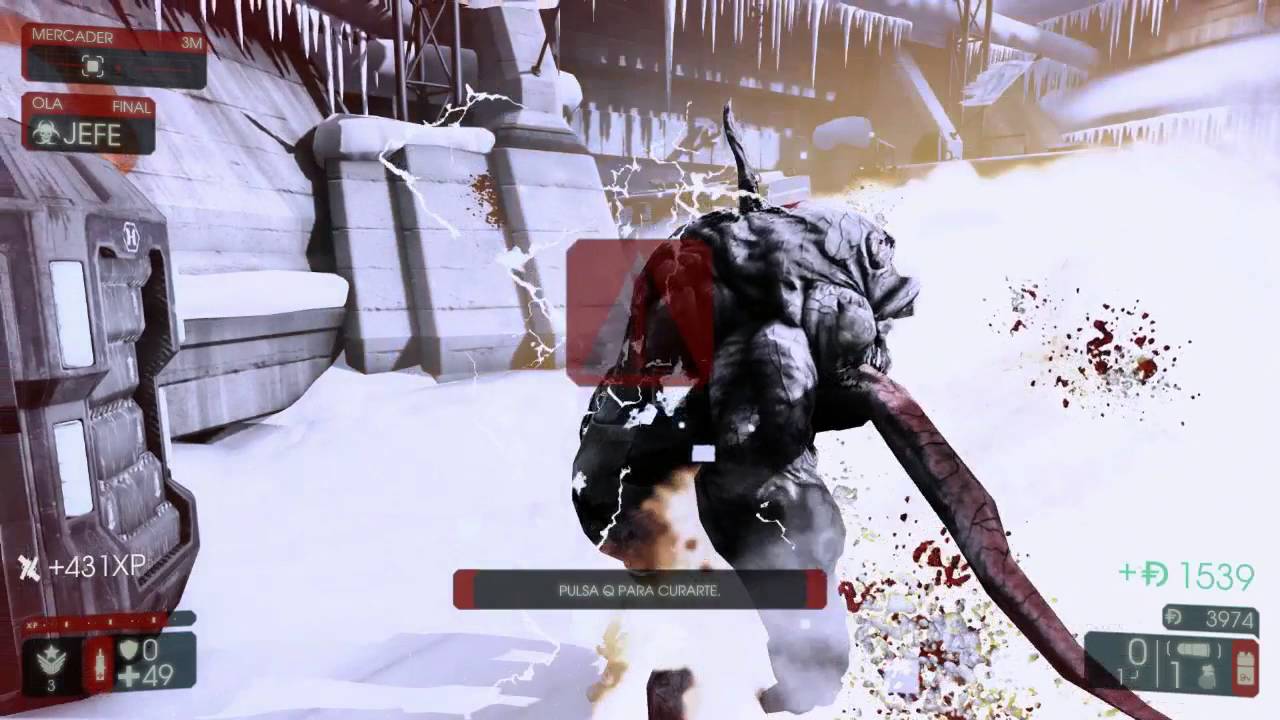
Amidst the chaos of Killing Floor 2’s relentless zombie hordes, guts, gore, and strewn limbs, there’s an occasional second of zen. A slow-motion impact referred to as Zed Time phases in out of nowhere, the color washes out, and also you get some respite from the insanity. It permits you the time to line up a sequence of pinpoint headshots, or reload your weapons as you again away from a stampeding behemoth, whereas on the similar time appreciating the over-the-top physics and buckets of grisly viscera hovering by means of the sky.
If you want making useless issues deader, examine our record of the best zombie games.
When the primary Killing Floor was late into growth, Tripwire Interactive’s president, John Gibson, was mendacity in mattress, looking at his ceiling fan. “The first thought that popped into my head was ‘slow-motion zombie killing’,” Gibson says. “It was like a bolt out of the blue, really, and I couldn’t get the idea out of my head. I thought about it all morning. I really felt like it would be something amazing to experience as a player.”
Gibson may see it clearly in his head: The Matrix’s hall scene and Max Payne’s slow-mo shootouts, in a sport about tearing by means of hordes of zombies. It was the right match. The solely downside was that Killing Floor was as a consequence of launch in simply two weeks. “At that point, developers really shouldn’t be adding new features to their games,” Gibson laughs. “That is the point in a project where devs are fixing final bugs, doing some balance tweaks, etc. We were so close to shipping that I didn’t even want to tell the other team members about the idea, because trying it would be so risky that late in development.”

So Gibson went to work on the function on his personal.. He set a self-imposed deadline of 1 hour, and promised himself he would scrap the concept and by no means point out it to the group in any respect if he couldn’t meet it. In lower than 60 minutes his slow-motion mechanic was up and working. It wasn’t lengthy earlier than he had the prototype working in multiplayer, watching his colleagues dodge projectiles, pop heads, and see their spent cartridges ejecting from their weapons in wonderful slow-motion. Presented with it in motion, the group determined to get to work on refining the concept for the upcoming launch.
“It really started with the idea to show off the awesome gunplay as well as the gore and ragdoll deaths in slow-motion,” Gibson explains. “At Tripwire, we’ve always felt that for weapons to feel powerful they need to impact on the enemy, and the ragdoll force when they are shot must feel very weighty and powerful. So the thought of seeing that in slow-motion was very exciting, and as it turned out it /did/ look amazing. Once we played with it, though, we saw that it was such a great tool to give players a moment to catch their breath and regain their footing in the midst of all the carnage. We then built on it from there to add chaining of Zed Time to extend the length of the slow-motion, as well as building it into other parts of the game.”
But first, Tripwire needed to repair up elements of the sport engine that didn’t play good with Zed Time, in addition to determine tips on how to sync up the sport’s audio for when the motion slows, all in time for launch. You see, Zed Time slows the sport to 20% velocity, and the audio sounded terrible when pitched all the way down to match. The candy spot for audio was 50%, however that made a few of the weapons, significantly automatics, sound out of sync. With a bit effort, they managed to repair this, after which launched the distorted, time-warping sound impact, created by Dan “zYnthetic” Nassick, that triggers upon getting into Zed Time. It was prepared for launch. Given that the mechanic had been cobbled collectively in a matter of weeks, nonetheless, there was room for enchancment. Which is the place the sequel is available in.

“In Killing Floor 2 it was much more challenging because we set out to resolve players’ biggest complaint from the first game – getting Zed Time when nothing was going on around them,” Gibson says. “No one likes slow-motion dramatic welding or slow-motion dramatic walking with no enemies around to shoot. So for Killing Floor 2 we implemented a system that would allow players that didn’t have any zed enemies around to continue at a normal time rate. It was extremely complex and challenging to implement, so much so we almost gave up several times. Slowing down the whole game in multiplayer wasn’t too hard. Slowing parts of the game down in multiplayer while other players continue at normal speed was really challenging. We had problems with the physics system, networking, effects, etc. But we persisted and the end result made Zed Time in Killing Floor 2 so much more enjoyable.”
Zed Time is triggered by a random likelihood on each enemy kill, so their distribution is sporadic. It results in some unimaginable moments whenever you, for instance, end up scanning a torso because it slowly flies off the map within the midst of a smoky rocket explosion. Or when the impact triggers on an ally’s kill and also you’re mid-jump, permitting you to twist and pull of a seemingly not possible headshot. It’s extremely slick, and I can’t think about Killing Floor 2 being anyplace close to as pleasant with out it. Obviously, it helps that it additionally creates these gory moments of visible spectacle, permitting you to savour the aftermath of your melee decapitations.

“The chance increases as the player does things that the system thinks will look cool for them to see in slow motion – blasting a zed with a shotgun up close, getting a headshot, killing multiple zeds at the same time,” Gibson explains. “The system also looks at how long it has been since Zed Time was triggered. The longer it has been, the higher the chance that Zed Time will occur, until it is basically guaranteed to happen. This system has worked out pretty well, with having Zed Time spread out to an interval that feels good for the player but also not rigidly happening at exact intervals.”
While some shooters get their kicks from harm numbers, colour-coded loot, and different strategies of visible suggestions, Killing Floor 2 retains you coming again with its shock slow-mo gibs. While structurally related, I believe that’s what elevates Killing Floor 2 above Call of Duty’s varied zombie modes. It’s the surplus, the carnage, and the way the pacing is impacted by Zed Time. Who doesn’t like immediately being rained on by falling entrails? Eh? EH? It is genius. Honestly, I’m contemplating investing in a ceiling fan.
Source
Related articles
 Darude Releases Sandstorm Storm 25 Mix After Reworking the Track for His Anniversary Tour
 Mahmut Orhan and Felix Raphael Release Three
 Gabry Ponte releases festival anthem Pulse React
 Prime 1 Studio opened preorders for an 86.8 kg Queen Alien statue
 Mosimann and Gaetan Roussel Release New Single Soon
 Michelle Yeoh receives a star on the Hollywood Walk of Fame
 Bitcoin’s Growing Role in Corporate Strategies and Market Sentiment