
How a forgotten superhero movie ruined Hollywood 15 years ago

During the dawn of the 2010s, superhero cinema occupied a strange, transitional purgatory. The formative era defined by Sam Raimi’s Spider-Man and Bryan Singer’s X-Men had largely concluded, yet the Marvel Cinematic Universe remained a nascent experiment, having produced two Iron Man hits and a largely disregarded Incredible Hulk. By the summer of 2011, Thor and Captain America: The First Avenger would start cementing the road to an ensemble future, while X-Men: First Class sought to rejuvenate the mutant franchise. In the midst of this shift, Sony attempted to resurrect The Green Hornet—a vintage vigilante whose cinematic presence had been dormant since the era of theatrical serials. Arriving on January 14, 2011, the big-budget gamble is often remembered as a misfire, but the reality is more nuanced.
Contrary to its lingering reputation as a catastrophe, the Michel Gondry-directed, Seth Rogen and Evan Goldberg-scripted Green Hornet earned nearly $100 million domestically and doubled that figure worldwide. While hardly a runaway success, it wasn’t the commercial trainwreck revisionist history suggests; it maintained a steady box office hold and secured a respectable B+ CinemaScore. Its “failure” was largely a narrative constructed by critics, an bloated production budget, and the creative team itself. Both Rogen and Gondry have been candid about their dissatisfaction with the experience. Perhaps more significant, however, is the film’s legacy as a catalyst for “studio house styles”—a set of creative guardrails designed to ensure that no project quite as eccentric or idiosyncratic as this one would ever be greenlit again.
Creatively speaking, The Green Hornet isn’t as disorganized as modern superhero bloat can be. Its peculiar DNA feels appropriate for a genre built on strange alliances. Rogen and Goldberg brought the raunchy buddy-comedy sensibilities of Superbad and Pineapple Express, while Michel Gondry brought the tactile, surrealist imagination seen in Eternal Sunshine of the Spotless Mind and The Science of Sleep. On paper, Rogen’s presence in a Gondry-designed world made sense, following in the footsteps of previous Gondry leads like Jim Carrey and Jack Black.
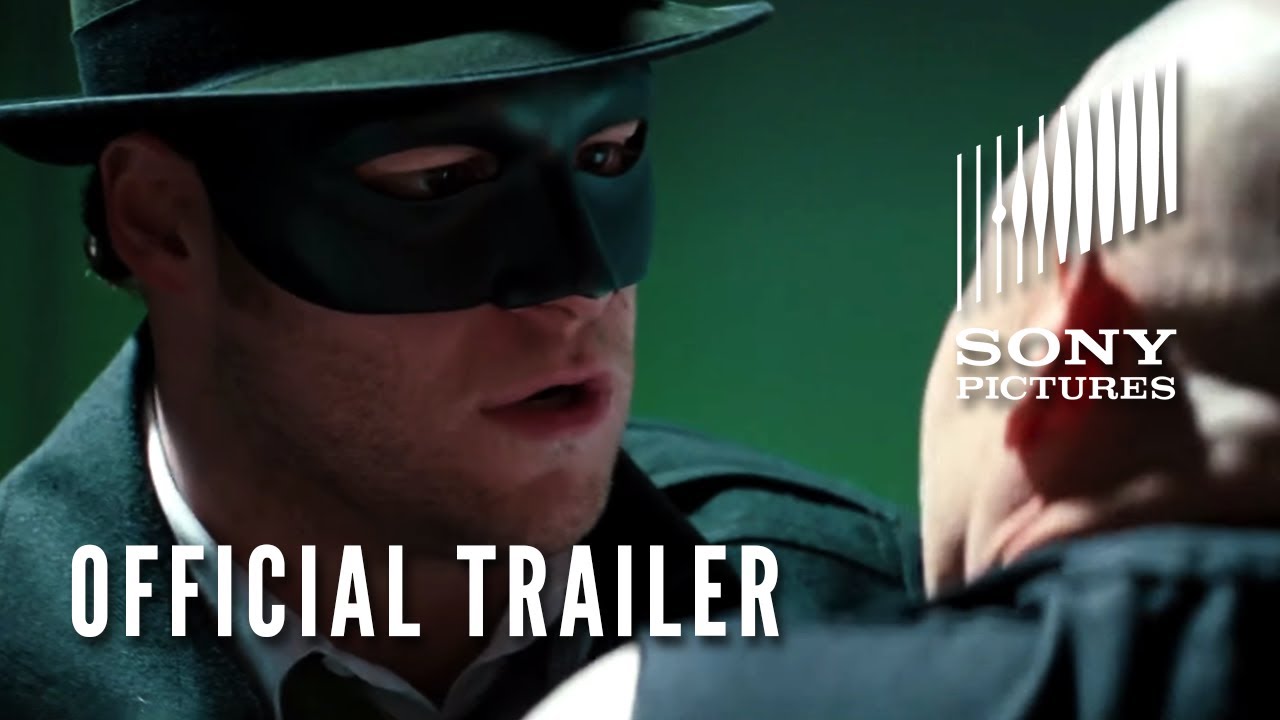
The film’s central subversion lies in Rogen’s portrayal of Britt Reid as a feckless, entitled heir who stumbles into vigilantism. The real prowess belongs to Kato (Jay Chou), a technical polymath and martial arts prodigy. This dynamic, where Reid provides the capital and the ego while Kato performs the actual heroics, serves as a sharp parody of the traditional sidekick trope. It perfectly bridges Gondry’s vision of heroism as a child’s elaborate daydream and Rogen’s specialty in playing immature men forced into reluctant growth.
A decade later, Gondry’s contributions have aged more gracefully than Rogen’s. While the star occasionally retreats into his familiar “frantic babbling” persona, the visual panache of the action remains striking. Conversely, the subplot involving Reid’s secretary, Lenore Case (Cameron Diaz), feels particularly dated. Even though the script acknowledges Reid’s behavior as boorish, the scenes lack comedic bite, leaving a talent like Diaz with frustratingly little to do.

However, Gondry’s enthusiasm for the action sequences is palpable. He renders Kato’s combat skills as a series of hyper-stylized, “Matrix-esque” internal calculations where time dilates and geometry shifts—a visual motif inherited from his music video roots. The chaotic finale, featuring a modified car being bisected by an elevator while Reid and Kato continue to drive the remaining half through an office, possesses a loopy, toy-like charm that favors practical effects over sanitized CGI.
This whimsicality extends to the gadgets, ranging from the practical (a knockout gas with a dangerously long recovery time) to the absurd (an in-car record player). Even the mandatory exposition is filtered through Gondry’s lens; when Reid finally connects the plot’s dots, the realization is presented as a kaleidoscopic collage of his thought process, turning a narrative chore into a visual gag about the hero’s limited intellect.
Ultimately, The Green Hornet remains an entertaining anomaly rather than a masterpiece. Compared to the iconic imprints left by Tim Burton or James Gunn, it lacks a singular, unifying vision to elevate it beyond a curiosity. Much of this aimlessness stems from Sony’s reported interference. Rogen has often detailed the friction between the creators and the studio, which likely balked at turning a legacy property into a sandbox for Gondry’s DIY aesthetic.

While studio-meddling was nothing new in 2011, the industry hadn’t yet perfected the “homogenized” house style that defines the modern era. Movies like Thor and Captain America still bore the distinct hallmarks of Kenneth Branagh and Joe Johnston. 2011 even saw a strange spike in stylistic experimentation, like the extensive use of split-screen in X-Men: First Class. But as the MCU and DCEU consolidated their power, projects like The Green Hornet likely served as cautionary tales for executives. The result is a landscape where visionary directors rarely get to play with these toys without surrendering to the machine.
Fifteen years later, there is something bittersweet about revisiting The Green Hornet. In a world where superheroes are corporate juggernauts, Gondry’s film feels like a relic of a time when the genre could still be a stylish, irreverent joke. It may not be Spider-Man 2 or Batman Returns, but its willingness to treat childish power fantasies with such colorful absurdity makes it a fascinating artifact of a bygone era.
Source: Polygon
Related articles
 Boxed Games Become a Problem for Collectors as Issues Reach PS5
 Gears of War: E-Day Reportedly Planned as Start of a New Trilogy, Rumors Say
 Shenmue III Enhanced Edition Delayed to Improve Graphics and Add New Features
 Ridley Scott Finds Screenwriter for New Film That May Continue the Prometheus and Alien: Covenant Story
 Zendaya to Be Promoted for Best Lead Actress Oscar for Third Dune Film
 Crimson Desert Charting the Unknown Expansion Will Add Sea Monsters and Ship Boarding, Details Revealed
 Ticket Presales Suggest Dune: Part Three Will Lose Heavily to Avengers: Doomsday at the Box Office
 DC Horror Film Clayface Earns Unusually High CinemaScore