
Horror Novel Bury Our Bones in the Midnight Soil Blends Vampire Drama With Regency-Style Romance
Fans of Anne Rice’s Interview with the Vampire have plenty of ways to feed their appetite for stories about sexy creatures of the night. The foundational work of vampire literature continued with 12 more novels and became an excellent movie. It was also updated into a TV series with three seasons, and a fourth is on the way. Many of Rice’s imitators took her sympathetic monsters and sanitized them for YA romance. But V.E. Schwab’s 2025 novel Bury Our Bones in the Midnight Soil feels like a true spiritual successor. It plays with the genre’s well-established themes and structure to create something beautifully original.
Rice built The Vampire Chronicles on Bram Stoker’s Dracula and Sheridan Le Fanu’s Carmilla, works in which the undead defy societal and sexual norms. Interview with the Vampire is a messy, queer love story, told by an unreliable narrator who shares centuries of relationship drama. Bury Our Bones in the Midnight Soil offers three unreliable narrators. All of them lie to themselves and to each other as their stories intertwine across the centuries. Schwab hides their motivations and key parts of their history to tease the reader. She jumps back and forth in time and shows the effects of a character’s mistake long before the cause becomes clear.
Time is relative for an immortal, and Schwab regularly changes the pace of her narrative. She stays longest with Maria, a girl growing up in 16th century Spain, where the only path open to her is to marry and have children. Maria works to find the best match she can, one that will raise her social status. She still ends up trapped with a boorish husband and in-laws whose flaws range from darkly funny to truly vile. Her mother-in-law is a cranky gossip, and her father-in-law tries to sexually assault her. When a mysterious widow offers Maria the chance to change her fate, she sheds her old life and becomes a “feral rose,” the book’s poetic name for vampires.
Maria’s journey follows some of the same story beats as Interview with the Vampire. It dwells on the weight of loneliness, set against the terrible danger of letting yourself get too close to others. As Maria learns the rules of her new existence, Schwab slowly unveils her own spin on vampire mythology. She explains what can actually kill vampires, and she adds clever twists on what undead life is like. Their hunger is eternal, and as decades and centuries pass, bits of their humanity fall away until only empty monsters remain. “It turns out a soul is what makes the sun feel warm against your skin, what gives food taste, what makes you feel full,” one vampire explains to her human companion.
That inevitability gives a dark weight to the relationships vampires have with each other. They fear that they will lose themselves and hurt the people they love. They also fear having to be the responsible partner who stops the monster a companion has become. The dynamic is inherently toxic. Like Interview with the Vampire, much of Bury Our Bones in the Midnight Soil is devoted to twisted obsessions and to people who would be much better off if they could just agree to an amicable breakup.
Schwab crafts a beautiful world full of horrors
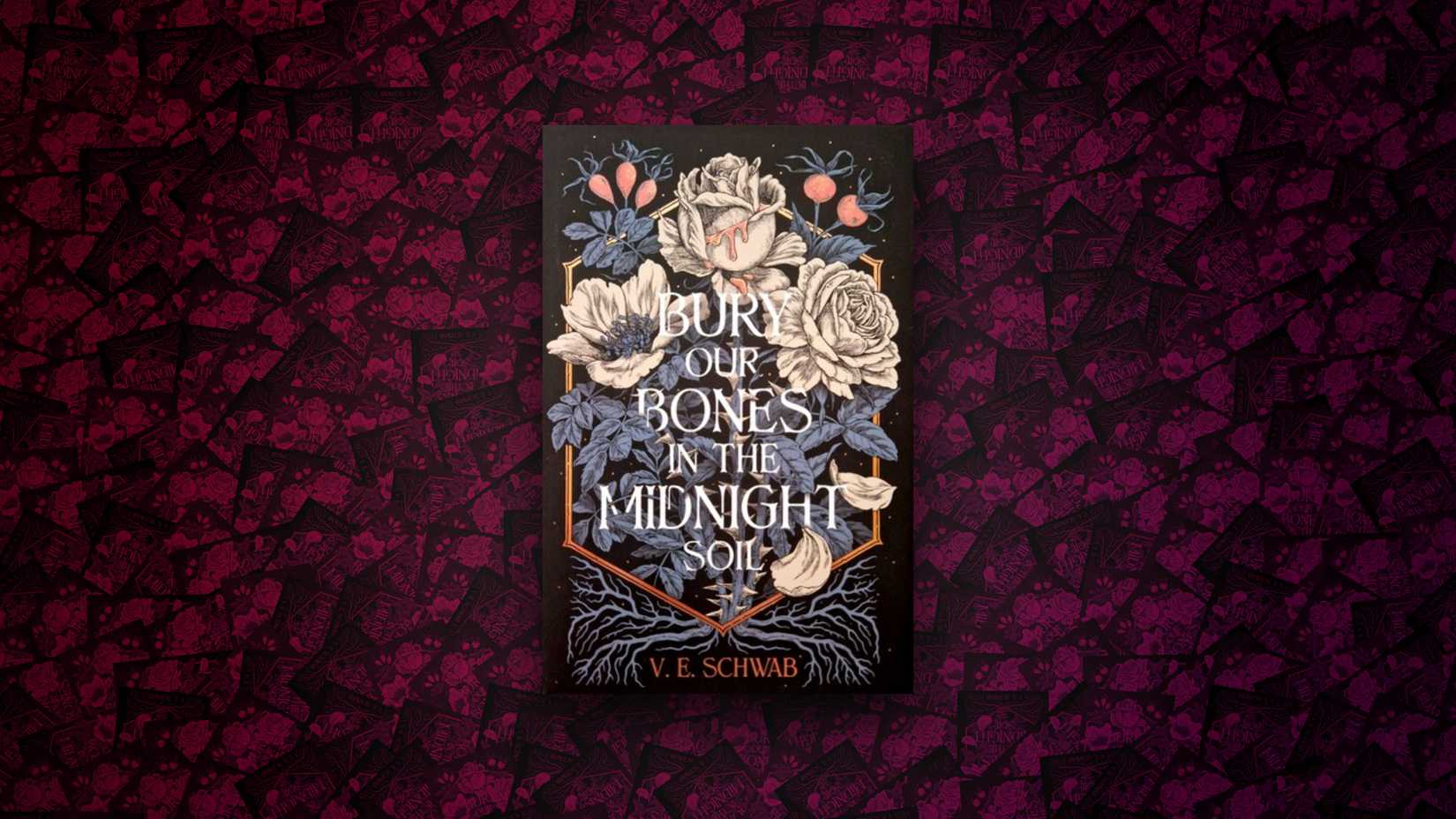
Schwab’s descriptions are always luscious, whether she is writing passionate sex scenes or the details of the cities where vampires lurk. A sojourn in Venice with a much older vampire is as beautiful as it is heartbreaking. It is a tale of how all good things end, and how hard it is to replace what has been lost. The story is at its most fun, though, when it stops in Regency London. That stretch kicks off a plot that’s effectively Bridgerton if Lady Danbury were secretly a vampire. The arc centers on Charlotte, a young woman pushed into a world of balls and suitors she wants nothing to do with. She receives the same poisoned offer of a new life.
Charlotte and Maria’s chapters can cover decades in a single page. The 21st century story of Alice plays out over just a few very eventful days. Alice is a shy Harvard student running from family trauma, and she hopes for a fresh start. After a one-night stand she gets just the opposite. She wakes up a vampire and has to work out what happened to her, what it means, and who is to blame.
Charlotte, Maria, and Alice are all lesbians. The conventions of their eras make it especially hard for Maria and Charlotte to fit in, and Schwab doesn’t gloss over the problems Alice faces, either. These vampires defy social norms, not just in their sexuality but as women with the power to fight back against the men who see them as prey. The threat of physical and sexual violence is always lurking. Part of the perverse power of vampirism is the chance to be the predator, deciding who deserves to die, or at least who will not be missed.
Both Interview with the Vampire and Bury Our Bones in the Midnight Soil are books about the stories people tell. Schwab’s novel lacks the frame of a literal interview, but it is filled with teary confessions, outright lies, and clever omissions as vampires manipulate each other and try to live with themselves. They also repeatedly change their stories. They seize agency over their lives instead of remaining supporting characters in someone else’s tale. The meta framing is a beautiful way for Schwab to play with the long tradition of vampire literature. Bury Our Bones in the Midnight Soil joins a long legacy, and Schwab breathes fresh life into the genre to craft a story fans will want to sink their teeth into.
Source: Polygon
Related articles
 Shenmue III Enhanced Edition Delayed to Improve Graphics and Add New Features
 Ridley Scott Finds Screenwriter for New Film That May Continue the Prometheus and Alien: Covenant Story
 Zendaya to Be Promoted for Best Lead Actress Oscar for Third Dune Film
 Crimson Desert Charting the Unknown Expansion Will Add Sea Monsters and Ship Boarding, Details Revealed
 Ticket Presales Suggest Dune: Part Three Will Lose Heavily to Avengers: Doomsday at the Box Office
 DC Horror Film Clayface Earns Unusually High CinemaScore
 Danganronpa 2×2 Visual Novel Lowers System Requirements After Criticism Over 32GB RAM Listing
 A Decade On, Nintendo’s Switch Reveal Is a Captivating Time Capsule