
GTA Cheat Codes Taught a Generation How Much Fun It Is to Break a Video Game
I have a confession to make: I have never once experienced a Grand Theft Auto game without bending the rules. Back in the day, I memorized the weapon-unlock sequence for GTA 3 so thoroughly that I am certain my muscle memory could still input it effortlessly if you handed me a controller today. I remain entirely oblivious to how the intended narrative progression actually unfolds. Without fail, I always secured a bazooka mere moments after firing up a new save file.
If that feels like a cardinal gaming sin, understand that I am simply a product of my era. During the 2000s, when the franchise was riding an unstoppable wave of PlayStation 2 success, cheat codes were woven into the very fabric of the experience. I didn’t know a single person who played through a GTA storyline as the developers ostensibly intended. Instead, my childhood friends and I treated it exclusively as a chaotic sandbox shooting range. While that meant many kids of that generation arguably missed out on Rockstar’s sharp American satire, those shortcuts taught us to appreciate the brilliant mechanics of open-world game design that practically invited players to tear them apart.
Here is what a standard gaming session looked like for me in the early aughts: A friend and I would crowd around a PS2, passing the controller back and forth. The objective was simple—see how long one of us could survive on an absolute rampage while holding out against a ferocious five-star wanted level. It functioned almost like a competitive roguelike. We would kick off each run by punching in the classic All Weapons cheat (R2, R2, L1, R2, Left, Down, Right, Up, Left, Down, Right, Up) and immediately get to work with an absurd arsenal. Even as I grew older and developed a genuine appreciation for Rockstar’s narrative depth, this unrestrained approach remained my foundational gateway to the series.
Was it a superficial way to engage with the medium? Naturally, to some extent. Behavior like this is undoubtedly what turned GTA into a lightning rod for moral outrage throughout the 2000s. If my mother happened to walk into the room, she would find me blowing up waves of police cruisers with zero overarching objective. It was mindless destruction, and I found it utterly captivating. Yet, the older I get, the more convinced I am that this remains a remarkably valid way to experience what GTA has to offer.
What makes Rockstar’s virtual worlds so astonishing is how effortlessly alive they feel. The environment never gives the impression that it is merely executing scripted routines; digital citizens possess genuine autonomy and react dynamically to unfolding chaos. Exploring Vice City felt like observing a sprawling ant farm. You were essentially there to run social experiments, prodding and poking at the environment to analyze how the simulation would cope. Whenever I engineered a massive traffic gridlock using stolen vehicles and launched a rocket right into the middle of it, it stemmed from pure curiosity. I wanted to see how the software would untangle the mess, and the resulting spectacle was always wonderfully unpredictable.
Get Polygon’s Wishlister newsletter
A weekly cheat sheet to what you’ll eventually love to play. No buying, no commitment — just saving for later.
Free. Unsubscribe anytime.
Within that context, cheat codes served as indispensable instruments for sandbox experimentation. Having an unlocked arsenal was essential, but my toolkit featured plenty of other favorites. Naturally, spawning a tank on a whim to watch local law enforcement grapple with it was a rite of passage. I could rarely resist tampering with pedestrian AI to spark faction wars on the sidewalk, and activating flying cars was mandatory for pushing the physics engine to its absolute breaking point. Every code offered a fresh glimpse into how Rockstar engineered emergent moments through deeply interlocking gameplay systems.
The gaming culture surrounding cheat codes has shifted dramatically since those simpler times. Practically no contemporary releases feature built-in modifiers that let you manipulate the game world like clay. (I am certainly dating myself here.) That kind of unbridled tinkering is now largely restricted to modders and PC players savvy enough to manipulate command consoles in massive open-world titles. True in-game experimentation has faded as developers grow increasingly protective, desperate to prevent players from breaking their meticulously crafted experiences. Major titles are routinely delayed simply to ensure quality assurance testers can squash every last bug, leaving little room for a flawed yet delightfully malleable product to reach the public.
Yet, some virtual landscapes are practically begging to be broken. When I dive into GTA, I approach it as both a participant and an eager student of design, hoping to dissect Rockstar’s wizardry and marvel at its underlying intricacy. I wish I could adopt that same mindset across more modern masterpieces. The Legend of Zelda: Tears of the Kingdom boasts a staggering combination of systemic interactions that essentially turn it into an immersive simulator, but I rarely feel free to push those boundaries to the absolute limit. Sourcing and grinding for the necessary Zonai components to construct the mechanized monsters of my imagination requires an immense time investment. It is genuinely disappointing that there is no quick-spawn code available to supply infinite parts for uninhibited building, especially given how much depth I am eager to uncover.
By contrast, I understand the mechanics of GTA 3 down to their bare bones. I know precisely how NPCs will adapt to varying degrees of manufactured mayhem. I know how to subtly manipulate local driving habits, and I know just how far local law enforcement will push themselves to halt my rampages. That deep familiarity breeds a profound respect for the engineering of video games—an educational side of the medium that is so frequently locked away behind rigidly enforced design choices.
All of this is to say that I sincerely hope Rockstar maintains its tradition of supporting cheat codes in GTA 6. As I watched the recent, extensive preview footage, my mind immediately raced to the various stress tests I intended to conduct the moment I set foot in the new world. The extended trailer features Jason firing upon a helicopter from the bed of a moving truck—neat, but what happens if you fire a rocket launcher at it instead? I want to discover the answer on day one.
Source: Polygon
Related articles
 GTA 5 Runs at Up to 60 FPS on PS5 Emulator Amid Questions of GTA 6 PC Release Timeline
 Silent Hill Creator Pyramid Head Designer Sacrifices Personal Life for Work
 52 Minutes of Exodus Gameplay Show Walkthrough of Bear Boss Mission
 The Blood of Dawnwalker Developers Reveal Launch Sales and Promo Art
 Rumored StarCraft Shooter in Development, Not Destiny-Style Game
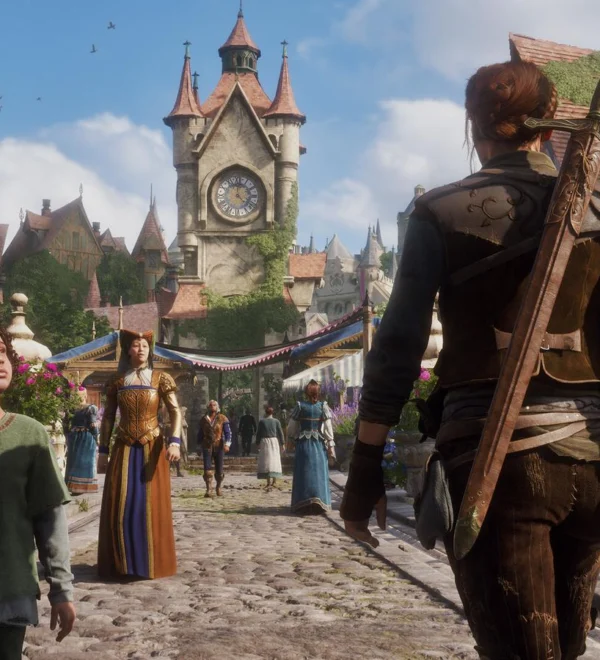 Fable Developers Built Character Generator Manually After Failing to Create Quality Tool
 Developers Issue Fix for NVIDIA GPU Flickering Bug
 3 Games Where Your Choices Truly Matter