
Glinda’s Ending in Wicked: For Good Is More Tragic Than It Seems

Wicked: For Good completes John M. Chu’s cinematic take on the Broadway phenomenon Wicked, centering the fraught, tender bond between Glinda the Good (Ariana Grande) and Elphaba, the Wicked Witch of the West (Cynthia Erivo). Given the story’s long life — from Gregory Maguire’s 1995 novel Wicked: The Life and Times of the Wicked Witch of the West to the stage — audiences have plenty to debate about how this adaptation chooses to end their story.
Opinion online is split — viewers are arguing over whether the film’s finale truly satisfies and whether Glinda’s conclusion should be read as a happy resolution. Some fans contend the film’s optimistic gloss masks a steeper cost. For many, Glinda’s final moments read as saccharine on the surface but are built on a painful sacrifice that may not be obvious at first glance.
Ed. note: This article contains spoilers for Wicked: For Good and the Broadway musical.
 Photo: Giles Keyte/Universal Pictures/Everett Collection
The musical’s original ending has long divided fans — many find Elphaba and Glinda’s farewell wrenching — and For Good has revived similar debates. The film largely preserves the musical’s framework: Glinda expels the Wizard (Jeff Goldblum) from power and confines Madame Morrible (Michelle Yeoh). But the adaptation also introduces subtle yet meaningful adjustments. For example, while the stage version leaves the fate of Oz’s talking animals implied, the movie explicitly restores their citizenship — a concrete fulfillment of Elphaba’s lifetime goal.
Most notably, the film closes with Glinda alone in the tower above the Emerald City, gazing out over the realm she now guides. Far beyond her sight, Elphaba travels with Fiyero (Jonathan Bailey) in the space beyond Oz; yet their connection endures. At Glinda’s side the Grimmerie — the spellbook only Elphaba could wield — stirs and glows a warm, golden light, hinting that Glinda may yet learn the craft Elphaba mastered.
That implication reads as hope for Glinda, but some viewers argue the film’s softer touch undercuts the musical’s original melancholy. Critics on social platforms suggest making the finale brighter lessens the story’s political sting, implying that systemic injustices can be remedied by a single compassionate ruler rather than sustained collective action.
Others object to what they see as an undeserved redemption arc for Glinda: while Elphaba and Fiyero are driven into exile, Glinda ostensibly inherits fame, adoration, and the chance at magic despite earlier complicity. For many, that asymmetry feels wrong — a reward for someone who benefited from, and at times enabled, the very power structures Elphaba fought.
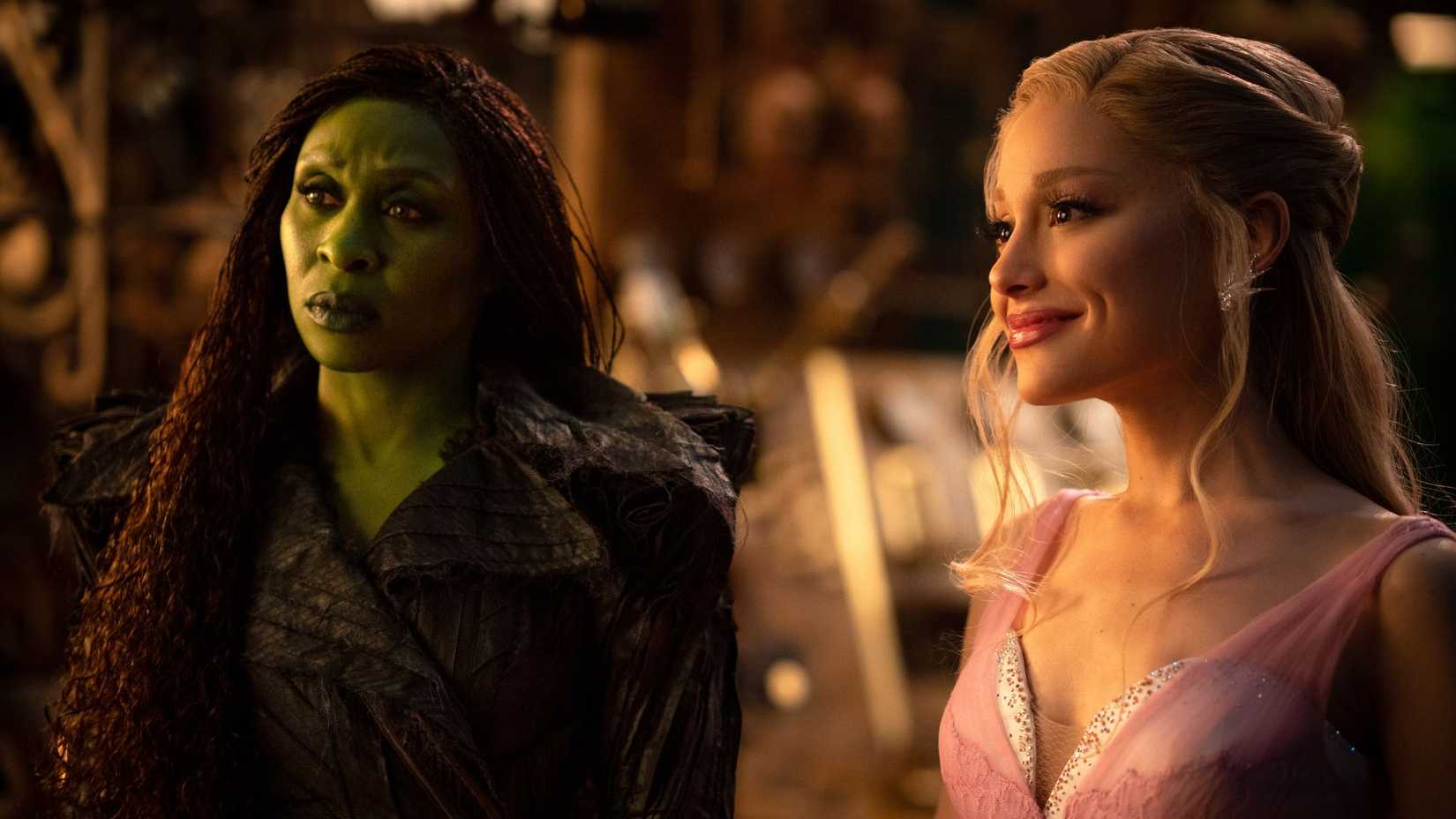 Image: Universal Pictures
But what Glinda attains is not precisely what she imagined — and the cost is the loss of Elphaba’s companionship. Across novel, stage, and screen, the relationship between the two women is the emotional core, and it’s also what makes the ending tragic: it cannot survive the forces arrayed against them. The 2024 film version of Wicked established Glinda as someone who craves adulation and comfort; her community has long protected her from hard truths, including her own limitations with magic. In For Good, a childhood flashback reinforces how those around her have habitually softened or ignored her flaws to keep her content.
That sheltering ultimately costs Elphaba dearly. When Glinda recognizes that her passivity contributed to a plot against Elphaba, she finally breaks with the Wizard and Morrible — but her defiance arrives too late. Elphaba stages her death and departs, leaving Glinda to carry forward the cause: freeing the oppressed animals and ruling a reformed Oz. Glinda’s authority isn’t primarily an evidence of superior virtue; it’s the consequence of her bond with Elphaba, which made her less self-centered and more willing to act.
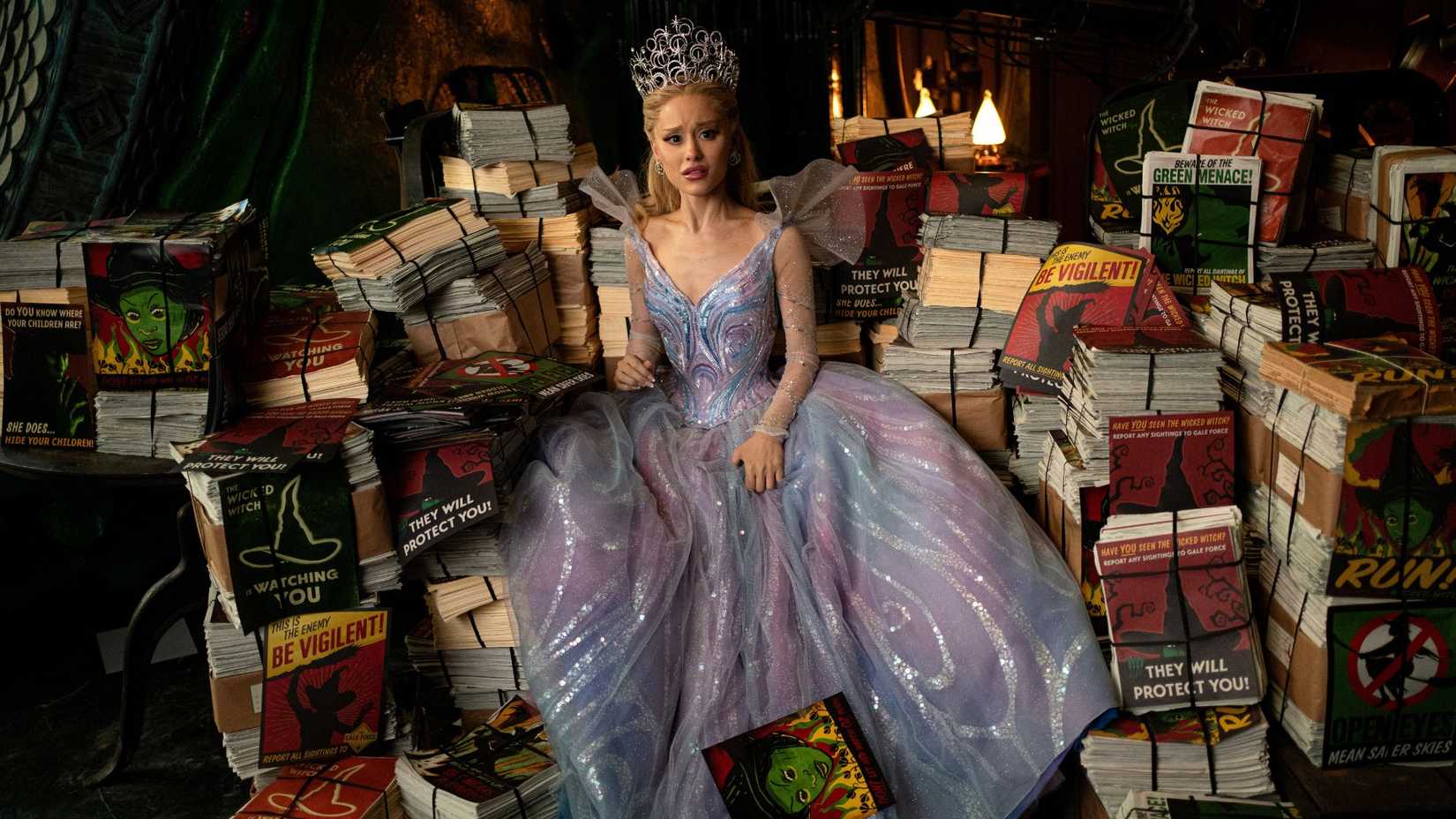 Image: Universal Pictures
Glinda’s triumph is therefore ambiguous. For Good doesn’t depict her as a carefree heroine who simply reaps the benefits of Elphaba’s struggle. Instead, the film suggests her victory is hollow: she becomes the public face of a culture that still condemns the person she loved, and the adoration she receives rests on a role she was groomed to play rather than on genuine selfhood. The one person who truly understood her is gone, and that absence turns any outward success into a form of penance.
Ultimately, Glinda is left to atone within the gilded cage she helped perpetuate. The movie refuses to make the moment a tidy moral victory; getting everything you wanted can still feel like a betrayal, and that moral ambiguity is the film’s final, uncomfortable note.
Wicked: For Good is in theaters now.
Source: Polygon
Related articles
 Netflix and Alfonso Cuarón Developing Dungeons & Dragons Horror Series
 Critics approve of the second season of Guy Ritchie’s The Gentlemen
 “Gangsterland” starring Tom Hardy renewed for a third season
 Martin McDonagh Presents “Wild Horse” Starring Malkovich and Rockwell in Venice
 Werner Herzog dedicates the film “Bad Lieutenant” to David Lynch
 First still from the film “The Luckiest Girl Alive” featuring Kate and Rooney Mara
 First still from the film “The Luckiest Girl Alive” featuring Kate and Rooney Mara released
 Friday the 13th Screenwriter Victor Miller Dies