
Ghost of Yōtei Players Must Watch This Intense, Action-Packed Samurai Film
Like its predecessor, Sucker Punch Productions’ Ghost of Yōtei honors iconic Japanese filmmakers with curated presentation modes. Where Ghost of Tsushima offered a monochrome Kurosawa-inspired filter, this sequel adds a collaboration with Samurai Champloo director Shinichirō Watanabe — a mode that pairs the visuals with lo-fi beats — and a Takashi Miike Mode that heightens the gore, deepens the mud, and places the camera much closer to the combat.
Miike’s output runs the gamut from hyperviolent yakuza epics to family pictures and live-action adaptations, but for players drawn to the swordplay in Ghost of Yōtei, his 2010 samurai film 13 Assassins is an essential watch.
13 Assassins, released in 2010, is Takashi Miike’s remake of Eiichi Kudo’s 1963 original. The story follows a band of killers who undertake a perilous mission to eliminate the sadistic Lord Matsudaira Naritsugu (Goro Inagaki) before he can secure a seat on the Shogunate Council. Other daimyo fear that Naritsugu’s unchecked cruelty and his ties to the shōgun will plunge the realm into chaos, so a desperate plan is set in motion.
The film does not shy away from brutality. It opens with a character’s ritual suicide (seppuku) and depicts Naritsugu committing horrific acts — including violence against defenseless people — that establish the stakes and the urgency of the assassins’ plot.
Given the scale and severity of Naritsugu’s crimes, the assassins’ mission is framed as necessary and morally justified.
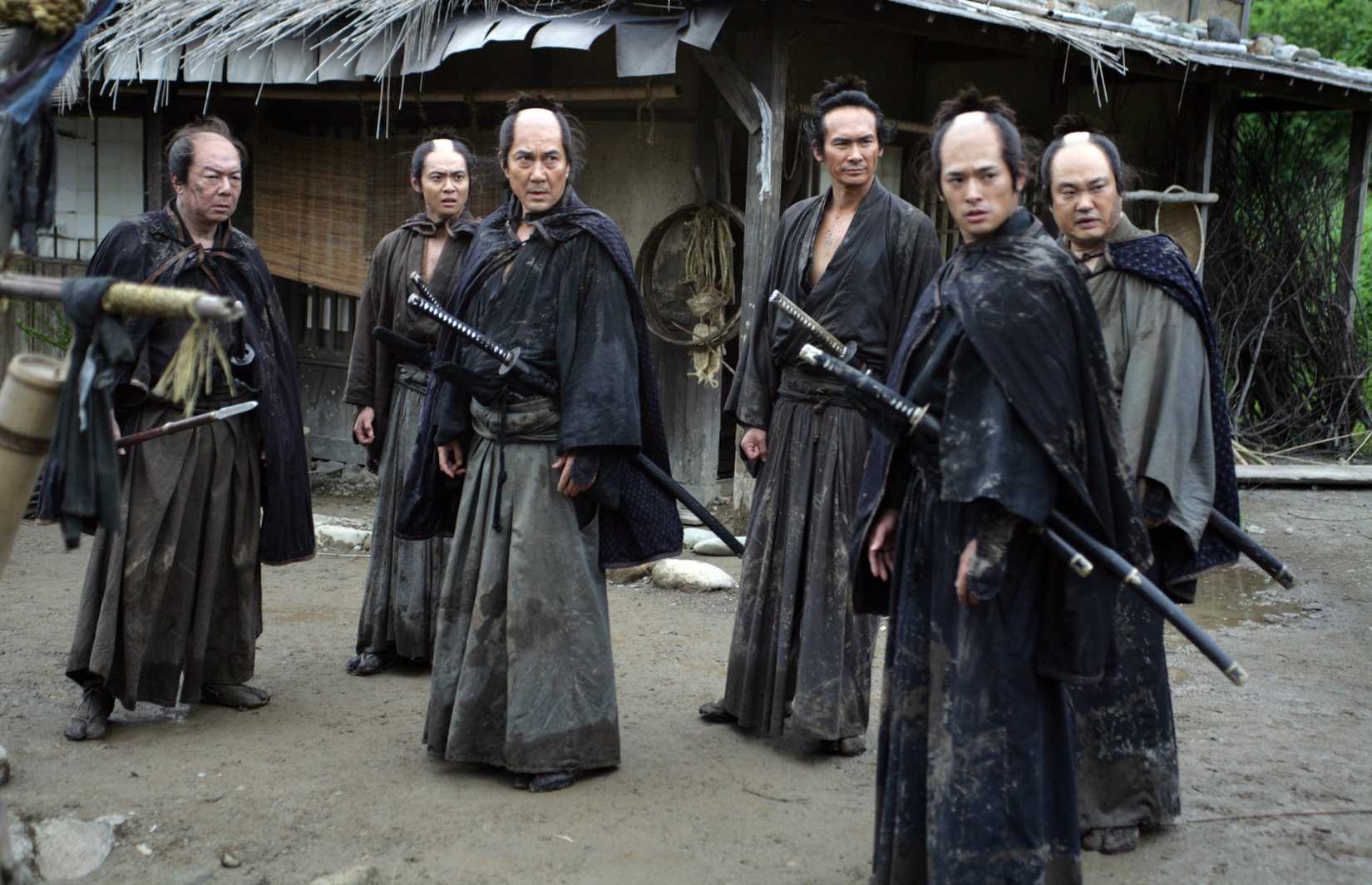
The veteran samurai Shimada Shinzaemon (Kōji Yakusho) is entrusted with the assassination. Much of the film’s first act is devoted to showing Naritsugu’s menace while Shinzaemon recruits a diverse group of allies. They journey toward a rural town where the assassins plan a trap, and once they arrive, Miike escalates the film into full combat mode.
The climactic sequence explains why 13 Assassins endures as a genre favorite. Thirteen warriors face roughly two hundred opponents, and they must use guile, engineering, and sheer determination to level the odds. The town of Ochiai itself becomes an instrument of war: the group rigs obstacles and snares that echo the ridiculous inventiveness of a certain booby-trapped childhood home — a nod that fans of slapstick ingenuity will appreciate.
The extended battle is a masterclass in clarity and choreography. Miike favors wide framing and deliberate staging over frenetic handheld cuts, so the audience always understands where the action is happening. Even amid the chaos — a lone swordsman carving through waves of attackers, for example — the fights remain readable and exhilarating.
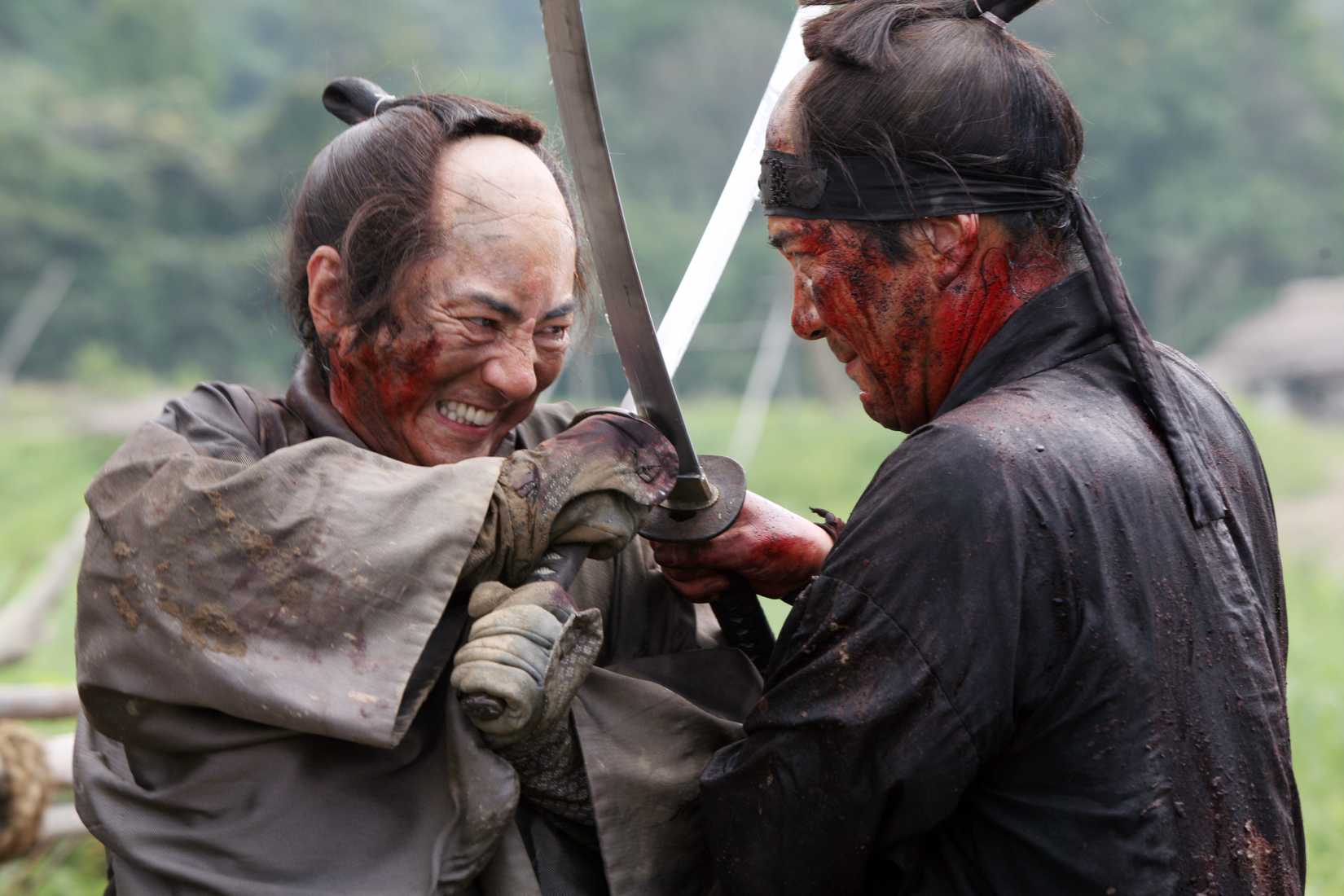
Watching 13 Assassins makes it easy to see why Miike’s mode in Ghost of Yōtei emphasizes mud and blood: combatants end the battle physically marked by the fight. The production relies heavily on practical effects and tangible set pieces, with minimal CGI limited to a few town explosions. That tactile approach gives the film a timeless quality — though it debuted in 2010, it still feels immediate and visceral.
For players who want to step away from the controller and enjoy samurai cinema, 13 Assassins is a perfect companion to the game — intense, meticulously staged, and highly recommended for fans of swordplay.
13 Assassins is streaming free with ads on Philo. It’s also available to rent on Amazon and other digital platforms.
Source: Polygon
Related articles
 Lilly Wachowski disavows involvement in the new “Matrix” film
 Kane Parsons to Return to The Backrooms
 First Emmy Award Winners Announced
 Robert Pattinson calls ‘The Batman’ sequel ‘radical’
 A24 to release documentary on Elizabeth Holmes
 Nolan’s “Oppenheimer” Surpasses “Spider-Man” at the Box Office
 Natalie Portman Becomes a Mother for the Third Time
 Zach Cregger Will Not Direct Franchises After “Resident Evil”