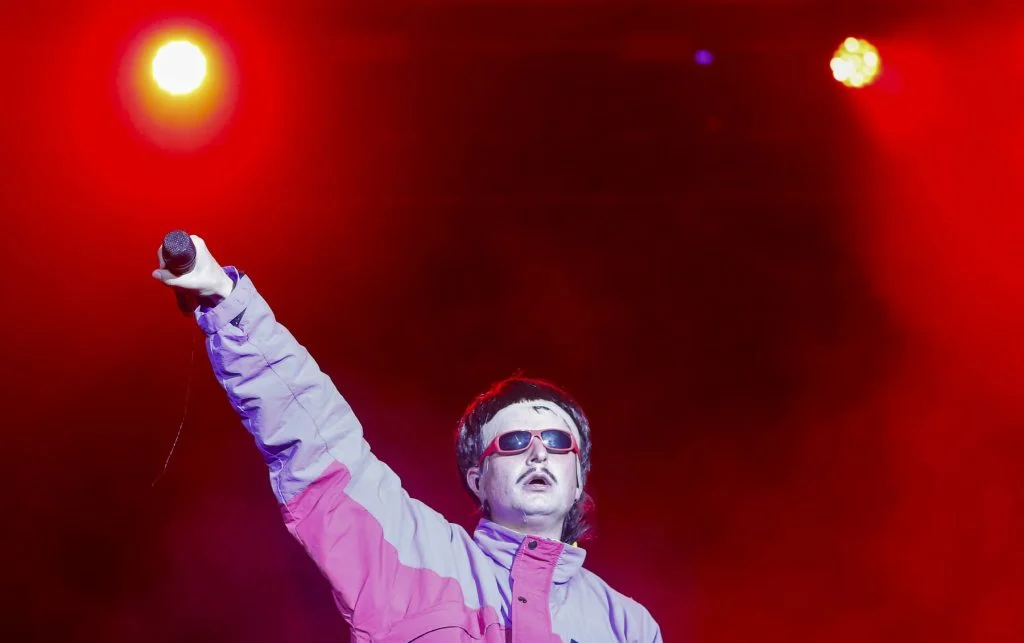
Following Oliver Tree’s Fatal Crash, Is It Safe for Musicians to Travel by Helicopter or Small Plane?

Srdjan Stevanovic/Getty Images
The tragic death of artist Oliver Tree in a helicopter crash in Rio de Janeiro this past Sunday (June 14) has cast a somber shadow over the music industry. His passing is a painful addition to an increasingly lengthy history of aviation accidents that have claimed the lives of celebrated musicians, their touring personnel, and key industry figures.
From the harrowing 1959 plane crash near Clear Lake, Iowa—the infamous “day the music died” that claimed Buddy Holly, Ritchie Valens, and J.P. “The Big Bopper” Richardson—to the loss of Tree and five others this weekend, these aerial catastrophes remain a harrowing reality for performers who often rely on non-commercial transit to sustain their rigorous touring schedules.
A History of Tragic Loss
The litany of lives lost in the sky serves as a grim reminder of the volatility inherent in private aviation. Notable losses over the decades include:
- Patsy Cline: Perished in a 1963 Piper PA-24 crash during inclement weather, alongside Cowboy Copas and Hawkshaw Hawkins.
- Jim Croce: Lost in a 1973 light aircraft crash shortly after takeoff.
- Randy Rhoads: The legendary Ozzy Osbourne guitarist died in 1982 when his plane clipped a tour bus during an unauthorized low-altitude maneuver.
- Stevie Ray Vaughan: Died in a 1990 helicopter crash departing Alpine Valley, Wisconsin, caused by limited visibility.
- John Denver: An experienced pilot, Denver died in 1997 when his experimental aircraft suffered a mechanical failure.
- Aaliyah: The R&B star was killed in 2001 when an overloaded light aircraft crashed in the Bahamas.
- Jenni Rivera: The beloved performer died in 2012 when her private jet went down near Iturbide, Mexico.
This tragic roster also includes icons like Otis Redding, Ricky Nelson, Lynyrd Skynyrd’s Ronnie Van Zant and Steve Gaines, and eight members of Reba McEntire’s band.
The Drive for Efficiency
Why do performers continue to accept these risks? Industry insiders note that for top-tier talent, private air travel is often a professional necessity. It bypasses the logistical nightmares of commercial terminals, ensures equipment arrives on time, and allows for the intense “hop-scotch” scheduling required by international festival circuits.
Rob DelliBovi, CEO of RDB Hospitality, notes that while the cost is astronomical, the demand for agility is non-negotiable. However, he observes a shift in client behavior: “Following the death of Kobe Bryant in 2020, there is a much sharper focus on safety protocols. Artists are now asking specific questions about tail numbers, pilot certification, and maintenance records.”
Managing the Risk
Michael Henderson of Legal Eagles Aviation argues that private charter, or “Part 135” operations, are often staffed by elite, former military or commercial pilots. He maintains that the dangers are often misconstrued by the public. “It is a matter of volume,” Henderson explains. “The more you fly, the higher the exposure. Musicians are simply more visible, so their losses garner more attention than those of corporate executives, despite the risk profiles being largely identical.”
While regional necessity—such as reaching remote venues in Latin America or hitting multiple festivals in one weekend—often mandates the use of small planes and helicopters, the industry consensus remains clear: safety cannot be compromised for speed. As DelliBovi concludes, “We counsel our clients that cheaper is never better. When it comes to the logistics of a global tour, you never cut corners.”
Related articles
 Teddy Swims, Gunna, and Morgan Wallen featured on the Southern Heat Movement playlist
 Carly Rae Jepsen Announces 2027 North American Tour Dates
 Bono Says Ed Sheeran Asked U2 Not to Involve Him in Politics While Collaborating on ‘Yours Eternally’
 Aubrey O’Day Expresses Concern Diddy Will Emerge From Prison Worse Due to a Broken System
 BTS Teases Return of ‘Run BTS!’ With Pickleball Showdown in Toronto
 Kelly Clarkson Recalls Dolly Parton’s Words to Her Thirty Minutes After Her Divorce Was Finalized
 Macklemore Says Free Palestine Tour Sold Out Immediately and Teases Upcoming Lineups
 Pete Davidson Discusses Conflict With Ye Four Years After Kim Kardashian Romance