
Five Sci-Fi Novels Noted for Their Exceptional Prose Writing
Books in the sci-fi genre often start from a “what if” scenario. They reflect real-world issues and satisfy the craving for fantastical settings that still follow a logic. Many center on technological ethics, and many criticize hyper-capitalist systems.
Most good sci-fi is well written, but a few books stand out for their prose. Robert Silverberg’s Time of Changes is set in a world that forbids expressions of individuality. Its narrator rebels on purpose by repeatedly using words like “I” and “me.” Other books have no such narrative gimmick. They simply have beautiful prose, and that makes them must-reads. Here are five sci-fi books that show what strong prose can do.
1. Fahrenheit 451 (1953) by Ray Bradbury
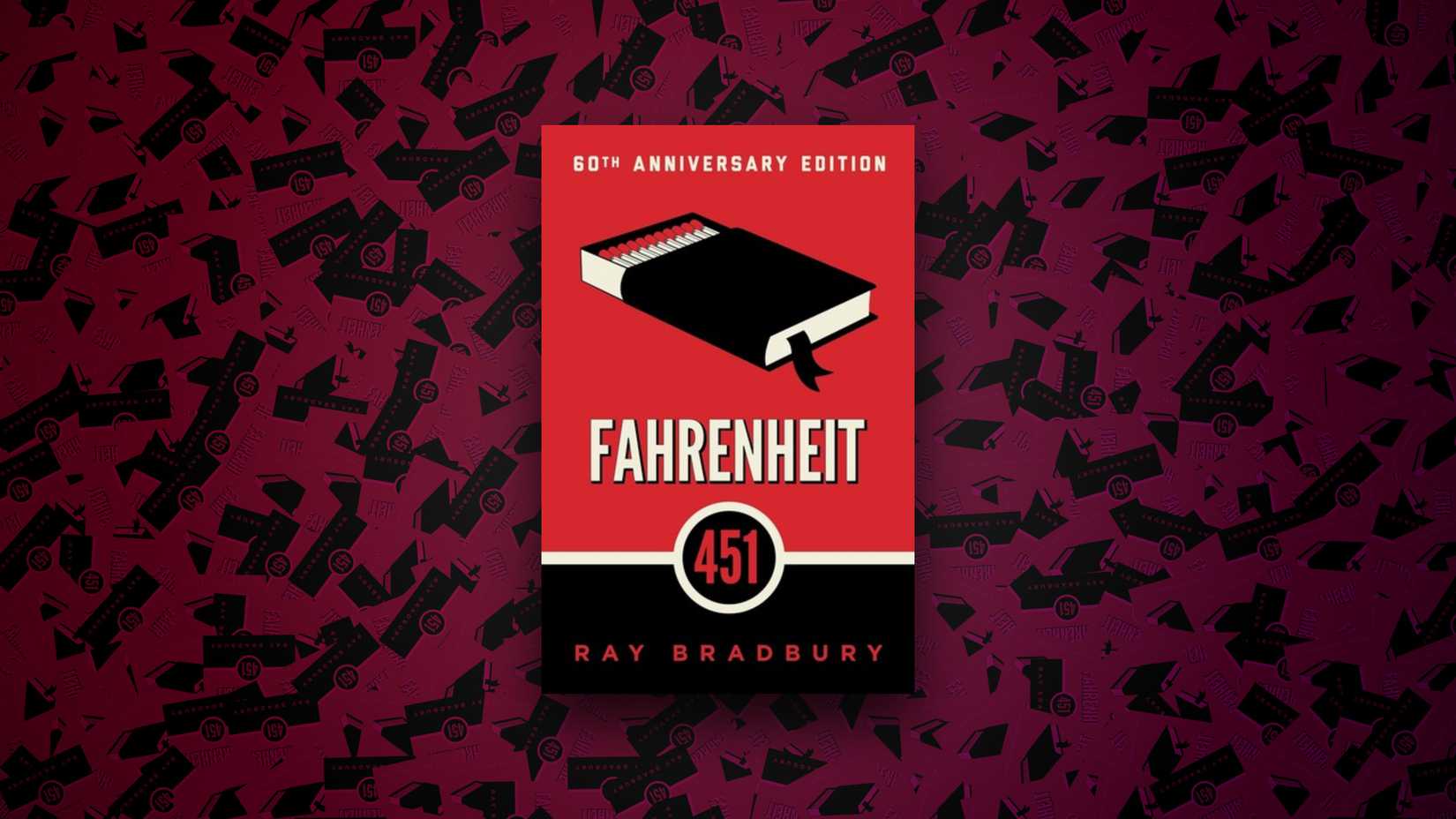
Book burnings have long marked authoritarian rule. Ray Bradbury’s Fahrenheit 451 imagines a future America where books are outlawed. State-sponsored censors called “firemen” burn them. The story follows a fireman named Guy Montag, who grows more disillusioned with his job of destroying valuable knowledge and literature. He starts to question the state’s mandate of willful ignorance. He wonders whether humanity can know itself without art and critical thinking.
Bradbury’s prose is a thing of beauty. His rhythmic, almost lyrical style leans on evocative metaphor, often to capture uncomfortable feelings. Guy’s inner perspective is rich with meaning as he changes from a numb, compliant censor into a man awakened to the vividness of the world. Bradbury sets the tactile warmth of emotional knick-knacks against the clinical coldness of sterile spaces. The book places us in a world where human emotion is heavily censored, so its poetic prose reads as a deliberate subversion of that stifling setting.
2. Hyperion (1989) by Dan Simmons
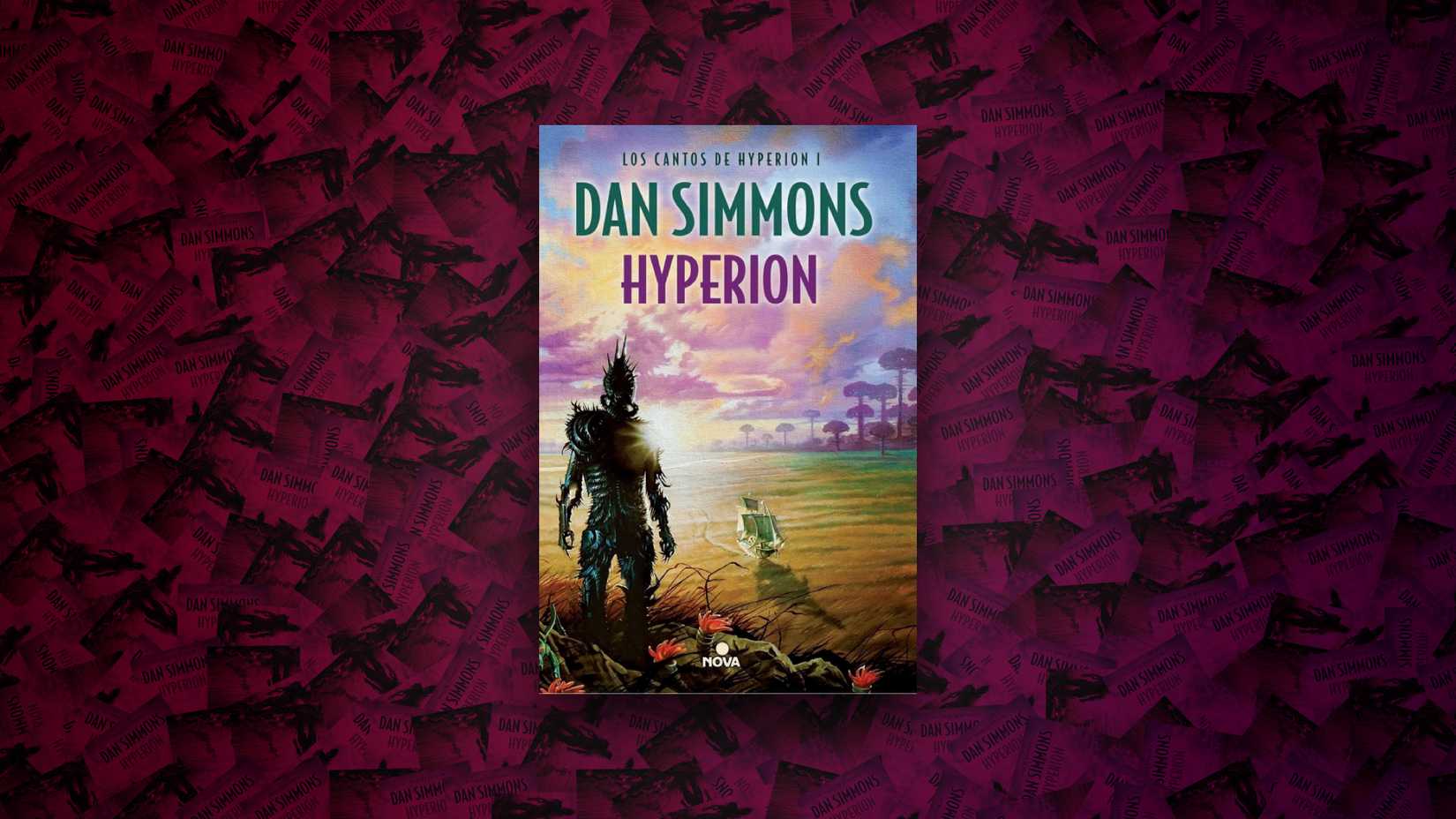
Dan Simmons’ Hyperion is praised for an intricate narrative structure that goes hand in hand with its brilliant prose. The structure resembles Geoffrey Chaucer’s The Canterbury Tales. A group of pilgrims travels to Hyperion’s Time Tombs, hoping a mysterious creature will grant one of their wishes. Simmons builds an elaborate backstory for each pilgrim and uses distinct writing styles to shape the perspectives behind their worldviews. When the occasion demands, he shifts from the cadence of hard-boiled noir to that of an epistolary novel.
The reason for the pilgrimage is fascinating in its own right. Simmons creates a complex world of interconnected planets called the Hegemony of Man, which keeps an uneasy alliance with an AI-centered civilization known as the TechnoCore. The pilgrimage is a final attempt to fix a core problem involving the planet Hyperion, which is moving backwards in time. The pilgrims’ tales explain why each of them was chosen for the voyage, and they let Simmons show off his range as a writer. The lyricism of the prose also alludes to John Keats’ unfinished epic poem Hyperion. The novel series references the Romantic poet heavily throughout.
3. Slaughterhouse-Five (1969) by Kurt Vonnegut
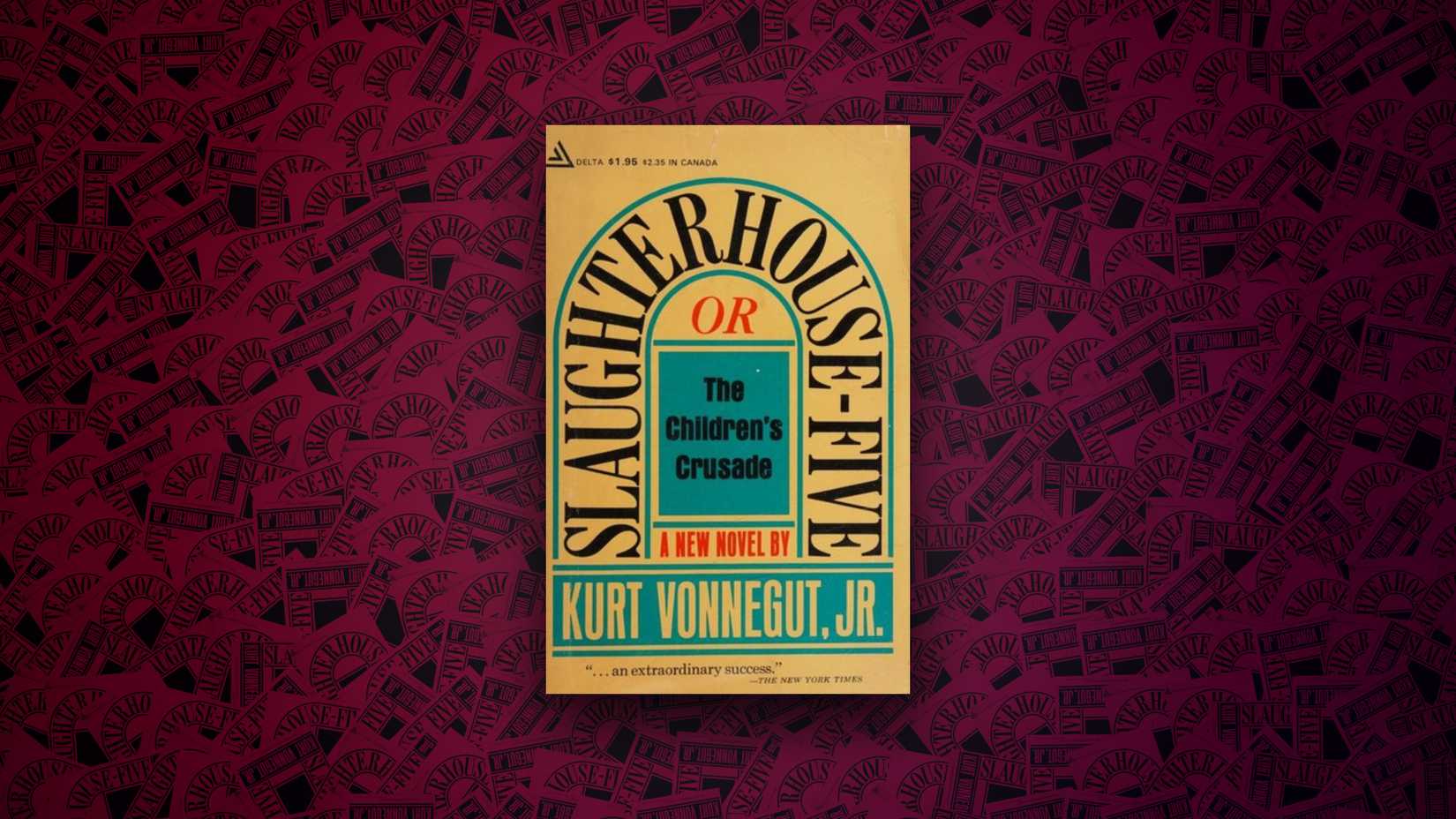
Kurt Vonnegut’s Slaughterhouse-Five is an anti-war novel for the ages and a masterclass in minimalist prose. It follows Billy Pilgrim across the years, including his time as a soldier in World War II and the post-war era. Billy is a prisoner of war after the Allied firebombing of Dresden, which Vonnegut experienced himself. His trauma feels visceral and immediate. It is made worse because he is “unstuck” in time, and his consciousness bounces around his personal timeline. The novel leaves an interesting question hanging. Is the time travel a literal sci-fi anomaly, or only a coping mechanism for severe post-traumatic stress disorder?
Vonnegut’s prose is blunt, deadpan, and crisp. Short, matter-of-fact sentences convey unreliable narration, and they also suggest that humanity has grown desensitized to mass violence. A non-linear narrative might seem to call for flowery description. Vonnegut instead uses a conversational tone to drive the horrors of war home. He draws on his own experiences at some points, which gives Billy’s trauma a confessional weight. The absurdist humor expresses the pain of unimaginable tragedy, and the book works all the better as an anti-war tale for it.
4. Neuromancer (1984) by William Gibson
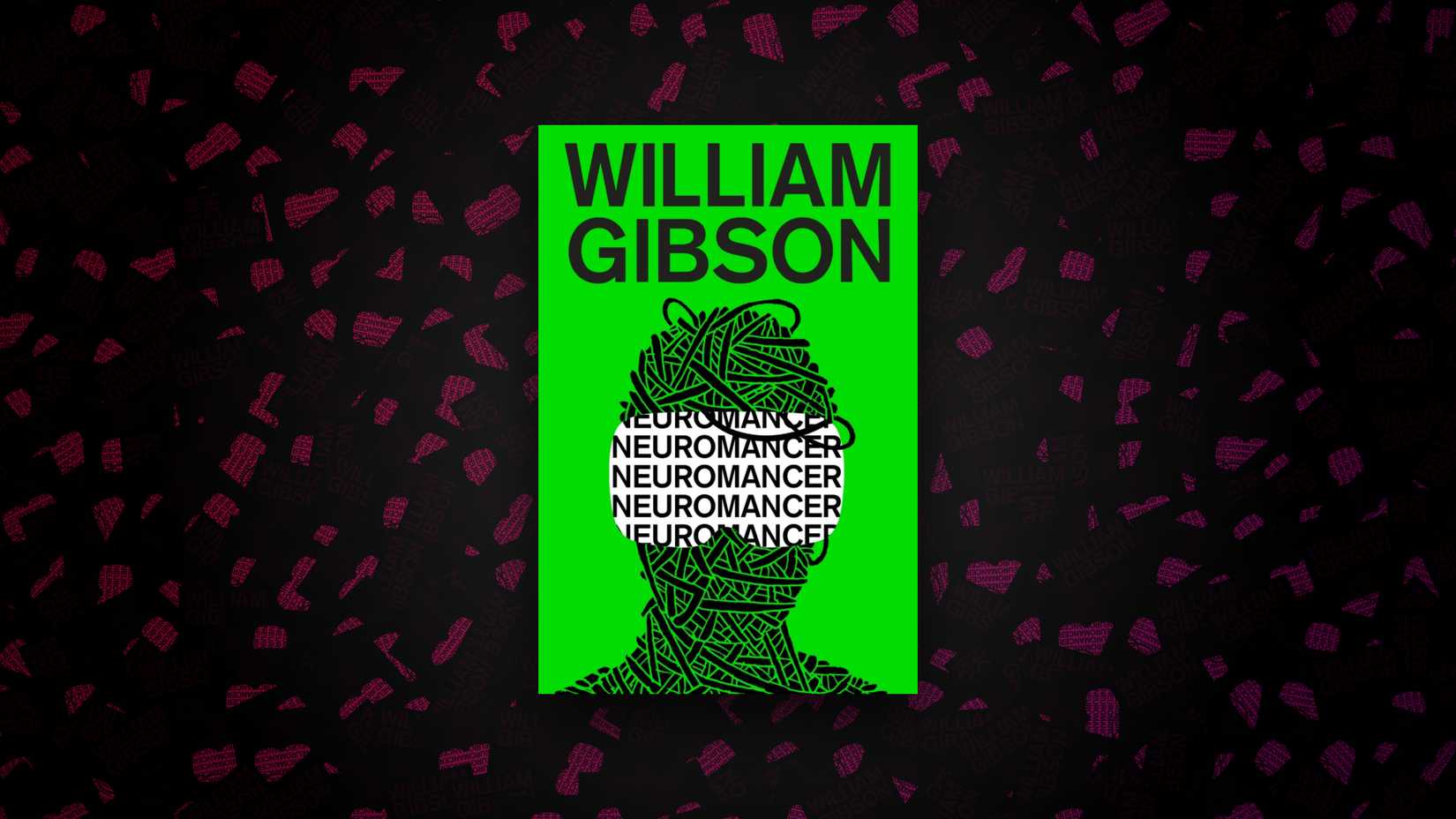
Including a book widely seen as a challenging read may be a little controversial. Still, William Gibson’s prose in Neuromancer is as special as it gets. The novel is an early cyberpunk marvel that introduced concepts like “jacking in” and “cyberspace” to the genre as we know it today. Gibson drops in terms like “console cowboy” and “flatline” without explanation. He trusts readers to work them out from context cues and references to the dense world-building.
Every sci-fi lover should experience Gibson’s prose. It is dense, fast-paced, and packed with vivid technobabble that makes a lot of sense once you get the hang of it. The disorientation is a necessary part of exploring his neon-soaked world, where a skilled hacker named Case is forced into a dangerous heist to survive. Events unfold in the blink of an eye. The pace matches the chaotic unpredictability of life in a tech-forward metropolis with rising corruption and crime.
5. The Book of the New Sun (1980-1983) by Gene Wolfe

Gene Wolfe’s The Book of the New Sun is a sci-fi fantasy series in four volumes, with a fifth novel serving as a coda to the overall story. It follows Severian, a torturer exiled to the city of Thrax, where he must spend the rest of his life as an executioner. Prose is central to the series’ appeal. Wolfe uses archaic and obscure terms for everyday objects. The result is a dissonance between how the reader and the narrator perceive this fictional world. The books are meant to read as a memoir originally written in a lost tongue and translated into English, which explains the strange syntax.
The series has been dubbed “science fiction’s Ulysses” for its puzzle-like structure and layered ambiguity. That label shouldn’t put anyone off. The series is clearly meant to be read more than once, and it rewards readers who take an active part. Wolfe also makes Severian a highly complex figure. The character’s eidetic memory doesn’t guarantee impartial recollection, because his subjective reading of events and people often blinds him. That richness makes The Book of the New Sun all the more fun to dissect and interpret.
Source: Polygon
Related articles
 Nintendo’s Shigeru Miyamoto Selected as First Game Developer to Receive Japan’s Order of Culture
 BioWare Veteran Explains Who Was Actually Responsible for Controversial Dragon Age Decisions
 PS5 Sales Jump Sharply in US as Xbox Hits New Record Low
 EA Could Sell Mass Effect After BioWare Closure, Former Producer Says
 6 Best Upcoming Steam Games Worth Adding to Your Wishlist
 Square Enix Releases Trailer for Retro RPG Final Fantasy Resonance
 Co-Op Horror Game Escape From Playtime Enters Early Access With New Threats
 Stranger Than Heaven Will Drop Yakuza Series’ Signature Humor for a Realistic Story