Farewell to the Most Mind-Blowing Sci-Fi Series of the Century Leaving Netflix

Science fiction has long provided a canvas for breathtaking and unsettling worlds that push the boundaries of our imagination—from the gritty, lawless sands of Tatooine in Star Wars to the vibrant, bioluminescent flora of Pandora in Avatar. Yet, few narratives capture the visceral ecological horror and sheer imaginative brilliance of Scavengers Reign, which is set to depart from Netflix at the end of May.
Conceived by Joe Bennett and Charles Huettner under the banner of Titmouse—the studio behind The Venture Bros. and The Mighty Nein—this 12-episode animated masterpiece arrived with little fanfare in 2023. Even now, the intricate, often terrifying ecosystem of its host planet, Vesta, remains deeply haunting. The story follows the stranded survivors of the cargo vessel Demeter 227, forced to navigate a hostile, uncharted world that operates on alien and often lethal laws of biology.
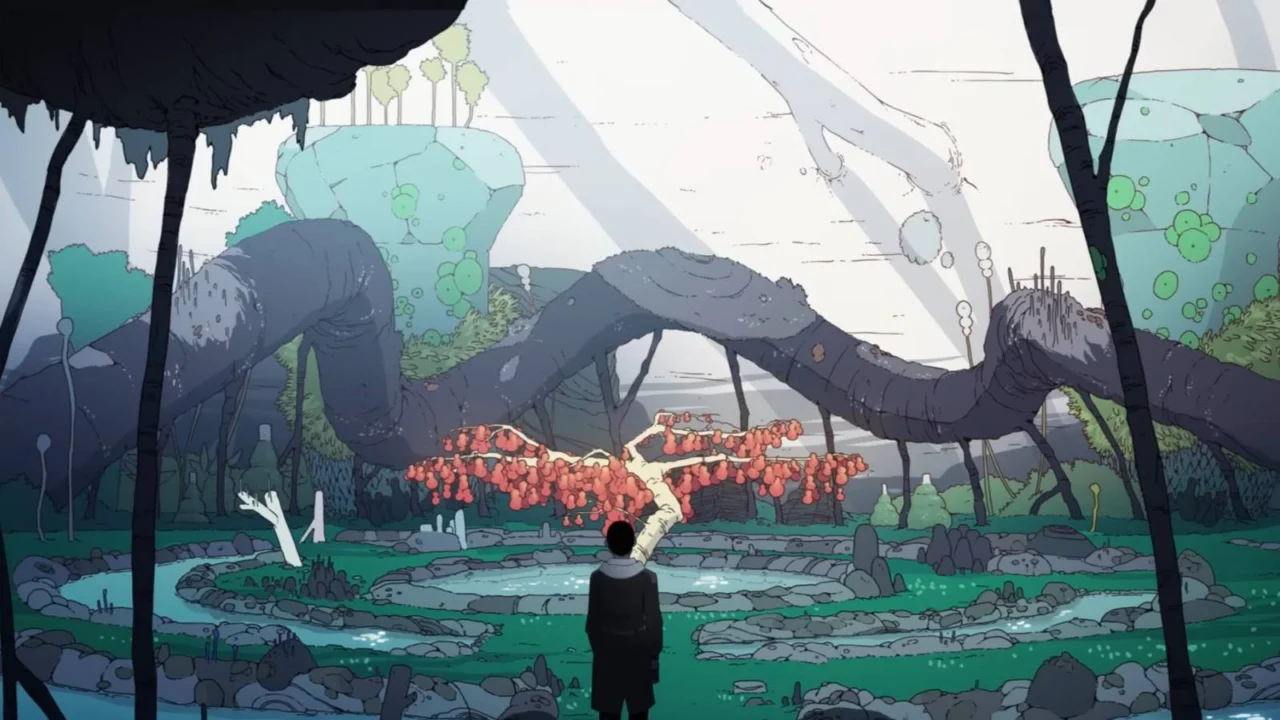
Vesta feels deeply influenced by the surreal, dreamlike aesthetic of Jean Giraud, or “Moebius,” famous for his clean lines and impossible, otherworldly vistas. Scavengers Reign translates this artistic sensibility into motion, depicting every organism and landscape with crisp clarity while maintaining an enigmatic, surreal logic. It is a mesmerizing experience, made all the more poignant by the desperate human struggles unfolding against this bizarre backdrop.
On Vesta, nature is unrestrained. We see avian creatures with razor-sharp beaks hunting gargantuan white slugs, while lesser fauna—and occasionally, stranded humans—hitch rides on colossal, ambulatory mushrooms. One wordless three-minute sequence, featuring a small creature’s life cycle within a flower, is a feat of pure visual storytelling. This is evolution run wild, presenting a constant array of dangers: titanic, monstrous insects, predatory parasites, and a malevolent, telekinetic entity that lures its prey with hallucinogenic visions.
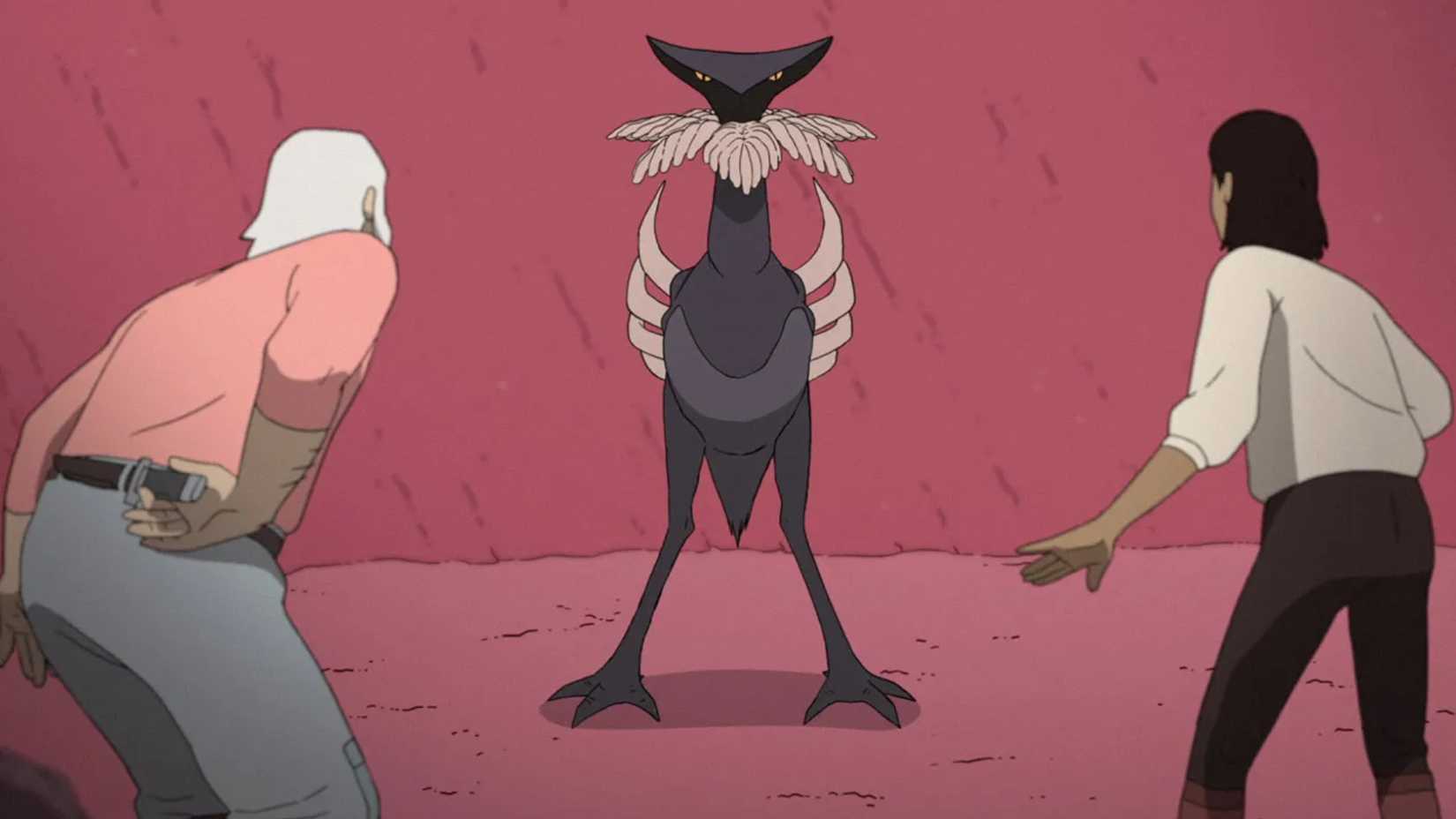 Image: Max
Every life form on Vesta serves a purpose, and this cycle of discovery drives the series forward. Eschewing the conventional spectacle of genre classics like Fantastic Planet or Blade Runner, the show opts for a contemplative, patient pace. It lingers on alien vistas—such as the rhythmic, sponge-like flora seen in the premiere—with deep intentionality. As supervising director Benjy Brooke explained to ComicBook.com, the creators were deeply inspired by the wonders of real-world nature documentaries, using them as a springboard for their own strange, extrapolated phenomena.
Ultimately, Vesta’s most clever subversion is framing the humans as the true anomalies. We are the invasive species here; the planet neither notices nor requires our presence. In this regard, the show transcends typical exploration narratives, focusing instead on how these individuals are fundamentally transformed by being trapped within such an indifferent, complex system.
 Image: Max
The planet’s name is a deliberate thematic touchstone. In Roman myth, Vesta is the deity of the hearth and home, representing warmth and the sanctity of life. While this might seem contradictory given the perilous setting, it perfectly mirrors the show’s preoccupation with metamorphosis and emergence. Vesta does not merely extinguish life; it cycles it, mutating and repurposing it into entirely new manifestations. Consider Levi, the crash-landed assistant robot, who gradually shifts toward organic consciousness through contact with the planet’s flora—that is the undeniable, transformative influence of Vesta.
Everything on Vesta exists by its own distinct internal logic, independent of whether human observers can comprehend it. This is precisely why Scavengers Reign lingers in the consciousness long after the credits roll. It presents a world that is not a riddle to be solved or a frontier to be tamed, but a living, breathing entity that refuses to conform to our expectations.
Few works of science fiction have crafted a setting that is simultaneously so alien, so breathtakingly beautiful, and so convincingly authentic. Its singular, immersive atmosphere will be profoundly missed once it leaves the Netflix library at the end of May.
Source: Polygon
Related articles
 Windrose Developers to Remove Old Faction Ships and Showcase Ashlands Update Mechanics
 New Denuvo Version Blocks Hypervisors, Complicating Star Wars: Galactic Racer Crack
 Gameplay Trailer Released for Former Extraction Shooter Canyons
 Dave the Diver to Get Subnautica 2 Collaboration and New DLC
 Clive Barker’s Hellraiser: Revival Achieves High Steam Player Count Despite Day-One Crack
 Free Steam Game Purgatory Arcade Offered to Celebrate Sequel Announcement
 Surprise Game Giveaway Begins on PlayStation Store
 CBS Sitcom Ghosts Becomes Available for Free Streaming on Pluto TV