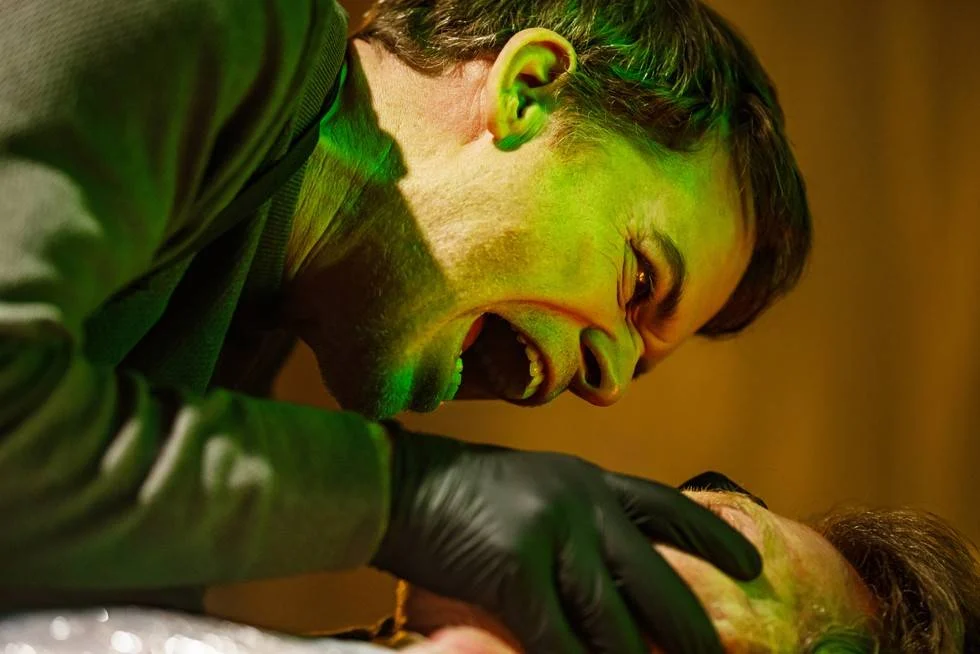
Dexter Hunts a Serial Killer in Resurrection — Season 2
From Dracula to Michael Myers, horror has long taught us one rule: no matter how definitively you dispatch the antagonist, they somehow crawl back. Now add another recurring killer to that list—one who is far more selective in his violence. Dexter Morgan (Michael C. Hall) has returned in Dexter: Resurrection, resurfacing in New York to hunt other murderers.
Resurrection has drawn strong praise from critics and viewers. Still, as the season wraps, it’s hard not to notice a glaring omission: this run lacks a singular, formidable serial killer for Dexter to pursue—a void season two should aim to fill.
[Ed. note: Spoilers follow for the entirety of Dexter: Resurrection]
The strongest seasons of Dexter traditionally center on a singular nemesis who forces Dexter to examine his own darkness. Season 1 delivered the Ice Truck Killer—revealed in a gutting twist to be Dexter’s brother—while season 4 introduced the deceptively ordinary Trinity Killer, a role John Lithgow inhabited with chilling ease. Even the 2021 revival, New Blood, succeeded by pairing Dexter with a truly unsettling opponent portrayed by Clancy Brown.
Dexter: Resurrection, by contrast, takes a different tack. Rather than one dominant adversary, the season unspools a roster of killers: Dexter infiltrates a clandestine society of murderers organized by a wealthy patron played by Peter Dinklage and proceeds to eliminate them one by one. The ensemble—featuring the likes of Neil Patrick Harris and Krysten Ritter—yields entertaining set pieces, but few of the foes present a meaningful challenge to Dexter’s methods.

The season’s most promising antagonist is the Gemini Killer, played by David Dastmalchian, whose calm menace hints at real peril. Dexter dispatches Gemini with relative ease, but the season’s cleverest beat reveals that the “killer” is actually two identical twins operating as one, never seen together and coordinating through concealed notes. It’s an effective ruse, yet Resurrection never invests enough time in building the Gemini mythos for his downfall to land emotionally.
Arguably the season’s true architect of chaos is Peter Dinklage’s Leon Prater—a suave manipulator who rarely kills himself but funds, blackmails, and orchestrates murder through others. Prater functions as a competent antagonist, but he lacks the seismic twist or layered complexity that would elevate him into a canonical Dexter nemesis.
By the finale of Dexter: Resurrection, most of the secret society is dead—only one member, played by Eric Stonestreet, survives. The outcome feels anticlimactic for viewers expecting a prolonged, climactic duel; instead, Dexter slices through a parade of underwhelming contenders. Still, that ending leaves room for course correction in a potential second season.

Scattered through the season are references to a retired, uncaught killer known as the New York Ripper, a predator who tormented victims’ families by calling them after crimes. The Ripper never directly drove most of the plot, but in the closing moments Dexter uncovers a name: Don Framt. (More on the reveal.)
Who is Don Framt? The show offers almost no context—an omission that reads less like an explanation and more like an invitation. If Dexter: Resurrection returns for a second season, Framt would be the obvious candidate to become the season-long adversary this installment lacked. While a follow-up has not been formally announced, the first season’s favorable reception makes the prospect plausible—and if it happens, Framt could finally give Dexter the truly formidable opponent he needs.
Source: Polygon
Related articles
 “The Bunker” starring Bardem and Cruz screened at Venice
 The Librarians: The Next Chapter Season 2 Has Concluded
 “The Mummy 4” filming has begun
 Urfin Jus Movie Announced
 Ellen Burstyn Receives Honorary Golden Lion
 Danny Boyle used artificial intelligence in his new film “Inks”
 Gary Oldman Reveals the Name of the New Bond
 Summer 2026 Becomes the Highest-Grossing Season in U.S. Box Office History