
Developer Diary: The Republic of Indonesia and the National Revolution
Selamat siang, everyone. Pdx_lily here, returning with another development diary. Today, we are pulling back the curtain on the revolutionary content coming to Indonesia. As a standard disclaimer, everything mentioned here remains a work-in-progress and subject to change.
Underground Revolution
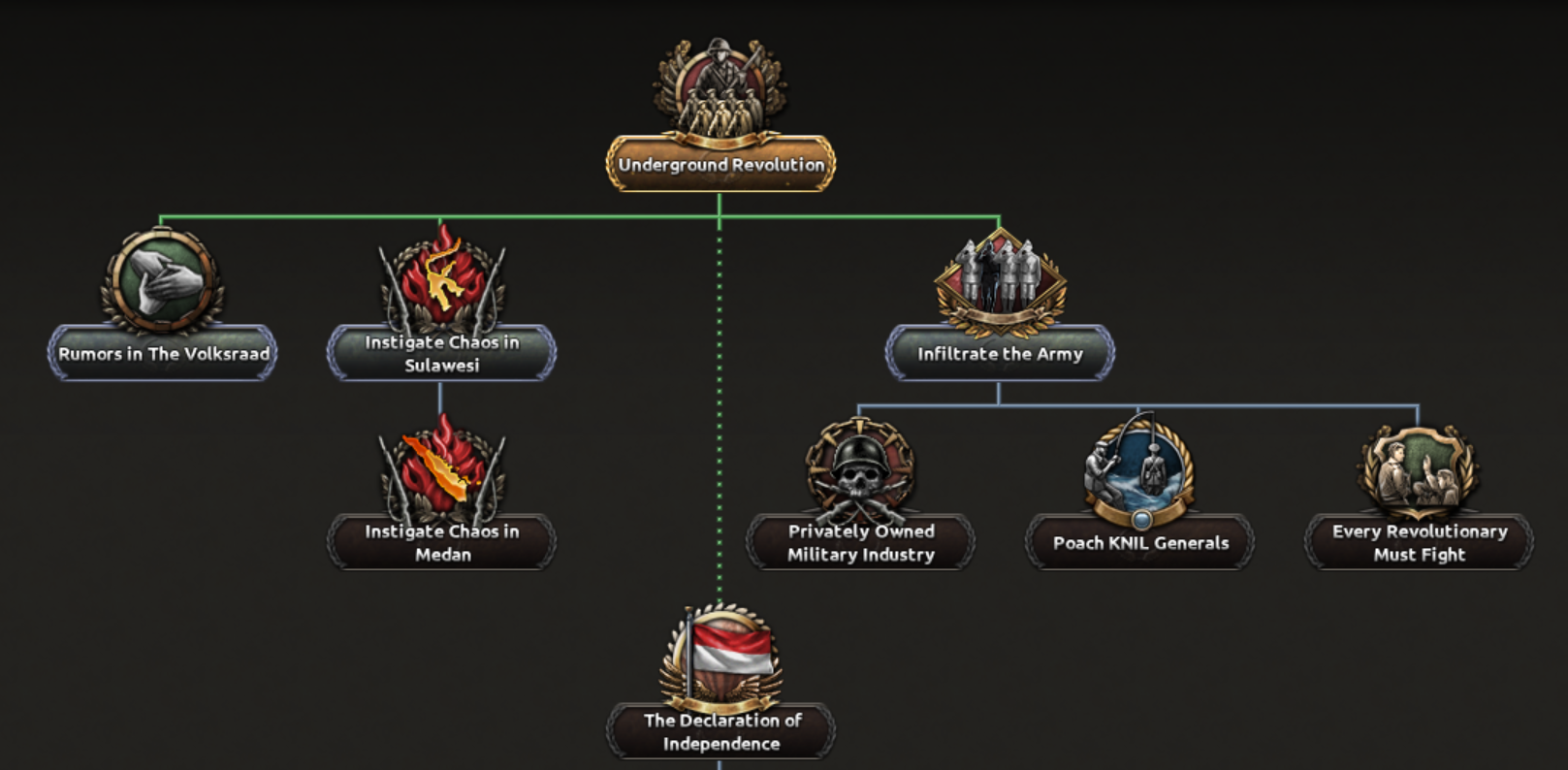
Given the historical four-year span of the Indonesian National Revolution—marked by intricate international diplomacy, internal political volatility, and countless alternate-history possibilities—we chose to anchor the Indonesian experience directly within this struggle. Rather than treating the revolution as a tedious hurdle to clear, we’ve prioritized making the process itself engaging and dynamic.
The revolution unfolds across three distinct phases:
- The Underground: Operating as the Dutch East Indies, you must establish an insurgent network to prepare for the coming conflict.
- Skirmishes and Rising Tension: You have declared independence and control various states, though the Netherlands maintains its claim to sovereignty.
- War: The final, full-scale military conflict. Whether you reach this point depends entirely on your strategic choices.
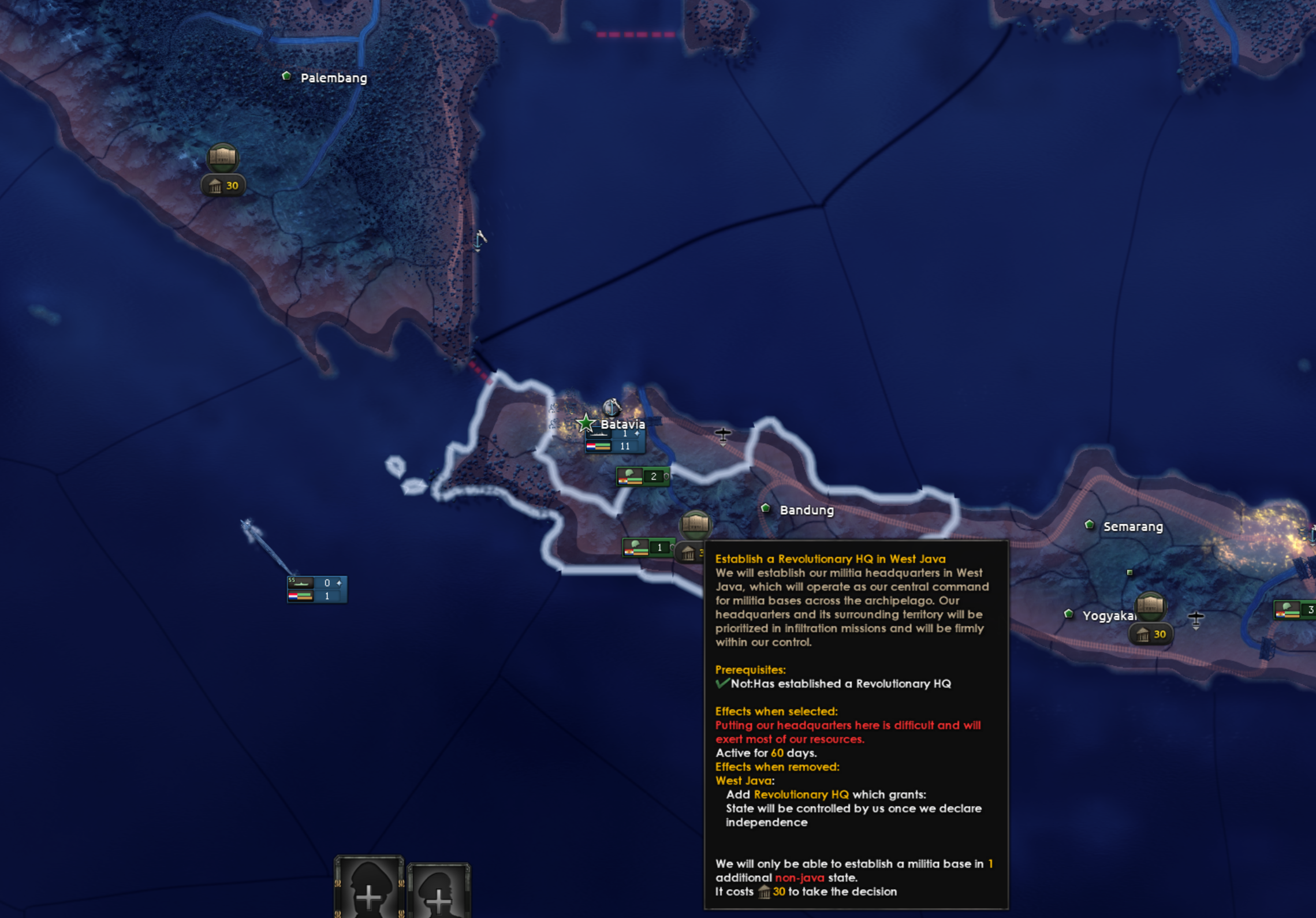
During the Underground phase, you’ll select specific states to house your militia bases, with one acting as your central headquarters. These states will fall under your control once independence is proclaimed. Strategic placement is vital: establishing an HQ in Java is significantly more costly than in Sulawesi, for example.
The National Revolution
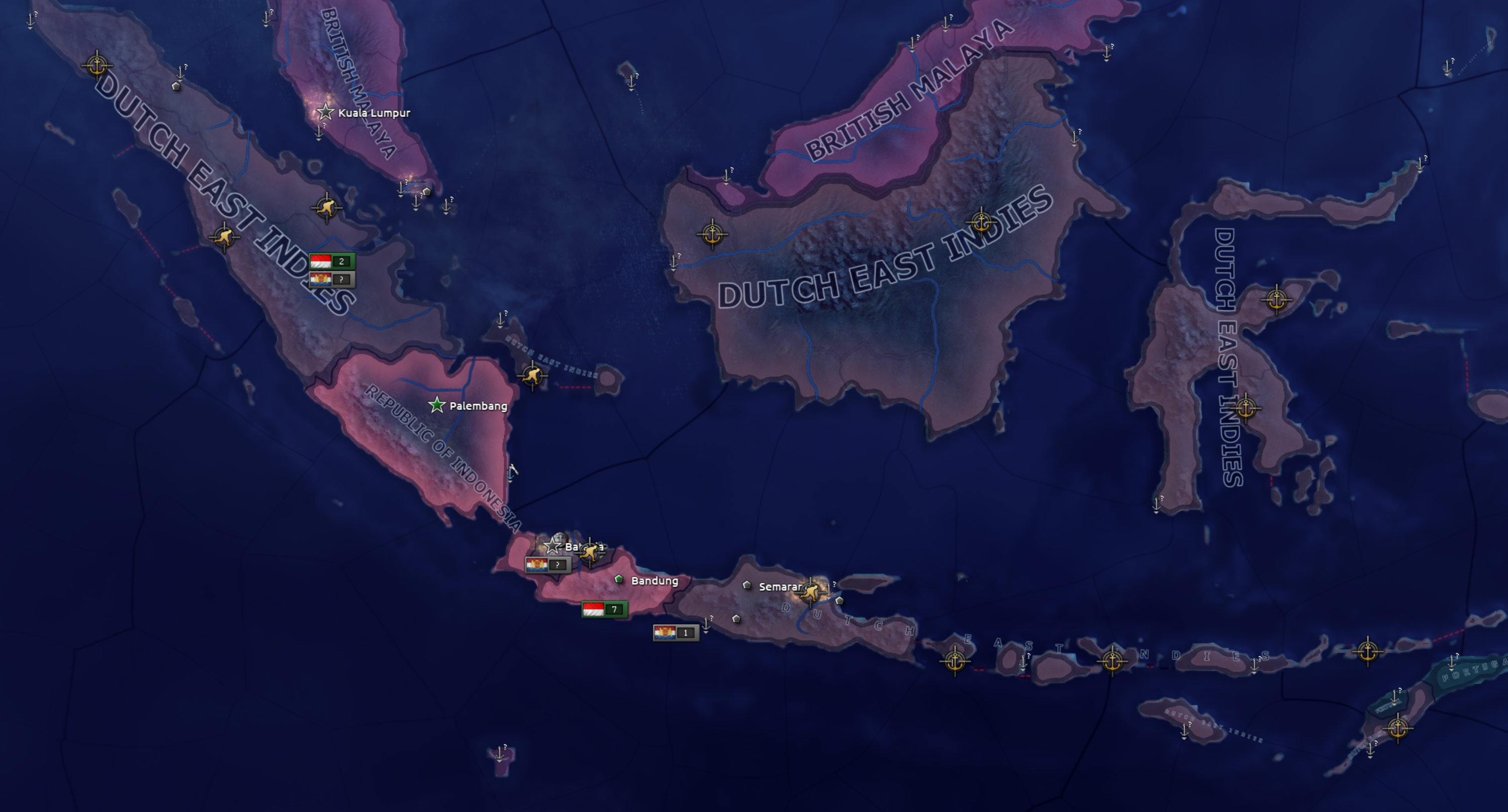
The second stage triggers once you’ve established your militia bases and completed the necessary focus. While you are independent, the Netherlands views your fledgling Republic as a criminal insurgency rather than a sovereign state. You effectively hold the territory, but not the legal recognition. Mechanically, this means you control states where your militias dominate, while the Netherlands holds those under police authority.
Escalation
We wanted the civil war to feel like a multi-year, evolving struggle. We’ve adapted the “Escalation System” from By Blood Alone to fit this conflict perfectly.
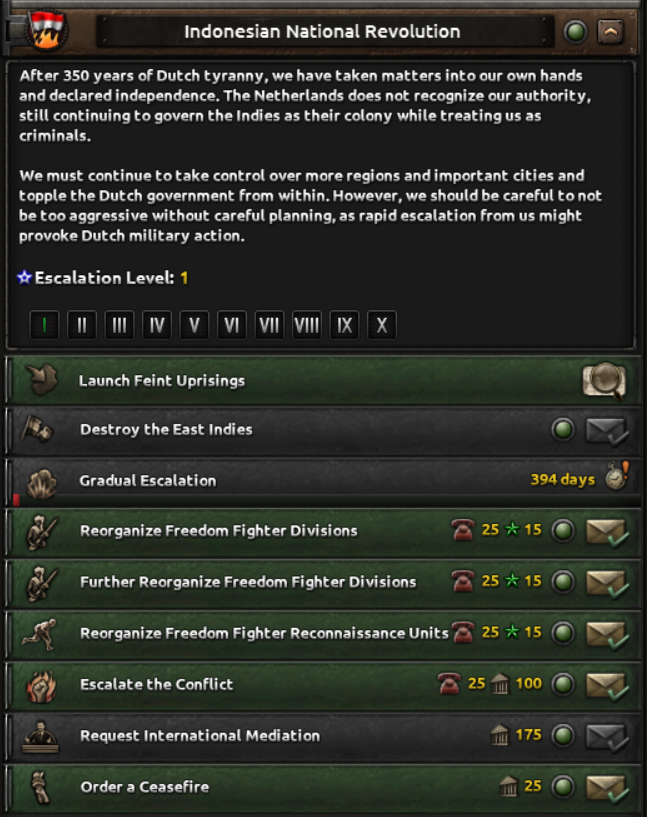
There are ten tiers of escalation that increase over time. Both sides have agency here: skirmishing in enemy territory drives escalation up, while successful diplomatic agreements lead to de-escalation. The crucial difference here is that war isn’t automatic; however, as escalation rises, the Netherlands faces less international scrutiny, making a full declaration of war much more likely.
Raids
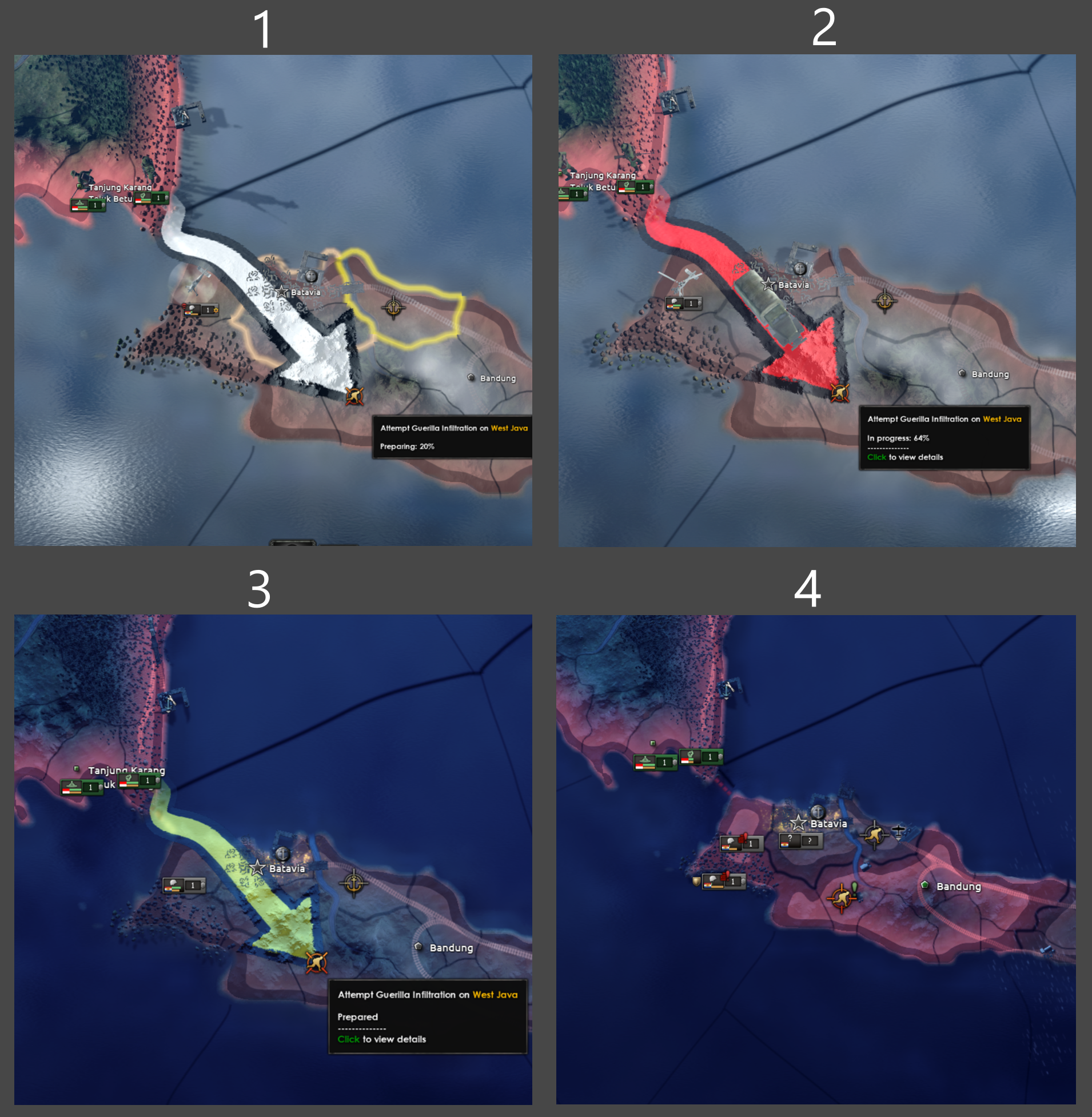
Before full-scale war, Indonesia can conduct land raids to seize Dutch-held territory. Be warned: each successful annexation increases the escalation tier. Overreaching too quickly will inevitably invite a crushing Dutch military intervention.
Naval and Marine Raids
Indonesia’s geography presents a challenge: how does a fledgling nation challenge the Dutch Navy? The answer lies in unconventional warfare. 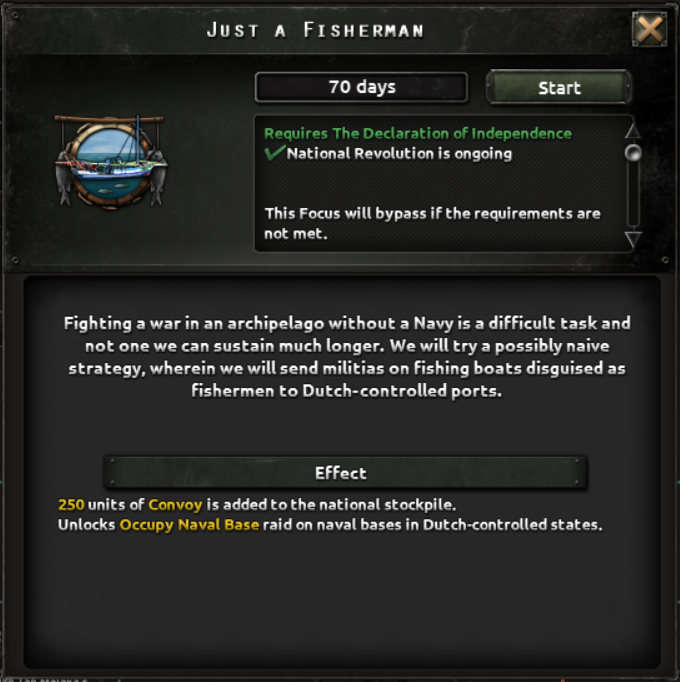
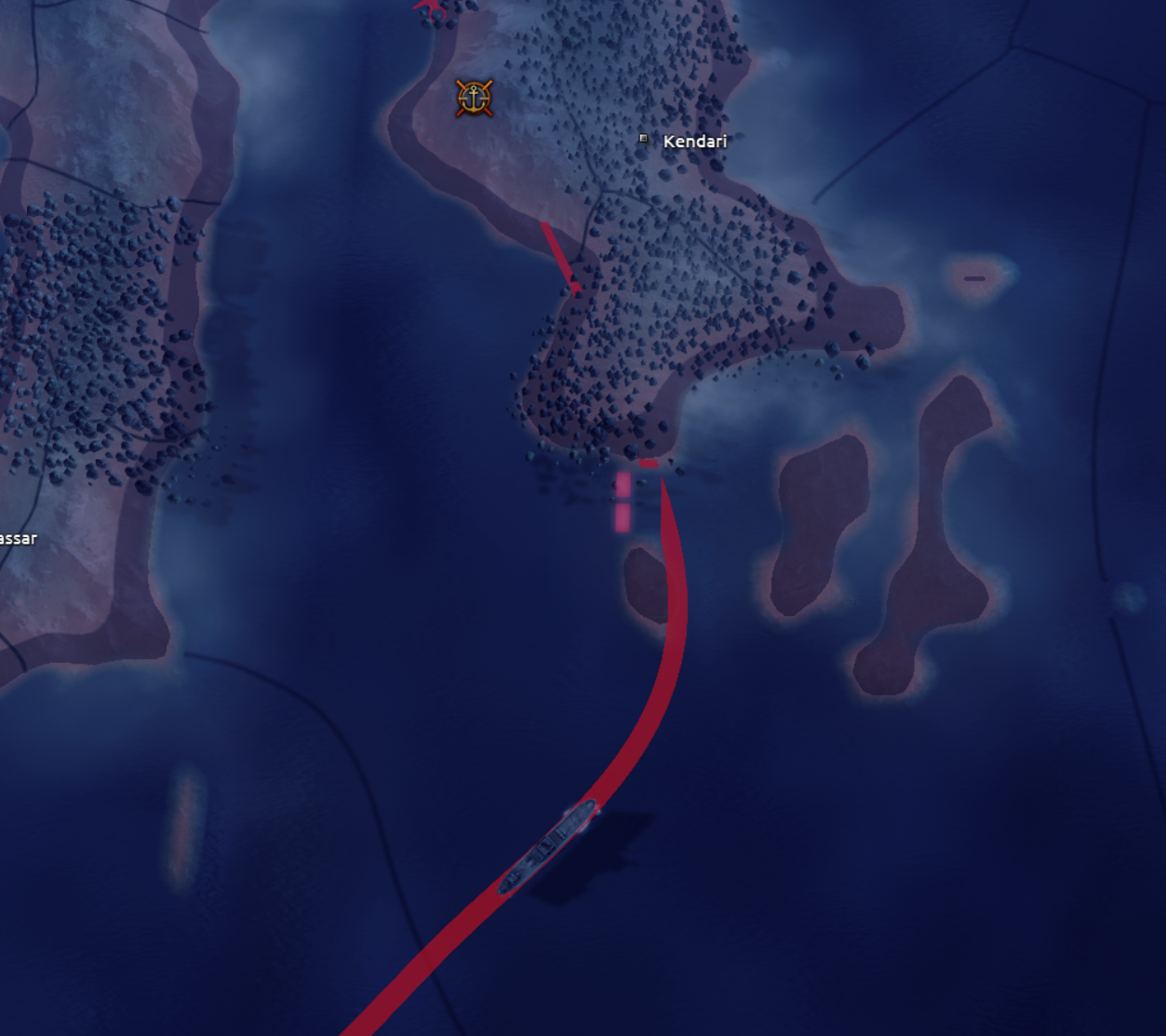
We’ve introduced Marine Commando Raids. These are high-risk operations using vessels disguised as local fishing craft. A single Dutch destroyer can sink your entire fleet if detected, requiring precise, covert execution.
Laskar Rakyat
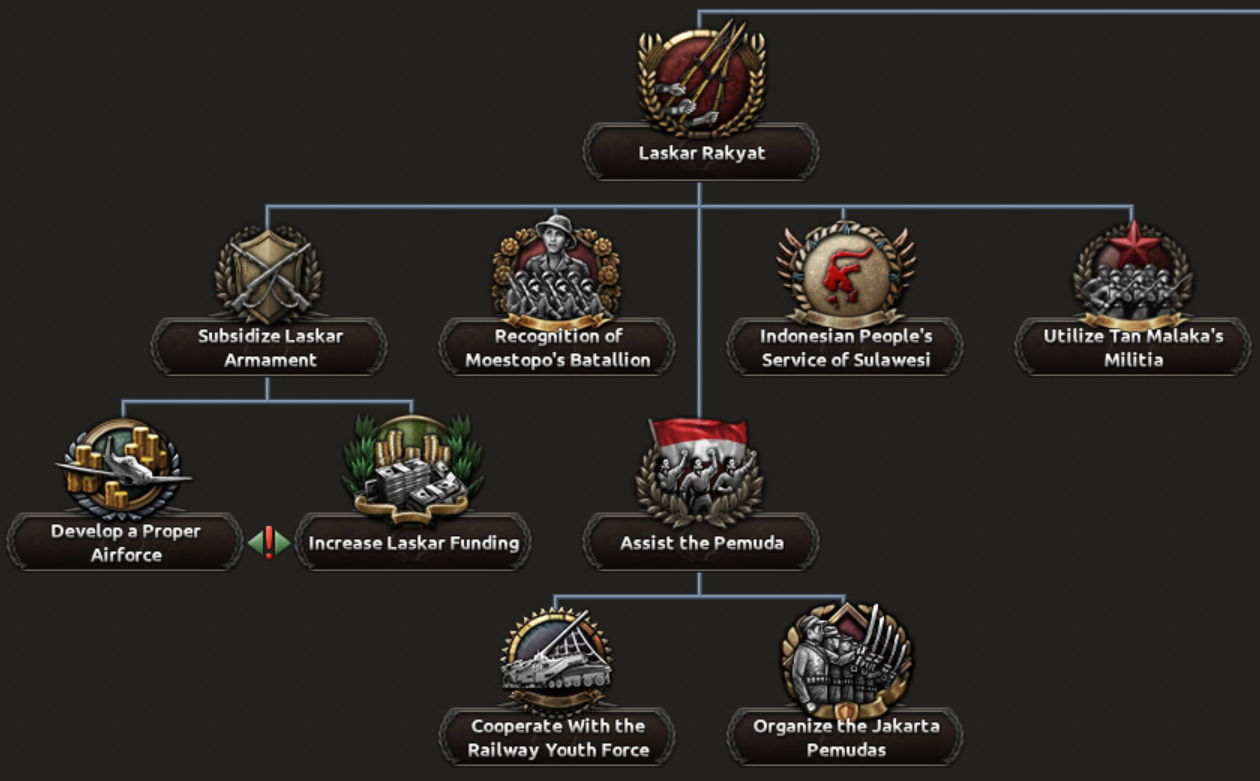
The Laskar (armed militia groups) are a double-edged sword. While they offer vital manpower for a weak government, they are often autonomous and demanding. Aligning with them allows you to field fully equipped divisions, but ignoring their political ambitions will cripple your national stability.
Military and Naval Development
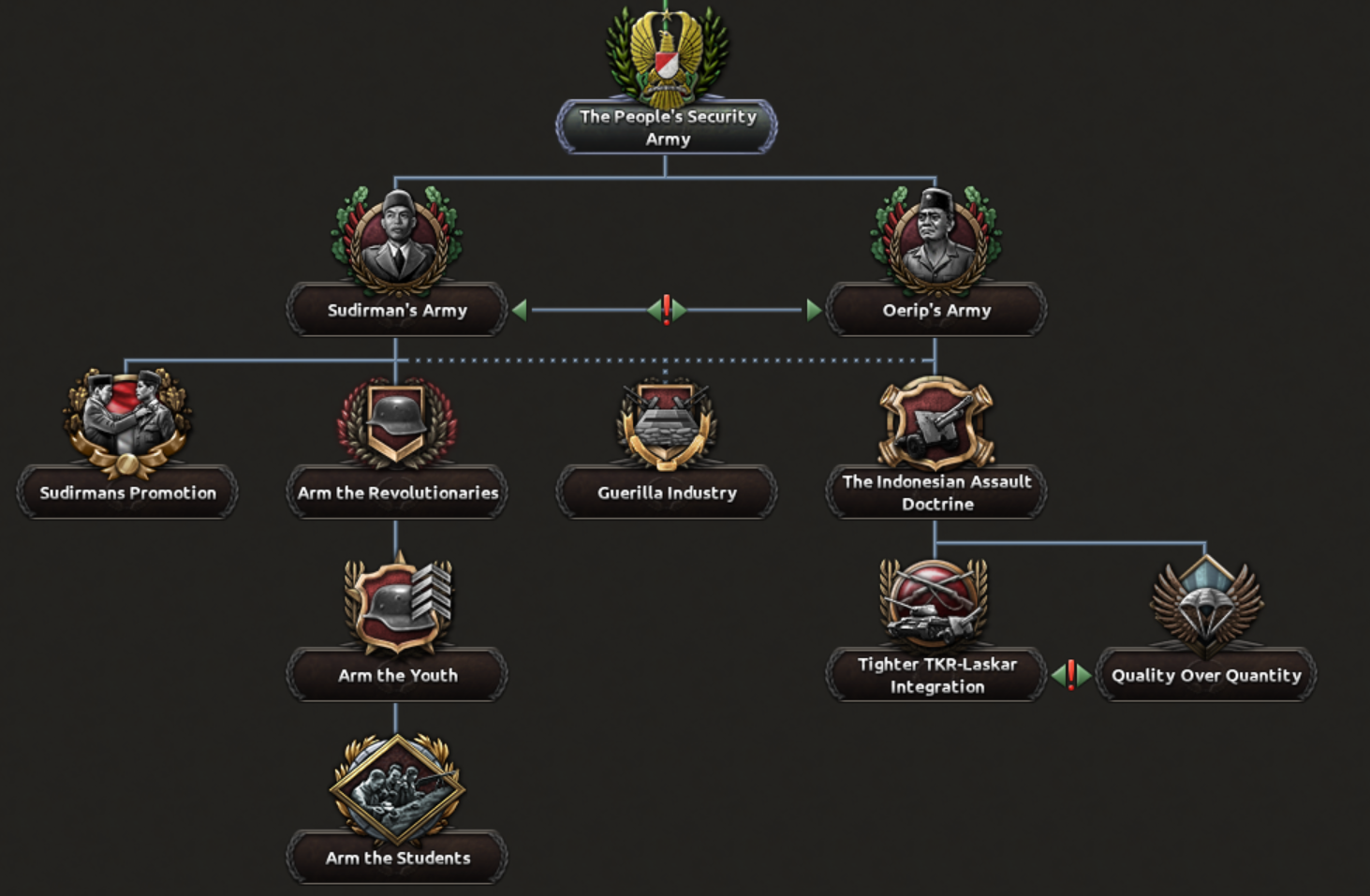
The Army branch is defined by the historic 1945 leadership vote. You must choose between Sudirman, who focuses on massive mobilization and manpower, or Oerip, who favors a professional, high-tech force. Similarly, the Naval branch forces a choice between seizing quick, cheap assets from the Dutch or investing heavily into a long-term modernization program.
Political Chaos
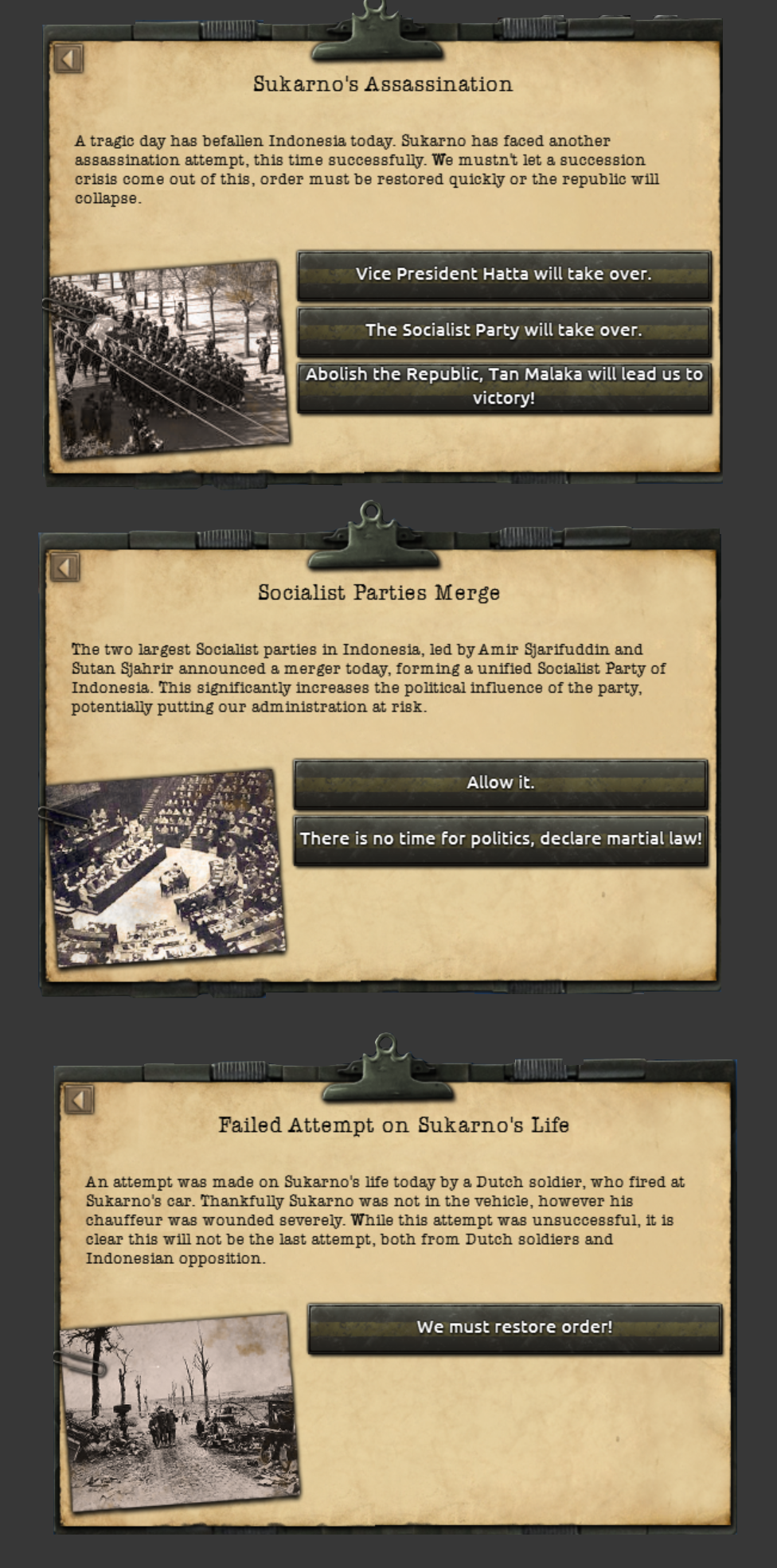
With four competing ideologies holding sway, the early Indonesian government is inherently unstable. Events will fire throughout your transition, forcing you to choose between stability and political advantage. You must consolidate power before you can truly set your national path—whether that is Sukarno’s Guided Democracy, a parliamentary democratic system, or a revolutionary Communist state.
A final note for those wondering: No, Indonesia will never be required to invade the Netherlands to conclude the revolution.
Related articles
 HOI IV Developer Diary | Romania: A Flawed Democracy
 Developer Corner & Open Beta: Energy #2
 Hearts of Iron IV Dev Corner | Strikes!
 Hearts of Iron IV Dev Corner: Old Canada Questions Before New Canada
 Hearts of Iron IV Dev Corner | Energy
 Steam Autumn Sale 2026
 HOI IV Dev Corner | The Great Depression
 Hearts of Iron IV | Patch 1.19.3