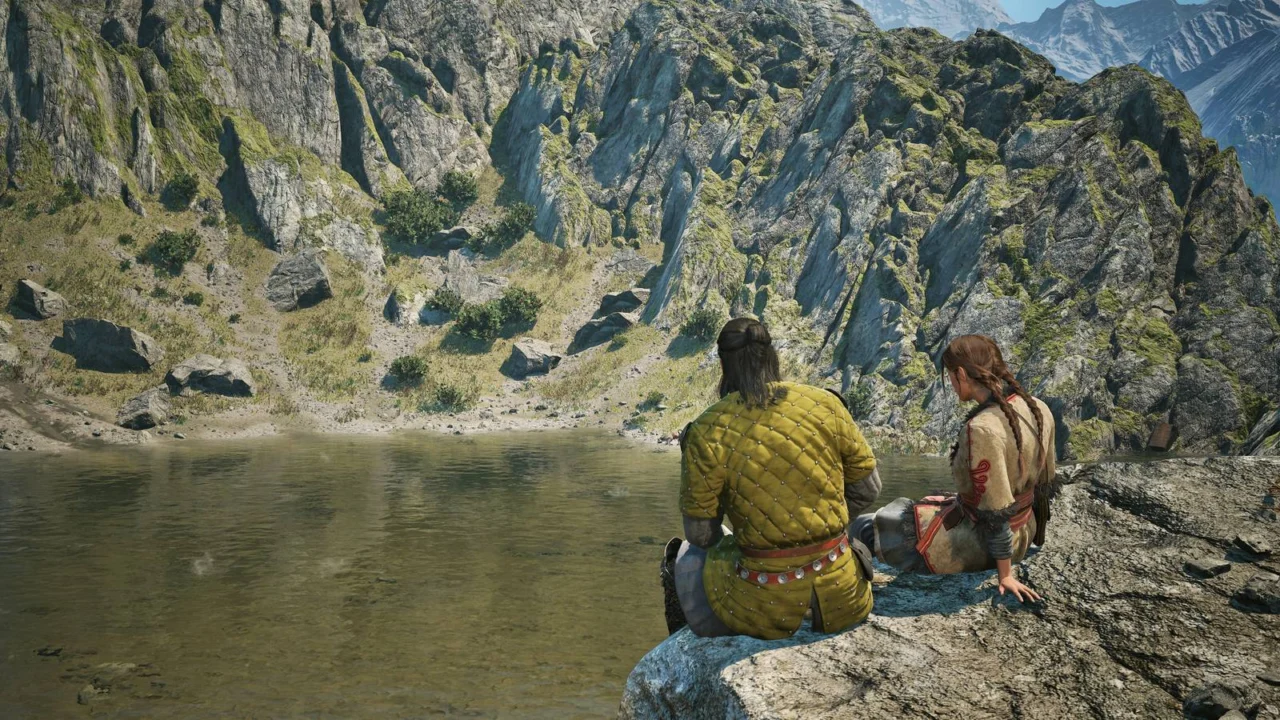
Dawnwalker’s Blood Fixes the Worst Thing About Open-World Games
Many avid gamers I know have poured countless hours into The Legend of Zelda: Breath of the Wild, yet astonishingly few have actually reached the credits. Whenever the topic comes up, the narrative is always identical: “I could easily defeat Calamity Ganon right now, but I simply aren’t ready to say goodbye.” Much like many massive open-world titles, Breath of the Wild is a haven for procrastinators. It supplies endless diversions—whether you are tackling side quests or tracking down every last elusive Korok seed—while the kingdom of Hyrule quietly smolders beneath your hesitation.
The Blood of Dawnwalker serves as the rare open-world adventure explicitly designed to shatter that cycle of delay. Rather than granting you the luxury of postponing the rescue of Coen’s abducted family indefinitely, the game implements a strict temporal mechanic to force players into a direct confrontation with the antagonist. Though that premise might induce panic for those accustomed to dawdling, it stands as a brilliant design choice capable of revitalizing a genre long reliant on aimless wandering.
The Blood of Dawnwalker reimagines open-world games
The Blood of Dawnwalker establishes high stakes immediately during its opening chapters. You step into the shoes of Coen, a young protagonist blessed with vampiric capabilities who finds himself thrust into dark political turmoil after his kin are seized by a ruling faction of vampires responsible for devastating his hometown. Spearheading this group is Brencis, a ruthless tyrant determined to sacrifice Coen’s family in a malevolent blood ritual scheduled to transpire precisely thirty days after their capture.
This gripping premise drives the game’s innovative time-management system. Every undertaking Coen pursues while bracing for the conflict consumes a fraction of your precious hours. With limited daily and nightly segments at your disposal, experiencing every single piece of content in a single playthrough is mathematically impossible. Every decision carries weight, demanding strategic planning to ensure your efforts genuinely prepare you for the impending clash.
Though intimidating at first glance, the system rarely feels suffocating. You quickly realize the vast potential packed into your allotted schedule, whether you choose to assassinate Brencis’ elite guard, acquire formidable weaponry, or rally loyal allies. Surprisingly, the early phases of The Blood of Dawnwalker feel far more liberating than most conventional open-world titles. You are granted immense autonomy right out of the gate with minimal mandatory objectives holding your hand. The initial ten days evoke the sensation of an open-road adventure, mapping paths across an expansive horizon and letting curiosity guide the way—though you are entirely welcome to march straight toward Brencis and meet a swift, agonizing end.
Get Polygon’s Wishlister newsletter
A weekly cheat sheet to what you’ll eventually love to play. No buying, no commitment — just saving for later.
Free. Unsubscribe anytime.
Yet, unlike traditional sandbox games, the clock refuses to pause. Every tick of the timer draws you closer to the inevitable confrontation with Brencis, and eternal avoidance is simply not an option. You are ultimately compelled to face the climax by a strict deadline, unfinished side content notwithstanding. Regrettably, dark blood rituals wait for no adventurer.
It serves as an ingenious remedy for one of the medium’s most frustrating tropes. Few elements break immersion quite like an ancient evil peacefully lingering in a stronghold for months while you busy yourself with home renovations. Such tropes create the hollow impression that the universe revolves exclusively around the protagonist, treating everything else like static set dressing devoid of genuine urgency.
That isolation is entirely absent in The Blood of Dawnwalker. Brencis succeeds as a compelling villain because he perpetually feels active—moving forward with his schemes precisely as you orchestrate your countermeasures. Each passing day genuinely mirrors his closer proximity to victory. Developer Rebel Wolves masterfully leverages this push-and-pull dynamic via highly reactive systems. Undermining Brencis’ operations extends far beyond mindlessly checking tasks off a list; every act of sabotage elevates your notoriety, prompting him to dispatch heavier patrols capable of tracking you down with heightened vigilance. Your choices directly provoke the world, maintaining the chilling illusion that your adversary is an active force rather than a dormant trophy locked behind a door.
Au revoir, family
Ultimately, it is this persistent countdown that anchors the RPG’s profound immersion. The Blood of Dawnwalker never masquerades as a digital theme park meant for casual dabbling whenever boredom strikes. Narrative weight matters once more, and Rebel Wolves clearly intends for you to experience the journey through to its proper conclusion, rather than artificially inflating engagement metrics to appease investors. It stands in direct defiance of modern design philosophies engineered to stretch playtime indefinitely. Sure, you will feel the undeniable urge to launch a fresh save file the moment the credits roll just to uncover missed content, but the true triumph lies in the fact that you actually crossed the finish line. No more endless stalling—you have a family to rescue.
Source: Polygon
Related articles
 Bethesda Veteran Explains Why Studio Should Not Have Developed Starfield
 Ace Combat 8 Lead Teases New Story DLC—and Even Ace Combat 9
 Steam Hit Wardogs Confirmed for Console Release This Year
 Ubisoft PC Games to Launch on Steam Without Ubisoft Connect Launcher
 Level-5’s Futuristic Detective RPG Decapolice Will Now Launch In 2027
 Actor Who Played Arthur in Red Dead Redemption 2 Was Genuinely Sick During Coughing Scenes
 Skyrim Gets IKEA Collaboration Featuring Companion, Quests, and Dungeons
 Xbox To Publish Hideo Kojima’s Action Espionage Game Physint Following End Of PlayStation Partnership