Critical Role Gives D&D Warlocks Cleric Spells in Campaign 4
From the beginning of Critical Role, the cast and crew have made it clear to Critters that they are willing to bend or change the rules of Dungeons & Dragons to suit the story they want to tell. Matthew Mercer, for example, created the Blood Hunter class and added subclasses to better fit his players’ stories.
Mercer is no longer the Dungeon Master for Critical Role’s latest campaign. His successor, Brennan Lee Mulligan, has introduced homebrew rules that change how death, combat, and magic work. His latest change affects one of D&D’s most popular classes, making it more powerful and potentially more unbalanced.
Spoilers follow for Critical Role Campaign 4 episode 41, “True Nature.”
Critical Role changes how warlocks work
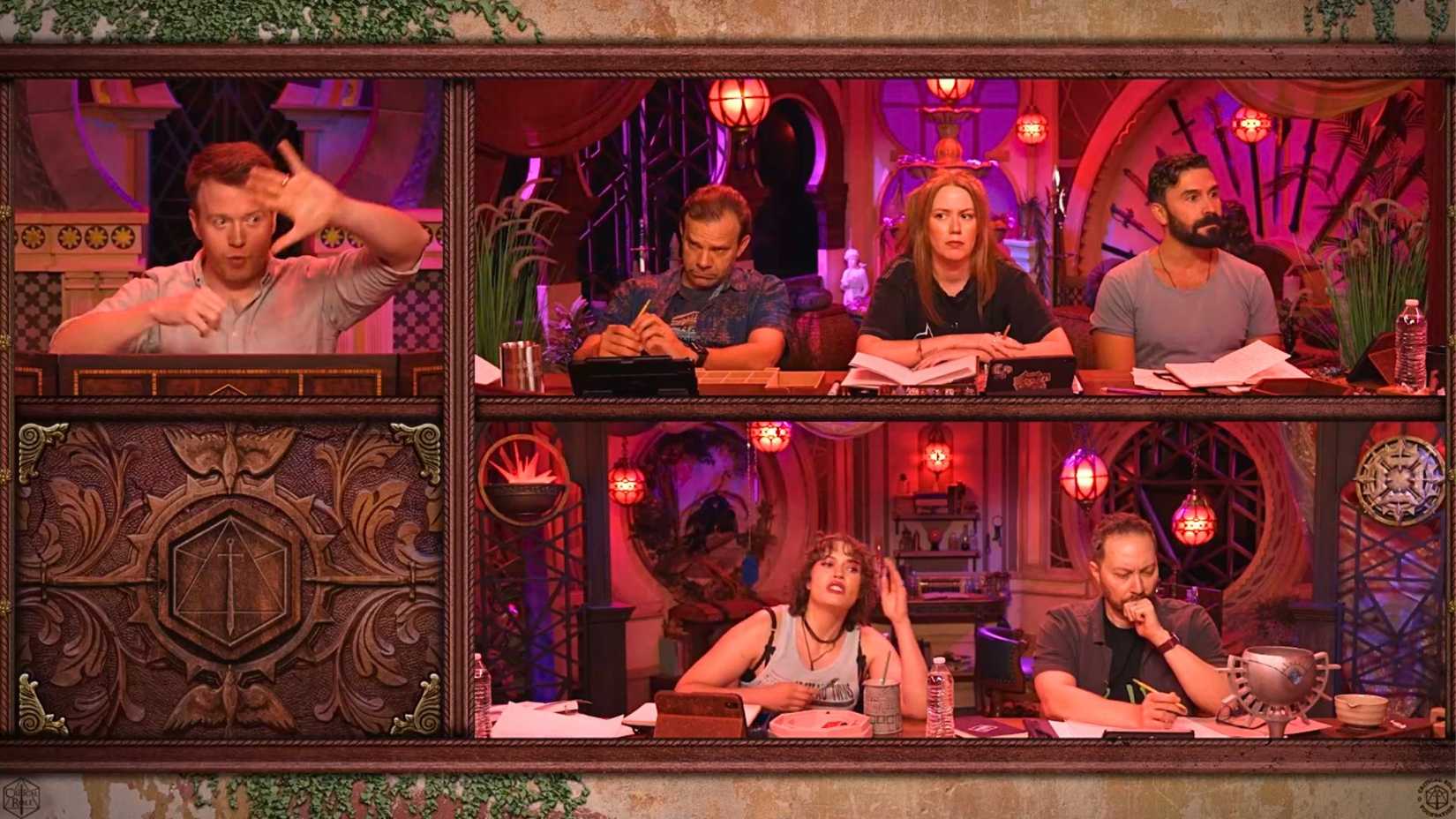
In “True Nature,” the show returns to Tyranny (Whitney Moore) and Wicander Halovar (Sam Riegel) in the demonic plane known as the Pit. They are investigating the mystery of Ksha’aravi, Tyranny’s father. He was left in charge of the Pit after Iljaza, the queen of demons, was obliterated alongside the Dying Fields in the aftermath of the Shaper’s War.
Tyranny and Wick receive help from the resurrected Tsul’rekshi, a powerful demon who has aided the party throughout the campaign. Tsul’rekshi now holds Ksha’aravi’s debt after Ksha’aravi ingested Wick’s soul as a bargaining chip.
Together, they discover that Yanessa Halovar is hiding a secret. Wick’s grandmother leads House Halovar and its religious offshoot, the Candescent Creed. She is also a warlock whose patron is Ksha’aravi.
Campaign 4 episode 33, “Off-Balance,” hinted at the connection when Yanessa cast Eldritch Blast on Halandil Fang’s (Liam O’Brien) mug and then flew away. “True Nature” confirms it.
Yanessa’s pact with Ksha’aravi differs from a typical warlock-patron relationship. When she was younger, a game she played led the demon to reveal his true name. Yanessa gained control over him and could use his power whenever she wanted.
She also uses Ksha’aravi’s power to grant magic to the luxes, religious leaders who travel across Aramán to bring the Candescent Creed’s teachings to communities. In exchange, they sign a contract.
Members of the Candescent Creed believe their faith earns them these powers. In fact, the powers come from a demonic contract and facial tattoos made with filament, or angel’s blood. The luxes’ sorcery-like abilities lend credibility to Yanessa and the Creed in Aramán, where magic has been severely restricted since the destruction of the gods.
Why the luxes are more powerful

Yanessa’s use of a warlock contract to grant powers to followers of a religion she created raises questions for the campaign. It also introduces unusual possibilities for the class.
Mulligan explained in “True Nature” that the luxes are all warlocks, but their filament tattoos enhance them in ways that differ from the usual rules.
“The spell list of the luxes, the spells they have access to, the filamental tattoos (from Wick’s grandfather Aetheon) give them things like healing and give them those Cleric spells like Ceremony,” Mulligan clarified, “but their spell slots are coming from the demon prince and this big old bug [Zgroog].”
Ksha’aravi and Zgroog supply the luxes with a warlock’s allotment of spell slots. Zgroog is a demonic golden tick who has grown larger over the years by consuming the souls of the Candescent Creed’s most devoted followers. The chained angel beneath the Halovars’ home provides the luxes with cleric spells.
Warlocks can become powerful depending on how they are customized, but their limited number of spell slots is a major weakness. They can restore those slots with a short rest, while other spellcasters generally need a long rest to do so.
Warlock spells also tend to favor dealing damage over strengthening allies or healing. A character’s choices can change that balance. A warlock with The Celestial as a patron, for example, gains access to spells such as Cure Wounds. Even so, warlocks are generally considered less flexible than other spellcasters. Giving the luxes access to cleric spells makes them tougher opponents.
Yanessa and Ksha’aravi reverse the usual balance of power
A warlock’s pact often leaves them at a disadvantage if they upset their patron, adding tension to their decisions. In one game, my warlock’s patron was satisfied only when she killed. After a few days of travel without killing anyone or anything, she upset her patron and had to make a Wisdom saving throw to keep control of her senses.
Not every warlock and patron have a hostile relationship, but there is usually a power imbalance. Yanessa and Ksha’aravi have one too, except Yanessa is in charge.
Her control over a demon prince shows how powerful and frightening she is. The heads of the Sundered Houses are already formidable, and the revolutionaries will need to be careful when dealing with her as Campaign 4 continues.
At the same time, Yanessa’s control reduces some of the tension that can come from serving a demon patron. There is still more to learn about warlocks and demonkind in Aramán, and Mulligan and the players may find other ways to explore that relationship. For now, warlocks appear more powerful, and their roleplaying dynamic has shifted.
Campaign 4 of Critical Role is available to watch live on Twitch, YouTube, and Beacon.tv on Thursday nights at 10 p.m. PDT. Critical Role posts each episode to YouTube the following Monday at 3 p.m. EDT/12 p.m. PDT.
Source: Polygon
Related articles
 Nintendo Switch Sports Resort Beats Final Fantasy Resonance on Japan’s Physical Sales Chart
 Smalland 2: Lost Realms Gameplay Shown as Grounded 2 Rival Takes Shape
 Former The Coalition Producer Says Xbox Engine Costs Add to Hundreds of Millions in Spending
 Nintendo Quietly Updates Switch 2 to Make Battery Replacement Easier
 Sony Releases PS5 Firmware Update Amid Reports of New Console Exploit
 Zelda: Ocarina of Time Remake May Use FSR 1.0 Instead of DLSS on Switch 2
 Phantom Blade Zero Director Says Meigu Lake Was Inspired by Wuxia, Not Zelda
 Xbox Put a Series X in an Alligator for GTA 6