
Coen Brothers’ Gangster Film, Released Days After Goodfellas, Flops

1990 marked a turning point for American crime cinema: Martin Scorsese’s Goodfellas and Francis Ford Coppola’s The Godfather Part III framed a season in which two towering filmmakers returned to gangster material on very different terms. Nestled between those high-profile releases was Joel and Ethan Coen’s Miller’s Crossing — a formally daring, period-infused gangster piece that performed modestly at the box office, earned no Academy Award nominations, and ultimately helped define the Coens’ distinctive approach to genre storytelling.
Miller’s Crossing premiered at the New York Film Festival just days after Goodfellas opened wide; unlike Scorsese’s commercially viable crime portrait (see its box-office run), the Coens’ film found its initial audience primarily among cinephiles and critics. That reception makes sense: of their pictures, Miller’s Crossing is one of the most lovingly referential to older films, an argument built for viewers steeped in movie history.
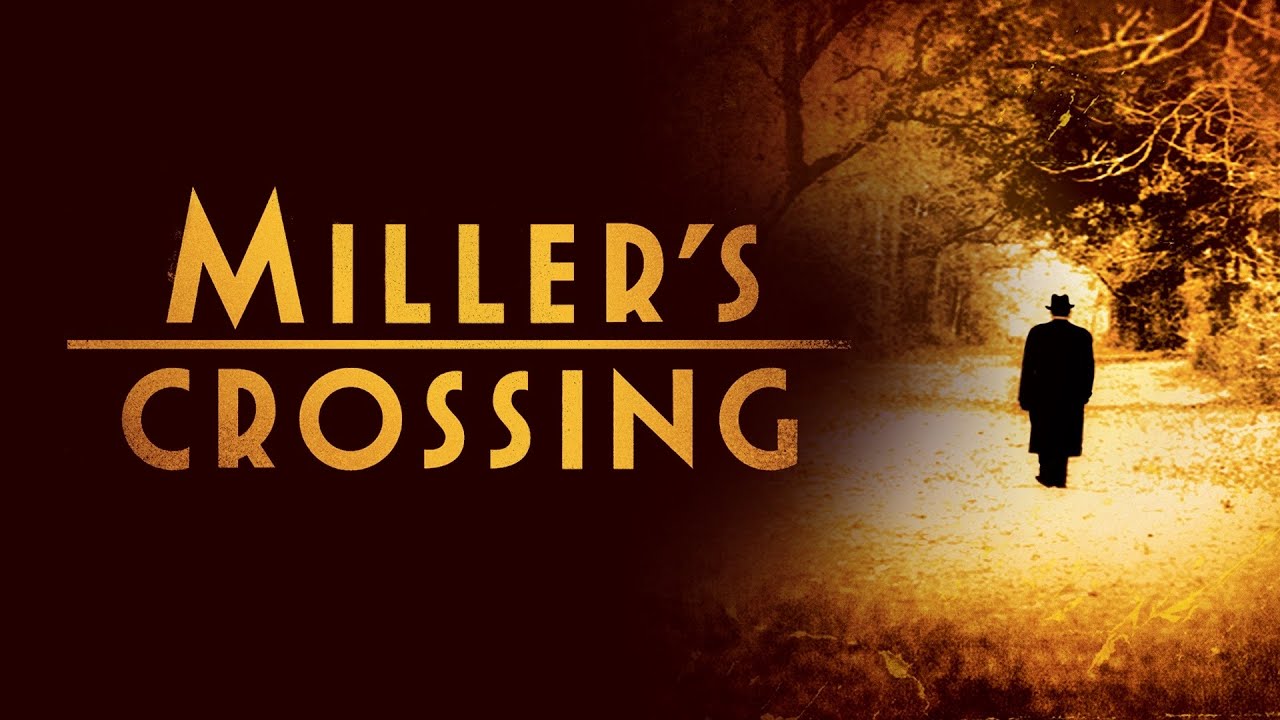
Where Scorsese’s Goodfellas often channels the raw immediacy and profanity of contemporary crime narratives, and Coppola’s Godfather trilogy invests organized crime with classical gravitas, Miller’s Crossing looks more directly to the vernacular of earlier noir and 1930s gangster cinema — and to hard-boiled writers like Dashiell Hammett. Its dialogue trades in stylized, period-inflected patter; characters crack wise with lines such as “What’s the rumpus?” while others, like the volatile Johnny Caspar (Jon Polito), obsess over perceived slights or the “high hat” given to them by rivals.
The script oscillates between screwball rhythm and noir fatalism. The Coens’ first two films — the lean noir Blood Simple and the exuberant neo-screwball Raising Arizona — are visible antecedents: Miller’s Crossing synthesizes both impulses. At the center is Tom Reagan (Gabriel Byrne), an Irish consigliere who maneuvers between competing factions with a philosopher’s reserve rather than a thirst for power or wealth. He’s the archetypal fixer, described by others as “the man who walks behind the man and whispers in his ear.”

Critics have sometimes accused the Coens of metafictional cruelty — of orchestrating fate like deities at a remove from the plights of their characters. Miller’s Crossing flirts with that charge: the film’s manipulative reversals feel at times like authorial orchestration. Yet compared with later Coen works that dwell in existential dread, such as A Serious Man or The Man Who Wasn’t There, Miller’s Crossing wears its homage and its irony with a lighter touch; its bleakness is tempered by linguistic playfulness and formal affection for the genres it borrows from.
Go deeper into 1990’s crime output and Miller’s Crossing reads as both reverent and quietly subversive. Scorsese’s Goodfellas, for example, ends with a violent, confrontational image that tips a hat to early cinema’s spectacle; the Coens, by contrast, compose something more elegiac and self-conscious, a film that rewards viewers familiar with the conventions it reworks while refusing to replicate the adrenaline rush of its contemporaries.

The screenplay itself emerged after a period of creative impasse that would also inspire the Coens’ next project, Barton Fink. Miller’s Crossing demonstrates the brothers’ relish for language: long, slang-laden monologues — most memorably in Steve Buscemi’s brief but electrifying appearance — contrast with Tom Reagan’s muted, calculating presence. Rather than declaiming or grandstanding, Tom navigates betrayals and alliances with a coolness that makes the film’s sudden eruptions of violence feel both inevitable and mournful.
Visually, Barry Sonnenfeld’s cinematography lends the film an elegant period sheen that anticipates his subsequent career as a director. The Coens’ blend of wit, menace, and formal reverence in Miller’s Crossing didn’t align neatly with mainstream tastes in 1990, but in retrospect the film reads as a critical waypoint: a work that helped the brothers refine the tonal range and genre fluency that would define their later masterpieces.
Source: Polygon
Related articles
 Lilly Wachowski disavows involvement in the new “Matrix” film
 Kane Parsons to Return to The Backrooms
 First Emmy Award Winners Announced
 Robert Pattinson calls ‘The Batman’ sequel ‘radical’
 A24 to release documentary on Elizabeth Holmes
 Nolan’s “Oppenheimer” Surpasses “Spider-Man” at the Box Office
 Natalie Portman Becomes a Mother for the Third Time
 Zach Cregger Will Not Direct Franchises After “Resident Evil”