
Christopher Nolan’s Insomnia: An Underrated Thriller Featuring Al Pacino and Robin Williams at Their Peak
Visualize your personal top three Christopher Nolan features—the films that instantly define his career. Are you thinking of the Dark Knight trilogy? Perhaps high-concept epics like Inception, Interstellar, or the Oscar-winning Oppenheimer? Now, consider the legendary filmography of Al Pacino. Does your mind drift toward The Godfather, Scarface, or Serpico? Finally, do the same for the incomparable Robin Williams, recalling Good Will Hunting, Dead Poets Society, or Aladdin.
It is a safe bet that for many, the 2002 psychological thriller Insomnia didn’t even register as a contender in those lists. This is a curious oversight, given that all three titans were operating at the height of their powers. Pacino and Williams deliver strikingly layered, uncharacteristic performances, while Nolan crafts a narrative that is as claustrophobic as it is expansive.
The film is set in the isolated town of Nightmute, Alaska, during the peak of the “midnight sun.” Much like the way 30 Days of Night weaponized constant darkness for horror, Insomnia utilizes perpetual daylight—mirrored by the blinding, snowy landscapes—to dissect the psychological unraveling caused by extreme sleep deprivation.
The relentless sun is a particular curse for Detective Will Dormer (Pacino), an LAPD veteran dispatched to the tundra alongside his partner, Hap Eckhart (Martin Donovan). Their mission is to assist local authorities in solving the brutal slaying of a local teenager. However, the investigation is shadowed by a looming Internal Affairs probe back home regarding evidence tampering. Dormer’s guilt is heavily implied, and the revelation that Eckhart intends to testify against him creates a palpable fracture in their alliance.
The tension reaches a boiling point during a botched pursuit of the primary suspect, Walter Finch (Williams), amidst a thick, disorienting fog. In the chaos, Dormer accidentally guns down his partner. Instead of confessing, he chooses to conceal the truth—only to realize that Finch witnessed the entire incident. What follows is a high-stakes game of psychological chess, where a murderer blackmails a corruptible lawman, exploiting Dormer’s moral compromise and his increasingly fractured sanity.
While Insomnia lacks the overt structural gymnastics of Memento or Tenet, it is far from a generic police procedural. It thrives on atmosphere, placing the audience directly into the hazy, vibrating headspace of its protagonist. Nolan captures a unique sense of disorientation, making the wide-open Alaskan vistas feel as stifling as an interrogation room.
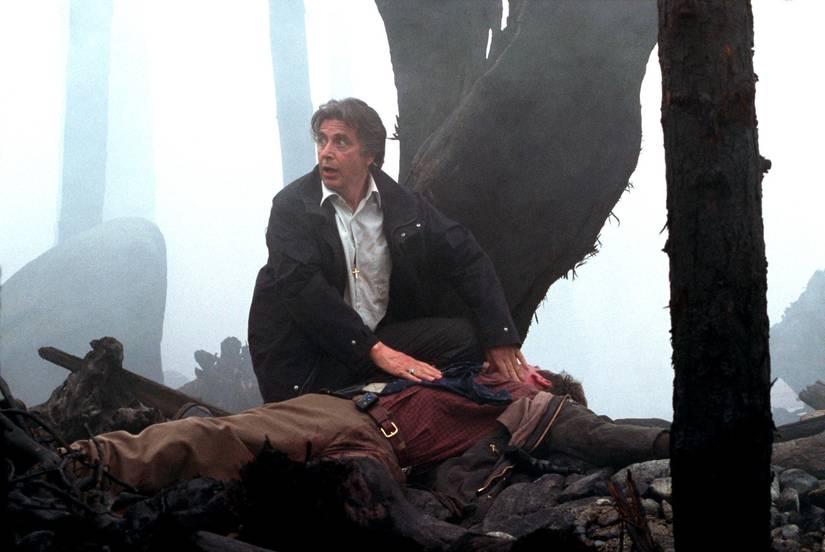
Pacino’s performance here reminds us exactly why he is a cinema icon. He transitions seamlessly from a sharp, charismatic mentor to local protégé Ellie Burr (Hilary Swank) to a man utterly consumed by fatigue. He manages to portray “tired” without ever being dull; his mental sluggishness becomes the film’s primary engine of suspense.
Robin Williams is equally captivating, stripping away his comedic persona to reveal something chilly and understated. His Walter Finch isn’t a flamboyant villain; he is a man who committed a crime in a moment of pathetic rage and now desperately seeks to justify it. Williams plays him with a quiet, bubbling intensity—like a kettle on the verge of whistling, though the sound never quite comes. This eerie restraint makes him one of the actor’s most unsettling characters.
So why has this masterpiece languished in relative obscurity? It likely boils down to timing. Pacino was entering a phase where he frequently played similar police roles in less-inspired films like The Recruit, causing this nuanced performance to blend into the background. For Williams, 2002 saw him release One Hour Photo, a film where his physical transformation and lead status grabbed more headlines than his supporting role in Insomnia.
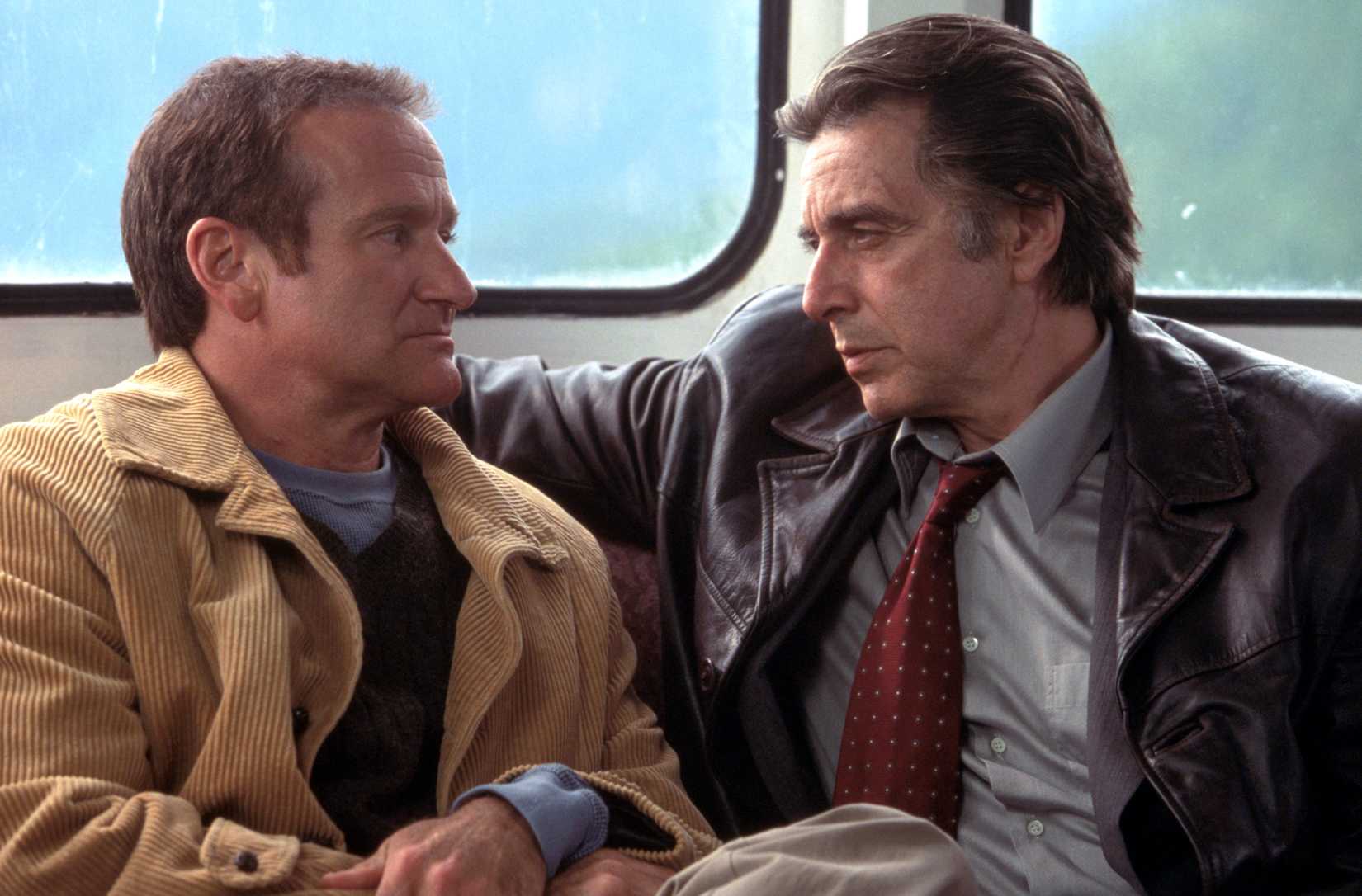
For Nolan, this was a transitional project. It was his first studio film following the independent success of Memento. Because it is a remake of a Norwegian thriller and the only film in his catalog where he lacks a writing credit, it is often viewed as a “director-for-hire” gig rather than a personal vision. While it doesn’t scream “Nolan” in the way his later puzzles do, his masterful pacing is undeniable.
Ultimately, Insomnia remains a vital piece of cinematic history. It served as proof that Nolan could handle major stars and significant budgets without losing his atmospheric edge. It provided Robin Williams with a chilling dramatic victory and gave Al Pacino one of his most complex, internal roles in years. Even if he isn’t shouting like Serpico, Detective Dormer’s silent battle with the light is just as haunting.
Insomnia is available for rental or purchase on Prime Video, Apple TV, and YouTube.
Source: Polygon
Related articles
 Boxed Games Become a Problem for Collectors as Issues Reach PS5
 Gears of War: E-Day Reportedly Planned as Start of a New Trilogy, Rumors Say
 Shenmue III Enhanced Edition Delayed to Improve Graphics and Add New Features
 Ridley Scott Finds Screenwriter for New Film That May Continue the Prometheus and Alien: Covenant Story
 Zendaya to Be Promoted for Best Lead Actress Oscar for Third Dune Film
 Crimson Desert Charting the Unknown Expansion Will Add Sea Monsters and Ship Boarding, Details Revealed
 Ticket Presales Suggest Dune: Part Three Will Lose Heavily to Avengers: Doomsday at the Box Office
 DC Horror Film Clayface Earns Unusually High CinemaScore