Castlevania: Belmont’s Curse Is a Near-Perfect Metroidvania
What unique offerings does Castlevania bring to the table in 2026 that its countless spiritual successors haven’t already perfected? Ever since Symphony of the Night and its acclaimed handheld sequels helped establish the blueprint for 2D action-adventure exploration, Konami largely shelved the franchise just as a wave of inspired successors began to thrive. Considering the diverse interpretations of this formula—ranging from unconventional “MetroidBrainias” like Animal Well to the overt homage Bloodstained: Ritual of the Night—perhaps it was ultimately a grace that the Belmont lineage quietly stepped into the shadows. After all, preserving a legendary legacy is vastly preferable to wearing out its welcome.
Castlevania: Belmont’s Curse, the legendary franchise’s first mainline installment in over a decade, decisively shatters that assumption, proving the series still has vast narrative and mechanical territory to explore. By marrying nostalgic appeal with the razor-sharp, kinetic combat championed in Dead Cells, developer Evil Empire’s latest masterpiece honors Castlevania’s storied heritage. From vibrant, saturated palettes that make the gothic environments brilliantly vivid to the innovative, card-driven Arcana system, Belmont’s Curse revitalizes the formula while heightening the elements that made the original adventures timeless. As exceptional as many modern spiritual successors have been, there remains something profoundly magical about confronting the Prince of Darkness beneath a looming full moon while “Bloody Tears” echoes through the halls—a fateful homecoming indeed.
This sprawling chapter unfolds in the aftermath of Castlevania 3: Dracula’s Curse (loosely adapted by Netflix’s celebrated animated series). Nearly twenty years after Trevor Belmont and his companions vanquished Dracula, the infamous vampire continues his frustrating habit of defying permanent death. Players step into the boots of Rose Belmont, the formidable daughter of Trevor and Sypha Belnades—a young, determined vampire hunter eager to carve out her own legacy. Responding to an urgent dispatch from her father detailing escalating occult threats, Rose and Trevor arrive in Paris to investigate. She is soon thrust into the abyss, battling the legions of hell to thwart Dracula’s ambitions. Beyond merely confronting the dark lord, Rose must grapple with an internal trial: an emotional curse slowly jeopardizing her future.
Paris in flames
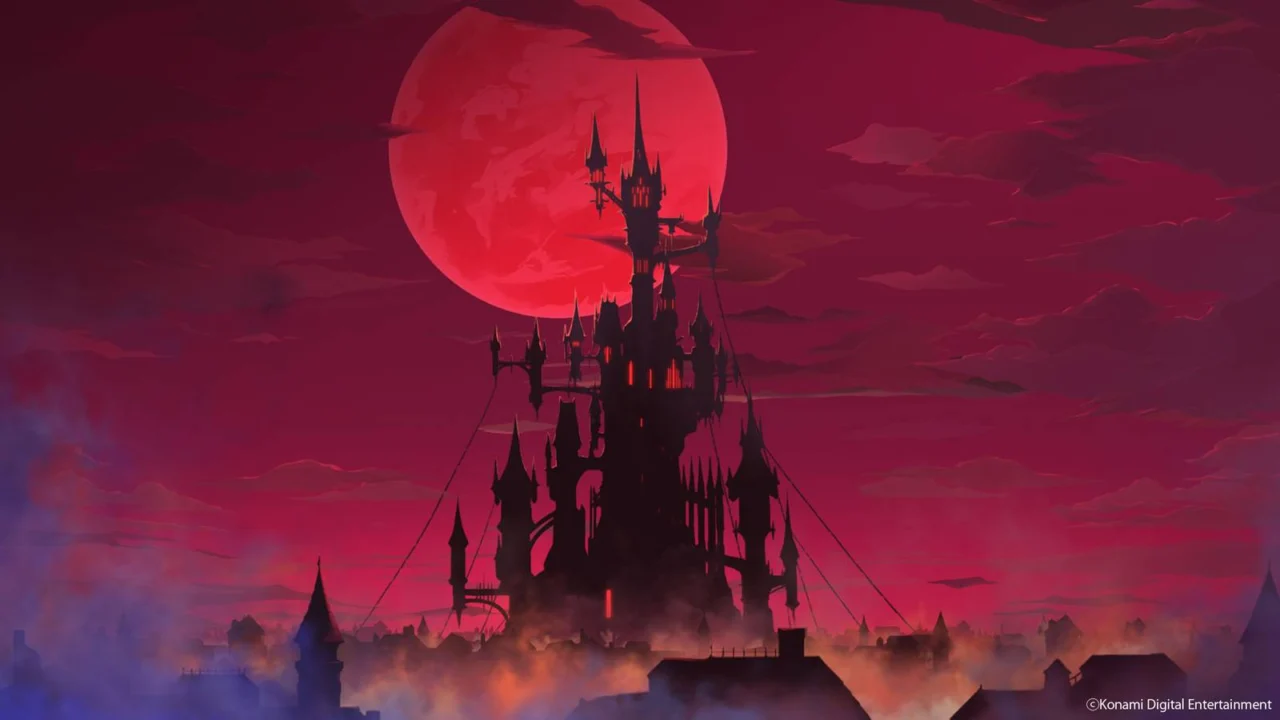
True to form, Belmont’s Curse relies less on intricate literary prose and more on an intoxicating, larger-than-life atmosphere reminiscent of classic Universal monster cinema. Here, the once vibrant streets of Paris have been transformed into a haunting ghost town, its skyline silhouetted against a blazing tapestry of crimson and amber. Highly stylized 2.5D aesthetics forge a striking environment that feels as though a visionary comic illustrator reimagined The Triumph of Death, contrasting heaps of decaying corpses against stunning, highly saturated backdrops. The visual presentation is nothing short of breathtaking.
These distinct vistas ensure every zone remains etched in memory, a triumph reinforced by brilliantly structured architectural design that honors the genre’s core tenets. While the opening hours lean slightly linear, the experience rapidly blossoms into an expansive, branching labyrinth of pathways as you hunt for the means to defeat Dracula. Attempting to confront the dark lord unprepared is absolute folly. This open-ended approach yields abundant opportunities for exploration, rewarding careful observation with substantive secrets and clever environmental puzzles. Fortunately, the primary route remains intuitively navigable, sparing players the frustration of aimlessly striking arbitrary walls to uncover hidden corridors.
While perhaps not quite as labyrinthine or massive in scale as masterpieces like Hollow Knight: Silksong, Belmont’s Curse aligns more closely with the tightly paced design of Metroid Dread—an equally focused sequel that never outstays its welcome. Where Evil Empire’s adventure distinctly surpasses Samus’s latest 2D excursion is in the richness of its world rewards, chief among them the Arcana Cards: a collection of mystical tarot artifacts inherited from Rose’s mother.
Heart of the cards
Upon triumphing over formidable bosses or aiding eccentric denizens throughout the realm, you will liberate—or occasionally redeem—souls warped by Dracula’s malice, seamlessly transforming old adversaries into valuable allies or complicated acquaintances. These cards grant access to versatile, mana-fueled magical abilities, empowering Rose to unleash devastating fireballs or manipulate temporal flows with the theatrical flair of a combatant from JoJo’s Bizarre Adventure. While certain skills prove more situational than others, many fundamentally alter moment-to-moment combat dynamics, allowing you to freeze minor adversaries for sudden mobility bursts or siphon vitality through vampiric life-stealing techniques.
Perhaps the most delightful surprise is how these empowering abilities intertwine with deeply resonant narrative developments. As Rose gathers wretched entities mutated by Dracula’s dark influence, she confronts profound questions regarding redemption and forgiveness. This thematic thread evolves from a subtle subplot into a deeply impactful optional storyline, making Dracula’s ultimate vulnerability far more compelling than mere garlic or wooden stakes. The fact that the narrative functions as a pseudo-sequel to the Netflix adaptation certainly enhances this connection, offering viewers of the series a significantly deeper emotional investment in characters like Sypha.
Tracking down these Arcana Cards and their associated lore stands out as one of Belmont’s Curse’s greatest triumphs. Subtle environmental clues are brilliantly peppered throughout the world, hinting at hidden puzzles and arcane mysteries that are immensely satisfying to decode. Alongside these mystical cards, explorers will uncover hidden chests containing valuable loot, including unique weaponry and equippable accessories that grant crucial passive benefits.
Action-platforming brilliance
Beyond material rewards, traversing Dracula’s domain is inherently exhilarating for a simpler, profoundly tactile reason: Evil Empire has engineered a 2D action-platformer that feels exceptional to control. Belmont’s Curse inherits the ultra-responsive movement mechanics of Dead Cells, seamlessly translated into the gothic aesthetic of Castlevania. Rather than relying on invulnerability-frame rolls to bypass incoming attacks, players must carefully read adversary telegraphs, choosing precisely when to slide, backstep, or leap to maintain optimal positioning and leverage spacing to their advantage.
While the absence of reckless evasion requires disciplined defensive play under pressure, the game equips Rose with an impressive arsenal of lethal monster-hunting instruments. A signature magical whip allows her to snap directly toward enemies before initiating high-flying aerial combinations—reminiscent of Dante’s fluid acrobatics from Devil May Cry. Furthermore, a rewarding parry mechanic sustains offensive momentum, enabling you to summon a holy orb that deflects incoming projectiles from skeletal archers while simultaneously pummeling a haunted suit of armor. Both combat encounters and platforming segments grow increasingly fluid and empowering as you unlock progressive mobility upgrades that let you effortlessly glide across the map utilizing advanced momentum-canceling techniques.
From moment-to-moment brawls to sweeping level architecture, Belmont’s Curse is meticulously crafted, though it is not entirely without minor friction points. Chief among these is the absence of a quick-swap utility for weapons and magical abilities. Because individual Arcana Cards offer distinct advantages tailored to specific combat scenarios, you will frequently want to cycle through them. Regrettably, doing so requires pausing the action to navigate through menus. Similarly, loadouts are constrained to three equipment slots, meaning optimization-focused players preparing for grueling boss skirmishes will spend noticeable time in inventory screens—though thankfully, the user interface remains snappy and responsive.
Belmont’s Curse deliberately sheds some of the more convoluted RPG mechanics found in earlier installments—retaining a streamlined leveling framework. Weapon variety features four distinct tiers across seven unique armaments, though the initial three tiers primarily scale numeric damage output rather than introducing radical behavioral changes. This represents a slight departure from the diverse, experimental gear drops characterizing classic “Igavania” entries overseen by producer Koji Igarashi. While this streamlining generally benefits the pacing, players occasionally yearn to stumble upon an eccentric purple blade with a hyper-specific percentage bonus against skeletal foes. Ultimately, these minor critiques pale in comparison to how satisfying every weapon category feels to wield in practice.
Castlevania: Belmont’s Curse triumphantly banishes any lingering skepticism surrounding this long-awaited revival. It distinguishes itself through striking 2.5D visual direction, fluid momentum inspired by modern action titles, and the strategic depth of the Arcana system, all while remaining utterly faithful to the series’ foundational identity: an atmospheric, moonlit aura paired with an unforgettable orchestral score. Much like its protagonist, who must courageously confront her ancestral burden, Belmont’s Curse honors the legacy of its predecessors while fearlessly forging a path into the future—wielding franchise iconography with the precision of a master hunter cracking a family whip.
Castlevania: Belmont’s Curse will be released Oct. 15 on Nintendo Switch, Nintendo Switch 2, PlayStation 5, Windows PC, and Xbox Series X. The game was reviewed on PlayStation 5 using a prerelease download code provided by Konami. You can find additional information about Polygon’s ethics policy here.
As well as reinventing the campaign, Fuse Games comes for online racing
Source: Polygon
Related articles
 Boxed Games Become a Problem for Collectors as Issues Reach PS5
 Gears of War: E-Day Reportedly Planned as Start of a New Trilogy, Rumors Say
 Shenmue III Enhanced Edition Delayed to Improve Graphics and Add New Features
 Ridley Scott Finds Screenwriter for New Film That May Continue the Prometheus and Alien: Covenant Story
 Zendaya to Be Promoted for Best Lead Actress Oscar for Third Dune Film
 Crimson Desert Charting the Unknown Expansion Will Add Sea Monsters and Ship Boarding, Details Revealed
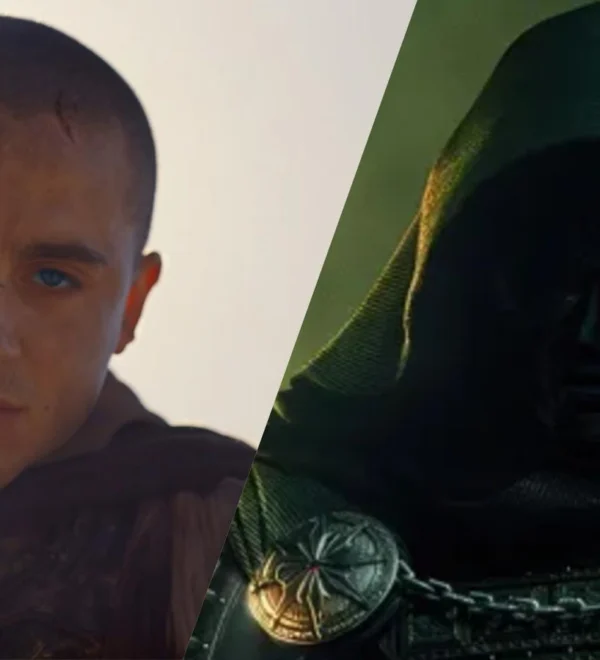 Ticket Presales Suggest Dune: Part Three Will Lose Heavily to Avengers: Doomsday at the Box Office
 DC Horror Film Clayface Earns Unusually High CinemaScore