Avatar: Seven Havens Review
Michael Dante DiMartino and Bryan Konietzko created one of the greatest fantasy series of all time with Avatar: The Last Airbender, imagining a rich world filled with wondrous magic, clashing cultures, and bizarre hybrid animals. Their sequel, The Legend of Korra, moved the world forward a generation and invented a new steampunk urban setting, while also featuring cameos and flashbacks with established characters like Aang, Katara, and Toph. For their third series, DiMartino and Konietzko, along with executive producers Ethan Spaulding and Sehaj Sethi, have taken a radical step by destroying everything they built.
Avatar: Seven Havens joins a rich legacy of post-apocalyptic fantasy where heroes of a fallen age must band together to face a rising threat. In The Lord of the Rings, The Wheel of Time, and The Stormlight Archive, the glorious past and the circumstances that led to ruin have been largely relegated to myth. Seven Havens takes a similar tack with a clever twist because Avatar fans already know what this world used to be like, but not how things got so bad.
Seven Havens is set 300 years after the events of Avatar: The Last Airbender and 225 years after The Legend of Korra. The four nations that once lived in harmony have all been wiped out by a mysterious cataclysm supposedly unleashed by the last Avatar, Korra. Survivors live in seven isolated Havens constantly besieged by devastating storms and ravagers. In Ellora, the Haven of Wind and Sand, all benders are conscripted into a brigade to protect its people from the elements, bandits, and crumbling infrastructure. Fewer benders are born every year, and the brigade numbers are shrinking. The situation is unstable, but when a mysterious threat from the spirit world emerges, Ellora survival is put in jeopardy.
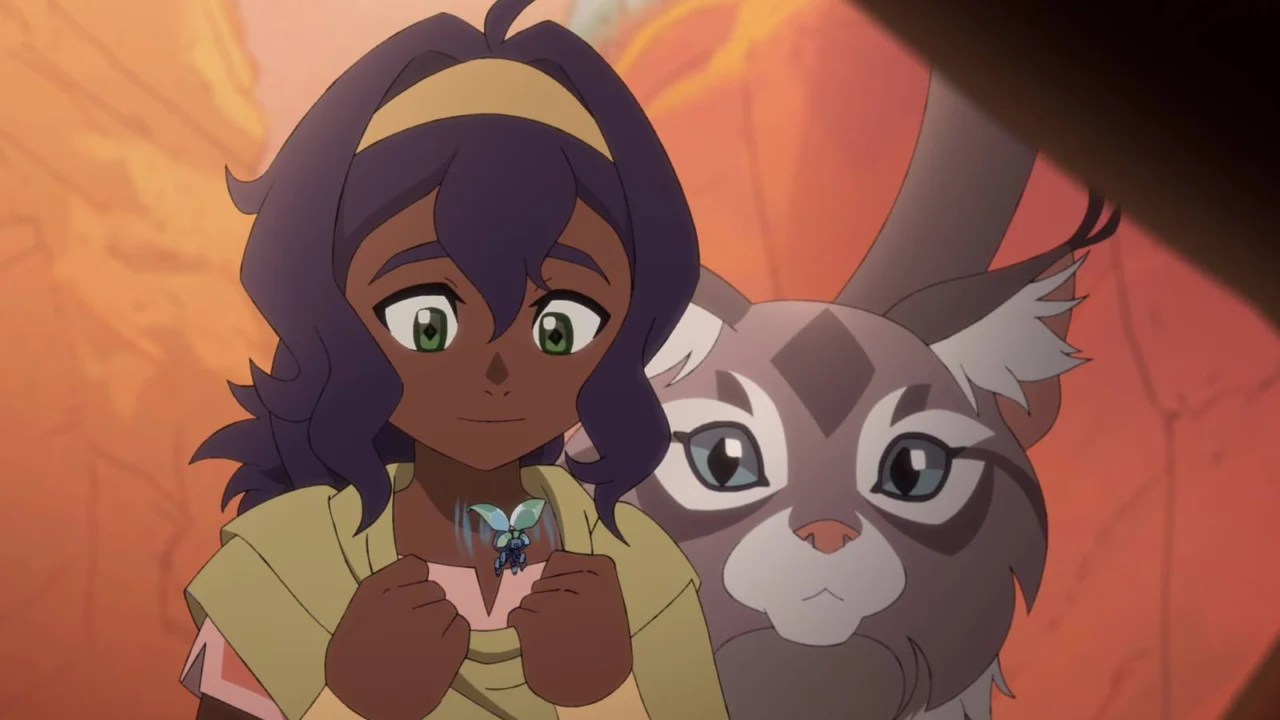
Every part of the setup oozes with potential. Korra role in the cataclysm teases fans who cannot imagine her recklessly destroying the world. It also makes things extremely difficult for the new Avatar, Pavi, played by Saheli Khan, an awkward child who spends most of her time dumpster-diving and talking to rocks and bugs. Pavi has to deal with the awesome responsibility of her power and the fact that almost everyone in Ellora views the Avatar as the ultimate evil.
It has been 21 years since Avatar: The Last Airbender premiered on Nickelodeon, and DiMartino and Konietzko have the tricky task of appealing to fans who grew up on the series while bringing in a new generation of kids. Older viewers might not relate to Pavi antics, as she blows her cover in the first episode by getting into a fight with another child and unleashing biting insects on a crowd, but it is the kind of goofy stuff that made Aang so endearing in the original. Pavi disciplined twin sister Nisha, played by Aishu Devan, is a strong foil, and the warmth behind even their fights gives the show a powerful emotional core.
Older viewers have their own characters to connect with, whether it is the eager-to-please teenage brigade squad leader Jae, played by Major Curda, or the gentle and patient Captain Karthik, played by Akshay Khanna. The show works well as all-ages entertainment because all the protagonists are struggling with feeling like they are in over their head in a high-stakes situation where others look to them for answers. The overt climate crisis themes and the general tension in Ellora make Seven Havens quite dark at times, but this is a franchise that taught kids about genocide and industrial warfare. DiMartino and Konietzko know how to combine the serious and the silly, like having a crazed armadillo camel serve as an early harbinger that something is very wrong in Ellora.
New world, new look
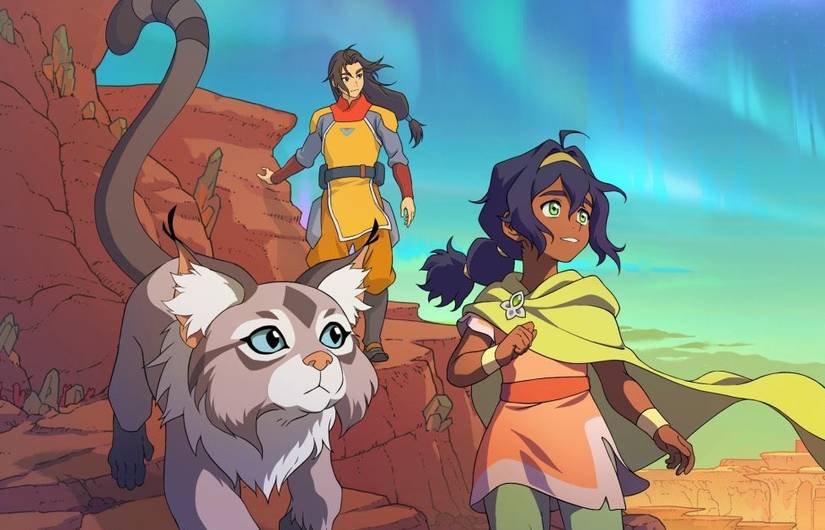
Avatar Studios changed the animation style for Avatar: Seven Havens, featuring more rounded character designs and less naturalistic environments. Where Avatar: The Last Airbender was defined by breaking up the action with gentle scenes of Appa coasting over the sea, Seven Havens never lets the outdoor world feel like a place you could relax. The vivid colors, jagged crystals, and fierce lightning storms give the scenery an ominous quality that reinforces Ellora status as a refuge.
One of the Avatar franchise greatest strengths has always been creatively imagining all the ways benders could use their powers, and Seven Havens constantly delivers dazzling new showcases. Brigades have benders of each type use their abilities in harmony to tackle any problem, including powering the complex technology protecting Ellora from the elements. There are also dramatic battles between benders that carry more impact because of the claustrophobic setting and the fact that Pavi typically has to hide the full extent of her abilities. Every 22-minute episode delivers action, keeping the show momentum strong even if answers about what is happening are doled out sparingly.
Seven Havens is far more mystery-driven than previous Avatar shows, invoking the feel of Lost with its flashbacks to slowly unveil Nisha and Pavi backstory. Each piece of information about the world outside Ellora leads to more questions and is laced with the promise of more threats. The world feels dangerously fragile as characters are caught up in dealing with immediate problems while larger issues fester until they boil over into crisis.
Paramount greenlit Seven Havens for two 13-episode seasons, but the series could run for far longer as Pavi and her allies tour more of the Havens and try to repair the world. Mystery shows can falter if they move too slowly or do not deliver satisfying answers, but the fundamentals of Seven Havens are strong enough that DiMartino, Konietzko, and company can avoid those pitfalls. They built a fascinating world and then destroyed it, and they have plenty of time to put all the pieces back together.
The first three episodes of Avatar: Seven Havens are available to stream now on Paramount Plus.
Source: Polygon
Related articles
 Xbox Console Sales Revenue Drops 14 Percent Amid Declines for Game Pass and Third-Party Games
 Modern Warfare 4 Season 1 to Introduce Secret X01 Weapon Complex to DMZ
 Phantom Blade Zero: The Best Graphics and Performance Settings on PlayStation 5
 BioWare Co-Founder Calls EA Acquisition Studio’s Final Nail in the Coffin
 Scarlett Johansson Sci-Fi Movie Under the Skin Leaving Netflix
 Super Battle Golf sets March 25, 2027 console launch with cross-play
 The Must-Play Board Games from 2026’s Biggest Board Game Fair
 HYPERyuki: Snowboard Syndicate confirms Switch 2 release for early 2027