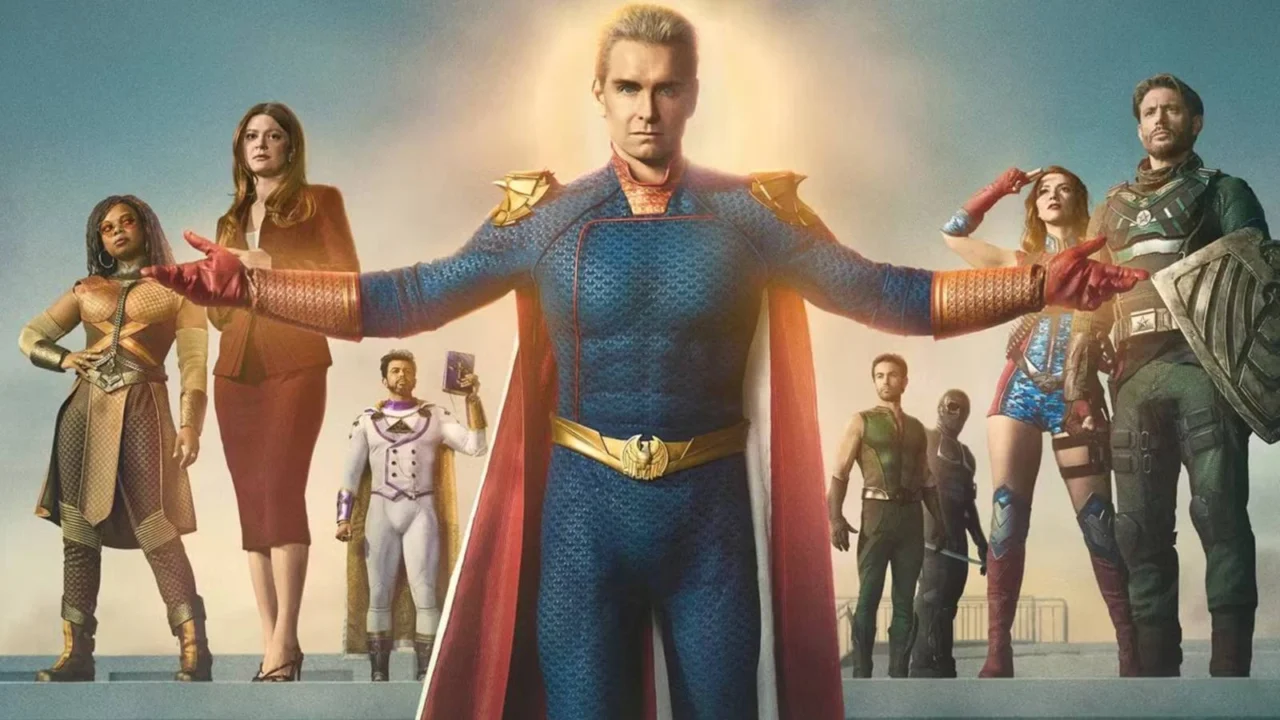
Amazon’s The Boys Failed to Live Up to the Comics

When the screen adaptation of The Boys was first announced, my anticipation was palpable. Garth Ennis remains my definitive favorite comic book writer, and The Boys holds a permanent place on my Mount Rushmore of essential graphic literature, sitting comfortably beside Preacher, Planetary, and The Invisibles. However, having witnessed AMC’s underwhelming take on Preacher, I was wary; Ennis possesses a singular, inimitable alchemy of grounded character dynamics and absurdist horror that frequently struggles to find its footing on television.
Watching Prime Video’s version of The Boys felt akin to consuming a pineapple pizza: an initial surge of curiosity gives way to a creeping realization of error, yet you persevere to the end simply because leaving it unfinished feels wrong. While that culinary metaphor is perhaps too generous, my experience with the show’s five-season run served primarily as a stark reminder of why the original source material remains superior.
Curiously, a trend emerged among digital creators to disparage the comics for easy engagement. By curating panels out of context to emphasize graphic shock value, these creators often gloss over the series’ genuine narrative depth and character arcs. With the show now concluded, pointing out its structural failures serves as a counterpoint, but it is far more productive to examine why The Boys remains one of the most compelling deconstructions of the superhero mythos ever committed to paper.
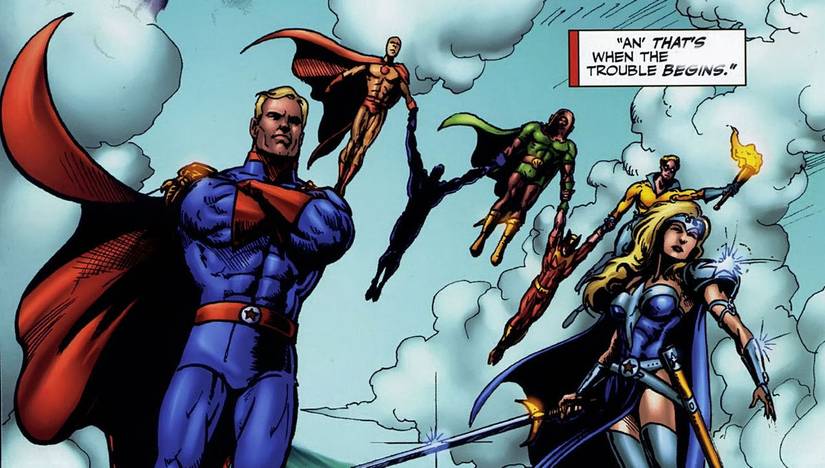
Image: Dynamite Entertainment/Garth Ennis/Darick Robertson
Debuting in 2006 and concluding in 2012, The Boys—crafted by Ennis and artist Darick Robertson—functions as a searing critique of the superhero industrial complex. The story captures the commodification of the genre, depicting heroes stripped of their creative spark and repurposed as sterile, corporate revenue streams. In hindsight, the series was remarkably prescient; it arrived just as the Marvel Cinematic Universe was beginning to reshape the cultural landscape, reaching its conclusion shortly before The Avengers turned superhero hegemony into the status quo.
In Ennis and Robertson’s vision, the “Supes” are not guardians of the innocent but corporate assets, owned by a conglomerate that views them as products to be peddled for defense contracts. The inherent flaw in this system is that these heroes are, quite frequently, arrogant, incompetent, and deeply troubled individuals. While the television show retains Vought as a looming presence, the series shifts the narrative focus toward the individual pathology of Homelander. In contrast, the comics focus on the cold, institutional greed that weaponizes these individuals against the citizenry.
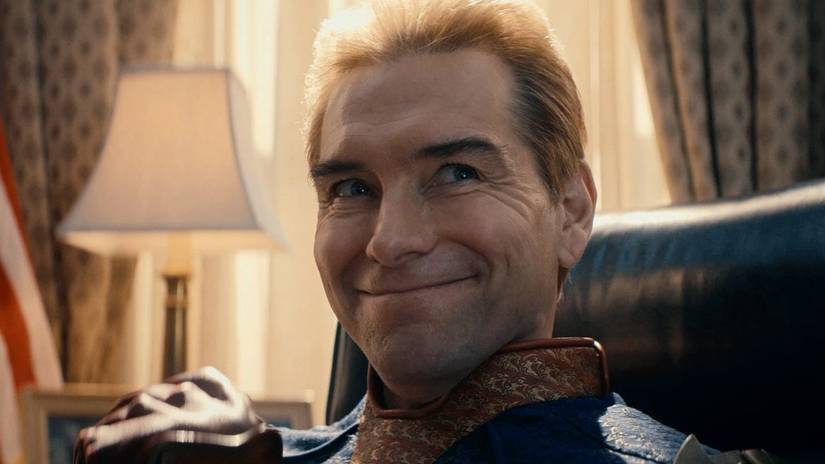
Image: Amazon MGM Studios
The show’s pivot toward overtly topical political satire often dilutes its bite. While the comics grapple with the universal rot of corporate malfeasance, the show’s reliance on shallow political shorthand creates a narrative that feels both dated and directionless. Furthermore, the television adaptation occasionally retreats from its own convictions, failing to interrogate its themes with the same rigor found on the page.
The true genius of the comics lies in its character study. William “Billy” Butcher is an iconic figure, yet he is not the hero of this story—that distinction belongs to Hughie Campbell, who provides the moral anchor and the audience’s perspective. Butcher represents the classic 80s anti-hero archetype, a man who uses violence to cauterize wounds that will never heal. Ennis deftly pulls the rug out from under the reader, revealing that Butcher’s crusade is not about justice, but about the uncontrollable urge to inflict misery. His failure to corrupt Hughie into his own image is the only true act of redemption in the entire saga.
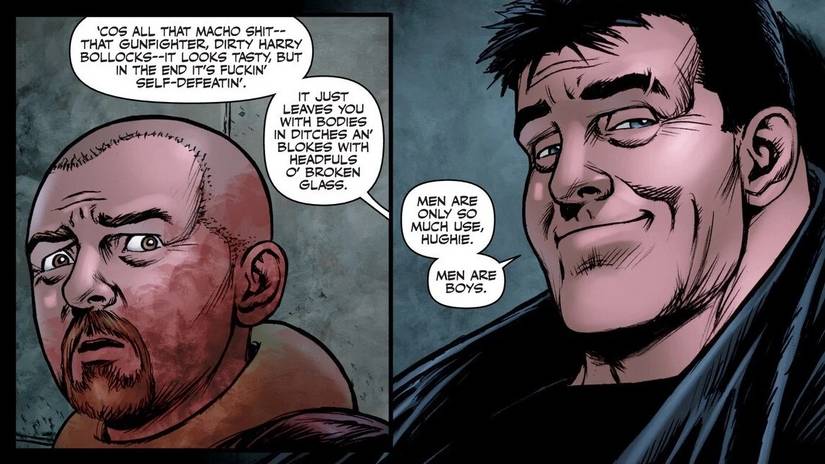
Image: Dynamite Entertainment/Garth Ennis/Darick Robertson
By altering Butcher’s motivation—specifically the survival of his wife, Becca—the television series fundamentally changes his trajectory. The comics explore Butcher’s psyche in Butcher, Baker, Candlestick Maker, depicting a man terrified that he is nothing more than a vessel for trauma. The realization in the comics—that Becca was never the reason for his violence, but merely the excuse—is a gut-wrenching conclusion that the show simply fails to match.
The finale of the comic series, complemented by the Dear Becky sequel, solidifies Butcher’s role not as a vengeful avenger, but as a man who recognized his own monstrosity and ensured he would eventually be stopped. While the show ends on a similar note, it lacks the thematic finality of the source material. Now that the curtain has fallen on the television adaptation, I highly encourage fans to revisit the original comics. Beyond the provocative exterior lies a profound, deeply human story that is, quite frankly, diabolical.
Source: Polygon
Related articles
 Xbox Announces Lineup of New Game Releases for the Week
 Derby Stallion 2 Tops Sales Charts in Japan
 Sony Seeks External Ideas to Revive Dormant PlayStation Franchises
 Enthusiasts Want to Launch GTA VI on PC at Release Using PS5 Emulator
 Rumor: Xbox Project Helix to run games at up to 240 FPS
 Lego Announces Partnership With Hello Kitty for 2027 Line
 Final Fantasy XIV’s Most Unique Crossover Officially Returns This Week
 The Best Xbox Amazon Prime Day Gaming Deals