
A Decade Ago, M. Night Shyamalan Revived His Career With a Surprising Cinematic Trick
Ten years ago, M. Night Shyamalan was emerging from a prolonged creative slump, and a modest found-footage film looked like a retreat. Instead, that modest gamble ignited an unlikely resurgence that has sustained his career ever since.
Shyamalan’s output still divides audiences and is unlikely to recapture the mass-market frenzy of The Sixth Sense. Yet a recent retrospective at Lincoln Center demonstrated he’s rebuilt a devoted following that revels in titles such as Trap and Knock at the Cabin. The turning point in public taste arguably arrived during the run of 2004’s The Village — a moody mystery with a signature twist that many viewers found more frustrating than satisfying, reflected in a notable 68% drop in its second weekend. That box-office falloff felt like the moment the mainstream cooled on his formerly unstoppable momentum.
After The Village, Shyamalan released a string of misfires: the fable-like Lady in the Water; the derided eco-horror The Happening; an ill-received adaptation of a Nickelodeon cartoon that alienated Avatar: The Last Airbender fans; and the polarizing After Earth, which dented Will Smith’s box-office aura. Paradoxically, some of these projects still turned profits — The Happening capitalized on R-rated horror interest, and The Last Airbender remains one of his larger global earners — making the setbacks conspicuous and public.
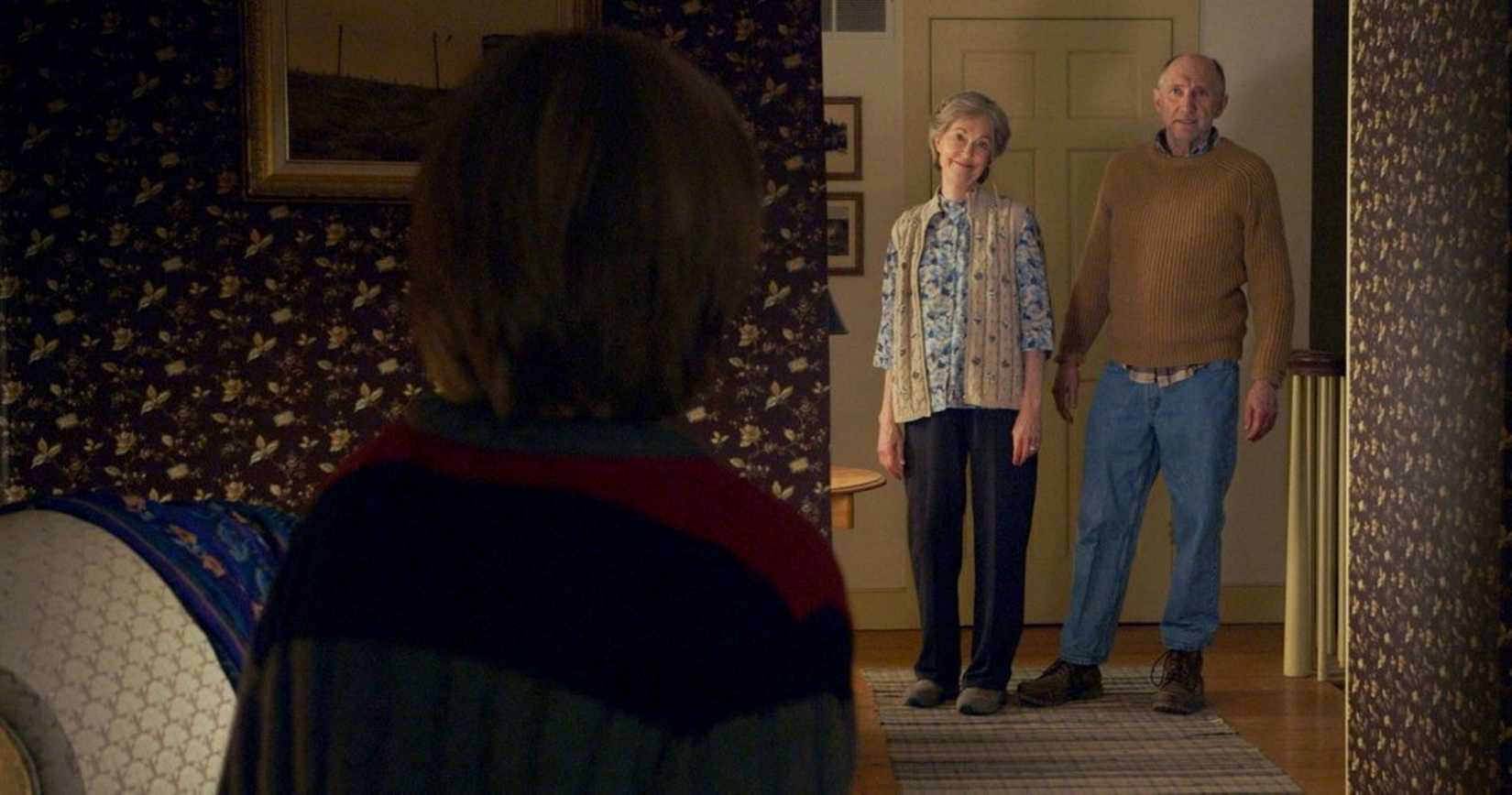
At first glance, The Visit looked like a routine assignment: another found-footage entry released when the format’s novelty was fading (a new Paranormal Activity installment was on the horizon). That style seemed at odds with Shyamalan’s preference for carefully composed frames and measured pacing, suggesting he might be conceding to simpler, cheaper thrills.
Viewed now, The Visit fits neatly into Shyamalan’s sensibilities. The found-footage conceit keeps the story tethered to the viewpoints of teenager Becca (Olivia DeJonge) and her younger brother Tyler (Ed Oxenbould), who travel to stay with estranged grandparents Nana (Deanna Dunagan) and Pop Pop (Peter McRobbie). Their mother, Loretta (Kathryn Hahn), had severed ties with her parents long ago; when the grandparents reach out, Becca plans to document the reconciliation. Instead, the siblings encounter increasingly unnerving conduct from the older couple. Nana and Pop Pop attribute odd moments to aging, while the kids grow more convinced that something darker is unfolding.
Shyamalan’s decision to make Becca an aspiring filmmaker is a clever flourish. It playfully acknowledges the amateurish aesthetic of found-footage while giving Becca — and by extension, the director — license to use composed, cinematic shots. Collaborating with cinematographer Maryse Alberti (known for work with Todd Haynes and Darren Aronofsky) lets Shyamalan alternate between raw handheld immediacy and strikingly arranged images: a memorable moment shows the grandparents warped through a glass prism. At other times the camera is deliberately fixed, inviting viewers to imagine what lies beyond the frame — a literalization of how horror thrives on unseen threats.
By reintroducing intentionality to found-footage, The Visit also tips its hat to an earlier landmark. The Blair Witch Project, which made waves in 1999 with its faux-documentary realism, reshaped expectations for on-the-ground horror. The Sixth Sense arrived weeks later with a more classical approach and ultimately outstripped Blair Witch in cultural impact. The Visit’s climax, which alternates a static shot of Tyler frozen in terror with frantic handheld footage as Becca runs through the house, feels like an homage to those seminal images — Shyamalan using familiar grammar to explore his own take. The film blends his formal restraint with a streak of goofy charm: on-screen subtitles redundantly label days of the week in a way that reads like a first-draft quirk, but it’s part of the movie’s character.
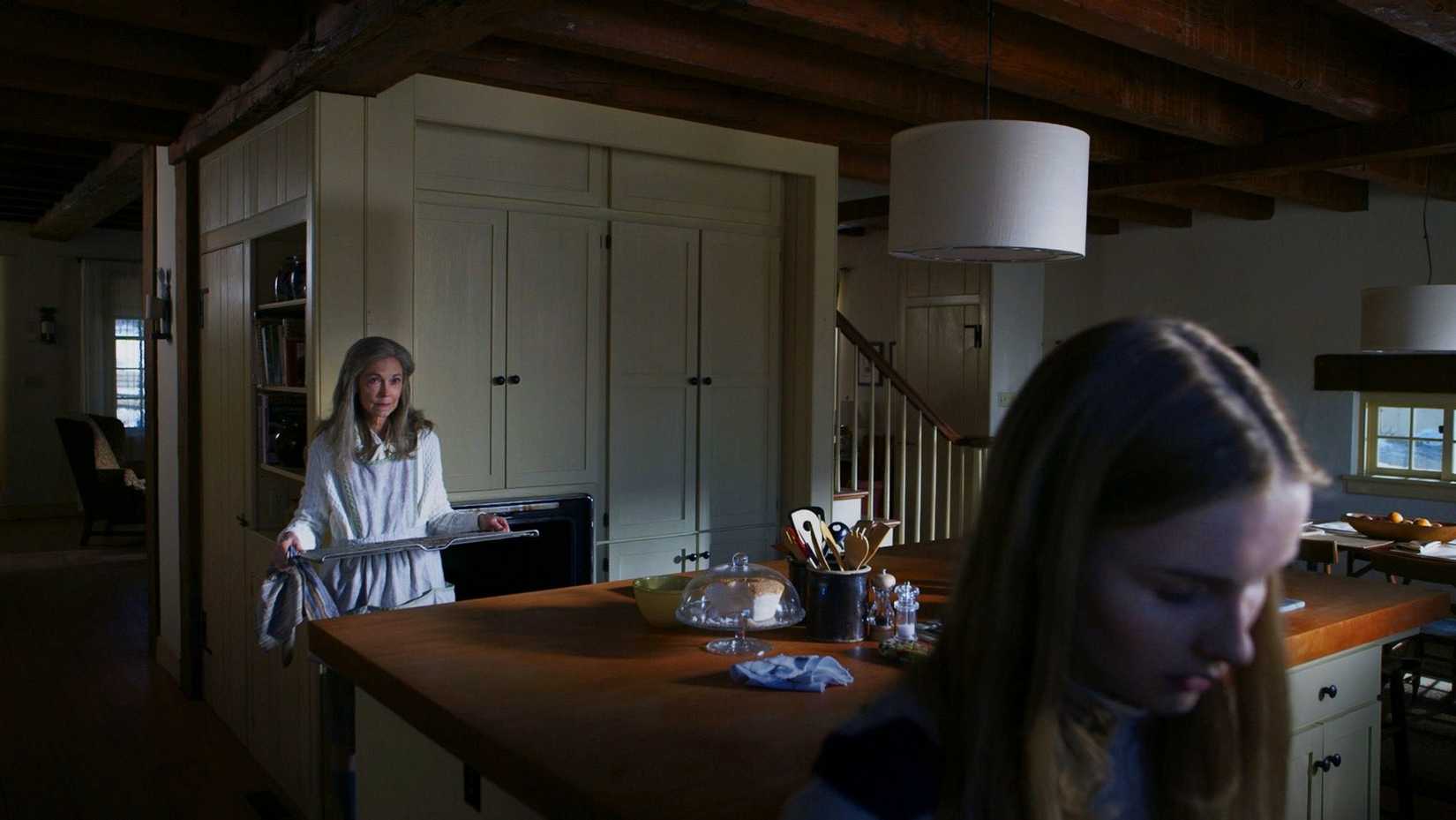
The Visit also prefigures Shyamalan’s next era of intimate, often domestically focused genre work. His films frequently distill ideas into the compact, moralistic shape of a Twilight Zone episode, and that sensibility crystallizes here. At a lean 94 minutes the film occasionally lingers, but its momentum is propelled by humor — Becca’s earnest formality and Tyler’s rambling bravado provide genuine laughs — and by the director’s inclination toward a kind of affectionate, corny “dad” humor. The Visit isn’t his deepest meditation on family, yet on Becca’s terms it compels viewers to consider the unseen ties that bind us and the ways those bonds fray. Thematically, it sits comfortably alongside his later, more emotionally charged pieces like Old and Trap.
Fitting for an uneasy family reunion, The Visit subverts expectations: Shyamalan dials back certain melancholic threads, leans into his comedic instincts, and occasionally delivers the kind of surprise audience members had been waiting for. After years of “twists” that failed to echo The Sixth Sense’s seismic reveal, this film offers a genuinely effective turn. More importantly, it signaled that Shyamalan was committed to a sustained, self-directed chapter of intimate, unsettling chamber pieces that would define his career for years to come.
Source: Polygon
Related articles
 “The Bunker” starring Bardem and Cruz screened at Venice
 The Librarians: The Next Chapter Season 2 Has Concluded
 “The Mummy 4” filming has begun
 Urfin Jus Movie Announced
 Ellen Burstyn Receives Honorary Golden Lion
 Danny Boyle used artificial intelligence in his new film “Inks”
 Gary Oldman Reveals the Name of the New Bond
 Summer 2026 Becomes the Highest-Grossing Season in U.S. Box Office History