7 Final Fantasy Games That Deserved Better
Trick question: Exactly how many Final Fantasy titles exist? Naturally, Square Enix has released countless spin-offs and sequels alongside the 16 mainline entries over the decades. Yet, you might be surprised to learn that upwards of 100 Final Fantasy games have launched since the franchise debuted on the NES in 1987. Even if you consider yourself a devoted series superfan, the chances are high that you haven’t experienced the vast majority of them.
Among that massive library lie several forgettable spin-offs and short-lived mobile titles that are no longer accessible. Those aren’t our primary concern today. Instead, we are shining a light on the hidden gems, bold creative experiments, and deeply underrated installments that deserve far more appreciation than they have received over the years.
Here are our selections for the most overlooked adventures in the franchise.
1
Final Fantasy 10-2
While massive blockbusters like FF7 frequently inspire a wave of spin-offs, very few Final Fantasy games receive direct narrative continuations. Launched in 2003, Final Fantasy 10-2 centers on Yuna as she searches for Tidus, the missing protagonist from 2001’s Final Fantasy 10. FF10-2 stands as the first—and sole—entry in the franchise to showcase an exclusively female primary cast. It also remains one of the rare installments to offer branching conclusions.
Where FF10 leaned into a somber and solemn tone, FF10-2 embraces a bright, unabashedly playful atmosphere. The world has already been saved, leaving Yuna and her companions free to pursue their own personal agendas. The game’s narrative and aesthetic drew heavily from the magical girl and idol subgenres of late-90s and early-2000s anime and manga, alongside Western pop culture touchstones like the 2000 film adaptation of Charlie’s Angels. The signature mechanical twist on the franchise’s traditional job system is the Dressphere mechanic, which radically transforms a party member’s combat capabilities on the fly. While certain Dresspheres reflect classic RPG archetypes like the thief and black mage, others are wonderfully eccentric, introducing flamboyant costumes and abilities such as the mascot and Lady Luck classes. Boasting profound customization, demanding combat encounters, and immaculate turn-of-the-millennium energy, FF10-2 proved that Final Fantasy doesn’t always need to take itself overly seriously. —Jen Glennon
Where to play: Nintendo Switch, Switch 2, PS4, Windows PC, and Xbox One
2
Theatrhythm Final Bar Line
Much like the Star Wars saga, the Final Fantasy series wouldn’t enjoy its current legendary status without its unforgettable musical scores. Featuring everything from energetic battle themes to emotionally resonant orchestral ballads, the base release of Theatrhythm Final Bar Line packs an incredible 385 tracks, with downloadable content expanding the catalog to a massive 505 songs. This vibrant rhythm title, infused with streamlined role-playing mechanics, functions as a heartfelt tribute to the entire franchise by uniting icons spanning multiple decades of gaming history.
Players assemble a four-person squad chosen from an impressive roster of 104 characters to confront classic adversaries through rhythm-based combat. (Naturally, iconic villains like Kefka and Sephiroth are also playable.) Traditional menu options like Attack, Magic, and Item are absent; instead, survival depends entirely on precision timing. Each note demands a specific action: single button presses for red markers, directional flicks of the analog stick for yellow arrows, and sustained holds for green bars. For those looking for a more relaxed experience, simple mode maps every action to a single button press. Integrated couch cooperation and online multiplayer elevate the enjoyment even further. —JG
Where to play: Nintendo Switch, PS4
Get Polygon’s Wishlister newsletter
A weekly cheat sheet highlighting the games you will eventually want to play. No purchases required—just save them for later.
Free. Unsubscribe anytime.
3
Final Fantasy Type-0
Released in 2011 for the PlayStation Portable, Final Fantasy Type-0 drew clear inspiration from the global acclaim of Atlus titles like Persona 3 and Persona 4, which successfully merged dungeon exploration with robust social simulation elements. Set within a prestigious academy of magic, the plot follows fourteen students of Class Zero who are thrust into active military service when a hostile empire launches an invasion.
The combat mechanics found their foundation in 2007’s Crisis Core: Final Fantasy 7, while simultaneously offering a fascinating preview of the mainline series’ future direction in FF15 and FF16, both of which abandoned turn-based battles in favor of real-time action. Much like FF7 Remake, Type-0 lets players field a three-person active party and seamlessly swap between them at any moment. Although the computer-controlled allies can occasionally feel a bit unreliable, the system remains deeply engaging—justifying Square Enix’s continued refinement of the concept over the years.
Mirroring the Persona formula, Final Fantasy Type-0 incorporates a structured calendar framework and relationship-building dynamics with fellow cadets. These students grapple with ordinary adolescent struggles alongside the crushing weight of a devastating war. Despite its academic backdrop, Type-0 presents a noticeably darker atmosphere than most preceding mainline entries. Western critics at the time responded lukewarmly to the melodramatic high-school narrative, though anime culture was far less mainstream fifteen years ago than it is today. A game pitch combining Square Enix and Persona aesthetics would likely set the internet ablaze today, yet such an experience already exists—it simply didn’t find the audience it deserved. Once again, the development team proved ahead of its time. — JG
Where to play: PS4, Windows PC, and Xbox One
}
}
width: 100% !important;
margin: 0 0 0.45rem !important;
text-align: center !important;
}
display: grid !important;
grid-template-columns: minmax(0, 1fr) auto minmax(0, 1fr) !important;
align-items: center !important;
column-gap: 0.75rem !important;
width: 94% !important;
margin: 0 auto !important;
color: var(–grText) !important;
font-size: 0.875rem !important;
font-weight: 700 !important;
letter-spacing: 2px !important;
text-transform: uppercase !important;
}
display: block !important;
width: 100% !important;
height: 1px !important;
background: var(–grText) !important;
content: ” !important;
}
margin: 3px 0 0 !important;
color: var(–grMuted) !important;
font-size: 11px !important;
font-weight: 700 !important;
text-align: center !important;
}
margin-top: 2px !important;
color: var(–grMuted) !important;
font-size: 9px !important;
text-align: center !important;
}
Recommended For You
4
Monster of the Deep: Final Fantasy 15
Capitalizing on two major industry trends of 2017, Monster of the Deep launched as a standalone virtual reality fishing game set within the universe of Final Fantasy 15, designed exclusively for the original PlayStation VR hardware. Critics were skeptical of the concept from the moment it was unveiled. Following a hands-on session at the Tokyo Game Show, reviewers characterized the experience as sluggish, repetitive, and occasionally exhausting. Not an ideal reception!
Following an entirely unnecessary cameo appearance by Cindy, players step into the shoes of a customizable angler casting lines alongside Prince Noctis and his loyal companions. After reeling in a trio of standard fish, players face off against the titular Monster of the Deep with Noctis providing backup.
Much like FF15 and its broader multimedia ecosystem, the game serves as a tantalizing glimpse of an unrealized potential. Monster of the Deep is best appreciated as a form of virtual tourism rather than a traditional game. While the open world of Eos in FF15 faced criticism at launch for feeling somewhat sparse, its breathtaking landscapes remain undeniable.
During the peak of early VR development, many releases felt overly complex, whereas the most memorable projects leaned toward exploration and relaxation. Given the lukewarm response to Monster of the Deep, a return to virtual reality for Final Fantasy seems unlikely anytime soon. However, if a laid-back, atmosphere-focused VR experience ever materialized—permitting fans to explore iconic franchise locations, converse with beloved characters, and soak in gorgeous orchestral arrangements—it would be an immediate purchase. — JG
Where to play: PlayStation VR (Note: incompatible with PSVR 2)
5
Final Fantasy 11
Unlike contemporary massively multiplayer online games (including Final Fantasy 14) and modern open-world RPGs, Final Fantasy 11 embraces intentional friction in its design. Traversing the world on foot can demand significant time commitments. Defeated monsters can fail to drop loot. Quest tracking can prove cumbersome. Excessive deaths result in experience point penalties. Essential quality-of-life additions, such as computer-controlled party members, are locked behind intricate questlines. While these design choices can occasionally cause frustration, they remain vital components of an experience that expects greater dedication from players than modern conventions typically allow.
The antidote to these hurdles is community interaction. Final Fantasy 11 was meticulously crafted around cooperative play with real people; and while solo play has been streamlined over the years, teaming up remains the definitive way to experience Vana’diel. Conquering an imposing, labyrinthine dungeon alongside helpful strangers creates an unmatched sense of triumph. A brief moment of celebration, a polite expression of gratitude in the chat log, and players part ways.
For steadfast adventurers willing to embrace the challenge, Final Fantasy 11 reveals a remarkably profound universe rich with diverse narratives and breathtaking moments. This includes the dramatic boss encounters and emotional storytelling beats expected from any premier mainline entry. More than two decades after its initial launch, Final Fantasy 11 endures simply because its community refuses to stop loving it. — Willa Rowe
Where to play: Windows PC
6
Stranger of Paradise: Final Fantasy Origin
This bold reimagining of the original 1987 Final Fantasy became an internet meme instantly upon the release of its debut trailer, largely due to protagonist Jack Garland. Stranger of Paradise features a notably brooding lead character single-mindedly obsessed with destroying Chaos—a mission he brings up repeatedly throughout the preview footage. However, beneath the edgy exterior lies one of the most mechanically inventive action titles Square Enix has produced in years.
Developer Team Ninja effectively re-engineered Final Fantasy into a Soulslike experience. It delivers demanding, deliberate combat paired with a wonderfully fluid interpretation of the franchise’s classic job framework. Jack can transition between two distinct roles instantly, permitting players to combine beloved specializations like Dragoon and Black Mage with creative variations such as Void Knight or Cyclic Warrior, enabling genuinely distinct playstyles.
The key hurdle is learning to appreciate the game’s unapologetically campy tone. Stranger of Paradise eventually executes genuinely clever ideas with the original game’s minimal plot, but it is equally a story where Jack casually interrupts villainous monologues to express total apathy. This abrasive attitude can occasionally alienate players. Yet, for those willing to look past—or laugh alongside—the grim facade, an exceptionally deep action RPG awaits, proving that Final Fantasy is just as much about experimenting with combat classes as it is about slaying deities. Especially if those deities happen to be named Chaos. — Corey Plante
Where to play: PS4, PS5, Windows PC, Xbox One, and Xbox Series X
7
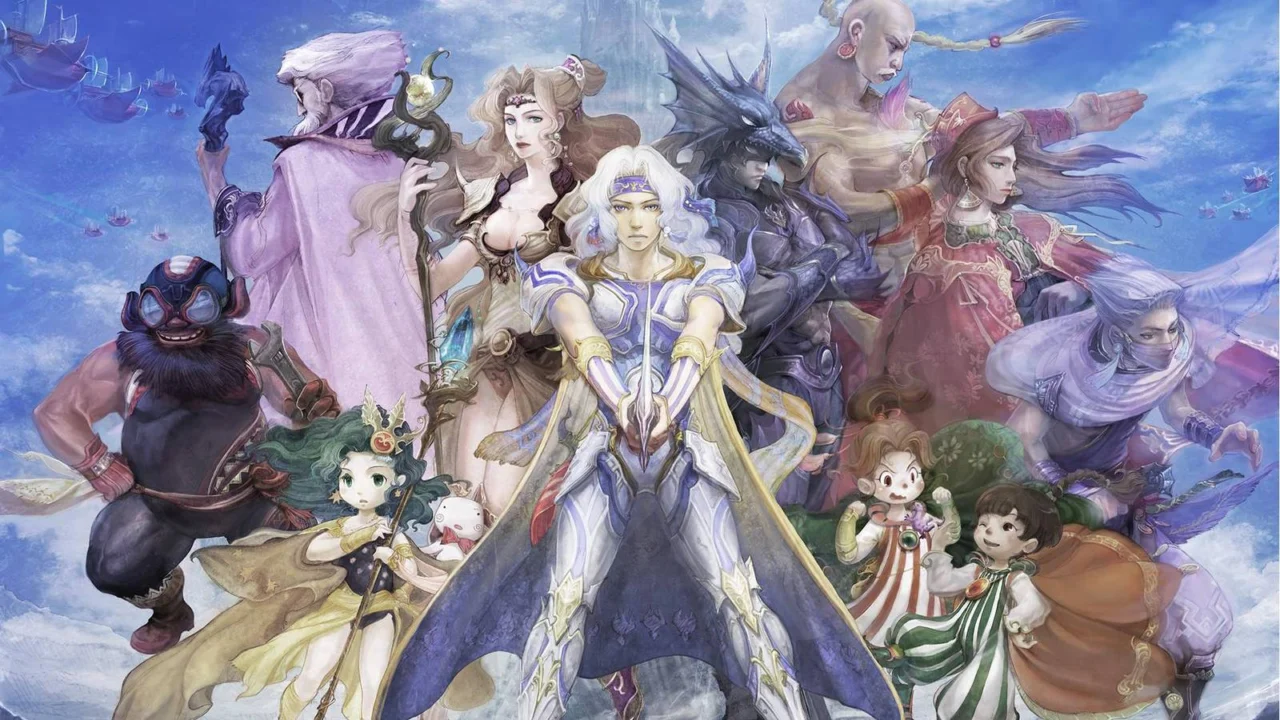
Final Fantasy 4
While FF7 and FF10 frequently receive praise for establishing the blueprint for modern Final Fantasy, examining the classics reveals that Final Fantasy 4 was the pioneer that introduced numerous staples defining the RPG genre, including dramatic narratives, robust character arcs, and a heavy emphasis on interpersonal dynamics among the core cast.
FF4 is a grand, high-stakes save-the-world epic packed with shocking plot developments and sweeping romantic subplots. It features an unforgettable ensemble of allies and antagonists alike—characters who linger in memory far longer than those found in the late-80s and early-90s predecessors.
Although players cannot freely interchange party members as they can in subsequent titles, every character fills a rigidly defined narrative and mechanical role. Intriguigly, certain heroes aren’t necessarily proficient in their roles right away. The young summoner Rydia is initially unable to cast fire spells for a significant portion of the adventure due to a childhood trauma involving a burning village. When Cecil transitions into a paladin, his level resets to 1, requiring players to invest time carefully grinding to bring his statistics back up to par with the rest of the group. Then there is Edward, the lovestruck bard who proves thoroughly useless in combat scenarios and remains a liability throughout his tenure in the active party. Working around his ineptitude is part of the charm, cementing his status as memorable.
Certainly, FF4 holds immense historical significance. Yet, unlike the earliest installments in the franchise, it remains an absolute joy to experience today. The narrative revels in its over-the-top dramatics—featuring no fewer than seven fabricated character deaths—which adds immensely to the entertainment value. Finding another video game that permits players to pilot the magical remains of a deceased whale to the moon is a tall order. It simply cannot be done! — JG
Where to play: Android, iOS, Nintendo Switch, PS4, PS5, Windows PC, Xbox One, and Xbox Series X
Naoki Hamaguchi shares insights on Cid, Cait Sith’s wardrobe choices, and more
Source: Polygon
Related articles
 Super Battle Golf sets March 25, 2027 console launch with cross-play
 HYPERyuki: Snowboard Syndicate confirms Switch 2 release for early 2027
 Screen Stocks launches on Steam with a shared simulated market and clicker progression
 Warehouse Catastrophe is out on Steam with a wrecked stockroom and feline helpers
 Bolt of Whalington demo arrives November 5 with a cat-piloted mech and a floating whale city
 Boxed Games Become a Problem for Collectors as Issues Reach PS5
 Gears of War: E-Day Reportedly Planned as Start of a New Trilogy, Rumors Say
 Shenmue III Enhanced Edition Delayed to Improve Graphics and Add New Features