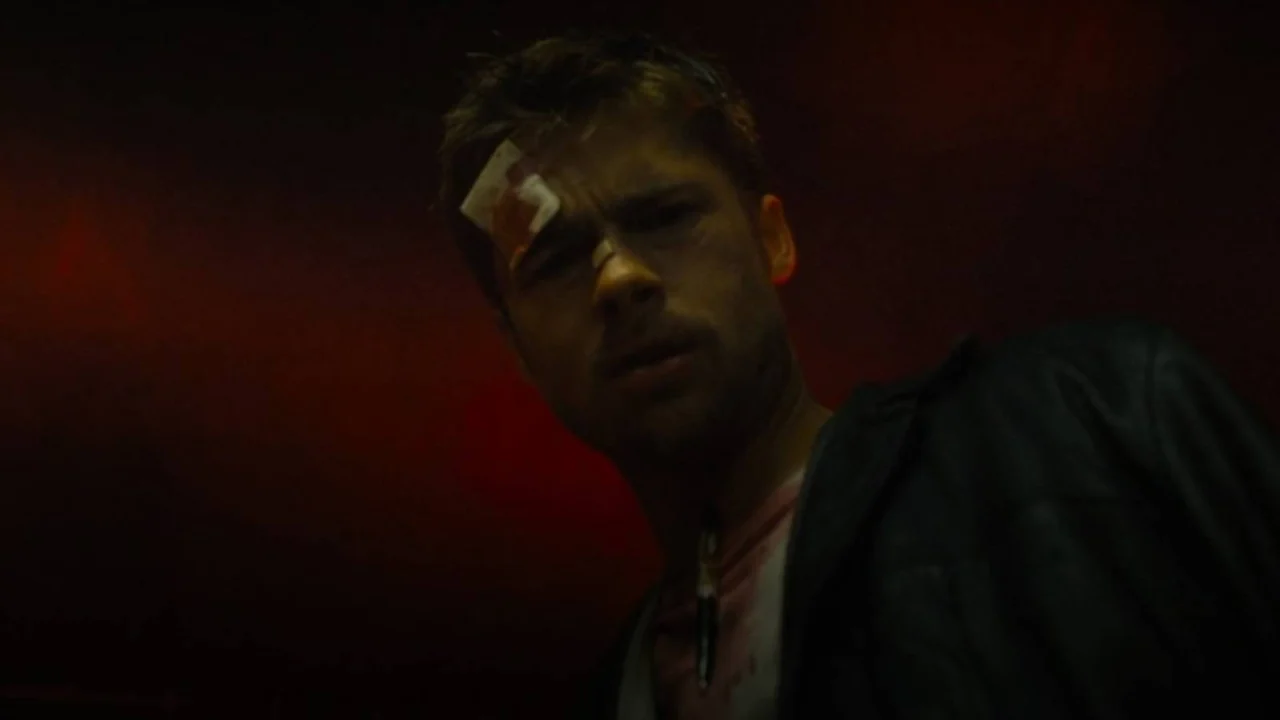
30 Years Later: How David Fincher’s Scariest Thriller Revived an Entire Genre

The horror genre was floundering in the early 1990s. The 1980s slasher craze had largely run its course, and each new year brought more signs of creative exhaustion. 1991 delivered waning sequels to icons like Freddy Krueger and Chucky. John Carpenter’s 1992 take on the invisible man, starring Chevy Chase, leaned away from pure horror. In 1993, the most genre-adjacent entry in the box-office top 25 was the stop-motion The Nightmare Before Christmas, and by 1994 Sony’s attempt at reviving classic monsters faltered when Mary Shelley’s Frankenstein underperformed. Against that backdrop, the slasher renaissance many associate with 1996’s Scream had yet to arrive.
But the true turning point came a year earlier with David Fincher’s 1995 film Seven. Marketed more as a dark thriller than a straight horror picture, the film — starring Morgan Freeman and Brad Pitt as mismatched detectives — follows a grisly string of murders arranged around the seven deadly sins. It reads as crime drama, mystery, and psychological horror all at once: bleak, uncompromising, and relentlessly atmospheric. Thirty years on, its influence is obvious: it helped shift mainstream cinema back toward stories that trade on dread and unease rather than cheap shocks or camp.
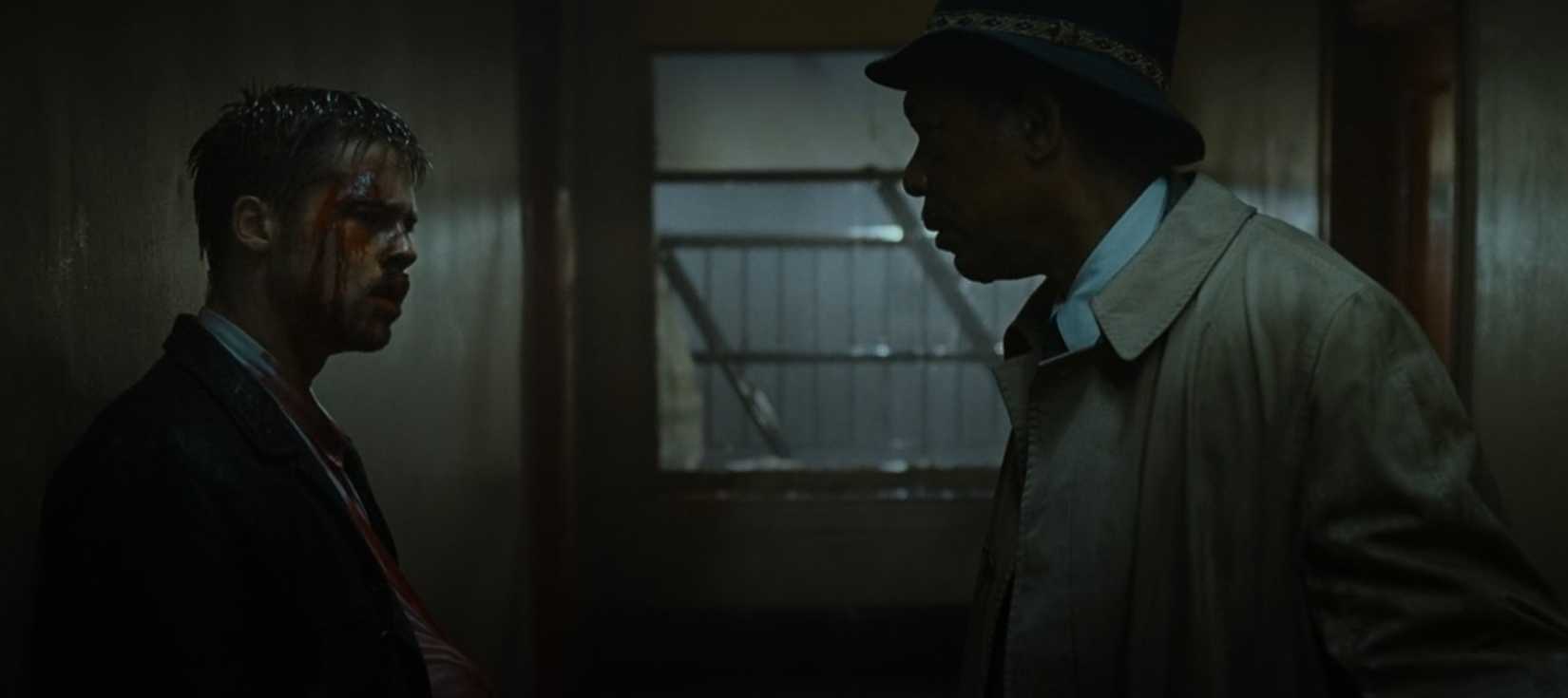
During the 1990s there was a noticeable appetite for serial-killer narratives: films such as Copycat and others set the tone for a decade that blended neo-noir stylings with erotic thrillers and procedural grit. Actors from Sigourney Weaver to Denzel Washington and Bruce Willis took turns facing off against elaborate, often theatrical homicidal antagonists. Those pictures traded a sharper emphasis on violence for the eroticism that had driven many ‘80s thrillers.
Seven sits squarely in that lineage but pushes its aesthetic further. Where other crime pictures hinted at brutality, Fincher constructs crime scenes that are meticulously staged and viscerally disturbing. The film’s sexuality, when present at all, is subsumed by brutality; what might have been eroticized elsewhere is depicted as grotesque. Fincher channels the shadowy textures of noir and borrows from German expressionist influences that historically linked horror and early thrillers.
Fincher’s unnamed city feels perpetually rain-soaked and exhausted — a character in its own right. Though the production filmed in Los Angeles, the film refuses to look like Los Angeles; it’s a deliberately unplaceable metropolis of grime and shadow. Even the domestic moments are tainted: Detective Mills’ apartment trembles each time a train rumbles by, and warmth never quite dispels the film’s unclean aura.
The killer’s lair is the film’s masterstroke of mise-en-scène. Illuminated only by flashlights, a neon-red cross, and the gruesome glow of makeshift darkroom lamps, the apartment is a compact exhibition of moral rot. Fincher lingers — the sequence unspools for several minutes — revealing photographic evidence and small details that convert a standard investigative beat into a series of stomach-tightening revelations. That measured escalation, from disquiet to outright horror, is what makes the movie linger in the mind long after the credits.
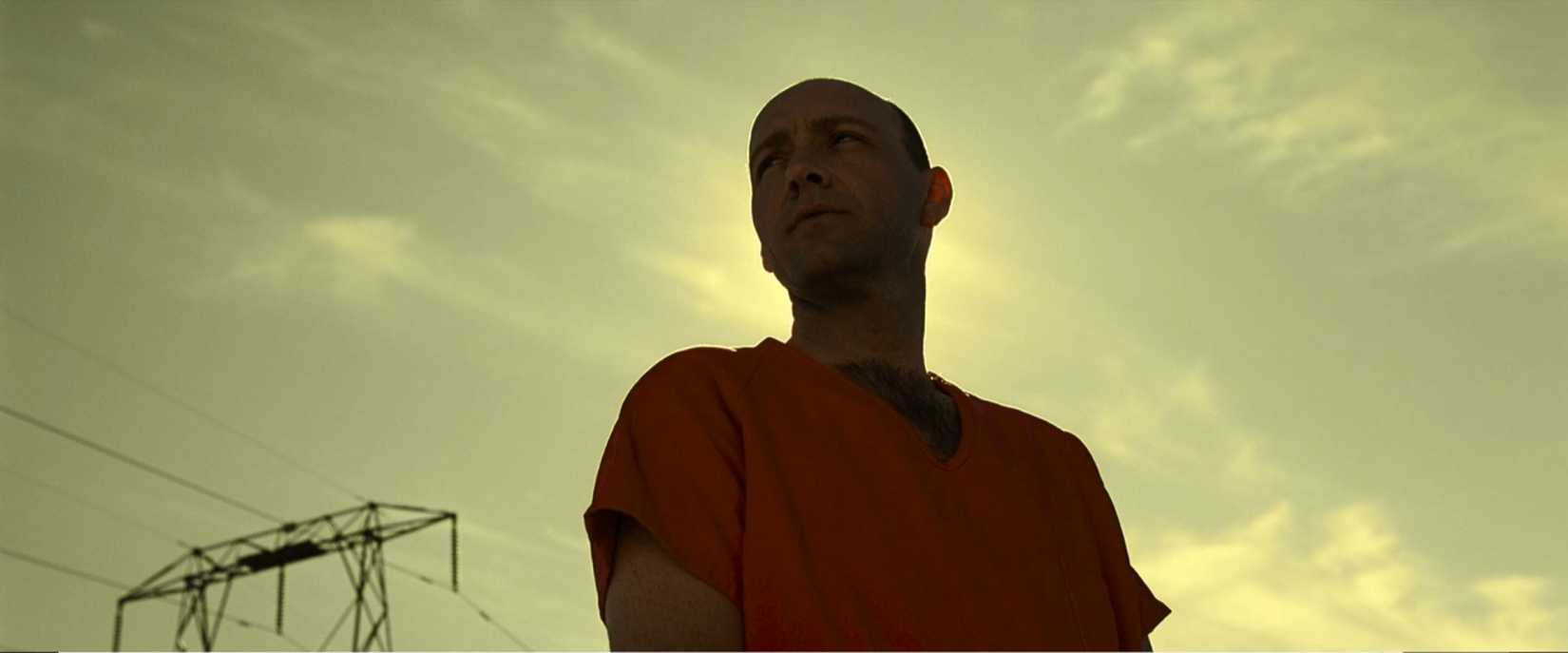
Visually, Seven amplifies the urban decay found in contemporaneous films like The Crow, but it is more unsettling because it remains plausibly tethered to reality. Fincher’s color palette — muddied browns and sickly greens — and constant rain rob the world of any comforting specificity. The result reads like a cautionary, every-city vision: the danger could be in the place you live, or the place you pass through.
Seen from a modern vantage point, when political rhetoric often paints American cities in alarmist terms, Seven can sometimes feel as if it flirts with reactionary imagery. Yet within the confines of horror — a genre that knowingly manipulates fear — that bleakness operates differently. Horror invites you to feel frightened; it doesn’t always pretend to offer moral clarity. The film’s admission of its own grim mechanics makes its provocations feel more deliberate than exploitative.
Calling Seven merely a crime thriller undersells its impact. Its narrative is straightforward and populated with archetypal roles, but both Pitt and Freeman bring heft and nuance, particularly Freeman, who elevates familiar material. Kevin Spacey’s late-game flourish as the antagonist delivers the performative moralizing the plot demands, though the killer’s philosophy can read as simplistic. The script rarely interrogates that worldview, preferring instead to let the bleakness stand on its own. In cinematic terms, Seven may not be David Fincher’s most accomplished film — many critics point to Zodiac as his crowning procedural — but as a piece of horror it’s unforgettable: a movie that helped revive mainstream appetite for dread, atmosphere, and stories that leave you unsettled.
Source: Polygon
Related articles
 Urfin Jus Movie Announced
 Ellen Burstyn Receives Honorary Golden Lion
 Danny Boyle used artificial intelligence in his new film “Inks”
 Gary Oldman Reveals the Name of the New Bond
 Summer 2026 Becomes the Highest-Grossing Season in U.S. Box Office History
 Shadow Movie Screenings in Russia Face Shutdown
 Dance drama “The Art of Falling” to premiere on Okko in September
 Lilly Wachowski disavows involvement in the new “Matrix” film