28 Years Later: The Bone Temple’s Most Shocking Scene Was Almost Completely Different
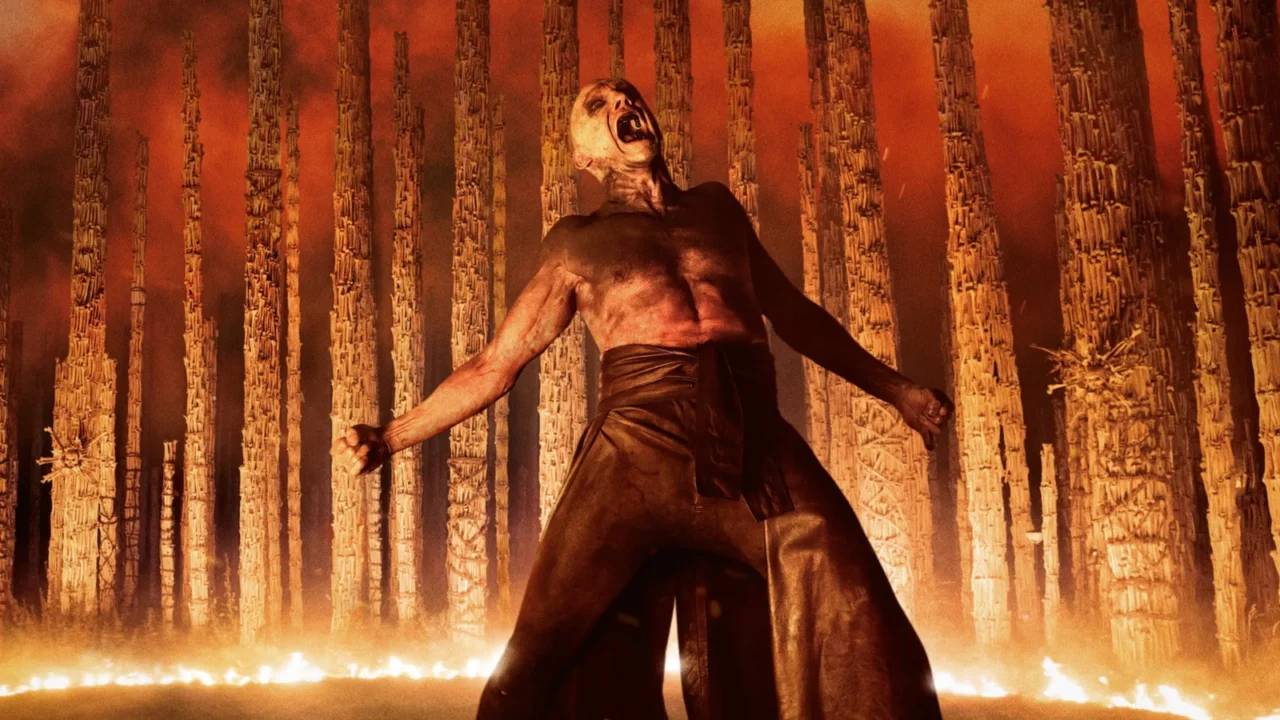
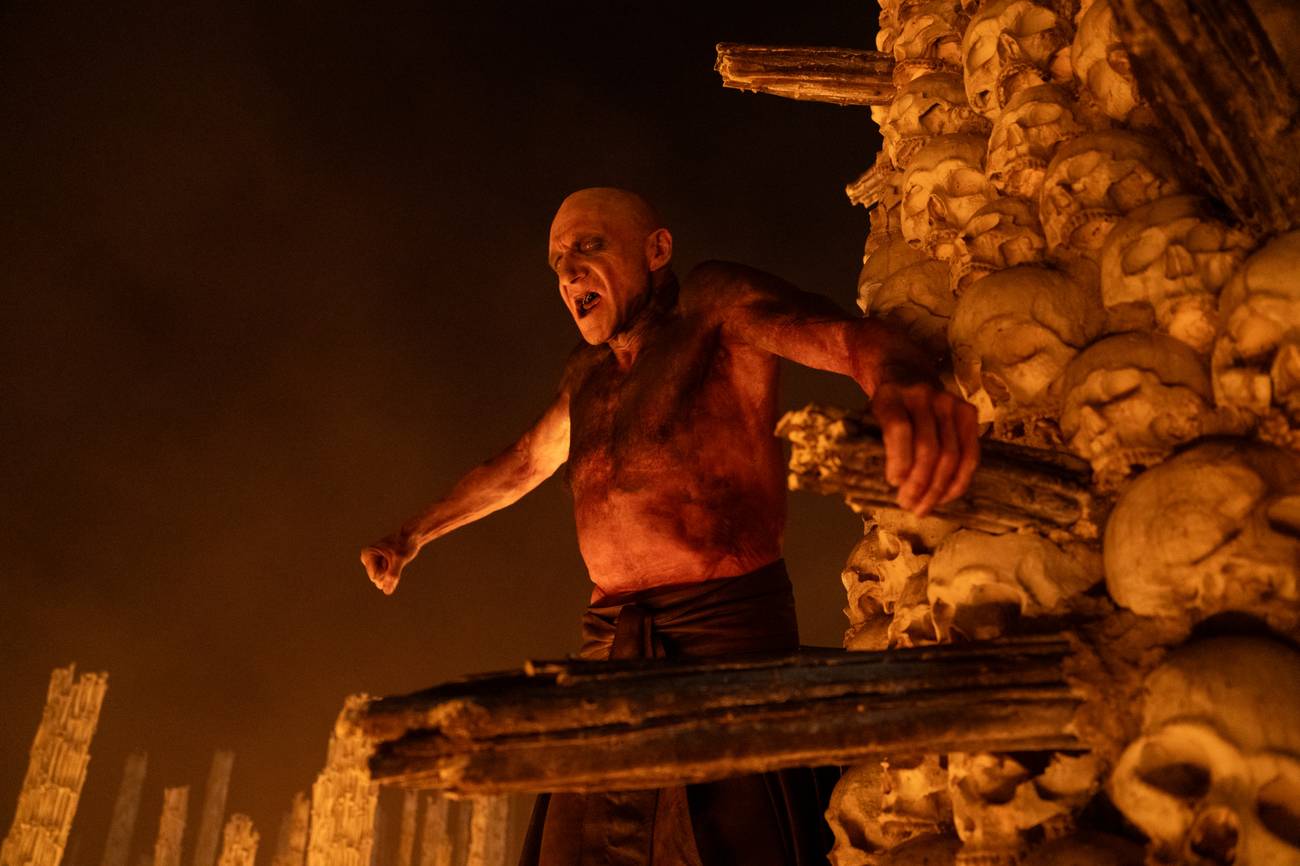
Perched atop a macabre monument of human remains, Doctor Ian Kelson commands the attention of his captives amidst a swirling vortex of flames. Draped in a dark trench coat with a bare chest and striking theatrical makeup, he embodies a diabolical showman, lip-syncing with primal intensity to Iron Maiden’s classic heavy metal track, “The Number of the Beast.”
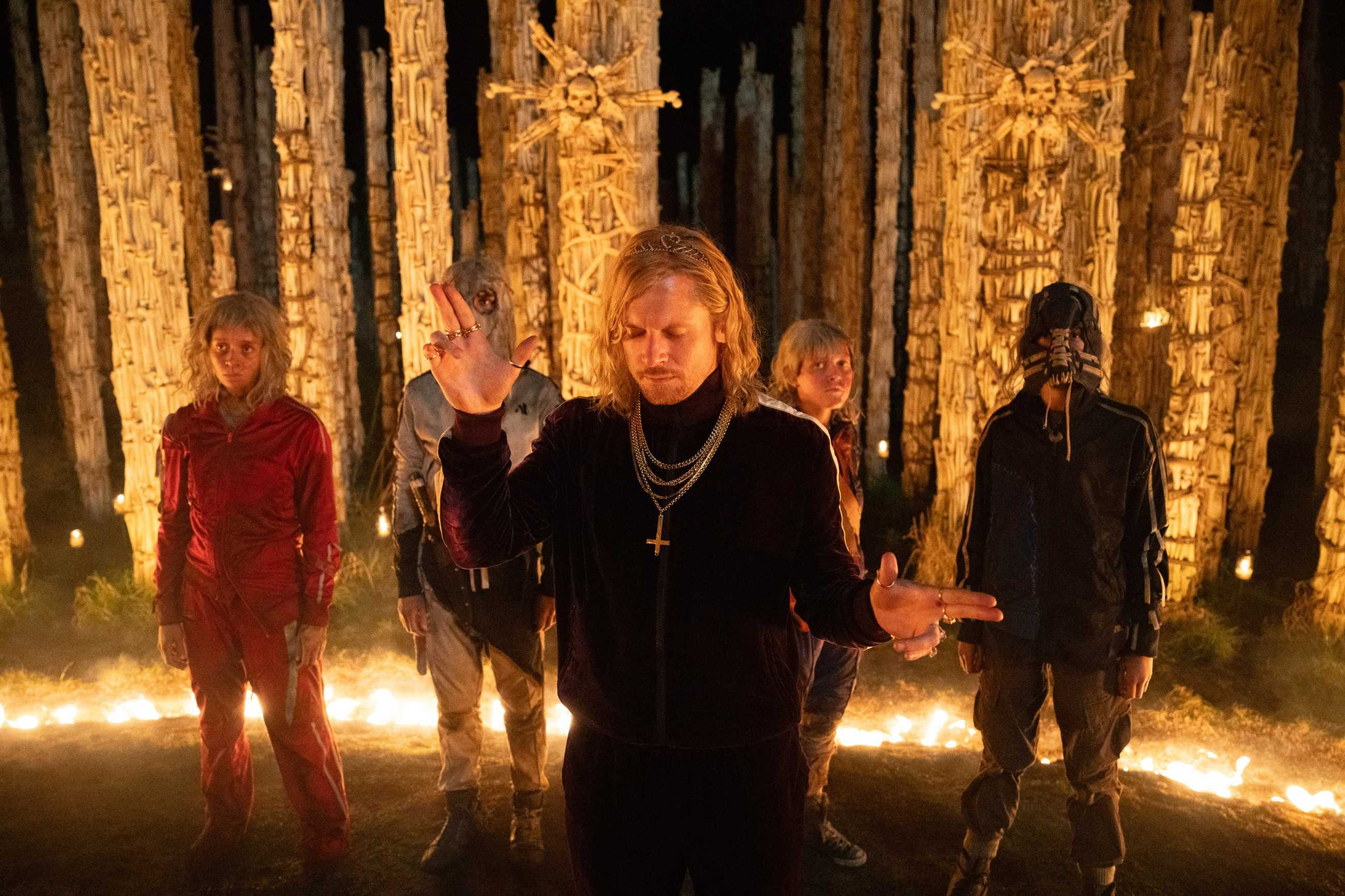
In the hallucinatory finale of 28 Years Later: The Bone Temple, Kelson (portrayed by Ralph Fiennes) weaponizes performance art to survive. He aims to intimidate and mesmerize “The Jimmies,” a ruthless faction of wasteland scavengers led by the formidable Sir Lord Jimmy Crystal (Jack O’Connell). The sequence is a cinematic triumph—a visceral, surrealist confrontation underscored by an ’80s anthem that is bound to elicit cheers in theaters. However, the original vision for this scene contained a jarring difference: Alex Garland’s initial screenplay called for Fiennes to perform entirely in the nude.
“On the page, the character was completely exposed,” recalls Jake Roberts, the film’s editor. “I’m not entirely sure what Alex [Garland] was envisioning at the time, but it was a bold choice. The script actually featured significantly more full-frontal male nudity than what ended up on screen.”
Beyond the discarded nudity, the evolution of The Bone Temple’s climax is a saga of creative ingenuity, logistical hurdles, and grueling night shoots. To understand how director Nia DaCosta and her collaborators orchestrated this unhinged moment, we spoke with the creative team—including Roberts, stunt coordinator Julian Spencer, choreographer Shelley Maxwell, and star Jack O’Connell—whose recollections of the chaotic shoot remain vivid yet dreamlike.
“The sheer scale of it was overwhelming,” O’Connell says. “It was a spectacle to witness. The reactions you see from us are entirely organic; Ralph’s performance was so intense and transformative that he pulled those responses right out of us.”
“I had to be a part of this project”
Garland’s script provided a detailed blueprint for the final sequence.
“The foundation was right there in the writing,” DaCosta explains. “The use of ‘The Number of the Beast,’ Kelson’s performative descent into a faux-Satanic persona, and Samson’s arrival—those were all core elements from the start.”
For Roberts, that specific scene was the hook that drew him to the film. “You read a sequence like that and realize you simply have to be involved,” he says. “But there’s a simultaneous anxiety. You ask yourself, ‘How do we actually execute this?’ It’s far easier to describe such madness on a page than it is to coordinate it on a live set.”
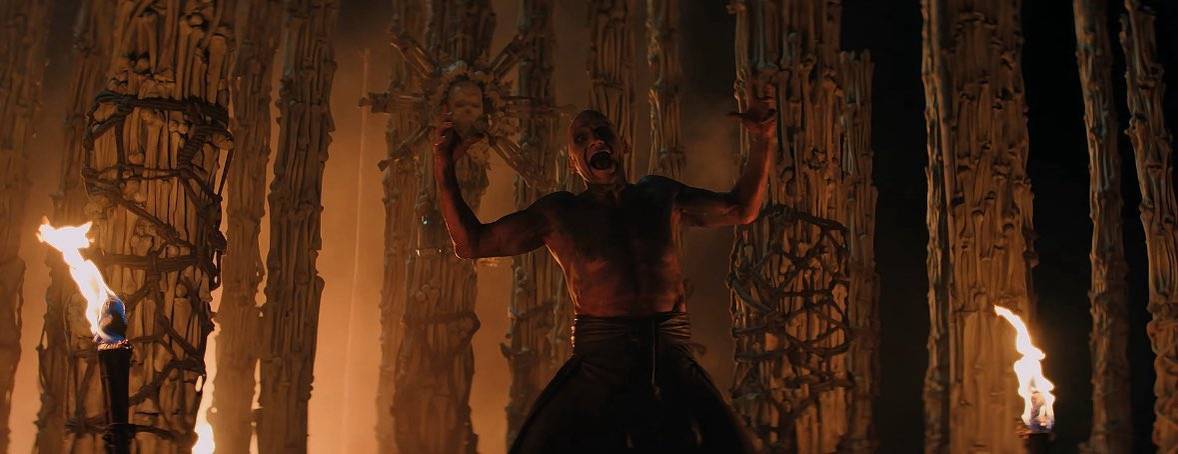
Over months of pre-production, DaCosta collaborated with her department heads—designers, VFX specialists, and movement coaches—to refine the logistics. “We meticulously constructed the sequence piece by piece until one day, it all clicked,” she notes.
“Does Ralph Have the Pipes?”
Another shift from the script involved the musical delivery. While the film shows Kelson using an antiquated turntable powered by a generator, Garland’s original draft envisioned Fiennes actually singing the high-pitched falsetto screams of the Iron Maiden track.
Roberts remembers asking DaCosta about Fiennes’ singing ability during their initial meeting. “She wasn’t sure at the time,” he laughs. While they eventually opted for the turntable approach, Fiennes committed fully, memorizing every lyric to ensure his miming was flawless.
The iconic solo at the end was actually repositioned from the middle of the track.
The audio itself underwent surgery to match the cinematic tension. Roberts rearranged the song’s structure, moving the instrumental bridge to the end to allow Fiennes more time to navigate the complex set. This creative license also allowed for a more atmospheric transition into the dialogue, omitting a shot of Kelson physically cutting the power to the record player for a more “elegant” aesthetic flow.
“A Masterclass in Physicality”
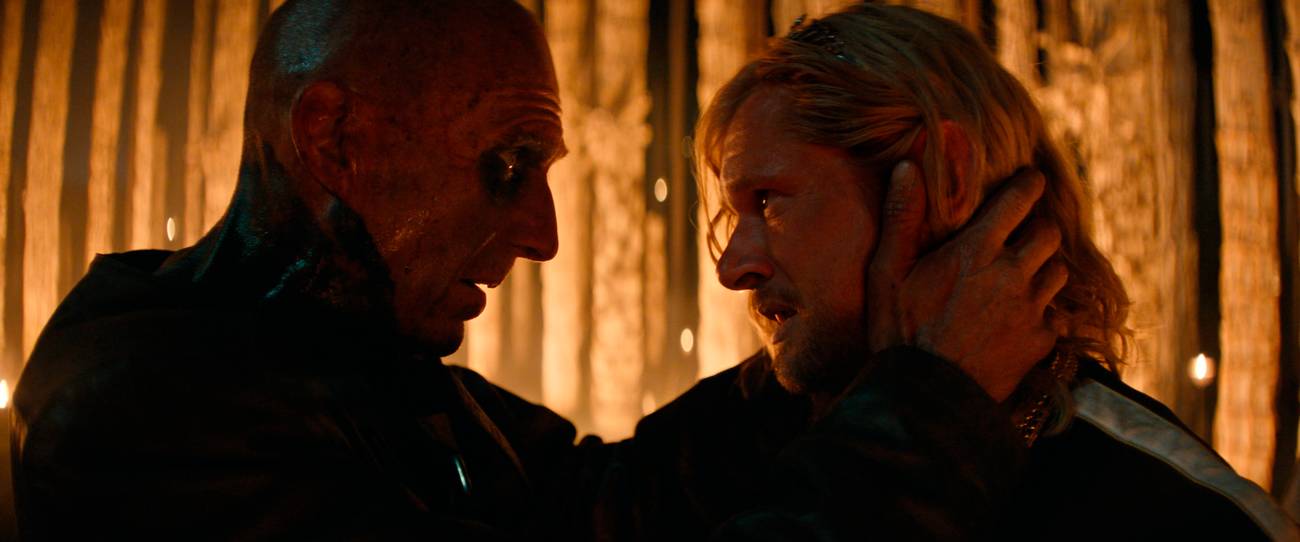
Ralph Fiennes executed nearly all his own choreography, a feat made possible by his exceptional fitness level. Stunt supervisor Julian Spencer, a veteran of the franchise since 2002, notes that Fiennes’ agility meant a double was rarely needed, which preserved the scene’s immersive quality.
Working with unpredictable, live fire drastically alters the safety dynamic.
While the cast wore fire-retardant garments, the ring of flames was authentic. The most dangerous element involved a specialty fire performer named Otto, from the Italian troupe I Piromanti. Clad in a custom-built leather and Nomex suit and drenched in water to prevent overheating, Otto wielded canisters that ejected a literal tower of sparks and embers.
“Climbing and Belting Out the Anthem”
Choreographer Shelley Maxwell had significant creative license with Fiennes’ movements. She drew inspiration from Butoh, a haunting Japanese performance art, and the fierce energy of the Haka. “We wanted something edged with ferocity and a touch of the uncanny,” Maxwell explained.
His movements had a hypnotic, serpentine quality.
Fiennes embraced the “sinuous” nature of the role, scaling the ossuary’s spires while maintaining the performance’s intensity. To keep the scene fresh, DaCosta kept Fiennes’ rehearsal process hidden from O’Connell and the Jimmies, ensuring their onscreen shock and subsequent “mosh pit” reaction were genuine reflections of the moment’s raw power.
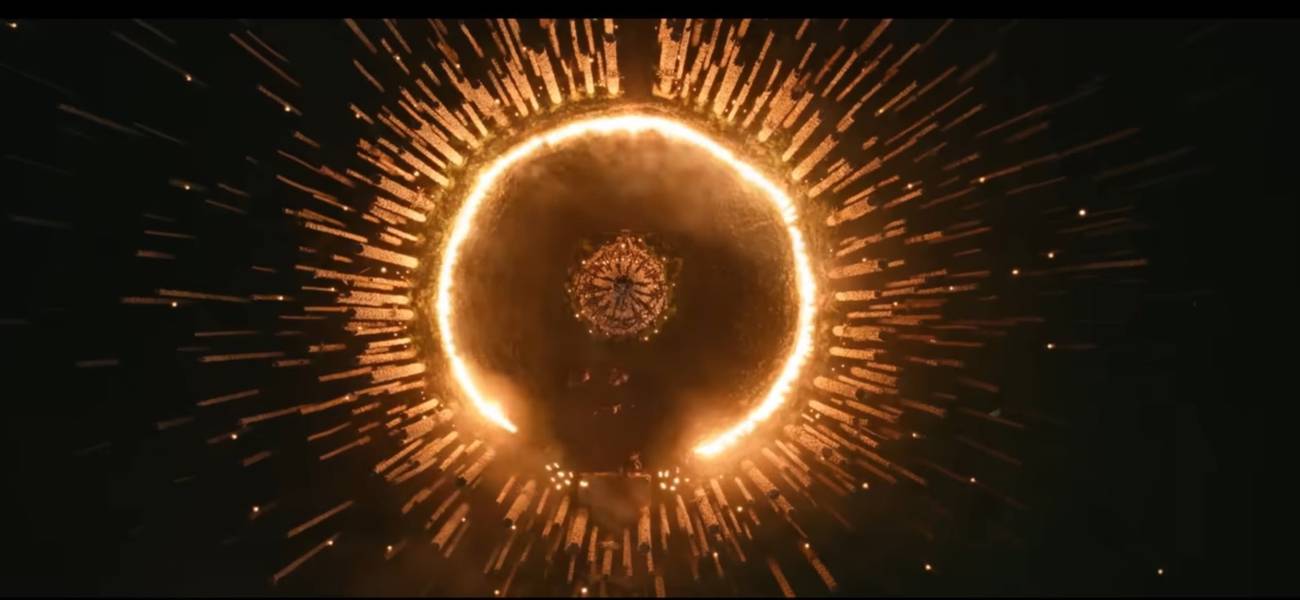
“A Relentless Pace in Post-Production”
Following a rapid three-night shoot, Roberts worked at breakneck speed to assemble a rough cut. “Within 36 hours of the cameras stopping, we had a version that looks remarkably like the final film,” he says. Given the tight schedule, there was no margin for error or reshoots.
I approached the edit with the kinetic energy of a music video.
The challenge lay in balancing the narrative beats—Kelson’s dominance, the Jimmies’ awe, and the pivotal lighting of the pyre—within the strict rhythmic constraints of the music. Roberts aimed for an “otherworldly” sensation that would captivate both the characters in the story and the audience in the theater.
A Hauntingly Successful Execution
The film’s parting shot of Kelson’s ritual involves O’Connell hanging from an inverted cross, a striking image captured in freezing temperatures. Spencer recalls the actor’s bravery, appearing nearly naked in sub-zero conditions while the crew watched in heavy winter coats.
“Night shoots have a way of blurring into madness,” O’Connell admits. Yet, that madness translated into a scene of unparalleled cinematic power. From Garland’s provocative script to the final, chilling frame, The Bone Temple’s conclusion stands as a testament to a team that refused to play it safe.
Source: Polygon
Related articles
 Boxed Games Become a Problem for Collectors as Issues Reach PS5
 Gears of War: E-Day Reportedly Planned as Start of a New Trilogy, Rumors Say
 Shenmue III Enhanced Edition Delayed to Improve Graphics and Add New Features
 Ridley Scott Finds Screenwriter for New Film That May Continue the Prometheus and Alien: Covenant Story
 Zendaya to Be Promoted for Best Lead Actress Oscar for Third Dune Film
 Crimson Desert Charting the Unknown Expansion Will Add Sea Monsters and Ship Boarding, Details Revealed
 Ticket Presales Suggest Dune: Part Three Will Lose Heavily to Avengers: Doomsday at the Box Office
 DC Horror Film Clayface Earns Unusually High CinemaScore