
2026’s Leading Vampire Movie Director Unfazed by Sinners Comparisons
While Night Patrol certainly mines dark territory for laughs, comedy is merely the surface layer. This is a visceral, blood-drenched horror experience where characters end up literally marinated in gore. Beneath the satirical edge and hyper-violent spectacle lies a deeply frustrated narrative tackling police malfeasance, unchecked aggression, and systemic prejudice. The film’s themes feel uncomfortably timely, echoing modern headlines of state-sanctioned violence and the controversial tactics of federal agents.
The parallels to the current political landscape are entirely intentional. Writer-director Ryan Prows, who first made waves with his 2017 debut Lowlife, has long been interested in the intersection of grit and social commentary. His previous work—a twisted thriller involving organ harvesting and corrupt officials in Los Angeles—drew frequent comparisons to Quentin Tarantino’s early filmography. Night Patrol shifts this focus into the realm of the supernatural, offering a more fantastical but no less biting exploration of these anxieties.
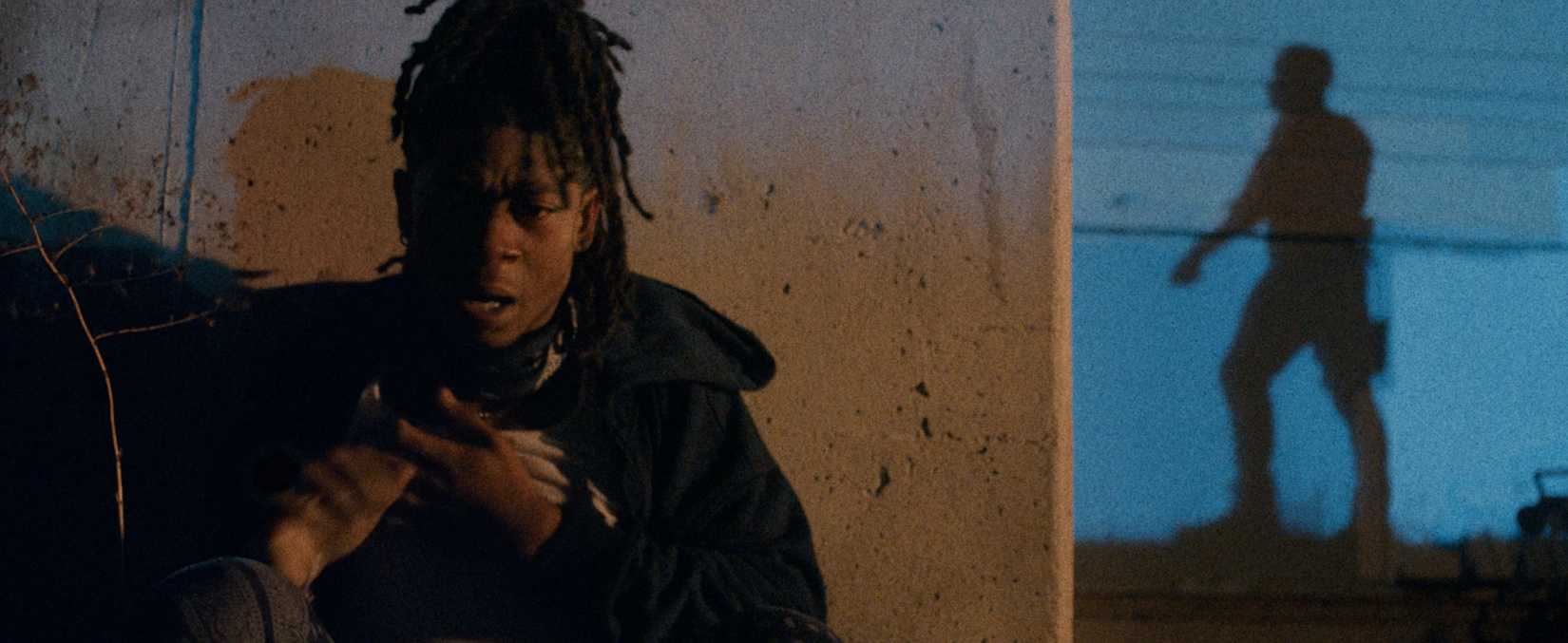
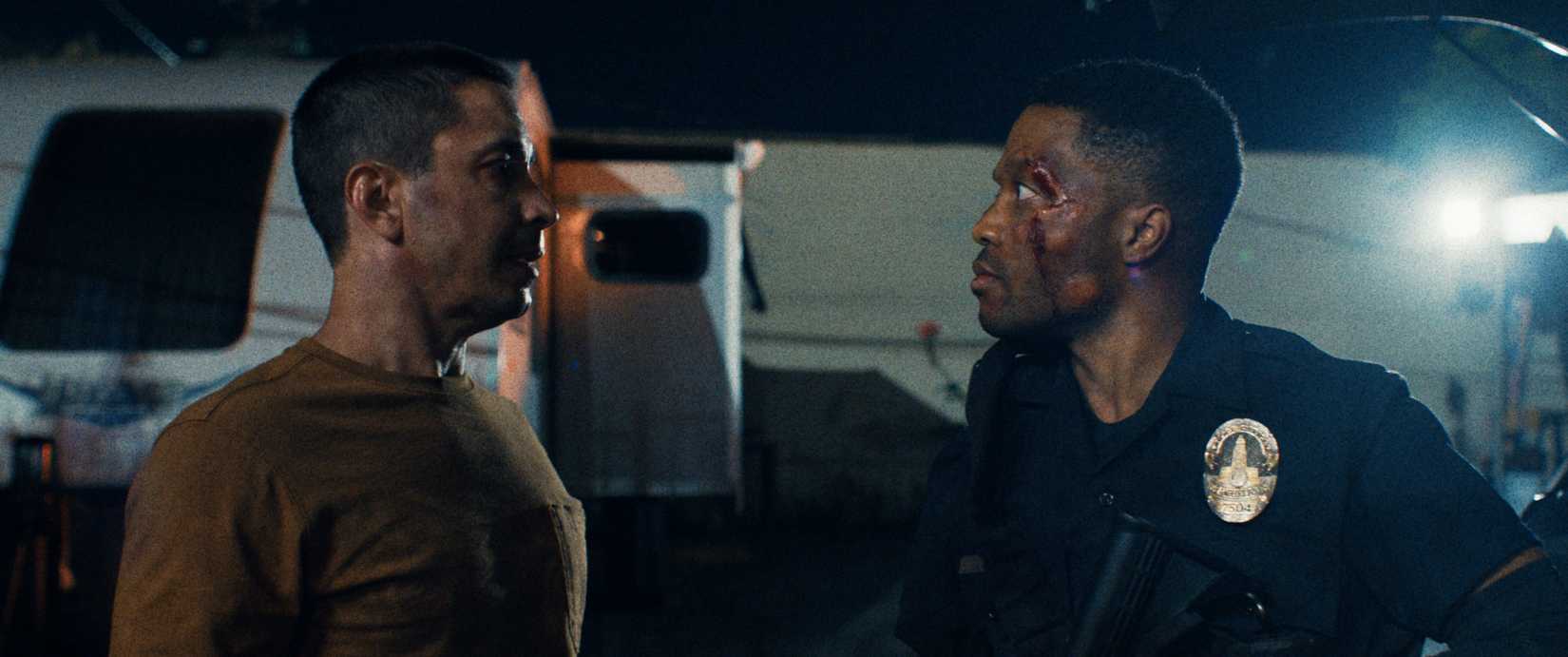
Justin Long and Jermaine Fowler headline the cast as LAPD officers attempting to infiltrate a shadow unit shrouded in secrecy. R.J. Cyler plays a local man who, after narrowly escaping an execution by this elite squad, finds himself caught between his community ties and the escalating violence of the law. As he digs deeper, he uncovers the film’s central hook—a reveal that serves as a jarring turning point for those who haven’t seen the trailer.
Major Spoiler: The members of the “Night Patrol” are actually vampires. Specifically, they are white-supremacist bloodsuckers who believe preying on Black and Brown communities is their inherent right. This turns the film into a high-stakes, cathartic showdown between marginalized groups and literal monsters backed by the state. Following the film’s premiere at the 2025 Fantastic Fest, Ryan Prows sat down to discuss the challenges of blending genre tropes with institutional critique, the inevitable comparisons to Ryan Coogler’s Sinners, and casting Dermot Mulroney as a menacing vampire patriarch.
The following conversation has been edited for brevity.
Polygon: Your previous work dealt with ICE and racial inequity. Now, you’ve returned with a story about—
Ryan Prows: Soft, cuddly animals? [Laughs]
Not quite. It features people in power literally caging and hunting people of color. The imagery is strikingly similar to modern news reports. Did you feel like you were mirroring our current political climate during production?
It definitely feels that way. I often wonder when I’ll get to make a movie about those cuddly animals instead. When we were developing Lowlife, the terrifying potential of agencies like ICE was already apparent, even if the general public wasn’t as focused on it yet. With this film, the narrative seemed to build itself naturally from the real-world tensions surrounding us; it eventually took on a life of its own.
Coming so soon after Sinners, the metaphor of vampires as institutional predators feels incredibly relevant. Are you concerned that audiences might compare the two films too closely?
I’m actually not worried—if anything, I think it helps the movie. Being part of a larger cultural conversation is a positive. It reminds me of the Tarantino comparisons with Lowlife; that’s a high bar to be measured against, so I’ll take it.
Your segment in V/H/S/94 also explored the intersection of white supremacy and vampires. It seems to be a recurring fascination.
A theme is definitely emerging, isn’t it? [Laughs]
Did Night Patrol allow you to expand on ideas that you couldn’t fit into a short film?
Absolutely. A feature film gives us the space to build out the mythology and the history of how these institutions have been weaponized. “Terror” was more of a high-concept experiment with the idea of vampires as human bombs. In Night Patrol, the rules are different, but the emphasis on practical effects and gore remains. We wanted to see how far we could push the “bloodiest vampire movie” title. Having David S. Goyer as a producer certainly pushed us to be as bold as possible with the carnage.
The film concludes on a very high-octane, unresolved note. Are there plans to revisit this world?
I’d love to return. We had a blast constructing the lore and the backstories of these characters. If the audience responds well, I’m ready for the sequel—2 Night 2 Patrol.
Marketing a movie like this must be tricky—you want to attract the right horror fans without ruining the surprises. What is your preferred way for someone to experience it?
Whether you know the twist going in or not, I don’t think you can predict the journey the movie takes. Even with the premise in mind, the execution is full of turns. I’m excited to see how both types of viewers react.
How did Dermot Mulroney get involved?
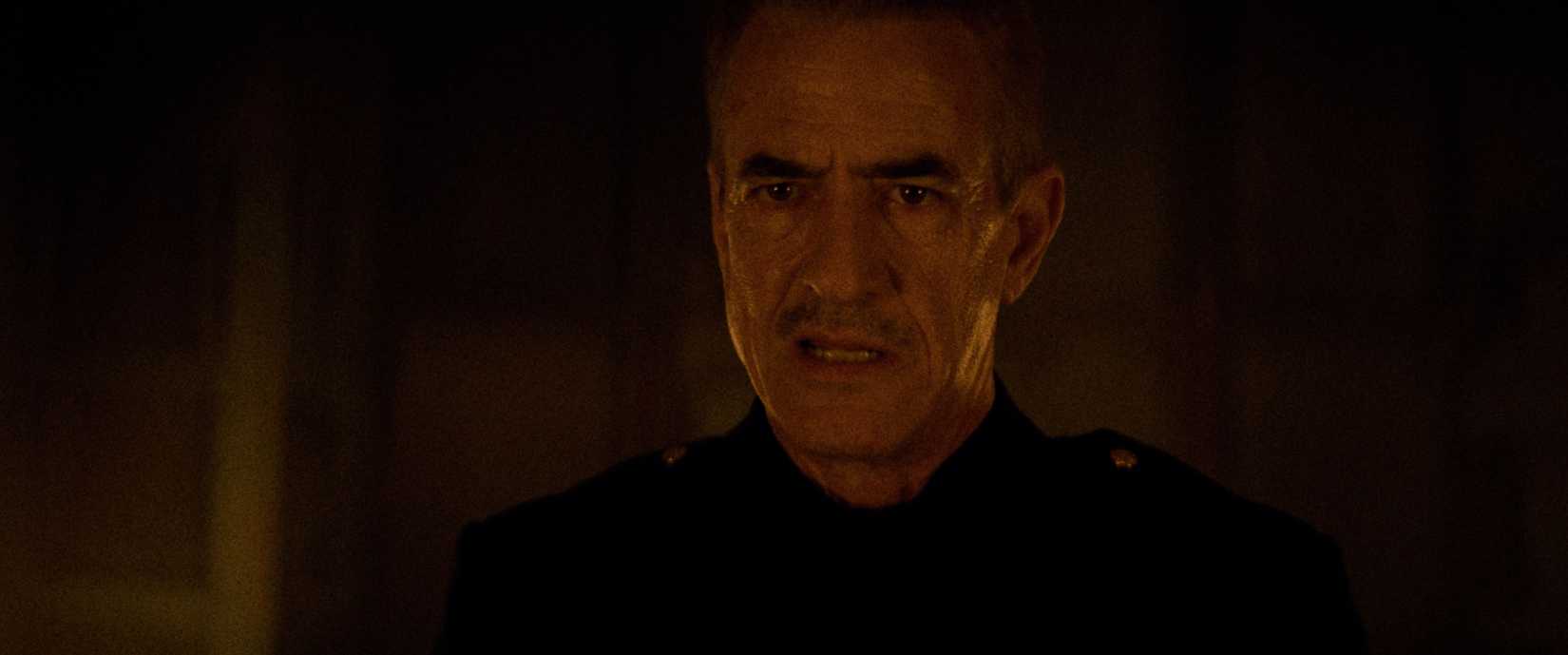
One of our producers made the introduction. From our first call, it was clear he understood exactly what we were going for. He leaned right into the duality of playing a veteran cop who is also a vampire king. He brought an incredible energy to the set. Our internal production code name for the project was Pals—a nod to Young Guns—so having him on board felt like a full-circle moment.
It’s a bold choice for a white actor to play such an overtly racist predator. How did you navigate the sensitivity of the racial themes on set?
I tried to give the actors enough space to make the characters feel authentic. We wanted the emotional stakes to feel grounded so that when the supernatural elements exploded, it felt like an extension of that reality. I didn’t want to shy away from the message, but I also didn’t want it to feel like a lecture. It’s meant to be a loud, provocative experience.
What do you hope the audience takes away from the film?
I want them to have a great time, but I also hope it keeps a necessary conversation going. Movies like this and Sinners are exploring very real anxieties through the lens of genre, and I think being provocative is a great way to ensure people keep talking about these issues long after the credits roll.
Night Patrol is currently playing in theaters.
Source: Polygon
Related articles
 Boxed Games Become a Problem for Collectors as Issues Reach PS5
 Gears of War: E-Day Reportedly Planned as Start of a New Trilogy, Rumors Say
 Shenmue III Enhanced Edition Delayed to Improve Graphics and Add New Features
 Ridley Scott Finds Screenwriter for New Film That May Continue the Prometheus and Alien: Covenant Story
 Zendaya to Be Promoted for Best Lead Actress Oscar for Third Dune Film
 Crimson Desert Charting the Unknown Expansion Will Add Sea Monsters and Ship Boarding, Details Revealed
 Ticket Presales Suggest Dune: Part Three Will Lose Heavily to Avengers: Doomsday at the Box Office
 DC Horror Film Clayface Earns Unusually High CinemaScore