Why Pokémon Doesn’t Need to Mature
Like many Millennials, my childhood was inextricably linked to the rise of Pokémon. The debut of the original RPGs coincided perfectly with my most formative years, effectively shaping my interests and even my adolescent identity. Since those early days, I have matured alongside the franchise. Every new generation serves as a chronological milestone, prompting me to reflect on my own personal growth between adventures. In many ways, one can map their path to adulthood through the lens of Pokémon releases.
It is hardly a revelation, then, that so many fans in my demographic have grown weary of the series’ perceived refusal to evolve. With each new iteration, the franchise seems to stumble while attempting to satisfy both its youngest audience and its veteran players—a friction that seems destined to persist in the upcoming Generation 10 titles, Pokémon Wind and Waves. Hand-holding tutorials have become more intrusive, combat mechanics are increasingly oversimplified, and any semblance of difficulty has largely vanished. To make matters worse, the technical polish that once defined Nintendo’s flagship titles has seen a significant decline.
These frustrations reached a boiling point during the Nintendo Switch era. Titles like Pokémon Sword and Shield left long-time enthusiasts desperate for an experience that felt as though it had aged with them. But this raises a difficult question: what does a “mature” Pokémon game actually entail? The diverse expectations of this sprawling fanbase illustrate why The Pokémon Company’s balancing act is far more precarious than players might assume.
We must be honest with ourselves: Pokémon has always prioritized a younger audience. The inaugural marketing campaigns for Red and Blue were saturated with vibrant, animated energy, which is precisely why children of the ’90s found it so irresistible. While the games were technically complex RPGs, the core rock-paper-scissors elemental system was intuitive enough for a child to grasp. You didn’t need to be an adult to appreciate the depth, but you did need a sense of childlike wonder to fall in love with the world.
This fundamental spirit has endured throughout the series’ history. Even when the narratives of Black and White touched upon more sophisticated themes, the journey remained rooted in youthful optimism. The formula is consistent: you step into the shoes of a young trainer, choose a charming companion, and save the world through the power of friendship. As hardware capabilities expanded, the art style leaned further into the bright, clean aesthetic of the anime. This strategy continues to yield results, drawing in fresh faces every year. Seeing younger generations pick up titles like FireRed on the Switch proves the brand’s incredible staying power.
Yet, the core appeal of Pokémon is truly ageless. Beyond the whimsical exterior, the RPGs boast sophisticated battle engines and a compelling collection loop that resonates with players of all skill levels. It is only natural that those who began their journey as kids would eventually gravitate toward the intricacies of competitive play and monster breeding, all while basking in the nostalgic comfort the series provides.
 Image: The Pokémon Company
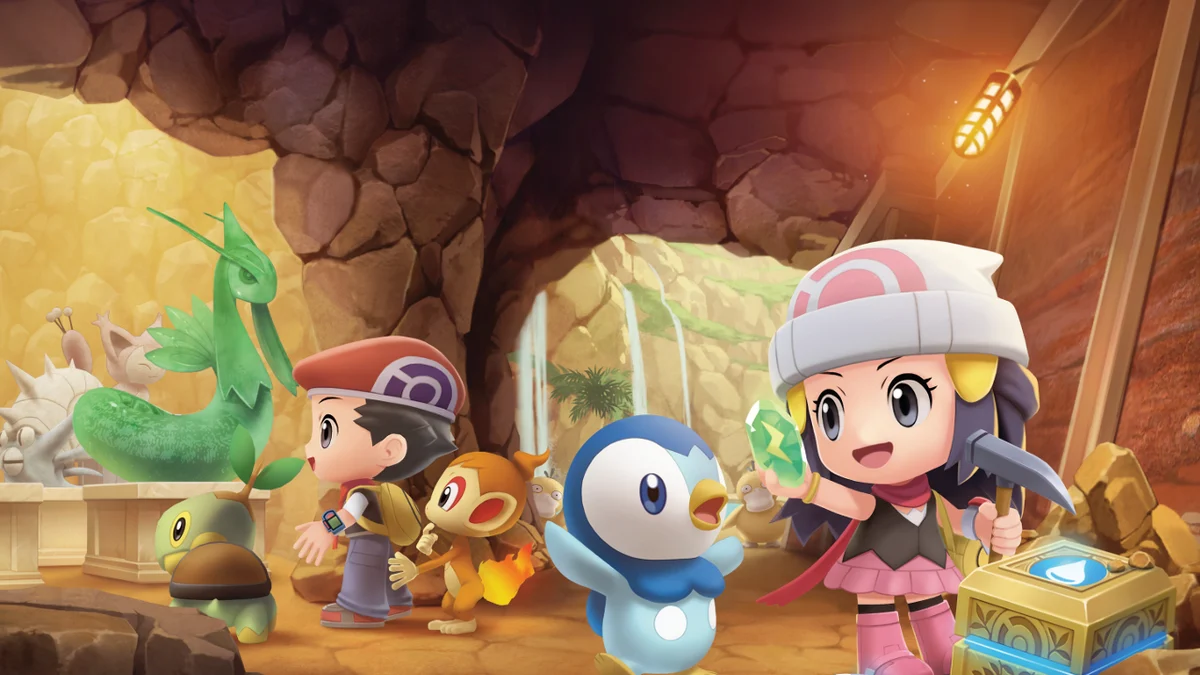
This is where the relationship becomes strained. Pokémon isn’t didactic in the way typical children’s media can be; its “lessons” are usually woven into smart game design. For years, the games felt appropriate for whatever age you happened to be. The disconnect only occurs when the design fails to maintain that universal appeal. We’ve seen this in the polarizing reactions to projects that skew explicitly toward toddlers, such as the Pokémon Let’s Go series or the toy-like aesthetics of the Diamond and Pearl remakes.
Long-time fans have become increasingly vocal about their desire for more “grown-up” features. Some of these requests are quite practical, such as restoring a level of challenge to games that have become trivial. Modern entries frequently automate the strategy, even highlighting which moves are super-effective before you use them. That rewarding sense of tactical discovery—where you had to deduce an opponent’s weakness through trial and error—has been largely eroded.
Similarly, the series’ penchant for environmental puzzles has diminished. The classic games often utilized Metroidvania-style progression, where HMs acted as keys to unlock hidden paths and shortcuts. The recent shift toward open-world environments has traded that thoughtful exploration for a more frictionless, yet often aimless, freedom. There is a middle ground here that could satisfy veterans without alienating the core youth audience.
 Image: Game Freak, ILCA/Nintendo
Then there is the debate over graphics and performance. While some demand ultra-realistic, gritty visuals, that misses the point entirely. Pokémon doesn’t need Unreal Engine 5 to render hyper-detailed, scaly monsters. The series thrives on its wholesome, cartoonish charm. The “sweetness” is the brand’s soul, and those who find that off-putting may simply have outgrown what makes Pokémon special.
However, that doesn’t excuse the recent technical failings. The visual appeal is dependent on a stable experience, and Pokémon Scarlet and Violet were so fundamentally broken at launch that it was impossible to stay immersed. Erratic framerates, low-resolution textures, and jarring glitches shattered the illusion of a living world. These technical hurdles make it difficult for even the most nostalgic adult to feel like a kid again.
 Image: Omega Force/The Pokémon Company, Nintendo
The solution isn’t necessarily to “grow up” the themes; it’s to create a world that feels whole. Look at the success of Pokémon Pokopia. Omega Force’s cozy life-sim spinoff doesn’t shy away from being kid-friendly. Instead, it leans into a charming, block-based aesthetic that appeals to the Minecraft generation. Despite the tutorials and lack of difficulty, it has received some of the highest critical praise in the franchise’s history. When a game is crafted with care and cohesion, players of all ages can happily suspend their disbelief.
As we anticipate the 2027 arrival of Generation 10, my hope is that Pokémon Wind and Waves can recapture that elusive magic. I don’t need punishing combat or a “feral” Pikachu. I simply want a stable, inviting world where I can leave my adult stresses behind for a while. Maturity shouldn’t mean abandoning your inner child; it should mean giving them a better, more polished playground to explore.
Source: Polygon
Related articles
 Activision to Launch New Call of Duty Subseries in 2027
 First Reviews of Cyberpunk: Edgerunners 2 Split Critics, Praising Visuals and Violence but Questioning Story
 One of the largest game decompilation sites is shutting down amid the rise of AI
 Cyberpunk: Edgerunners 2 Premiere Time Announced, All 10 Episodes Arrive on Netflix October 20
 Call of Duty: Modern Warfare 4 Dedicates Separate Screen to Memory of Vince Zampella
 8 Classic PlayStation Adventure Games That Are Barely Playable Today
 Hideo Kojima Will Appear in Cyberpunk: Edgerunners 2, Cyberpunk 2077 Developers Say
 Modern Warfare 4 Is Legitimately a Top-5 Call of Duty Campaign