
Three Essential Calvin and Hobbes Stories From the 1980s
One of the most interesting parts of any long-running newspaper comic is often its first few years. The first entries in any new comic strip are often significantly different from what they would later become, especially if they are given time to evolve. The jokes are rougher, different characters cycle in and out of the spotlight, and the cartoonist has not yet finalized their art style.
For example, the first two years of Berkeley Breathed’s Bloom County are a big departure from what the strip eventually became. Milo Bloom is still the title character and protagonist. Opus is present, but he has not yet stolen center stage, and his nose is a fraction of its eventual size. Cutter John, who is almost entirely sidelined as the strip moves further into the 1980s, gets several storylines to himself, while Bill the Cat was not introduced until 1982.

In the case of Bill Watterson’s Calvin and Hobbes, the run can be usefully split into two eras: pre-sabbatical and post-sabbatical. During the strip’s original run in syndication, Watterson took two long breaks, the first of which lasted from May 1991 until February 1992. Upon his return from that first sabbatical, Watterson immediately made several big changes to Calvin and Hobbes.
The best-known example is the introduction of the more elaborate half-page format for Sunday strips, though that did not kick in immediately. In addition, post-sabbatical C&H takes bigger swings with its art, features shorter story arcs, and often takes jabs at contemporary comics and newspapers as a format.
Pre-sabbatical Calvin and Hobbes does not feel like a wholly different comic. While Watterson was still figuring things out as he went, most of the base ingredients of C&H were present from the jump. The big innovations he made over the course of the run came largely from format rather than style.
Home is where the TV heart was
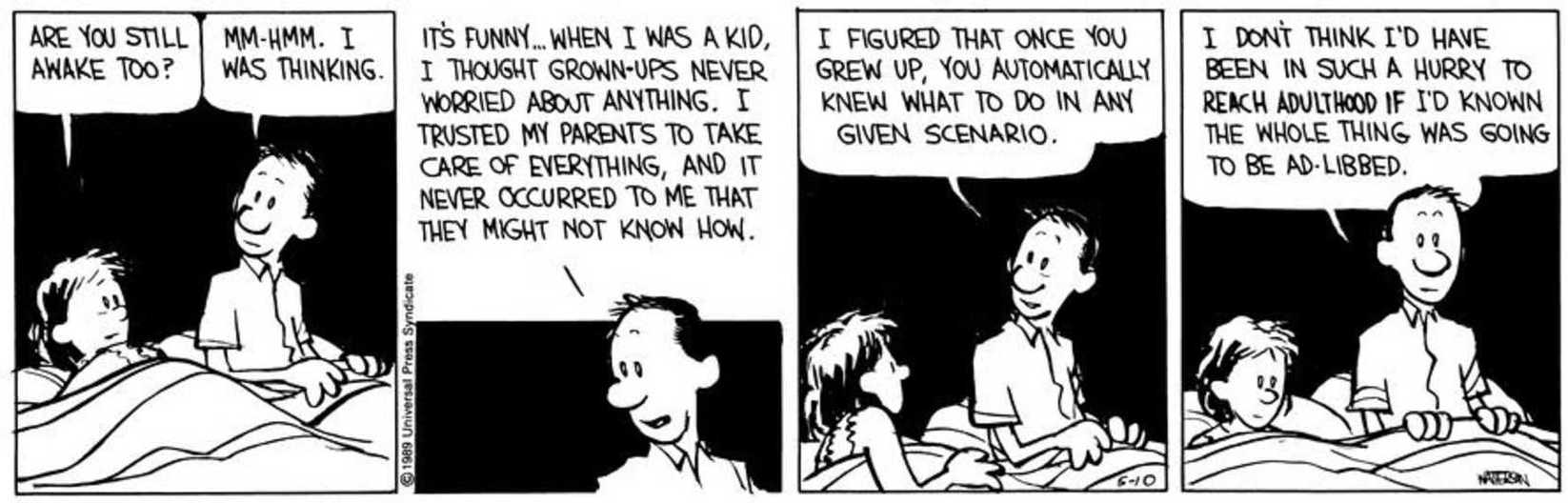
On a reread, some highlights from early Calvin and Hobbes include the burglary arc, when Calvin’s family comes home from a wedding to discover their house has been robbed. Calvin’s first worry is for Hobbes, but many of their valuables are missing.
More crucially, Watterson writes at length about the family’s sense of vulnerability in the aftermath. A home is supposed to be a constant and a sanctuary, but much of that is a necessary illusion.
It takes a few strips to reach that point, but Calvin’s dad’s thoughts in the aftermath remain one of the better meditations on adulthood found in all of Western comics. At the end of the day, even the most self-assured person you know is simply making it up as they go. There is no shame in that. It is part of the human condition.
Maybe this hat will fix me
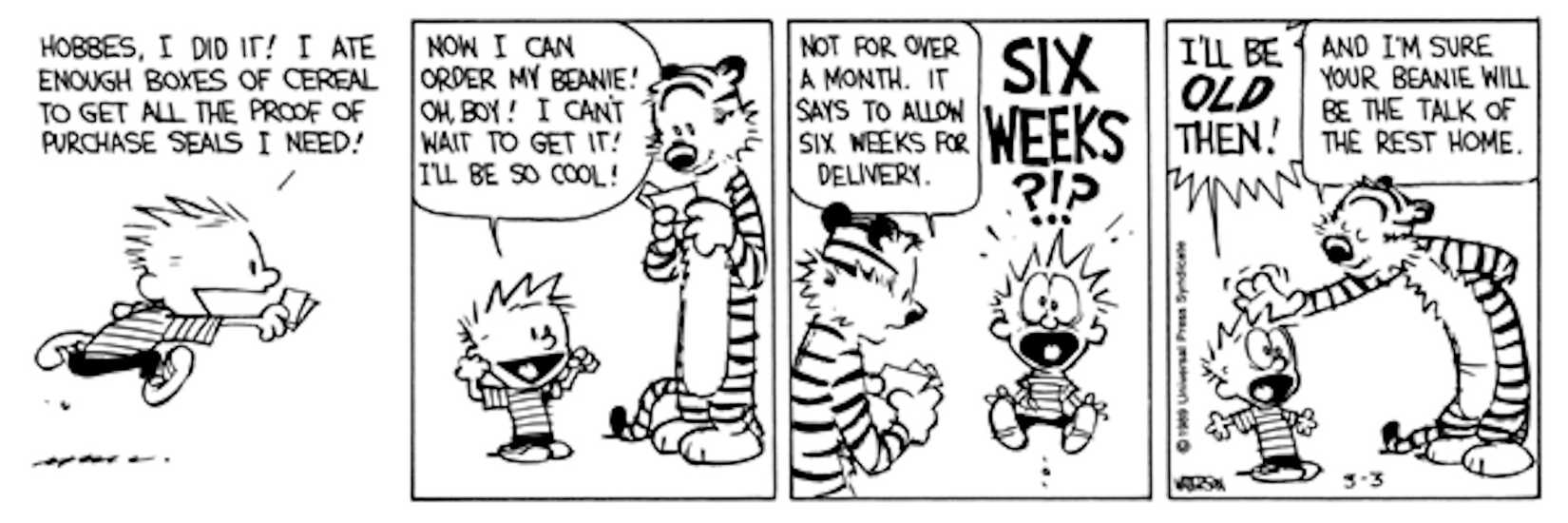
Another storyline that jumps out, although one that has aged poorly in the age of next-day delivery, ran from February through March of 1989. When Calvin learns his favorite cereal is offering a propeller beanie as a prize for sending in box tops, he goes through an ordeal familiar to anyone who remembers the 1980s.
First, Calvin gorges himself on Sugar Bombs, then he waits six weeks for the beanie to arrive. Once it arrives, the beanie is just a hat. Calvin allowed himself to get hyped up for a product that could not deliver what he wanted from it. Granted, Calvin thought it would let him fly, so much of that is on him.
If you were born before 1990, you likely had this or something similar happen to you. Even today, waiting for something such as a movie, a new season of a show, or the release of a new game is a common experience, though anticipation often ruins the event. Now that wait time is measured in days rather than months.
To change the world, start in your own back yard
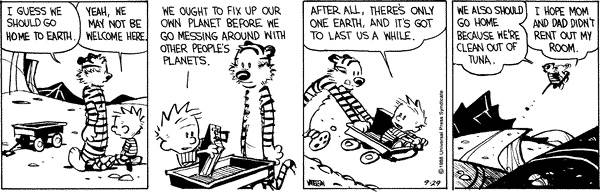
A storyline that has only aged better with time started in September 1988. Calvin reads the newspaper, decides to abandon Earth, and takes Hobbes on a trip to Mars.
They intend to colonize the place permanently, but after a few days of solitude and an encounter with a Martian, Calvin realizes they need to head back to Earth. “We ought to fix up our own planet,” Calvin says, “before we go messing around with other people’s planets.”
At three weeks long, the Martian voyage is one of the bigger storylines in the strip’s run, serving as an immediate and preemptive counterpoint to the modern argument for Martian colonization.
Visiting another planet might hold appeal, but you cannot solve Earth’s problems, or many of your own, by running away from them. Bill Watterson made that argument efficiently 38 years ago.
Source: Polygon
Related articles
 JND Studios Teases Hyper-Realistic Rubeus Hagrid Statue
 007 First Light Gets Performance Mode on Xbox Series S
 Remedy Begins Full Production on Max Payne Remakes
 New Crazy Taxi: World Tour Trailer Showcases Brazil
 Ubisoft Promotes Diversity, Equity, and Inclusion Director to Head of AI Implementation
 US Xbox Sales Hit Historic Low Amid Record Prices While PlayStation Sees Weakest Result Since 2013
 PlayStation Store Launches Players’ Choice Sale With Discounts Up to 85 Percent
 SEGA Casts Charlie Cox in New Game Despite Initial Preference for American Actor