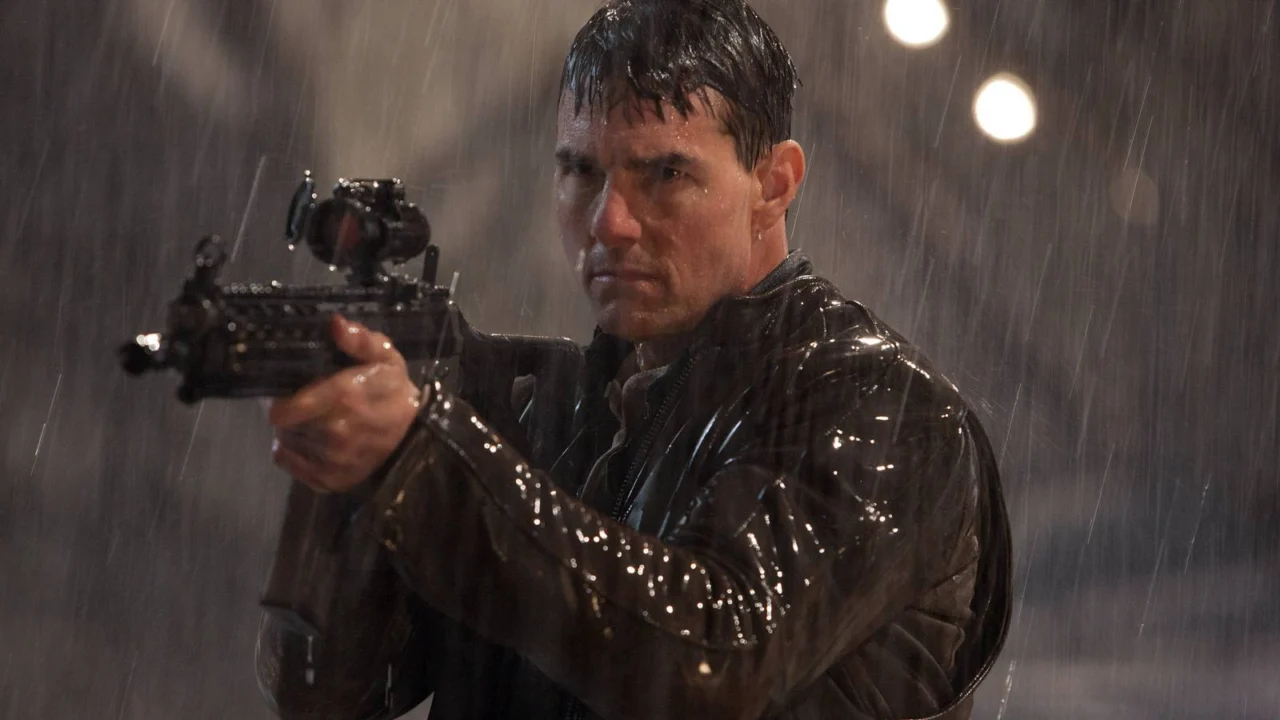
The Underrated Tom Cruise Thriller That Prime Video’s Reacher Owes Everything To

When Prime Video’s Reacher first hit screens, long-time devotees of Lee Child’s novels breathed a collective sigh of relief. It wasn’t just that the series was high-quality; it was the casting of the eponymous drifter—a man with no permanent residence and an unshakable military pedigree. While Alan Ritchson offers a more polished aesthetic compared to the rough-around-the-edges, disheveled protagonist of the source material, he possesses the imposing, hulking presence the role demands. He moves through skirmishes and intricate conspiracies with the unstoppable momentum of a freight train. Simply put, it felt authentic.
This sense of alignment was a stark departure from the Tom Cruise era, encompassing 2012’s Jack Reacher (currently streaming for free on Pluto TV) and its 2016 sequel, Jack Reacher: Never Go Back. Audiences were largely dismayed by the casting of the 5’7″ Cruise, and for many, the mismatch remained a dealbreaker. Although the films performed reasonably well given their modest budgets, Child eventually pivoted to mirror his readers’ wishes, opting for a physically towering lead for the television adaptation.
The overwhelming acclaim currently directed at the Amazon series has retroactively labeled the Cruise films as failures. However, this is revisionist history. The show likely wouldn’t exist had those original films not introduced the character to a global mainstream audience. Furthermore, much of the television series’ success is built on a foundation of elements either perfected by the films or corrected where they previously stumbled.
Moreover, the movies aren’t devoid of merit. While Jack Reacher: Never Go Back is admittedly a lethargic slog, the 2012 original remains a compelling piece of work. It serves as a prime example of the mid-budget, character-driven studio thriller—a cinematic species that has become increasingly endangered in the last decade. It relied on a tight, grounded premise, a high-wattage lead, and seasoned character actors, polished with atmospheric cinematography and visceral, practical action sequences.
Jack Reacher serves as an adaptation of the ninth book in the series, One Shot. The narrative kicks off when an ex-Army sniper, James Barr, is arrested for a mass shooting in Pittsburgh and requests the presence of Reacher. The drifter soon joins forces with defense attorney Helen Rodin (Rosamund Pike). What begins as a seemingly open-and-shut case unfolds into a sprawling criminal conspiracy anchored by a genuinely unsettling performance from Werner Herzog, with Robert Duvall lending his gravitas as a grizzled gun range proprietor.
Watching this film, one can trace the stylistic development of writer-director Christopher McQuarrie as he solidified his creative partnership with Cruise. After their collaboration on Valkyrie (2008), McQuarrie—known previously for the razor-sharp, dialogue-heavy tension of The Usual Suspects—began to lean into the high-octane spectacle that would eventually define the Mission: Impossible franchise. Jack Reacher sits at an interesting crossroads between those two sensibilities.
While the film features flashes of the eventual Mission: Impossible flair—particularly in a masterfully executed car chase—it is grounded by moments of pure, eerie tension, most notably Herzog’s haunting monologue about surviving as a prisoner of war. It is a sturdy, moody thriller that occasionally transcends its own genre conventions.
 Photo: Karen Ballard/Paramount Pictures via Everett Collectio
Cruise brings his signature intensity to the role, bolstered by a script that leans into the “mythic” nature of the character. Other figures in the film frequently stop the action just to recount how dangerous or nearly superhuman Reacher is. It’s an absurd framing, but one that fits the larger-than-life nature of Cruise’s brand.
However, the disconnect remains. Reacher is defined by a cool, detached temperament, whereas Cruise’s screen presence has always been defined by a manic, high-energy drive. Whether he’s playing Ethan Hunt—where that intensity makes sense given the apocalyptic stakes—or as Reacher, it feels like a mismatch. In the gritty, low-stakes urban environment of Jack Reacher, his performance feels forced rather than effortless. Ultimately, the film’s attempt to launch a franchise around his specific brand of star power feels somewhat cynical, which likely explains why the series struggled to find its footing.
Despite these flaws, Jack Reacher stands far above many of its contemporaries, offering a legitimate, highly watchable crime thriller. The modern series wouldn’t exist without it, and while we can hope for a feature-length budget for Ritchson’s iteration in the future, the original film remains a fascinating artifact of a bygone era of studio filmmaking.
Source: Polygon
Related articles
 Dear Villagers to Lay Off Most of Its Staff in Industry-Wide Cuts
 Valve Steam Deck Used to Control Mars Rover
 AI Boom and Chip Shortage Threaten NEOGEO AES+ Console Release
 Minecraft Dungeons II Trailer Released One Week Ahead of Launch
 Avengers Endgame Encore Leaks Reveal Doomsday Plot Details
 World of Warcraft: Forever to Implement Strict Bans for Gold Buying
 Xbox to Introduce Mythic Tier with First Details Revealed
 Five Classic Peanuts Comics Highlighting Charles Schulz’s Genius From the 1950s