
The one thing Luc Besson’s Dracula remake actually gets right
Luc Besson’s 2026 reimagining of Dracula appears less concerned with Bram Stoker’s original 1897 epistolary novel and more obsessed with Francis Ford Coppola’s 1992 cinematic interpretation. In fact, observing Besson’s narrative choices, one might wonder if he ever cracked the spine of the source material at all. Instead, he seems to be adapting Bram Stoker’s Dracula—the movie—replicating its specific aesthetic flourishes and departures from the book. In the U.K., the film is even marketed under that exact title. The concept of the “Euro-trash” provocateur mimicking Coppola mimicking Stoker should, by all rights, be absurd. Yet, Besson has somehow crafted a version that captures the raw, melodramatic intensity of discovering Gothic horror during one’s most impressionable years.
Though Besson is well into his 60s, his filmography has always been infused with a certain adolescent vigor, visible in cult classics like The Professional, Lucy, and The Fifth Element. In the latter, a common man rescues a world-saving entity, Leeloo (Milla Jovovich), who transcends being a mere fantasy object to become the literal embodiment of love. In Dracula, Besson leans even harder into this brand of grandiose sentimentality.
The film begins with sweeping, theatrical strokes. Mirroring Coppola, Besson explicitly identifies the Count as the historical Vlad the Impaler. In this version, Prince Vladimir (Caleb Landry Jones) is so hopelessly enamored with his wife Elisabeta (Zoë Bleu) that his fellow soldiers must forcibly drag him away from their domestic bliss to the battlefield. The romance is depicted with a messy, tactile intimacy—at one point involving porridge—that sets a high bar for the tragedy to follow.
While victory is achieved on the field, disaster strikes at home. In a pivotal departure from both history and previous adaptations, Vladimir is the architect of his own misery; while attempting to save Elisabeta, he inadvertently impales her with a spear intended for an assassin. Consumed by grief and rage, he executes a priest for the failure of divine protection and turns his back on God. In the hands of Jones and Besson, this Dracula is portrayed with a certain tragic, impulsive lack of foresight.
Centuries later, Jonathan Harker (Ewens Abid) arrives at the Transylvanian estate for a property deal, encountering an eccentric, ancient figure with an elaborate white updo—a visual homage (or theft) so blatant it borders on parody of Gary Oldman’s iconic look. Upon discovering that Harker’s fiancée, Mina (also played by Bleu), is the spitting image of his lost bride, the Count begins his pursuit of what he believes is a fated reincarnation.
Besson’s narrative takes its most eccentric turn in the second act. Harker’s stay turns into a series of flashbacks reminiscent of Interview with the Vampire, chronicling Dracula’s failed attempts to reunite with Elisabeta through the ages. These vignettes further highlight the character’s erratic nature, such as a scene where he exhumes his wife’s grave only to react with genuine, baffled horror at the natural process of decay.
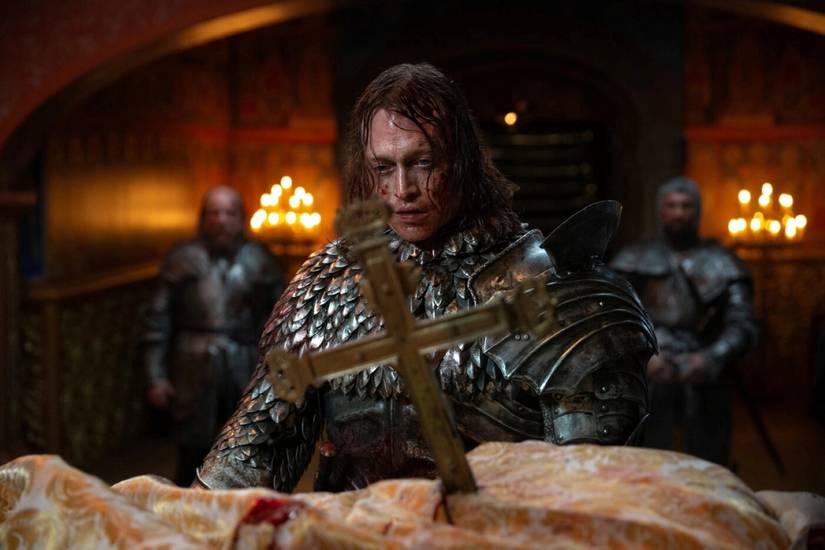
The film is peppered with bizarre, stylized flourishes: a dance sequence that dissolves into a massacre and the reimagining of Lucy Westenra as Maria (Matilda De Angelis), a voracious, fully committed vampire lieutenant. Perhaps most strangely, Dracula’s castle is populated not by a harem of brides, but by sentient, animated stone gargoyles who serve as his household staff.
By the time the gargoyles appear, Besson’s Dracula becomes an oddly captivating experience for those willing to embrace its uninhibited melodrama. Some audiences may find the director’s personal history—specifically past allegations of misconduct, despite being cleared by the French courts—too substantial a hurdle. The film’s deep sympathy for a mass-murdering monster who kills in the name of love is even more aggressive here than in Coppola’s version.
Yet, there is an undeniable accuracy in how the film portrays the solipsistic, obsessive nature of a “monster romance.” Dracula’s centuries-long tantrum is less like a sophisticated curse and more like a hellish teenage crush that refuses to die, regardless of the body count it leaves behind.
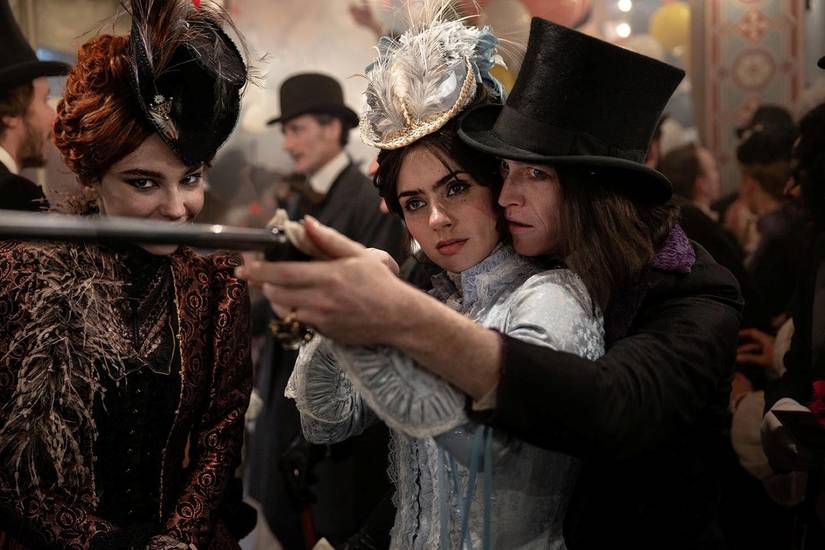
Caleb Landry Jones, who previously collaborated with Besson on the polarizing Dogman, provides a performance that oscillates between pathetic longing and monstrous hunger. Besson reportedly built the project around his fascination with Jones’s presence, comparing the actor’s raw talent to that of a young Gary Oldman. This connection likely explains why the film so shamelessly borrows the visual language of the 1992 production.
Jones captures a specific energy: the “elderly teenager.” He lacks the poetic gravitas of Guillermo del Toro’s Frankenstein or the eldritch dread of Robert Eggers’ Nosferatu. Instead, this Dracula feels like the type of character who would spend eternity writing terrible poetry or recording experimental, self-indulgent indie albums.
POLY Report: Subscribe for the latest insights
Ultimately, there is something refreshing about Besson’s refusal to “elevate” the material. In an era of prestige horror, this is a film that wears its silliness and sincerity on its sleeve. It serves as a reminder that monster movies don’t always need to be awards-season contenders; sometimes, they just need to be weird, bloody, and unabashedly romantic.
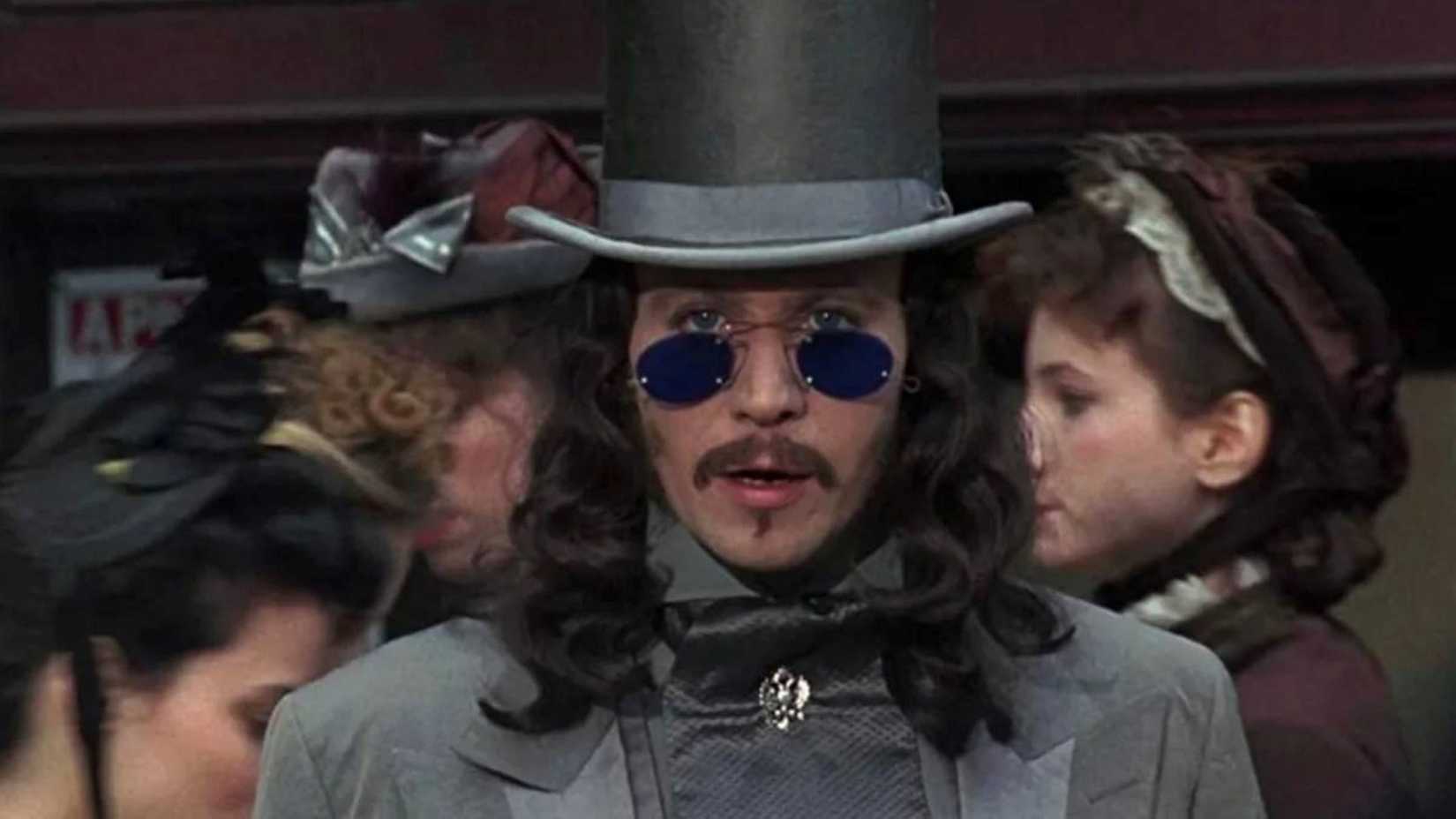
Besson’s Dracula feels like a gateway drug for the next generation of horror enthusiasts. It is an undignified, passionate mess—much like the Count himself. By embracing the absurdity of an immortal who behaves with the reckless fervor of a youth, the film finds its own strange, ridiculous truth.
Dracula arrives in theaters Feb. 6.
Source: Polygon
Related articles
 Sony Patents Technology That Could Warn PS6 Players of Danger With Vibration
 Xbox Set to Get Nearly 40 New Games in Coming Days, Including Some Unexpected Releases
 Popular YouTuber Reportedly Breaks Rockstar Agreement Over GTA VI Access
 Japanese Gamers Buy New Releases in Large Numbers as Newcomers Take Entire Sales Podium
 Enthusiasts Find Unusual Way to Run Steam Games on PS5 Without a PC
 Enthusiasts Find Hidden Potential to Nearly Double Performance of NVIDIA RTX 20, RTX 30 and RTX 40 GPUs
 Canceled Mass Effect Universe Was Built Around “Absolute Autonomy,” Franchise Technical Director Says
 Steam Frame Gets New Feature a Day After Player Asks Valve for Improvement