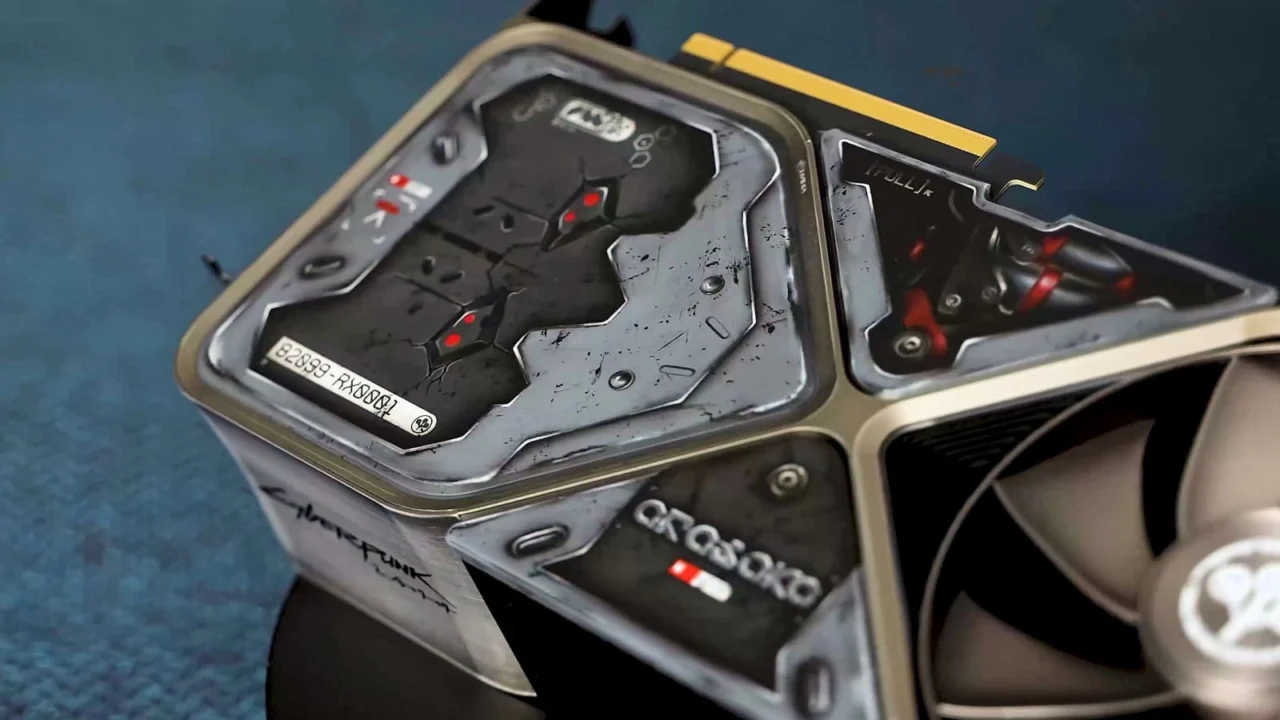
Enthusiasts Find Hidden Potential to Nearly Double Performance of NVIDIA RTX 20, RTX 30 and RTX 40 GPUs
Enthusiasts have found a way to raise matrix computation performance on NVIDIA RTX 20, RTX 30, and RTX 40 graphics cards by nearly a factor of two, which is particularly useful for running local AI models.
Older NVIDIA GPUs can run some calculations almost twice as fast thanks to modifications that unlock hidden potential in the RTX 30, RTX 40, and RTX 20 series without changing drivers.
Both modifications target matrix computations, which are important for AI. On the Ampere architecture (RTX 30), enthusiasts unlocked faster processing of FP/BF16 FMA instructions with FP32 accumulation. As a result, the RTX 3090 Ti’s BF16 matrix multiplication performance rose from 87.5 to 157.4 TFLOPS, an increase of roughly 80%.
A similar trick worked on Ada Lovelace. The RTX 4090’s FP16 tensor core performance increased from 165.6 to 331.6 TFLOPS. The modification also covers the RTX 20 series, where the RTX 2080 Ti’s result grew from 59.9 to 111 TFLOPS. For local language models, this could speed up performance by about 33–36%.
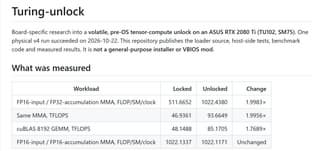
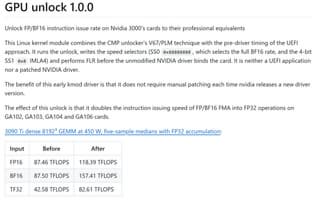
The modifications work with standard drivers and pass CUDA tests. They mainly speed up AI tasks and complex matrix computations, not games. Activation requires running the modification at system startup, and it may void the warranty.
Source: iXBT.games
Related articles
 Japanese Gamers Buy New Releases in Large Numbers as Newcomers Take Entire Sales Podium
 Enthusiasts Find Unusual Way to Run Steam Games on PS5 Without a PC
 Canceled Mass Effect Universe Was Built Around “Absolute Autonomy,” Franchise Technical Director Says
 Steam Frame Gets New Feature a Day After Player Asks Valve for Improvement
 Fans Launch Petition to Restore Classic Jiggle Physics After Blizzard Removes Them From WoW
 Cyberpunk 2077 Hits Record 2.8 Million Mod Downloads in 24 Hours on mod.io After Update 2.5
 Blizzard’s 2012 Action RPG Is Still the Best Co-Op Game on Game Pass
 Nintendo Switch 2 Hacked, Emulator Built, and Files From FromSoftware’s The Duskbloods Under Analysis