Lily Allen Says Being a Tradwife “Appealed to Me in the Past”
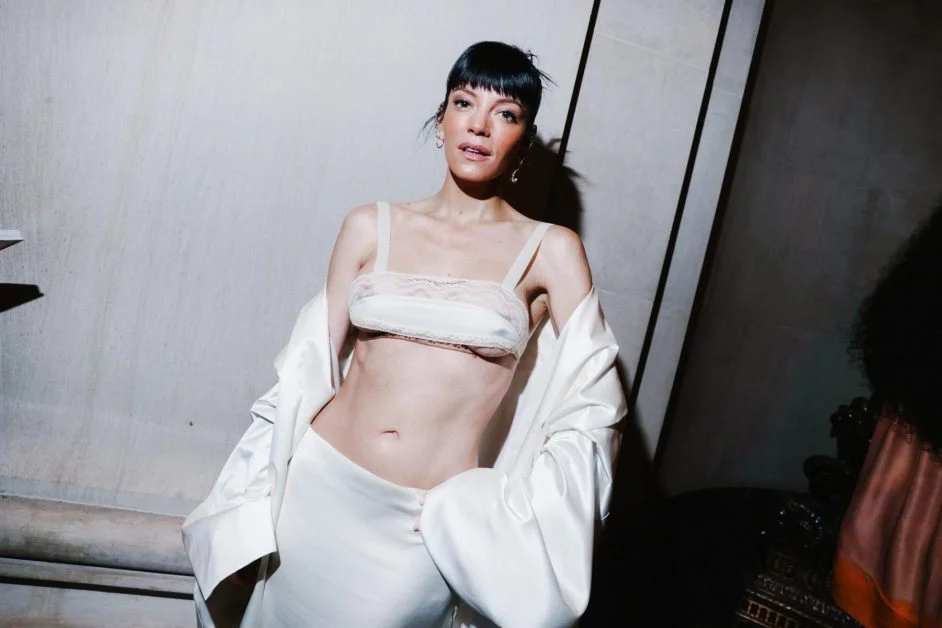
Lily Allen at the 2025 CFDA Fashion Awards held at American Museum of Natural History on Nov. 3, 2025, in New York. Lexie Moreland/WWD
Lily Allen says the “tradwife” lifestyle once appealed to her but no longer does.
In an interview with The Times published Tuesday (Oct. 20), Allen looked back on her marriages to Sam Cooper, with whom she has two teenage daughters, and David Harbour, from whom she split sometime around February 2025. She told the newspaper that during those relationships she prioritized staying home and cooking for the household, and that the “tradwife” movement “appealed to me in the past.”
“I don’t think it does now,” she continued. “There’s this myth someone’s going to pick you up and make everything OK. I haven’t seen much evidence of it.”
According to Merriam-Webster, “tradwife” refers to a “married woman who embraces traditional gender roles (such as being a stay-at-home wife and mother).” The term has grown in popularity in recent years because of social media influencers who embrace the lifestyle, either openly or subtly, in videos.
The movement has drawn labels ranging from wholesome to ultra-conservative propaganda. Allen also told The Times that taking control of her life after her breakup from the Stranger Things actor has changed how she sees herself. She chronicled the split on her 2025 album, West End Girl.
“The album and tour having been a success has given me a sense of agency and accomplishment,” the singer said. “I feel like I’m here: a single mum supporting two teenagers on my own. I don’t need to be taken care of any more. There’s definitely a sense of liberation in that.”
“There’s always going to be a part of me that wants a happy ending — but also, not really,” she added. “I’m starting to see through that.”
Allen recently launched a sex-toy line with Lovehoney, which references some of the more explicit lyrics on West End Girl songs. She described it as part of her liberation. She told The Times: “If me speaking about it can help women feel more confident talking about desire and pleasure, then that can only be a good thing.”
Source: Billboard
Related articles
 Rod Stewart Health Update After Canceling Tour Due to Heart Procedure: ‘F—ing Brilliant’
 Alex Warren Explains Why He Loves Fans Asking Him to Autograph Their Dead Parents’ Ashes
 Ed Sheeran Is the Target of a Side Joke in Martin Short’s Roast of Conan O’Brien
 U2 to Perform Halftime Show at NFL’s First-Ever Thanksgiving Eve Football Game
 Apple Corps Plans Major New Beatles Attraction in Liverpool for 2028
 MUNA’s Tour Bus Catches Fire After Stanford Show, Band Says Everyone Is Safe
 Swae Lee Announces 2027 Same Difference Tour in Australia
 Darren Criss Debuts at London’s Royal Albert Hall With Surprise Chris Colfer Duet in ‘Glee’ Reunion